Why Law Practice Management Software for Personal Injury Works: A 2026 Comprehensive Analysis
Law practice management software for personal injury works by centralizing high-volume medical data, automating complex settlement calculations, and ensuring strict adherence to statutes of limitations. Unlike general legal tools, it p...
Law practice management software for personal injury works by centralizing high-volume medical data, automating complex settlement calculations, and ensuring strict adherence to statutes of limitations. Unlike general legal tools, it prioritizes the contingent fee model and medical-legal workflows, significantly reducing administrative overhead while maximizing case value through data-driven insights and automated document generation.
Contents
The personal injury (PI) legal landscape in 2026 is defined by extreme data density and the necessity for rapid, accurate communication. For a PI firm to remain profitable, it must balance the high costs of litigation and medical record retrieval against the eventual contingent fee. This delicate financial equilibrium is why specialized Law Practice Management (LPM) software has become the backbone of successful firms. By replacing fragmented spreadsheets and manual filing systems with integrated, AI-enhanced ecosystems, PI firms can handle higher case volumes without a linear increase in headcount.
The Structural Necessity of Personal Injury Specialization
General law practice management software often focuses on billable hours and corporate governance. However, personal injury law operates on a fundamentally different engine. PI practitioners do not sell their time; they sell their ability to manage risk and demonstrate damages. Consequently, the software must be built around the lifecycle of a claim rather than a clock.
The primary reason these platforms work is their focus on contingency-based accounting. In a standard hourly model, every minute is tracked for invoicing. In personal injury, the firm often front-loads thousands of dollars in costs—medical records, expert witness fees, and filing costs—with the hope of recovery months or years later. PI-specific software tracks these "hard costs" in real-time, ensuring that when a settlement is finally reached, the firm captures every reimbursable penny. Without this specialized tracking, firms often suffer from "leakage," where small expenses are forgotten, directly eroding the firm’s net profit.
Streamlining the Intake and Lead Conversion Funnel
The first point of failure for many PI firms is the intake process. In 2026, potential clients expect immediate responses. If a firm takes four hours to return a call after a motor vehicle accident, the claimant has likely already contacted three other competitors.
Personal injury LPM software works by integrating automated intake workflows that use logic-based branching. When a lead enters the system—whether via a web form, a chatbot, or a live call—the software triggers a sequence of qualifying questions. This ensures that the firm only invests time in cases with clear liability and significant damages. Furthermore, these systems often include e-signature integration for contingency fee agreements, allowing a firm to "sign" a client while they are still on the initial phone call. This speed to lead is a critical metric that specialized software optimizes through immediate, automated engagement.
Medical Records and Bill Management: The Core Engine
Perhaps the most significant reason PI software is indispensable is its ability to handle the "medical-legal" overlap. A personal injury case is essentially a story told through medical records. Managing these records is historically the most labor-intensive part of the practice.
In 2026, top-tier PI software utilizes Optical Character Recognition (OCR) and Natural Language Processing (NLP) to analyze medical bills and records automatically. When a firm receives a 500-page medical file, the software can:
- Identify specific ICD-10 or ICD-11 diagnostic codes.
- Flag gaps in treatment that could devalue the claim.
- Automatically extract "billed vs. paid" amounts for specialized calculations.
- Organize records chronologically, creating a "medical summary" that can be exported directly into a demand letter.
By automating the retrieval and organization of medical evidence, the software allows paralegals to move from manual data entry to high-level case strategy. This shift reduces the "time-to-demand," which is the period between a client finishing treatment and the attorney sending a demand package to the insurance adjuster. The faster this package is sent, the faster the firm (and the client) gets paid.
Settlement Calculators and Lien Tracking
Settling a personal injury case is not as simple as receiving a check from an insurance company. It involves a complex web of subrogation, Medicare/Medicaid liens, and third-party medical provider balances. Personal injury software works by providing a settlement calculator that accounts for these variables in real-time.
| Feature | Impact on Personal Injury Workflow | Importance (1-10) |
|---|---|---|
| Lien Tracking | Ensures all medical providers and insurers are paid, preventing post-settlement litigation. | 10 |
| Demand Automation | Generates comprehensive demand packages using medical data with one click. | 9 |
| Statute of Limitations Alerts | Automated, multi-channel reminders to prevent missed filing deadlines. | 10 |
| Client Portals | Reduces "status update" calls by giving clients 24/7 access to their case progress. | 8 |
| Predictive Analytics | Uses historical data to estimate case value based on injury type and venue. | 7 |
The settlement calculator allows an attorney to show a client exactly what their "net recovery" will be after all liens and fees are deducted. This transparency is crucial for managing client expectations and facilitating faster settlements. If an attorney can prove the math instantly during a negotiation, they hold a significant advantage over adjusters who may be working with less organized data.
Deadline Management and Risk Mitigation
In personal injury law, missing a Statute of Limitations (SOL) is a catastrophic event that leads to immediate malpractice claims. General calendar apps are insufficient for the layers of deadlines inherent in PI litigation.
Dedicated software works because it employs "chaining" logic for deadlines. For example, when a "Complaint" is marked as served in the system, the software automatically generates subsequent deadlines for the "Answer," "Initial Disclosures," and "Discovery Requests" based on the specific jurisdictional rules of the court. In 2026, these systems are often synced directly with court electronic filing systems (CM/ECF), ensuring that if a court date changes, every calendar in the firm updates instantly. This redundancy is the firm's primary defense against human error.
Centralized Communication and Client Satisfaction
The number one complaint against attorneys is a lack of communication. In personal injury cases, where clients are often dealing with physical pain and financial stress, this need for communication is amplified.
LPM software addresses this through automated client journeys. While the attorney works on the legal strategy, the software can send automated SMS or email updates to the client at key milestones, such as "Medical Records Requested" or "Negotiations Initiated." This makes the client feel prioritized without requiring the attorney or paralegal to pick up the phone for every minor update. Additionally, secure client portals allow for the safe exchange of sensitive documents, such as photos of the accident scene or tax returns for lost wage claims, ensuring compliance with data privacy regulations like HIPAA.
Technical Requirements and Implementation
To make personal injury software work effectively, a firm must meet several technical and operational prerequisites:
- Cloud-Native Infrastructure: In 2026, on-premise servers are largely obsolete. Cloud-based systems allow for remote evidence collection and real-time updates from the courthouse.
- API Integration Capabilities: The software must "talk" to other tools, such as Microsoft 365, Google Workspace, and specialized legal research databases.
- Data Migration Accuracy: Transitioning to a PI-specific system requires clean data. If the "date of loss" or "SOL" is entered incorrectly during migration, the system’s automation will be flawed.
- Cybersecurity Compliance: Given the sensitivity of medical records, the software must utilize end-to-end encryption and multi-factor authentication (MFA).
Frequently Asked Questions
Is PI-specific software worth the cost for a solo practitioner?
Yes. Solo practitioners benefit most from the "force multiplier" effect of automation. By using software to handle medical record requests and status updates, a solo attorney can often handle a caseload that would traditionally require two full-time assistants. The software effectively acts as a digital paralegal.
How does the software handle HIPAA compliance in 2026?
Modern PI software is built with HIPAA-compliant storage and transmission protocols. This includes encrypted document repositories, audit logs that track who accessed which record and when, and Business Associate Agreements (BAAs) that ensure the software provider takes legal responsibility for data security standards.
Can the software predict the value of my cases?
Many 2026 platforms include predictive analytics modules. By analyzing your firm’s historical settlement data alongside regional court trends, the software can provide a "estimated settlement range." While it cannot replace an attorney’s judgment, it serves as a powerful benchmark during negotiations with insurance adjusters.
How long does it take to implement PI practice management software?
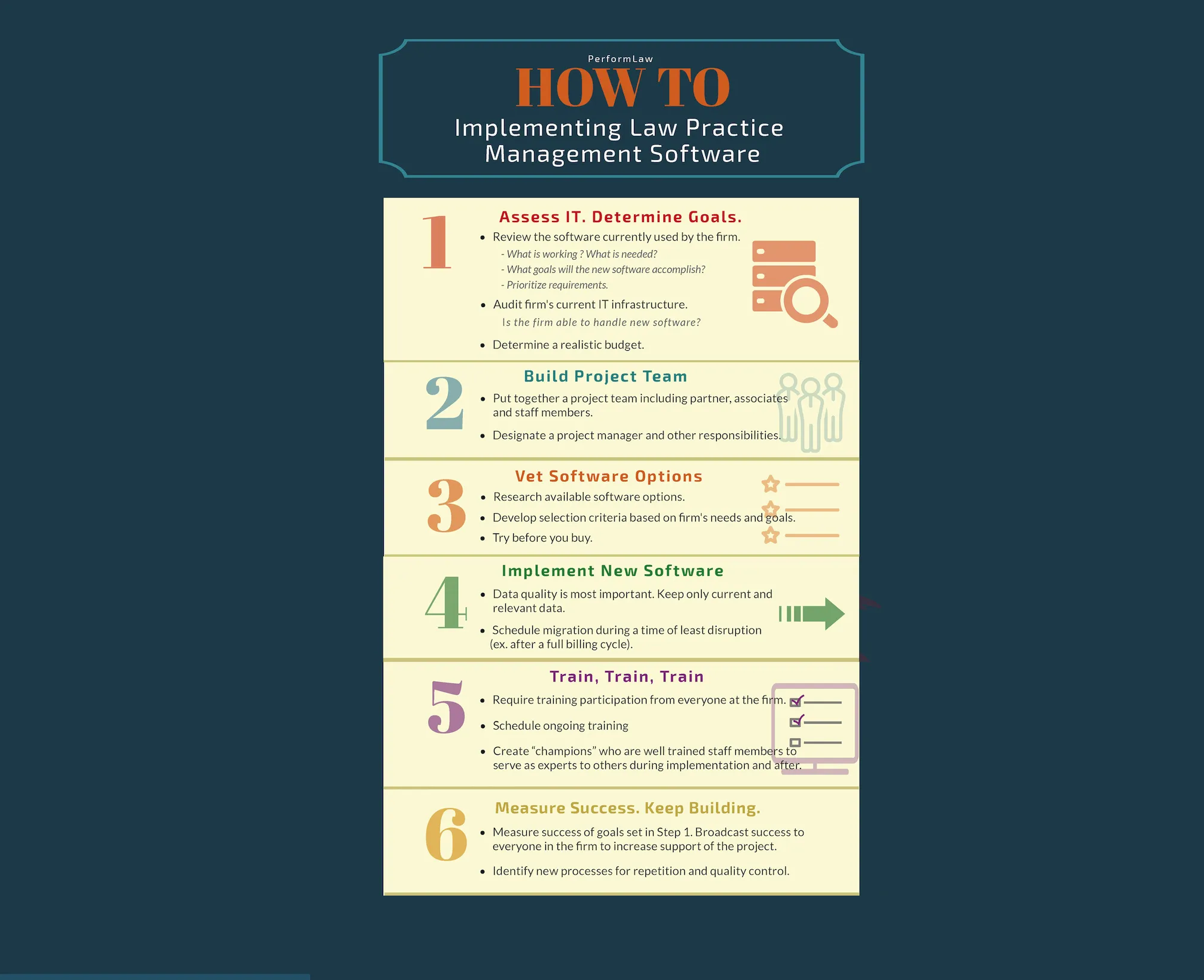
Implementation typically takes 4 to 12 weeks, depending on the volume of data being migrated. The process involves mapping existing data fields to the new system, configuring custom workflows for different case types (e.g., slip and fall vs. medical malpractice), and training staff on the new interface.
Does the software integrate with court filing systems?
Most leading PI software in 2026 offers direct integration with major state and federal e-filing portals. This allows documents to be filed directly from the case management screen, with the resulting "file-stamped" copy automatically saved back to the correct client folder and the filing fee recorded in the case ledger.
Final Recommendation for Law Firms
To maximize the benefits of law practice management software for personal injury, firms should move beyond using it as a simple digital filing cabinet. The true value lies in workflow automation. Start by identifying the most repetitive task in your office—usually medical record follow-ups or settlement distribution drafting—and use the software’s automation tools to handle those first. As the firm becomes more comfortable with the technology, transition to using its data analytics features to identify which referral sources and case types yield the highest return on investment.
Image Gallery