Best Free SEO Keyword Finder Tools for 2026
An SEO keyword finder free tool is a digital platform that identifies the search terms users enter into search engines, providing data on search volume, competition, and user intent without requiring a paid subscription. In 2026, the m...
An SEO keyword finder free tool is a digital platform that identifies the search terms users enter into search engines, providing data on search volume, competition, and user intent without requiring a paid subscription. In 2026, the most reliable free options include Google Keyword Planner for raw data, Ahrefs’ Free Keyword Generator for precision, and Google Search Console for analyzing existing performance data.
Contents
The Role of Keyword Research in the 2026 Search Landscape
Keyword research remains the foundation of digital marketing, though the methodology has shifted significantly by 2026. Search engines now prioritize semantic clusters and user intent over exact-match keyword strings. However, even with the rise of Search Generative Experience (SGE) and AI-driven answers, identifying the specific language your audience uses is the only way to ensure your content aligns with their needs.
A free keyword finder serves as the entry point for small businesses, independent creators, and startup SEOs. These tools bridge the gap between "guessing" what people want and "knowing" what they are actually typing into search bars. While paid suites offer unlimited data and deep competitive intelligence, free tools provide the essential metrics—volume, difficulty, and related queries—needed to build a functional content strategy.
Essential Free SEO Keyword Finders for 2026
Navigating the landscape of free tools requires understanding the trade-off between data depth and usage limits. Most "free" tools are technically "freemium," offering a restricted number of searches per day or hiding specific metrics behind a paywall.
1. Google Keyword Planner (GKP)
Originally designed for Google Ads, the Keyword Planner remains the most authoritative source of raw search data because it comes directly from Google. To access it for free, you must set up a Google Ads account, but you are not required to run an active campaign.
- Primary Strength: Access to historical volume data and localized search trends.
- Operational Limit: If you are not spending money on ads, Google often shows volume as ranges (e.g., 1K–10K) rather than exact numbers.
- Best Use Case: Generating large lists of "seed" keywords and understanding seasonal fluctuations in search interest.
2. Ahrefs Free Keyword Generator
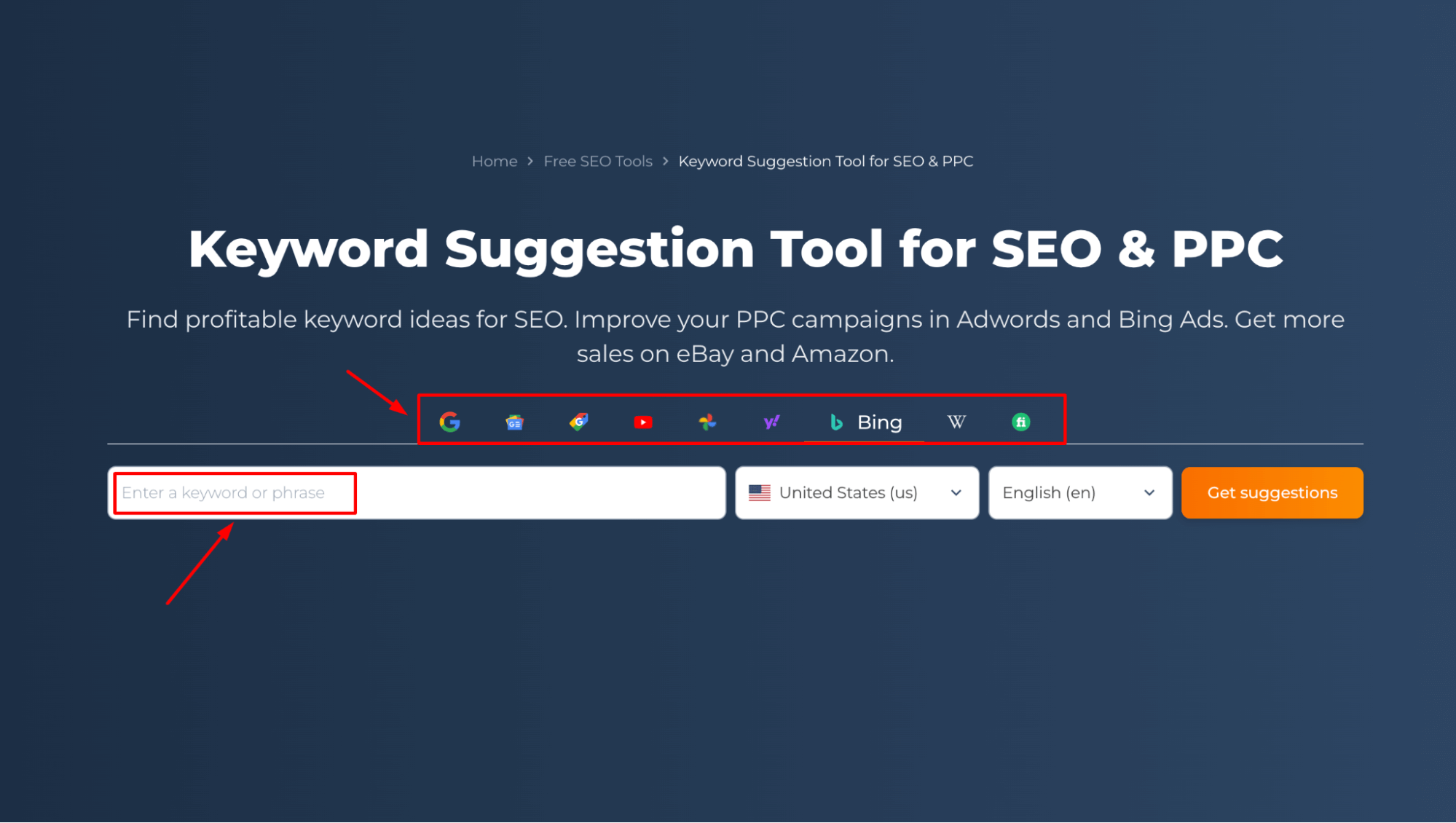
Ahrefs has maintained its reputation for having one of the most comprehensive web crawlers in the industry. Their free tool allows users to find the top 100 keyword ideas for any seed term across several search engines, including Google, Bing, YouTube, and Amazon.
- Primary Strength: Provides a Keyword Difficulty (KD) score, which estimates how hard it will be to rank on the first page.
- Operational Limit: It does not show the full list of keywords or comprehensive SERP (Search Engine Results Page) analysis found in the paid version.
- Best Use Case: Finding "low-hanging fruit" by identifying keywords with high volume but low KD scores.
3. AnswerThePublic
In 2026, search is increasingly conversational. AnswerThePublic specializes in visualizing "phrase-based" search queries—the who, what, where, why, and how of a topic. This is particularly useful for capturing Featured Snippets and appearing in "People Also Ask" boxes.
- Primary Strength: Maps out the natural language patterns and questions users ask around a specific subject.
- Operational Limit: Limits users to a small number of daily searches on the free tier.
- Best Use Case: Content brainstorming and creating FAQ sections that address specific user pain points.
4. Google Search Console (GSC)
Often overlooked as a keyword finder, GSC is the most powerful tool for discovering keywords you are already starting to rank for. By analyzing the "Performance" report, you can see which queries triggered your site to appear in search results, even if you are on page five.
- Primary Strength: Provides actual Click-Through Rate (CTR) and average position data for your specific domain.
- Operational Limit: It only provides data for keywords your site is currently indexed for; it cannot help you find keywords for entirely new topics.
- Best Use Case: Optimization of existing content to move from the bottom of page one to the top three spots.
Comparative Analysis of Free Keyword Tools
The following table compares the primary features of the top free keyword finders available in 2026 to help you select the right tool for your specific objective.
| Tool Name | Primary Data Source | Best Feature | Usage Limit | Ideal User |
|---|---|---|---|---|
| Google Keyword Planner | Google Ads Data | Localized Volume | Requires Ads Account | Local Businesses |
| Ahrefs Free Generator | Clickstream & Crawl | Difficulty Score | Restricted per session | Technical SEOs |
| AnswerThePublic | Search Suggestions | Question Mapping | 3 Searches per Day | Content Creators |
| Keyword Tool.io | Autocomplete API | Long-tail Suggestions | No Volume on Free Tier | Bloggers |
| Google Search Console | First-party Site Data | Actual CTR & Rank | Your domains only | Site Owners |
Strategic Workflow: How to Combine Free Tools for Maximum Impact
Relying on a single free tool often leaves gaps in your data. Successful SEO professionals use a "stacking" method to get professional-grade insights without a subscription.
Phase 1: Discovery and Seed Generation
Start with Google Keyword Planner to identify broad topics. If you are in the fitness niche, you might enter "home workout." GKP will provide you with hundreds of variations like "no-equipment workout," "home yoga," and "HIIT for beginners." Export this list to a spreadsheet.
Phase 2: Difficulty Filtering
Take the most promising keywords from GKP and run them through the Ahrefs Free Keyword Generator. Check the Keyword Difficulty (KD). In 2026, a new website should generally target keywords with a KD under 20. This step ensures you aren't wasting time trying to compete with massive authority sites for high-competition terms.
Phase 3: Intent and Question Mapping
Use AnswerThePublic to find the specific questions people are asking about your chosen low-difficulty keyword. If your keyword is "HIIT for beginners," AnswerThePublic might show that users are specifically asking, "Is HIIT safe for seniors?" or "How many minutes of HIIT is enough for beginners?" These become your H2 headings and the core of your content.
Phase 4: Performance Monitoring
After publishing your content, wait 30 to 60 days and then check Google Search Console. Look for "impressions" on keywords you didn't intentionally target. These are "accidental" keywords that Google thinks your content is relevant for. You can then update your article to include these terms more prominently, further increasing your traffic.
Common Pitfalls When Using Free Keyword Tools
While free tools are powerful, they have inherent limitations that can lead to strategic errors if not managed carefully.
- Incomplete Data Volume: Many free tools show you the top 10 or 20 results but hide the thousands of "long-tail" variations. Long-tail keywords (queries with 3+ words) often have lower volume but much higher conversion rates.
- Delayed Data Updates: Paid tools often update their databases daily or weekly. Free tools may rely on older "cached" data, which can be misleading for trending topics or rapidly changing industries like technology or finance.
- Lack of Competitive Intelligence: Free tools rarely allow you to "spy" on your competitors. You can see what people are searching for, but you can't easily see exactly which keywords a specific competitor is using to drive 80% of their traffic.
- Manual Effort: Using free tools requires significant manual copying and pasting between platforms. Professional SEOs pay for tools primarily to save the time it takes to aggregate this data.
The Importance of Search Intent in 2026
Regardless of the tool you use, the most critical metric in 2026 is Search Intent. Keyword finders provide the "what," but you must determine the "why." Search intent generally falls into four categories:
- Informational: The user wants to learn something (e.g., "how to fix a leaky faucet").
- Navigational: The user is looking for a specific website (e.g., "Facebook login").
- Commercial: The user is researching products but isn't ready to buy (e.g., "best laptop for video editing 2026").
- Transactional: The user is ready to make a purchase (e.g., "buy iPhone 17 online").
Free tools like Google Search itself are excellent for verifying intent. Simply type your keyword into a private browser window. If the results are all blog posts, the intent is informational. If the results are all product pages, the intent is transactional. If your content doesn't match the intent Google expects, you will not rank, regardless of how many times you use the keyword.
FAQ
Can I do professional SEO using only free keyword finders?
Yes, it is entirely possible to rank highly using only free tools. However, it requires more manual labor and a deeper understanding of search intent. Free tools provide the necessary data points, but you must be more diligent about manually checking the SERPs to understand the competitive landscape.
Is Google Keyword Planner still accurate in 2026?
Google Keyword Planner remains the most accurate source for Google-specific search volume. However, because it is an advertising tool, it tends to group similar keywords together. For organic SEO, you should supplement GKP data with other tools that show more granular differences between synonyms.
Why do some free tools show different search volumes for the same keyword?
Each tool uses a different data collection method. Google uses direct internal data, while third-party tools like Ahrefs or Moz use a combination of "clickstream" data (anonymized user behavior) and their own proprietary algorithms. No tool is 100% accurate; they should be treated as estimates for comparison rather than absolute facts.
Do I need to worry about keyword density in 2026?
No. Keyword density—the practice of repeating a keyword a certain percentage of times—is an obsolete tactic. In 2026, search engines use Natural Language Processing (NLP) to understand the context of your page. Focus on covering a topic comprehensively and using related terms (LSI keywords) naturally rather than hitting a specific keyword count.
How many keywords should I target per page?
Generally, you should target one primary keyword and 3 to 5 secondary, related keywords (or questions) per page. Attempting to rank one page for dozens of unrelated terms often results in diluted content that fails to satisfy any specific user intent.
Final Recommendation
To get the most out of your SEO efforts in 2026 without spending a dime, start by mastering Google Search Console to leverage your existing data. Supplement this with Ahrefs Free Keyword Generator to validate the competition level of new ideas. Always prioritize the user's search intent over raw volume numbers; a keyword with 100 highly targeted monthly searches is often more valuable than a generic term with 10,000 searches that leads to high bounce rates.
Image Gallery