How to Spell Volleyball: Correct Spelling, Usage, and Common Mistakes
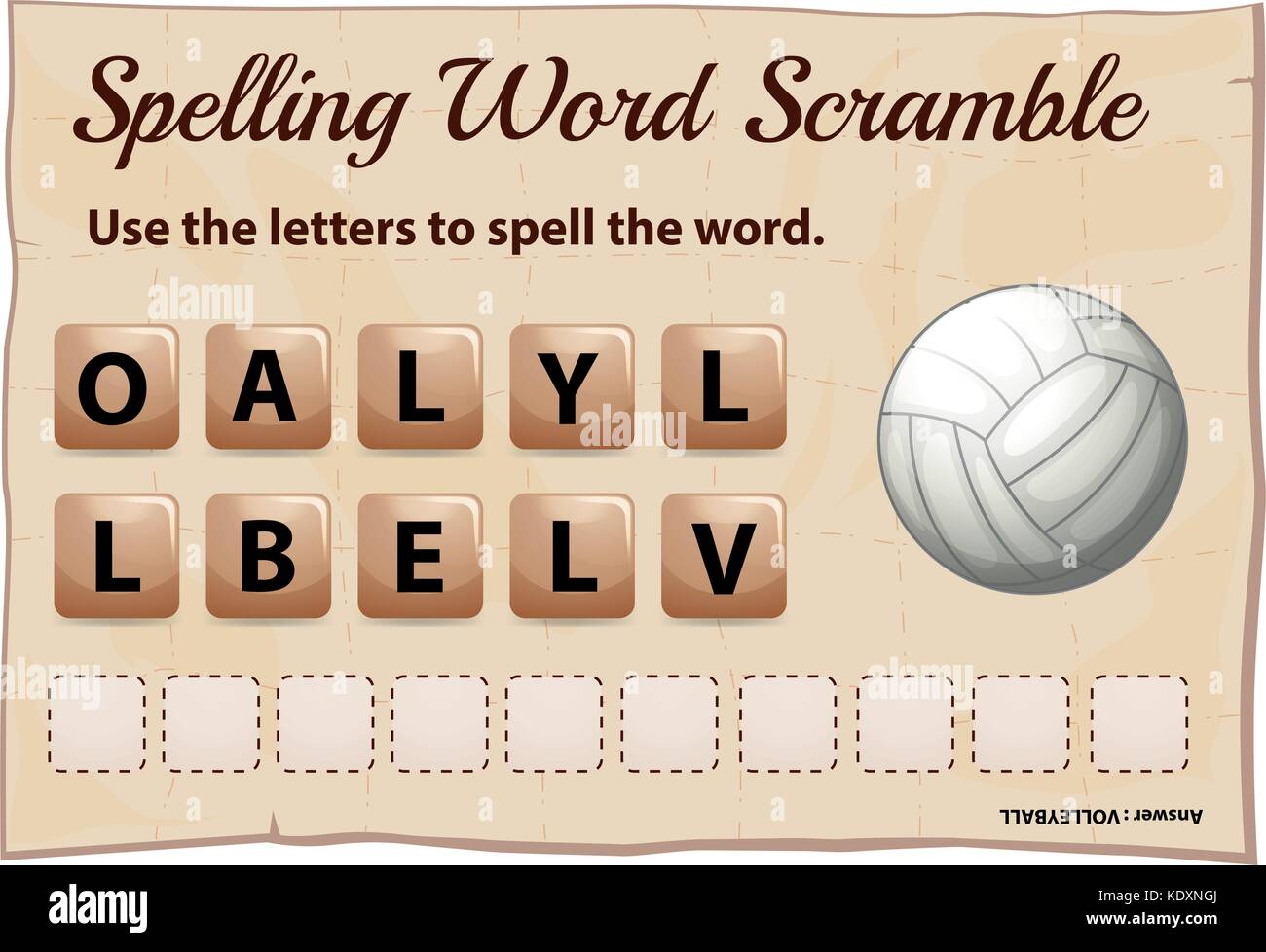
The correct spelling of the sport is volleyball. It is written as a single, unhyphenated word consisting of ten letters: V-O-L-L-E-Y-B-A-L-L. The word is a compound of "volley" and "ball," reflecting the fundamental action of hitting t...
The correct spelling of the sport is volleyball. It is written as a single, unhyphenated word consisting of ten letters: V-O-L-L-E-Y-B-A-L-L. The word is a compound of "volley" and "ball," reflecting the fundamental action of hitting the ball back and forth over a net without letting it touch the ground.
Contents
While the word is ubiquitous in schools, sports clubs, and international competitions in 2026, its spelling and even its name have evolved since the sport's inception in the late 19th century. Understanding the mechanics of the word, its etymological roots, and common orthographic pitfalls is essential for students, athletes, and sports journalists alike.
The Anatomy of the Word "Volleyball"
To spell volleyball correctly every time, it is helpful to break the word into its two constituent parts: volley and ball. Each part carries its own spelling rules that, when combined, create the full compound noun.
The First Component: Volley
The term "volley" comes from the Middle French word volée, meaning "flight." In a sporting context, a volley refers to hitting a ball while it is still in the air, before it touches the ground. This is the core mechanic of the sport.
- Common Error: People often forget the "e" before the "y," resulting in the misspelling "volly."
- The Rule: In English, many words ending in the /ee/ sound that follow a consonant use "ey" (like donkey, monkey, or chimney). Remembering the "e" in "volley" is the most frequent hurdle in spelling the sport's name correctly.
The Second Component: Ball
This is the standard English word for a spherical object used in play.
- Common Error: While "ball" is rarely misspelled on its own, some writers accidentally drop one of the final "l"s when forming a compound word, though this is grammatically incorrect for "volleyball."
- The Rule: Always retain the double "l" at the end of the word.
Historical Evolution of the Name
In 2026, we take the name "volleyball" for granted, but the sport did not begin with this title. Understanding the history helps clarify why the spelling eventually settled into its current form.
Mintonette: The Original Name
When William G. Morgan invented the sport in 1895 at the YMCA in Holyoke, Massachusetts, he called it Mintonette. The name was derived from badminton, as the new sport shared some characteristics with it, such as the use of a net. However, "Mintonette" did not capture the dynamic nature of the game.
The Transition to "Volley Ball"
During an exhibition match in 1896 at the International YMCA Training School (now Springfield College), Dr. Alfred Halstead noticed the "volleying" nature of the play. He suggested that the name be changed to Volley Ball. For several decades, the name was officially written as two separate words: Volley Ball.
Consolidation into "Volleyball"
As the sport grew in popularity and became more codified, the two words naturally merged. This is a common linguistic phenomenon known as compounding, where frequently used word pairs eventually lose their space and hyphen to become a single entity. By the mid-20th century, the United States Volleyball Association (now USA Volleyball) and the Fédération Internationale de Volleyball (FIVB) standardized the single-word spelling: volleyball.
Common Misspellings and How to Avoid Them
Even with its standardized status, "volleyball" is frequently misspelled in digital communications, signage, and academic papers. Here are the most common variations and why they are incorrect.
- Vollyball: This is perhaps the most frequent error. It occurs when the writer omits the "e" in the first syllable. Because "volley" is pronounced with a long "e" sound followed by a "y," the "e" is often missed phonetically.
- Volley ball: While historically accurate, this is considered an outdated spelling in 2026. Modern style guides (AP, MLA, Chicago) all mandate the single-word form. Using the two-word version in a professional or academic context may be viewed as an error.
- Valleyball: This is a phonetic misspelling where the "o" is replaced with an "a." This usually happens due to regional accents where the "o" in "volley" sounds similar to the "a" in "valley."
- Volley-ball: Some international English speakers, particularly those influenced by French or older British conventions, may include a hyphen. In modern American and international English, the hyphen is unnecessary and technically incorrect.
Grammar, Capitalization, and Usage Rules
Beyond the basic spelling, using "volleyball" correctly in a sentence requires an understanding of English grammar rules.
Is Volleyball Capitalized?
In general English usage, the names of sports are not capitalized unless they are at the beginning of a sentence.
- Correct: "We are going to play volleyball this afternoon."
- Incorrect: "We are going to play Volleyball this afternoon."
However, you must capitalize "Volleyball" when it is part of a proper noun, such as the name of a specific organization, tournament, or trophy.
- Example: "The 2026 FIVB Volleyball Men's World Championship."
- Example: "The NCAA Women’s Volleyball Tournament."
Is it a Noun or an Adjective?
"Volleyball" functions as both a noun (the name of the sport) and an attributive noun/adjective (describing something related to the sport).
- Noun: "She excels at volleyball."
- Adjective: "He bought a new volleyball net." (In this case, "volleyball" modifies "net.")
Pluralization
The word "volleyball" is typically an uncountable noun when referring to the sport itself. However, when referring to the physical balls used in the game, it is a countable noun.
- Uncountable: "Volleyball is a popular sport in Brazil."
- Countable: "The coach brought ten volleyballs to the practice."
Related Technical Terminology
To write effectively about the sport, one must also master the spelling of related technical terms. Many of these terms are frequently misspelled even by seasoned fans.
| Term | Correct Spelling | Common Misspelling | Definition |
|---|---|---|---|
| Libero | Libero | Libaro / Liberoo | A defensive specialist who wears a different colored jersey. |
| Rotation | Rotation | Rotasion | The clockwise movement of players to the next service position. |
| Antenna | Antenna | Antena | The vertical rods attached to the net to mark the boundaries. |
| Sideout | Sideout | Side-out / Side out | When the receiving team wins the rally and gains the right to serve. |
| Setter | Setter | Seter | The player in charge of "setting" the ball for an attacker. |
| Spike | Spike | Spicke | A powerful hit directed into the opponent's court. |
International Variations and Phonetics
While the English spelling is "volleyball," the sport is global, and the word has been adapted into various languages, sometimes phonetically and sometimes through direct translation.
- Spanish: Voleibol (This spelling reflects the phonetic pronunciation in Spanish, replacing the "y" with an "i" and the "ball" with "bol").
- French: Volley-ball (French often retains the hyphen that English has discarded).
- Italian: Pallavolo (A direct translation: palla meaning ball and volo meaning flight).
- Portuguese: Voleibol (Similar to Spanish, though often shortened to "vôlei" in casual conversation).
Understanding these variations is useful when communicating with international athletes or fans, but for all English-language publications in 2026, "volleyball" remains the gold standard.
Teaching the Spelling to Students and New Learners
If you are a teacher or coach helping younger players learn the word, a multi-sensory approach is often most effective.
- Chanting: Have the students chant "V-O-L-L-E-Y... B-A-L-L" while mimicking the motion of a serve or a set.
- Visual Decomposition: Write the word in two colors on a whiteboard—blue for "volley" and red for "ball"—to emphasize that it is a compound word.
- Mnemonic Devices: Use a phrase like "Very Often, Lovely Ladies Eat Yams" to remember the first six letters if the "e" and "y" are proving difficult.
Frequently Asked Questions
1. Is "volleyball" one word or two?
In modern English, "volleyball" is written as one word. While it originated as two words ("Volley Ball") in the 1890s, the spelling was consolidated over a century ago. Today, writing it as two words is considered an error in almost all contexts.
2. Does "volleyball" have a hyphen?
No, "volleyball" does not require a hyphen. While some compound words in English use hyphens to prevent ambiguity, "volleyball" is a closed compound word, meaning the two parts are joined directly together without any punctuation.
3. Why is there an "e" in "volleyball"?
The "e" is part of the root word "volley." In English orthography, the suffix "-ey" is a common way to end a word with a long "e" sound, especially after certain consonants. Without the "e," the word would be "volly," which is not a standard English word.
4. How do you spell the plural of volleyball?
When referring to multiple physical balls, the plural is "volleyballs." When referring to the sport itself, it is a non-count noun and does not have a plural form. For example, you would say "I love various types of volleyball," not "I love various volleyballs."
5. What was volleyball originally called?
Before it was named "Volley Ball" (and eventually "volleyball"), the sport was called Mintonette. The name was changed because the action of the game involved volleying the ball back and forth, making "volleyball" a more descriptive and dynamic name.
Practical Recommendation for 2026
When writing the word "volleyball," the most reliable method to ensure accuracy is to remember the "Double-L Rule." The word contains two sets of double "l"s: one pair in the middle and one pair at the very end. If your spelling only has one "l" in either location, it is incorrect. In any professional, academic, or athletic document, always double-check that the "e" is present before the "y." If you are using digital word processors in 2026, ensure your dictionary is set to the correct regional English (US or UK), though "volleyball" is spelled identically in both.
Image Gallery