How Asset Valuation Drives Net Worth Analysis
Asset valuation is the fundamental engine of net worth analysis because it determines the "Total Assets" component of the core accounting equation. By accurately assessing the fair market value of tangible and intangible holdings, indi...
Asset valuation is the fundamental engine of net worth analysis because it determines the "Total Assets" component of the core accounting equation. By accurately assessing the fair market value of tangible and intangible holdings, individuals and businesses can establish a reliable financial baseline, influence creditworthiness, and make informed strategic investment decisions.
Contents
To understand financial health, one must look beyond a simple list of possessions. Net worth analysis is the process of subtracting total liabilities from total assets. However, the "value" of those assets is rarely static. Whether you are an individual tracking personal wealth or a corporate treasurer evaluating a balance sheet, the methodology used to assign a dollar value to an asset—known as asset valuation—dictates the accuracy, reliability, and utility of the resulting net worth figure. In the fiscal landscape of 2026, where market volatility and digital assets have introduced new layers of complexity, precise valuation is more critical than ever.
The Interdependence of Valuation and Net Worth
The relationship between asset valuation and net worth is one of direct causality. Net worth is a snapshot in time, a numerical representation of equity. This snapshot is only as accurate as the data used to construct it. If an asset is overvalued, the net worth is artificially inflated, leading to a false sense of security or "paper wealth." Conversely, undervalued assets hide potential capital and can hinder borrowing power or investment opportunities.
Asset valuation provides the qualitative "weight" to the quantitative list of holdings. While liabilities (debts) are usually fixed or easily calculated based on contract terms, assets are subject to market forces, depreciation, and appreciation. Therefore, net worth analysis is not a one-time calculation but a dynamic process driven by the constant re-valuation of the underlying portfolio.
Primary Methodologies for Valuing Assets in 2026
In 2026, financial professionals utilize three primary frameworks to determine the value of assets. The choice of method significantly impacts the final net worth calculation, as each approach highlights different aspects of an asset's worth.
The Market Approach (Comparables)
The market approach is the most common method for liquid assets and real estate. it relies on the "fair market value," which is the price a willing buyer would pay a willing seller in an open market. For stocks and bonds, this is determined by current exchange prices. For real estate, it involves looking at "comps"—similar properties sold recently in the same geographic area.
In net worth analysis, the market approach offers the most "real-time" look at wealth. However, it is highly sensitive to market sentiment and can fluctuate rapidly, making it a volatile driver of net worth during economic shifts.
The Income Approach (Discounted Cash Flow)
Commonly used for businesses, rental properties, and intellectual property, the income approach values an asset based on the income it is expected to generate in the future. The most common technique is the Discounted Cash Flow (DCF) analysis, which calculates the present value of future earnings, adjusted for the time value of money and risk.
When driving net worth analysis, the income approach is vital for "productive assets." It helps an individual understand not just what an asset is worth today if sold, but what its utility value is as a source of ongoing wealth.
The Cost Approach (Replacement Cost)
The cost approach determines value by calculating how much it would cost to replace the asset with a new one of similar utility. This is frequently used for specialized machinery, unique construction, or insurance purposes. While less common for personal net worth analysis, it is essential for businesses with heavy capital investments in equipment that may not have a frequent secondary market.
Segmenting Assets for Accurate Analysis
To perform a sophisticated net worth analysis, assets must be categorized based on their liquidity and valuation stability. Not all assets drive net worth in the same way.
- Liquid Assets: These include cash, savings accounts, and money market instruments. Their valuation is straightforward and provides the "floor" for net worth.
- Investment Assets: Stocks, bonds, and mutual funds. These are valued via the market approach and provide the primary growth engine for net worth.
- Real Estate: Often the largest component of personal net worth. Valuation requires periodic appraisals or automated valuation models (AVMs) to remain accurate.
- Tangible Personal Property: Vehicles, jewelry, and collectibles. These often depreciate, and their valuation is frequently overestimated by individuals, leading to skewed net worth figures.
- Intangible Assets: In 2026, this increasingly includes digital assets, patents, and brand equity. These are the most difficult to value and require specialized "mark-to-market" or "mark-to-model" techniques.
Technical Challenges in Valuation Accuracy
The "drive" that valuation provides to net worth analysis is often interrupted by technical challenges. One of the most significant is liquidity discounting. If an individual owns a minority stake in a private company valued at $10 million, they cannot simply add $1 million to their net worth. Because the shares are not easily sold, a "discount for lack of marketability" (DLOM) must be applied. Ignoring these discounts results in a net worth figure that is technically accurate on paper but practically useless for cash-flow planning.
Another challenge is market volatility. In the current 2026 economic environment, rapid shifts in interest rates can cause bond values to plummet or real estate markets to freeze. Net worth analysis that does not account for the "as-of" date of a valuation can lead to significant errors in financial planning.
Comparative Analysis of Valuation Frameworks
The following table compares how different valuation methods influence the perception of net worth across various asset classes.
| Asset Class | Primary Valuation Method | Impact on Net Worth | Frequency of Update |
|---|---|---|---|
| Public Equities | Market Approach | High Volatility; High Liquidity | Daily/Real-time |
| Residential Real Estate | Market/Sales Comparison | High Stability; Low Liquidity | Annually |
| Private Business | Income Approach (DCF) | High Growth Potential; Complex | Every 2-3 Years |
| Fixed Income/Bonds | Market/Yield Analysis | Interest Rate Sensitive | Monthly |
| Digital/Crypto Assets | Market Approach | Extreme Volatility | Real-time |
| Collectibles/Art | Appraisal (Market) | Subjective; Illiquid | Every 5 Years |
Strategic Impacts: Why the Valuation Method Matters
The choice of how an asset is valued can have profound legal and financial consequences. Net worth analysis is a prerequisite for several critical activities:
- Lending and Credit: Banks perform their own asset valuation before issuing loans. If a borrower’s internal net worth analysis uses aggressive valuations that the bank rejects, the loan-to-value (LTV) ratio may fail, leading to rejected applications or higher interest rates.
- Tax Planning: For high-net-worth individuals, estate and gift taxes are calculated based on the fair market value of assets. Accurate valuation ensures compliance while identifying opportunities for tax-efficient wealth transfer.
- Estate Planning: Valuation drives the equitable distribution of assets. Without professional appraisals, heirs may receive portions of an estate that are vastly different in actual market value, leading to legal disputes.
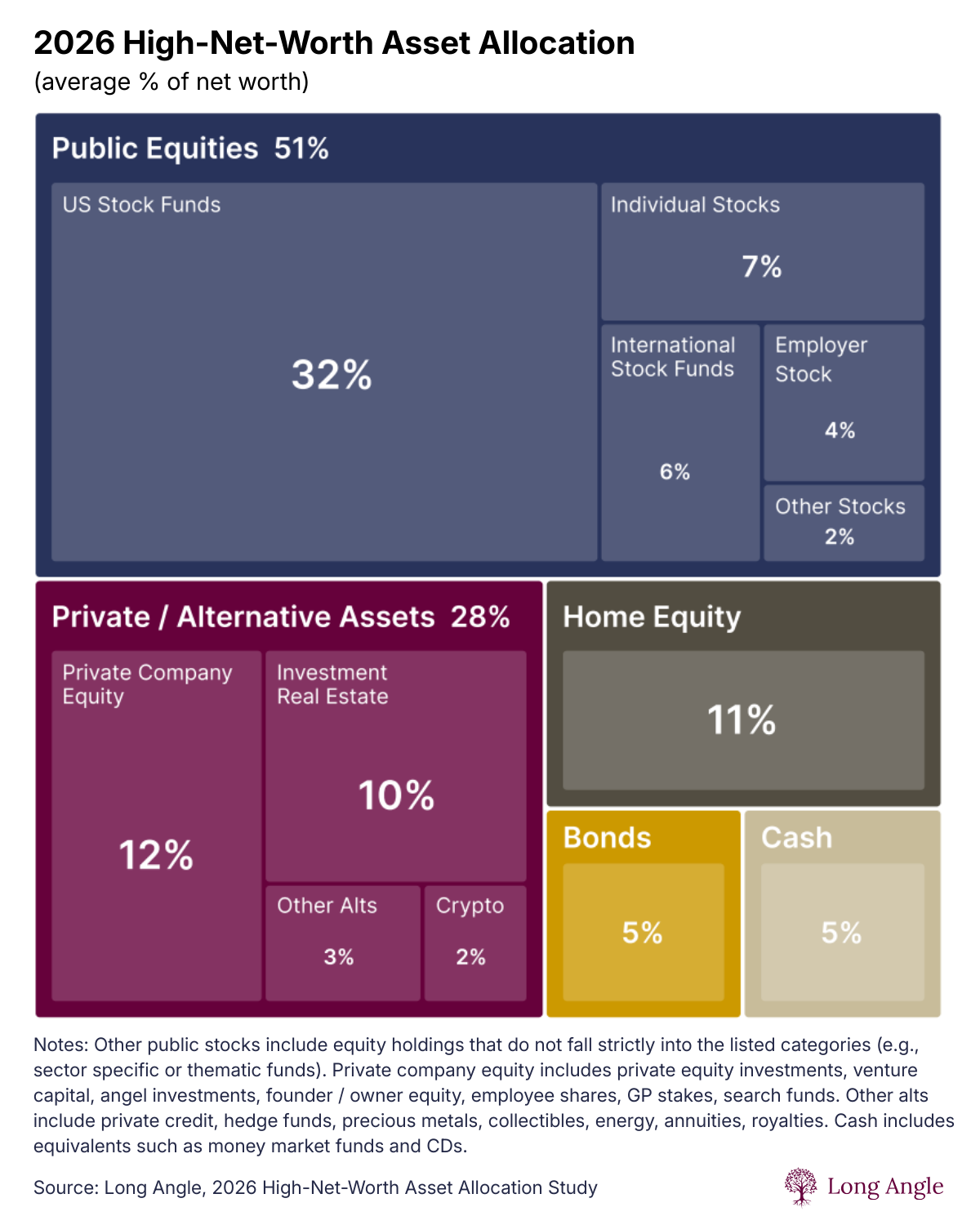
- Investment Rebalancing: Portfolio managers use net worth analysis to determine asset allocation. If real estate values have driven net worth up significantly, the portfolio may be "overweight" in property, necessitating the sale of assets to maintain a target risk profile.
Common Pitfalls in Asset-Driven Net Worth Analysis
Many people fall into the trap of sentimental valuation, particularly with family homes or heirlooms. This involves assigning a value based on what the owner "feels" the item is worth rather than what the market will bear. In a professional net worth analysis, sentiment must be stripped away in favor of objective data.
Another common error is ignoring tax liabilities associated with asset values. If an investment account is valued at $1,000,000 but carries $200,000 in embedded capital gains tax liability, the "net" contribution to net worth is effectively $800,000. Sophisticated net worth analysis in 2026 often uses "after-tax" valuation to provide a clearer picture of spendable wealth.
Finally, outdated valuations are a significant risk. Using a 2023 appraisal for a 2026 net worth statement is dangerous, as it fails to account for three years of depreciation, market shifts, or physical wear and tear.
FAQs
How often should I update asset valuations for a net worth statement?
For most individuals, an annual update is sufficient. However, if your portfolio contains high-volatility assets like stocks or cryptocurrencies, a quarterly review is recommended. Business owners should seek professional valuations every two to three years or whenever a significant "trigger event" occurs, such as a buy-sell agreement update or a new round of funding.
Does "Book Value" differ from "Fair Market Value" in net worth analysis?
Yes, significantly. Book value is the original cost of an asset minus accumulated depreciation. It is an accounting measure. Fair Market Value is what the asset is actually worth on the open market today. For net worth analysis, Fair Market Value is almost always the preferred metric because it reflects current economic reality rather than historical cost.
Can I perform asset valuation myself, or do I need a professional?
It depends on the asset. Publicly traded stocks and cash are DIY-friendly. Residential real estate can be estimated using AVMs, though a professional appraisal is better for accuracy. For private businesses, specialized equipment, or high-value art, a certified appraiser or valuation professional is necessary to ensure the net worth analysis holds up under scrutiny from lenders or tax authorities.
How does inflation affect asset valuation and net worth?
Inflation typically increases the nominal value of tangible assets like real estate and commodities, which can drive up nominal net worth. However, it also often leads to higher interest rates, which can decrease the value of fixed-income assets (bonds) and lower the multiples used in business valuations. A true net worth analysis should consider "real" value (adjusted for inflation) to determine if purchasing power is actually growing.
Practical Recommendation
To effectively use asset valuation as a driver for net worth analysis, establish a valuation hierarchy. Start by categorizing your assets into "hard data" (cash, public stocks) and "estimated data" (real estate, private business). Update the hard data monthly and the estimated data annually using conservative market benchmarks. Always apply a 10-20% "liquidity haircut" to illiquid assets to ensure your net worth reflects a realistic "exit value" rather than just a theoretical peak. By maintaining this disciplined approach, your net worth analysis becomes a reliable tool for long-term financial security rather than a mere exercise in vanity metrics.
Image Gallery