The Architects of the Atomic Age: Who Actually Invented the Nuclear Bomb?
The invention of the nuclear bomb was not the work of a single individual but the result of a massive, multi-national collaborative effort known as the Manhattan Project. While J. Robert Oppenheimer is often called the "father of the a...
The invention of the nuclear bomb was not the work of a single individual but the result of a massive, multi-national collaborative effort known as the Manhattan Project. While J. Robert Oppenheimer is often called the "father of the atomic bomb" for his role as the director of the Los Alamos Laboratory, the weapon was made possible by the theoretical and experimental breakthroughs of scientists like Leo Szilard, Enrico Fermi, and Lise Meitner.
Contents
The development of the nuclear bomb represents one of the most complex scientific and industrial undertakings in human history. To understand who "invented" it, one must look beyond a single name and examine a hierarchy of theoretical discovery, military administration, and engineering genius. By 2026, historical perspective has shifted to recognize that while Oppenheimer managed the design, the bomb's existence was predicated on decades of international research into the very nature of the atom.
The Theoretical Genesis: Fission and the Chain Reaction
The path to the nuclear bomb began long before the first laboratory was built in the New Mexico desert. In the early 20th century, the scientific community was rapidly unlocking the secrets of the nucleus. In 1933, Hungarian physicist Leo Szilard first conceived the idea of a nuclear chain reaction—the process where one neutron hits a nucleus, causing it to split and release more neutrons, which in turn split more nuclei.
The actual discovery of nuclear fission—the physical splitting of the atom—occurred in late 1938. German chemists Otto Hahn and Fritz Strassmann successfully split uranium atoms, but it was their former colleague Lise Meitner and her nephew Otto Frisch who provided the theoretical explanation and named the process "fission." This discovery proved that an immense amount of energy could be released from a small amount of matter, confirming Albert Einstein’s famous equation, E=mc².
Despite Einstein's name being synonymous with the atomic age, his direct involvement in the invention was limited. In 1939, prompted by Szilard, Einstein signed a letter to President Franklin D. Roosevelt warning that Nazi Germany might be developing atomic weapons. This letter served as the catalyst for the United States government to begin its own research, leading eventually to the Manhattan Project.
The Manhattan Project: A Triad of Leadership
As the project moved from theory to reality in 1942, three men emerged as the primary leaders of the effort. The project was officially designated the Manhattan Engineer District, or the Manhattan Project.
General Leslie Groves
While the scientists designed the physics, General Leslie Groves of the U.S. Army Corps of Engineers built the infrastructure. He was responsible for the massive industrial scale of the project, overseeing the construction of entire secret cities and procurement of materials. Groves chose the sites and managed the $2 billion budget (roughly $35 billion in 2026 adjusted dollars).
J. Robert Oppenheimer
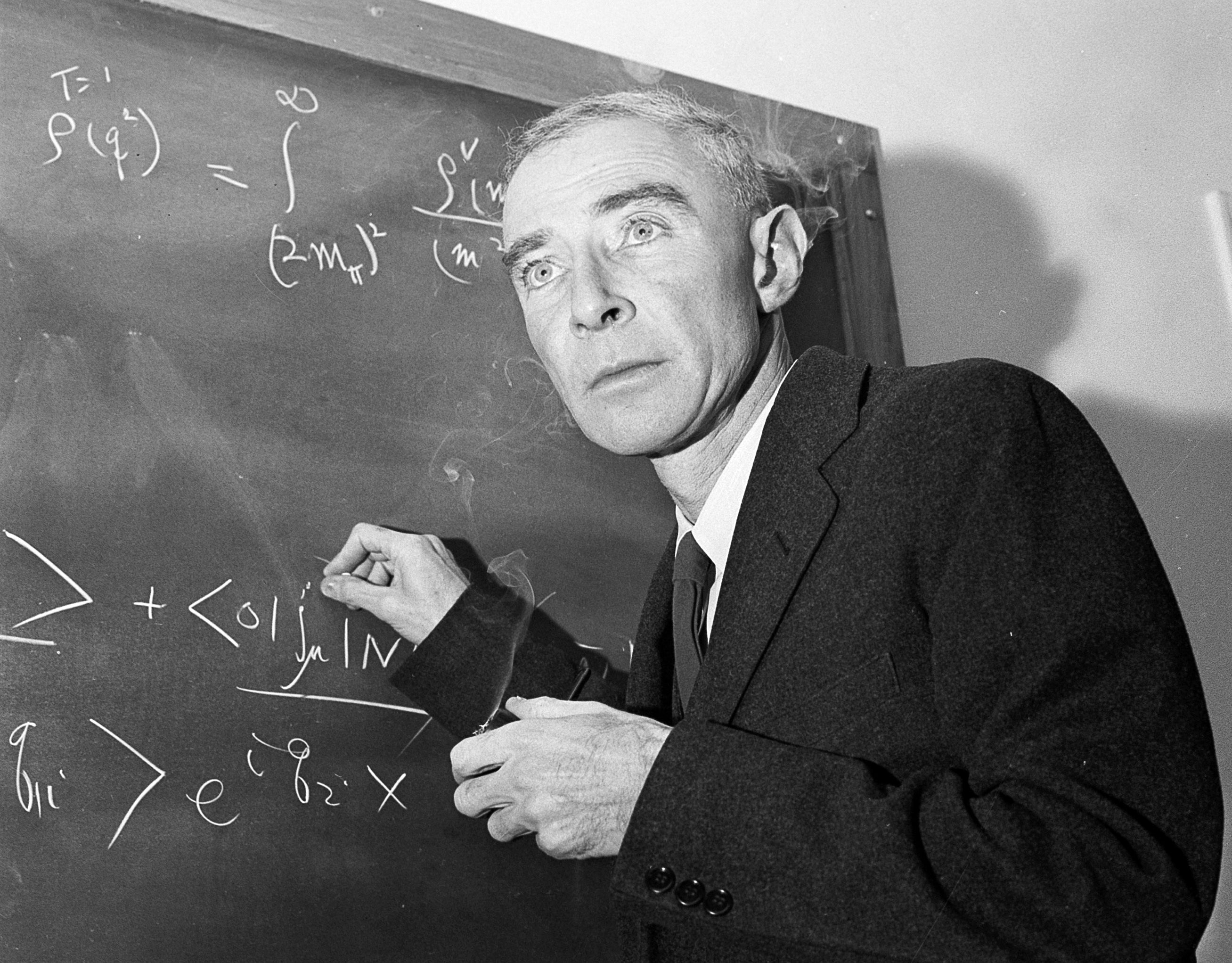
Often cited as the primary inventor, Oppenheimer was the scientific director of the Los Alamos Laboratory in New Mexico. His genius lay in his ability to coordinate hundreds of disparate scientific minds—including many Nobel laureates—toward a single goal: a deliverable weapon. He navigated the technical challenges of "critical mass" and the complex physics of detonation.
Enrico Fermi
If Oppenheimer was the architect, Fermi was the master builder of the engine. In December 1942, at the University of Chicago, Fermi and his team achieved the first controlled, self-sustaining nuclear chain reaction in a "pile" of graphite and uranium. This experiment proved that a nuclear bomb was physically possible and that the energy of the atom could be harnessed.
The Industrial Pillars: Oak Ridge and Hanford
To build a bomb, the United States needed fuel: either Uranium-235 or Plutonium-239. Neither was easy to produce in large quantities. This required the invention of entirely new industrial processes.
At Oak Ridge, Tennessee, Ernest Lawrence (inventor of the cyclotron) and other scientists developed electromagnetic and gaseous diffusion methods to separate the rare U-235 isotope from more common U-238. This was a monumental task that required some of the largest buildings in the world.
Simultaneously, at the Hanford Site in Washington State, massive nuclear reactors were built to "transmute" uranium into plutonium. This work was led by the DuPont corporation and based on the research of Glenn Seaborg, who discovered plutonium in 1940. Without these massive industrial sites, the theoretical designs from Los Alamos would have remained mere drawings.
Comparison of Key Figures and Their Contributions
The following table outlines the primary individuals whose work was essential to the invention and successful deployment of the first nuclear weapons.
| Individual | Primary Role | Key Contribution |
|---|---|---|
| Leo Szilard | Theoretical Physicist | Conceived the nuclear chain reaction; co-wrote the Einstein-Szilard letter. |
| Enrico Fermi | Experimental Physicist | Created the first controlled nuclear reactor (Chicago Pile-1). |
| J. Robert Oppenheimer | Director, Los Alamos | Oversaw the design and assembly of the "Little Boy" and "Fat Man" bombs. |
| Lise Meitner | Physicist | Co-discovered and explained the physics of nuclear fission. |
| Leslie Groves | Lieutenant General, USA | Directed the Manhattan Project's logistics and industrial scale. |
| Ernest Lawrence | Physicist | Developed the electromagnetic process for uranium enrichment. |
| Edward Teller | Theoretical Physicist | Key member of the Los Alamos team; later known as the "father of the H-bomb." |
Solving the Engineering Puzzle: Gun-Type vs. Implosion
The invention of the bomb involved solving two distinct engineering problems, resulting in two different designs.
- The Gun-Type Design (Little Boy): This was a relatively straightforward design where one piece of uranium-235 was fired into another to reach critical mass. It was so reliable that scientists didn't even feel the need to test it before use.
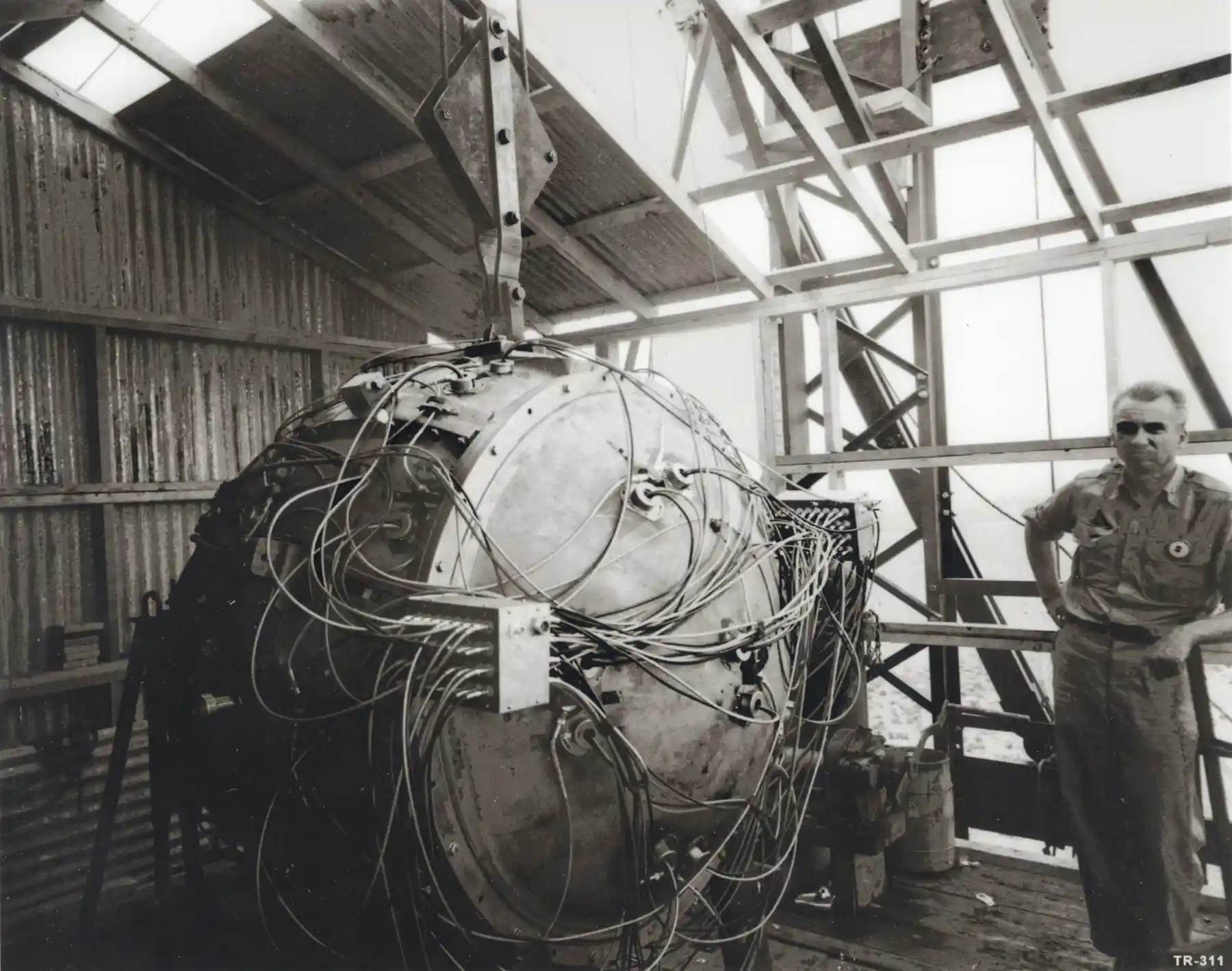
- The Implosion Design (Fat Man): Plutonium could not be used in a gun-type device because it would "pre-detonate." Scientists had to invent a method of surrounding a plutonium core with high explosives that would fire simultaneously, compressing the core inward. This required the invention of "explosive lenses" and precise timing mechanisms, a feat led by researchers like Seth Neddermeyer and George Kistiakowsky.
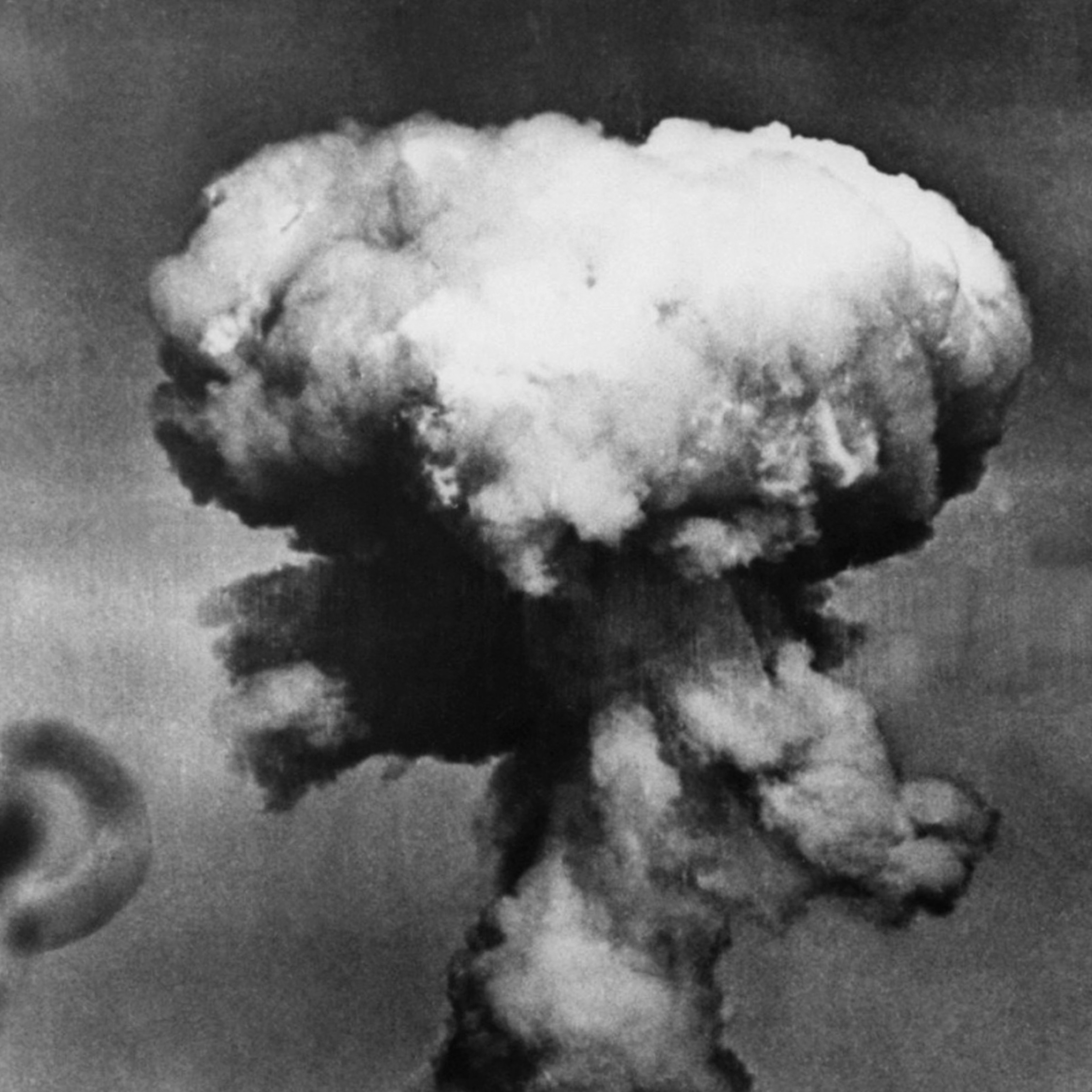
The successful test of the implosion device at the Trinity Site on July 16, 1945, marked the true moment the nuclear bomb was "invented" and proven functional.
The Global Context and the British Contribution
It is a common misconception that the nuclear bomb was a purely American invention. The MAUD Committee in the United Kingdom had already concluded by 1941 that an atomic bomb was feasible. Through the Quebec Agreement, the UK and Canada merged their research (known as "Tube Alloys") with the American effort. British scientists, including James Chadwick (who discovered the neutron) and the controversial Klaus Fuchs (who later passed secrets to the Soviet Union), were instrumental at Los Alamos.
Ethical Legacy and the "Father" of the Bomb
The title of "inventor" carries a heavy burden. Following the use of the weapons on Hiroshima and Nagasaki in August 1945, many of the creators experienced profound moral conflict. Oppenheimer famously quoted the Bhagavad Gita: "Now I am become Death, the destroyer of worlds."
Leo Szilard, who initially pushed for the bomb's development out of fear of Hitler, later campaigned against its use and for international control of nuclear energy. The invention changed the nature of global conflict forever, ushering in the era of "Mutually Assured Destruction" (MAD).
Frequently Asked Questions
Did Albert Einstein help build the nuclear bomb?
No, Einstein did not work on the Manhattan Project and was denied security clearance due to his political leanings. His contribution was theoretical (E=mc²) and political (the letter to Roosevelt), but he did not participate in the engineering or design of the weapon.
Who was the primary head of the Manhattan Project?
General Leslie Groves was the military head and overall director of the Manhattan Project, while J. Robert Oppenheimer was the scientific head of the Los Alamos laboratory where the bomb was designed.
Was the atomic bomb invented to stop Japan or Germany?
The project was originally initiated due to fears that Nazi Germany was developing a nuclear weapon. However, by the time the bomb was completed in 1945, Germany had surrendered, and the focus shifted to ending the war with Japan.
What is the difference between an atomic bomb and a hydrogen bomb?
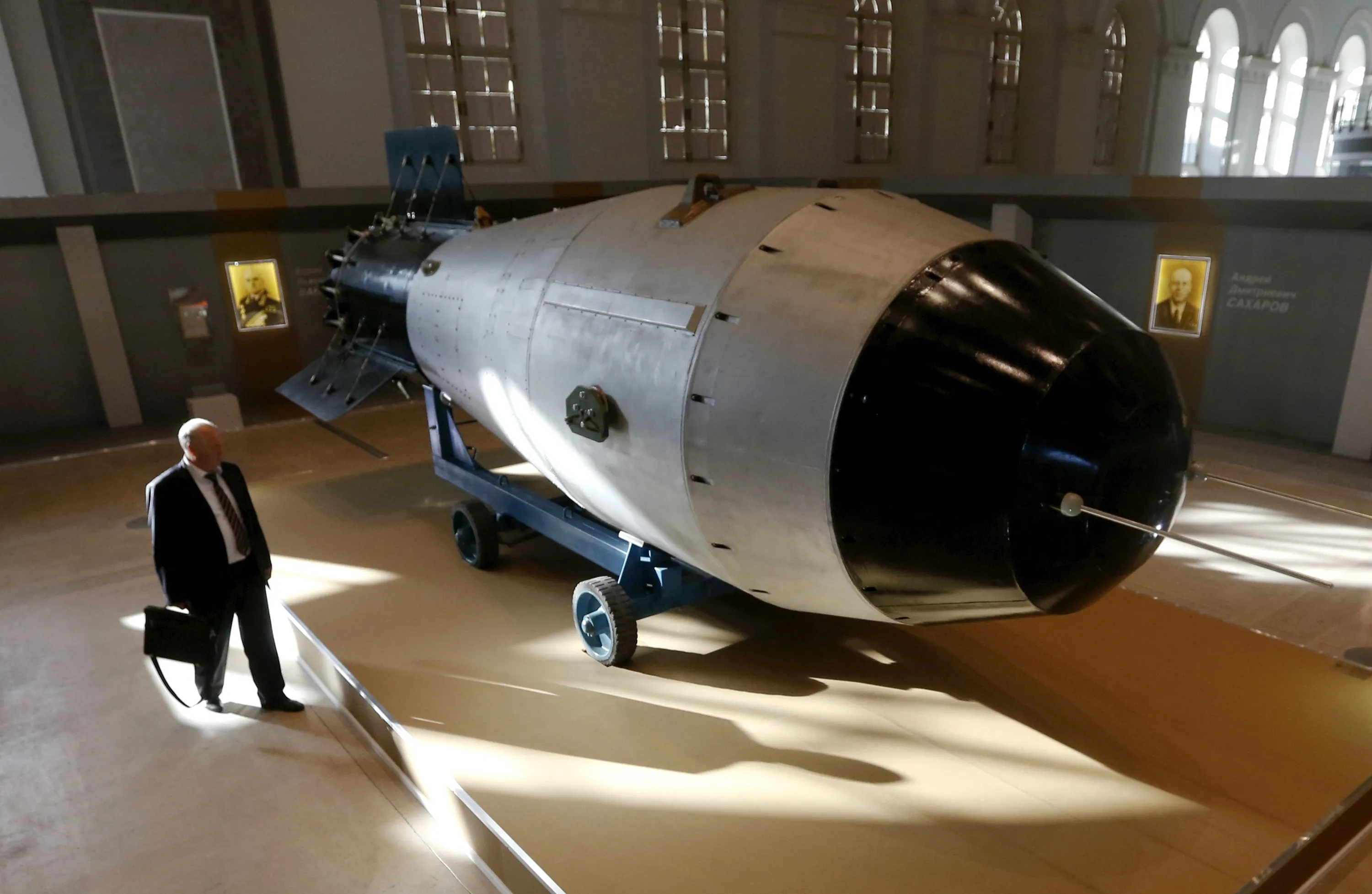
The original atomic bombs (fission bombs) work by splitting heavy atoms like uranium or plutonium. The hydrogen bomb (fusion bomb), developed in the early 1950s by figures like Edward Teller and Stanislaw Ulam, works by fusing light atoms like hydrogen, creating an explosion many times more powerful than a fission bomb.
How many people worked on the invention of the bomb?
At its peak, the Manhattan Project employed approximately 130,000 people. Most of these workers, however, did not know they were working on a bomb; the project was shrouded in extreme secrecy.
Summary and Next Steps
The invention of the nuclear bomb was a watershed moment in human history, facilitated by a global network of scientists and an unprecedented mobilization of American industrial power. While J. Robert Oppenheimer remains the most recognizable figure in this history, the "invention" was a collective achievement of physics, chemistry, engineering, and military logistics.
For those interested in the technical evolution of nuclear science post-1945, researching the Atomic Energy Act of 1946 or the history of the International Atomic Energy Agency (IAEA) provides critical insight into how the world attempted to manage the technology after its invention. Exploring the biographies of Enrico Fermi or Lise Meitner can also offer a deeper understanding of the specific scientific breakthroughs that made the atomic age possible.
Image Gallery