Understanding the California Sales Tax Percent: What the Rates Mean for Residents and Businesses
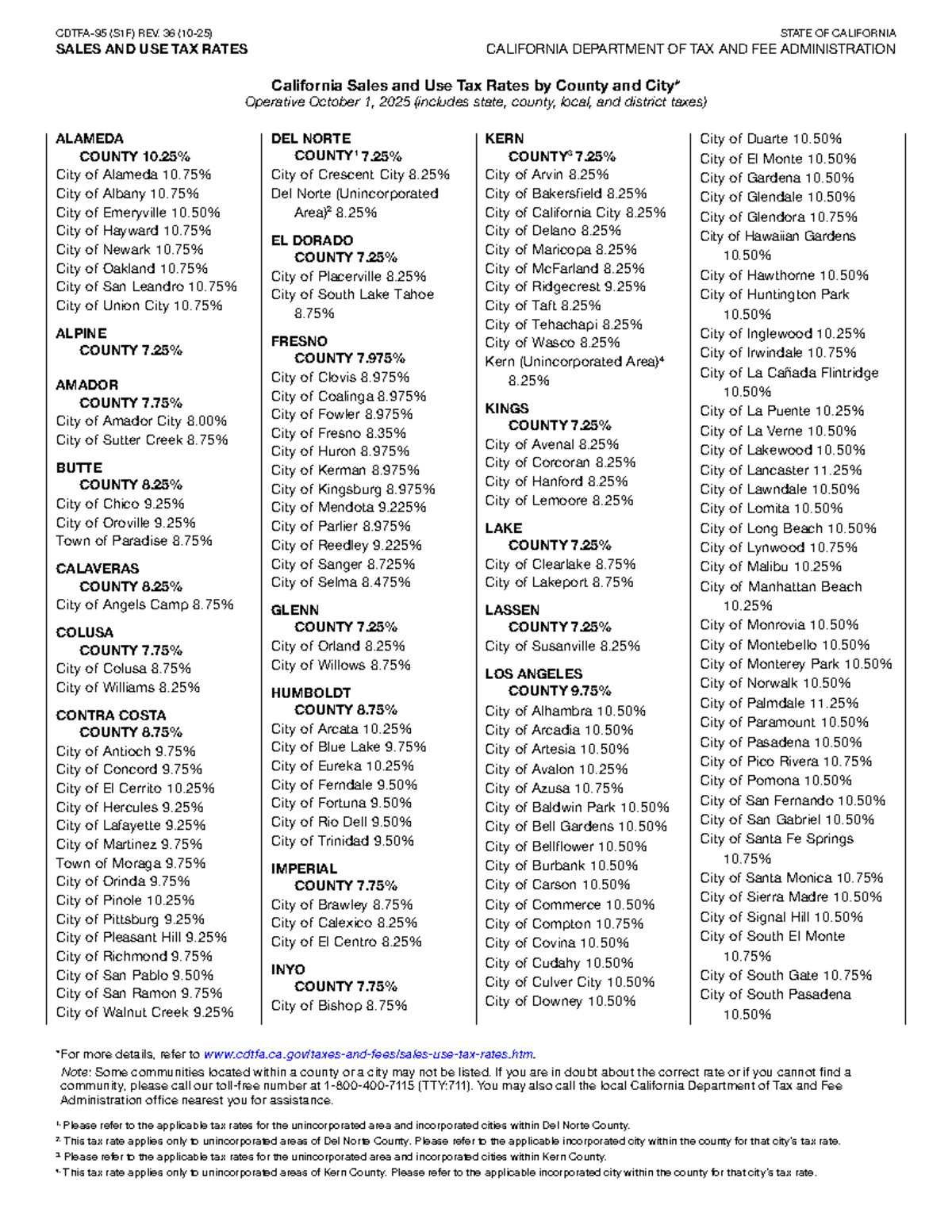
As of 2026, the California statewide base sales tax rate remains 7.25%. However, the actual amount you pay at the register is often higher—ranging from 7.75% to 10.75%—due to additional local district taxes. This combined rate applies...
As of 2026, the California statewide base sales tax rate remains 7.25%. However, the actual amount you pay at the register is often higher—ranging from 7.75% to 10.75%—due to additional local district taxes. This combined rate applies to most retail purchases of tangible goods and determines the final cost of living and doing business within the state.
Contents
The California sales tax system is one of the most complex in the United States. Unlike states with a flat, universal rate, California utilizes a tiered structure that combines state-level requirements with voter-approved local initiatives. For consumers, this means the price of a laptop or a car can fluctuate significantly simply by crossing a city or county line. For businesses, it necessitates a deep understanding of jurisdictional boundaries to ensure compliance and avoid costly audits.
The Components of the 7.25% State Base Rate
When you see a sales tax charge on a receipt, the first 7.25% is the floor established by state law. It is important to realize that this 7.25% is not a single levy; rather, it is a combination of several different funds allocated to various levels of government.
The State General Fund (6.00%)
The largest portion of the base rate, totaling 6.00%, goes directly to the State of California's General Fund. This money supports broad state operations, including higher education, health and human services, and the state correctional system. Within this 6.00%, a small percentage is technically diverted to specific "Realignment" funds that help counties manage programs formerly handled by the state.
The Local Revenue Fund (0.25%)
A 0.25% portion is dedicated to the Local Revenue Fund. This was established during the 1991 state-local program realignment to help counties fund mental health, social services, and health programs.
Public Safety Fund (0.50%)
Authorized by Proposition 172 in 1993, this 0.50% is a permanent tax dedicated specifically to local public safety services. This includes funding for police departments, fire protection, and sheriffs' offices across California's 58 counties.
The Bradley-Burns Local Tax (0.50%)
The final 0.50% of the base rate is the "Local" portion under the Bradley-Burns Uniform Local Sales and Use Tax Law. This money is returned to the city or county where the sale occurred to fund general municipal services like road maintenance and libraries.
Why Your Local Rate Is Likely Higher
While 7.25% is the minimum, very few Californians actually pay that exact amount. Most residents live in "special districts" where voters have approved additional taxes for specific local needs. These are officially known as District Taxes (Transactions and Use Taxes).
District Taxes and Voter Approval
Under California law, local jurisdictions—such as cities, counties, or special transportation authorities—can propose tax increases to fund local projects. These typically require voter approval. Common reasons for these increases include:
- Transportation Projects: Funding for light rail (like BART or LA Metro), highway expansions, and pothole repairs.
- Public Education: Supplementary funding for local school districts or community colleges.
- Environmental Protection: Initiatives for open space preservation or wastewater management.
- General Services: Enhancing local parks, libraries, or emergency response times.
Each district tax is usually added in increments of 0.125% to 1.00%. In highly populated areas like Los Angeles County or the San Francisco Bay Area, multiple district taxes often overlap, pushing the total rate toward the 10% threshold.
The "Destination-Based" Rule
For residents and businesses, what the California sales tax percent means for you often depends on where the item is delivered. California is generally a destination-based state for district taxes. If you live in a city with a 9.5% tax rate and order a television online, you should be charged 9.5%, even if the warehouse shipping the item is located in a rural area with only a 7.25% rate.
What is Taxable vs. Non-Taxable in California?
Understanding the percentage is only half the battle; knowing what that percentage applies to is equally vital for budgeting. California taxes "tangible personal property," which is defined as any physical item that can be seen, weighed, measured, felt, or touched.
Taxable Goods
Standard retail items are almost always taxable. This includes:
- Clothing and footwear.
- Furniture and home appliances.
- Electronics and toys.
- Motor vehicles, aircraft, and boats.
- Books and physical media.
Common Exemptions
To mitigate the regressive nature of sales tax, California exempts several categories of essential items.
- Groceries: Most food products for human consumption are exempt. However, this does not include "heated" food (like a rotisserie chicken or hot pizza) or food consumed on the premises of a restaurant.
- Prescription Medicine: Medications prescribed by a physician and dispensed by a pharmacist are generally exempt.
- Medical Devices: Certain prosthetics and wheelchairs are exempt, though many other over-the-counter medical supplies are not.
- Utilities: Sales of natural gas, electricity, and water delivered through mains or pipes are typically exempt from sales tax (though they may be subject to other franchise fees).
The "Service" Grey Area
California generally does not tax services unless the service is an integral part of the sale of a physical product. For example, if you hire a consultant for advice, there is no sales tax. However, if that consultant produces a physical printed report that you purchase, the entire cost of the labor to produce that report might become taxable.
Comparing Sales Tax Rates Across Major California Cities
Because rates vary by street address, staying updated on your local jurisdiction is essential. The following table illustrates the combined sales and use tax rates for several major California hubs as of 2026.
| City | County | Total Combined Rate (2026) |
|---|---|---|
| Los Angeles | Los Angeles | 9.50% |
| San Francisco | San Francisco | 8.625% |
| San Diego | San Diego | 7.75% |
| San Jose | Santa Clara | 9.375% |
| Sacramento | Sacramento | 8.75% |
| Long Beach | Los Angeles | 10.25% |
| Oakland | Alameda | 10.25% |
| Fresno | Fresno | 8.35% |
| Santa Monica | Los Angeles | 10.25% |
| Bakersfield | Kern | 8.25% |
Note: Rates are subject to change based on local elections held in late 2025 or early 2026. Always verify the specific rate for your zip code using the California Department of Tax and Fee Administration (CDTFA) rate lookup tool.
The Concept of Use Tax: The "Hidden" Counterpart
Many people believe that if they buy an item from an out-of-state retailer who doesn't charge tax, they have "saved" the sales tax amount. In reality, California law mandates the payment of Use Tax.
Use tax is a companion to sales tax. It applies to the storage, use, or consumption of tangible personal property in California. If you purchase an item from a seller outside of California for use inside the state and the seller does not collect the tax, the obligation shifts to you, the consumer.
Why Use Tax Matters for You
For the individual consumer, use tax is most commonly reported on the California state income tax return (Form 540). Failing to report large out-of-state purchases—such as jewelry, electronics, or furniture—can lead to penalties and interest if the CDTFA discovers the transaction.
The rate for use tax is exactly the same as the sales tax rate in your home jurisdiction. If you live in a city with a 9% sales tax, your use tax liability is also 9%.
How Sales Tax Affects Your Purchasing Power
The California sales tax percent directly impacts your effective purchasing power. Because the tax is added at the point of sale rather than being included in the sticker price, consumers must manually factor it into their budgets.
For example, if you are purchasing a new vehicle in a city like Long Beach where the rate is 10.25%, a $40,000 car actually costs $44,100 before registration fees and documentation costs. This "hidden" 10.25% can be the difference between an affordable monthly payment and a financial strain.
Impact on Businesses
For business owners, the California sales tax percent means a significant administrative burden. Businesses are responsible for:
- Collecting the correct amount: Using the wrong rate based on a customer's address can lead to under-collection, which the business must then pay out of pocket during an audit.
- Filing Returns: Depending on sales volume, businesses must file sales tax returns monthly, quarterly, or annually with the CDTFA.
- Resale Certificates: Businesses that buy goods for the purpose of reselling them must provide a valid California Resale Certificate to their suppliers to avoid paying sales tax on the initial purchase.
Common Mistakes and Misconceptions
- Assuming Zip Codes Determine the Rate: Zip codes often span multiple jurisdictions. Two houses in the same zip code could have different sales tax rates if one is within city limits and the other is in an unincorporated county area.
- Thinking "Tax-Free" Holidays Exist: Unlike some other states, California does not typically offer "sales tax holidays" for back-to-school shopping or emergency supplies.
- Ignoring the "Marketplace Facilitator" Rules: Since 2019, platforms like Amazon, eBay, and Etsy are required to collect California sales tax on behalf of their third-party sellers. This means that even "small" online purchases are now almost always taxed at your local rate.
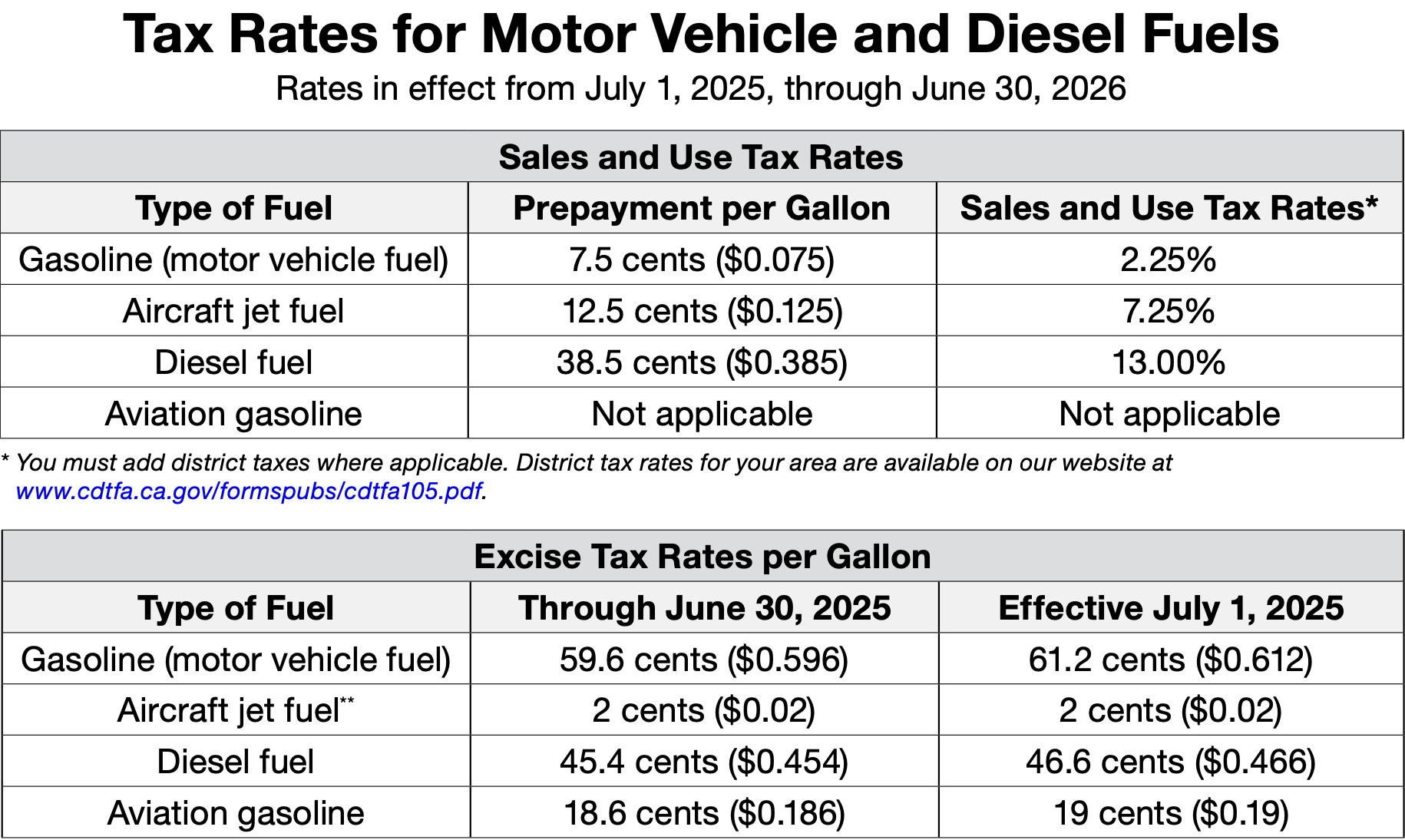
- Mixing up Sales Tax and Excise Tax: When you buy gasoline, the price includes a "per gallon" excise tax in addition to the sales tax percentage. This is why fuel prices in California remain significantly higher than the national average.
Frequently Asked Questions
Is labor taxable in California?
Generally, no. Pure labor, such as repairing a car or providing legal advice, is not subject to sales tax. However, if the labor results in the creation of a new physical product (fabrication labor), it is usually taxable. For instance, if you pay a tailor to make a suit from scratch, the labor cost is part of the taxable sale.
Do I pay sales tax on used items?
Yes. Sales tax applies to the retail sale of used goods, such as items bought at an antique store or a used car dealership. However, "occasional sales" (like a garage sale held once a year) are typically exempt, provided the seller is not engaged in a regular business of selling those items.
How do I check the exact sales tax rate for my address?
The most reliable method is to use the CDTFA’s "Find a Sales and Use Tax Rate" interactive map. By entering your exact street address, the tool identifies every overlapping district and provides the final combined percentage.
Are digital goods like software downloads taxable?
As of 2026, California generally does not tax "electronically delivered" products if no tangible personal property (like a disc or thumb drive) is transferred. This includes digital music, movies, and software downloads. However, this is a frequently debated topic in the legislature, so users should monitor updates from the California Legislative Information portal.
Practical Next Steps for Residents
To navigate the California sales tax landscape effectively in 2026, you should take a proactive approach to your finances. If you are planning a major purchase, such as a vehicle or home theater system, check the rates of neighboring cities; a short drive could potentially save you hundreds of dollars in district taxes, provided the item is not being delivered to your home.
For business owners, ensure your Point of Sale (POS) system is integrated with a geolocation-based tax calculation service. Relying on manual entries or zip-code tables is no longer sufficient given the frequency of local rate changes. By staying informed through official resources like the CDTFA, you can ensure that you are neither overpaying as a consumer nor falling out of compliance as a seller.
Image Gallery