Why the Lucid Arizona Plant Matters for Buyers
The Lucid Arizona manufacturing plant, known as AMP-1 (Advanced Manufacturing Plant-1), is critical for buyers because it ensures rigorous quality control through vertical integration, enables faster delivery timelines for custom confi...
The Lucid Arizona manufacturing plant, known as AMP-1 (Advanced Manufacturing Plant-1), is critical for buyers because it ensures rigorous quality control through vertical integration, enables faster delivery timelines for custom configurations, and secures the brand’s long-term viability. By centralizing production in Casa Grande, Lucid maintains direct oversight of its proprietary powertrain and battery technology, resulting in a more reliable and higher-performing luxury electric vehicle.
Contents
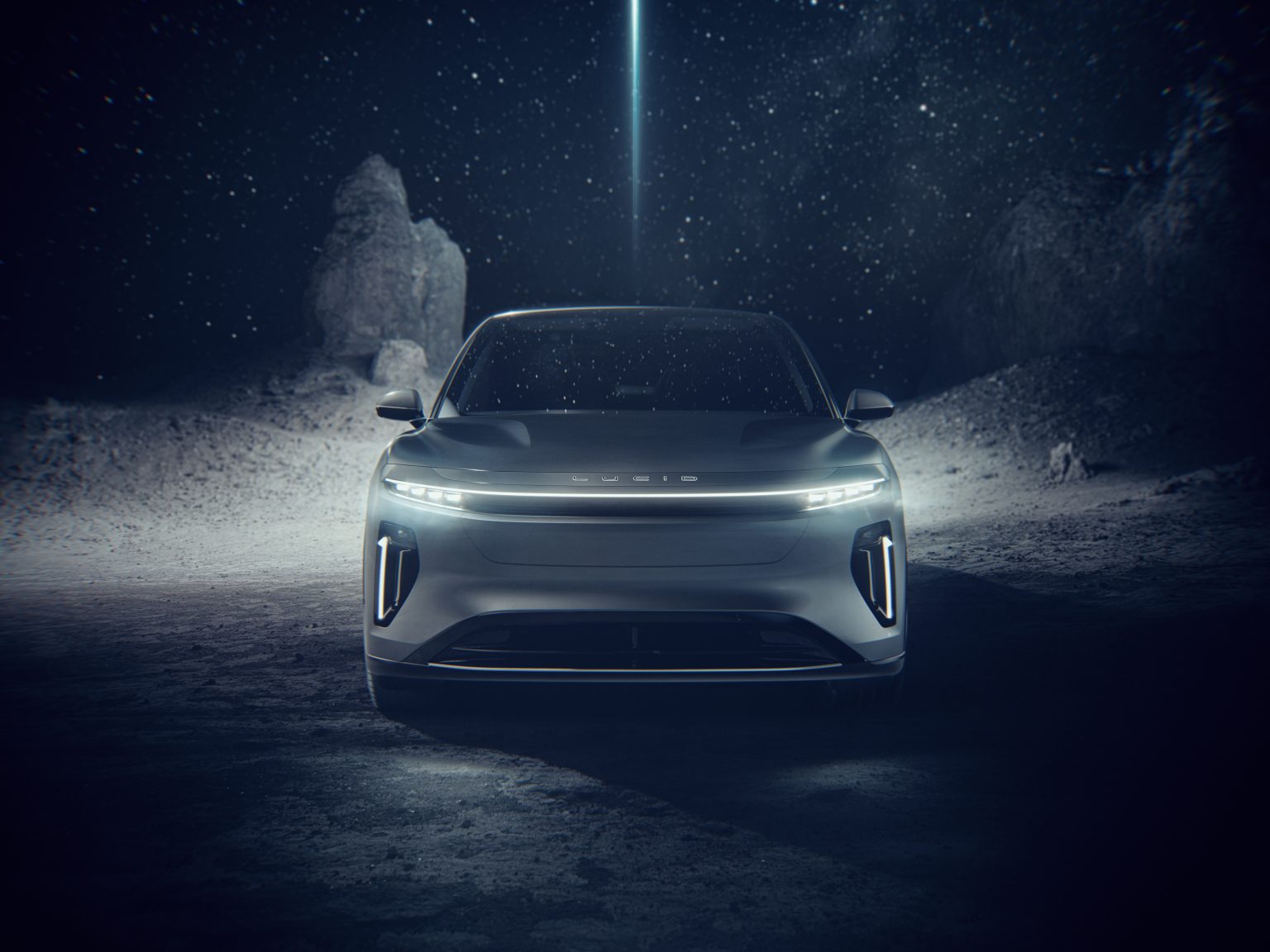
For the modern luxury electric vehicle (EV) consumer, the "where" and "how" of a car's birth are just as important as its 0-60 mph time. In 2026, as the EV market reaches a point of high-saturation and intense competition, the Lucid Arizona plant stands as a symbol of domestic manufacturing prowess. For those considering a Lucid Air or the widely popular Gravity SUV, understanding the mechanics of AMP-1 is essential to understanding the value of the vehicle itself.
Vertical Integration: The Quality Assurance Advantage
Unlike many traditional automotive manufacturers that rely on a fragmented network of third-party suppliers for core components, Lucid Motors utilizes a philosophy of vertical integration. At the heart of this strategy is the Arizona plant. For a buyer, this translates to a vehicle where the motor, inverter, transmission, and battery pack are all designed, engineered, and manufactured in-house.
When a manufacturer controls the entire production stack, the feedback loop between the engineering team and the factory floor is instantaneous. In 2026, this means that any software-defined hardware improvements or minor engineering tweaks can be implemented on the production line in days rather than months. For the buyer, this results in a vehicle with fewer "legacy" bugs and a higher degree of hardware-software synergy.
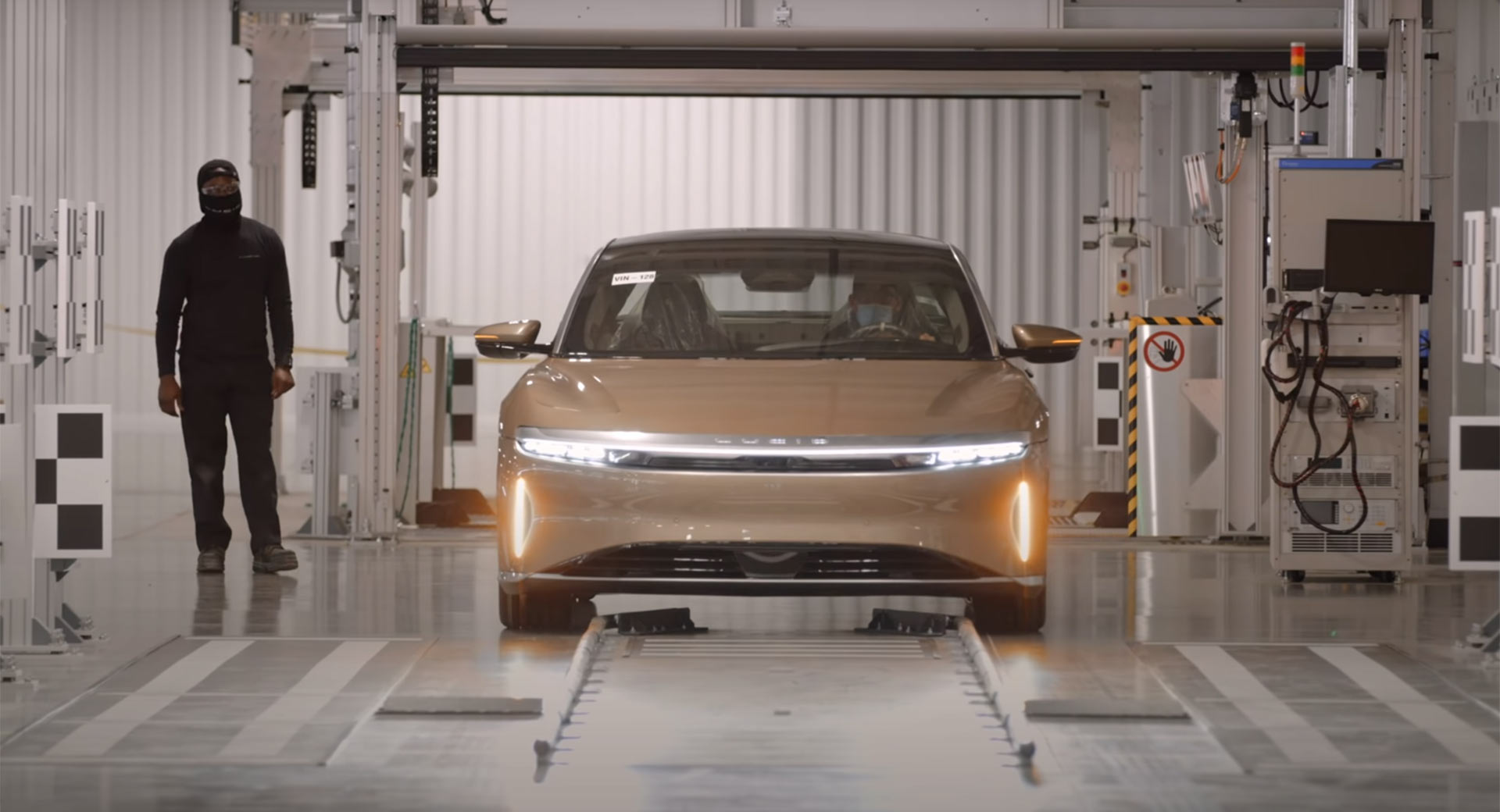
The Arizona facility houses the "Body-in-White" shop, where advanced structural adhesives and self-piercing rivets are used to create the industry-leading rigidity found in Lucid vehicles. Because this process is handled on-site under strict Lucid-monitored tolerances, owners experience fewer rattles, better crash safety ratings, and the precise handling characteristics that have become the brand's hallmark.
Scaling Production: Impact on Delivery and Customization
In the early years of EV startups, "production hell" was a common phrase that often meant multi-year wait times for customers. By 2026, the expansion of AMP-1 into its third and fourth phases has fundamentally changed the buyer experience regarding lead times.
The Arizona plant was designed as the first purpose-built EV factory in North America. This "greenfield" approach allowed Lucid to design the factory layout for maximum efficiency rather than retrofitting an old internal combustion engine (ICE) plant. For a buyer, this efficiency manifests in two ways:
- Customization Velocity: Buyers can use the Lucid Studio to configure highly specific interior themes (such as Santa Cruz or Tahoe) and expect their bespoke vehicle to enter production within a predictable window. The plant’s modular assembly lines allow for rapid switching between the Air sedan and the Gravity SUV without significant downtime.
- Inventory Stability: With the 2026 production capacity reaching full tilt, Lucid has moved away from the "reservation" model to an "inventory and order" model. This means buyers are no longer waiting for years; they are participating in a mature retail experience supported by a high-output domestic facility.
Comparative Production Evolution at AMP-1
The following table illustrates the growth of the Arizona facility and how it has evolved to meet buyer demands from its inception through 2026.
| Feature | Phase 1 (2021-2022) | Phase 2 (2023-2024) | Phase 3/4 (Current 2026) |
|---|---|---|---|
| Footprint | ~1 Million Sq. Ft. | ~3 Million Sq. Ft. | ~5 Million+ Sq. Ft. |
| Primary Models | Lucid Air (Dream/Grand Touring) | Air (All Trims), Gravity (Pilot) | Air, Gravity, Mid-size Platform |
| Annual Capacity | ~10,000 - 30,000 units | ~90,000 units | ~150,000+ units |
| Key Focus | Proof of Concept & Luxury | Scale & SUV Introduction | High-Volume & Global Export |
| Buyer Impact | Long wait times; High price | Moderate wait; Gravity launch | Fast delivery; Diverse price points |
The "Made in America" Factor and Financial Incentives
The location of the plant in Casa Grande, Arizona, is not merely a logistical choice; it is a strategic one that directly affects the buyer's wallet. Under the evolving landscape of federal and state incentives in 2026, domestic production remains a cornerstone of eligibility for various tax credits and rebates.
For many buyers, the ability to claim the Clean Vehicle Credit (or its 2026 equivalent) depends heavily on the "North American Assembly" requirement. Because Lucid builds its vehicles in Arizona, it satisfies one of the primary hurdles for these incentives. Furthermore, the proximity to a domestic supply chain for battery assembly—another key component of the Arizona plant's ecosystem—helps Lucid meet the "critical minerals" and "battery component" percentages required for buyers to receive the full financial benefit of federal subsidies.
Beyond direct credits, the Arizona plant supports the local economy by providing thousands of high-tech manufacturing jobs. For the socially conscious buyer, knowing that their vehicle was produced in a facility that adheres to stringent U.S. labor and environmental standards provides an added layer of brand loyalty and peace of mind.
Sustainability and Long-Term Reliability
Arizona’s climate presents unique challenges and opportunities for automotive manufacturing. Lucid has utilized the Arizona plant to showcase its commitment to sustainability, which in turn affects the long-term reliability of the product. The plant incorporates advanced water recycling systems and is increasingly powered by the region's abundant solar energy.
From a technical standpoint, the Arizona plant includes a state-of-the-art paint shop that uses a "dry" scrubber system. For the buyer, this means the exterior finish of a Lucid vehicle is not only environmentally friendlier but also applied in a zero-dust environment that ensures the longevity of the clear coat and paint depth. In a 2026 luxury market where resale value is heavily tied to the physical condition of the car, this "factory-gate" quality is a tangible asset.
Additionally, the plant serves as the central hub for Lucid’s remanufacturing and parts distribution. If a vehicle requires a significant hardware repair, the proximity of the Arizona plant to the majority of the North American market ensures that genuine, factory-certified parts are available quickly. This reduces the "total cost of ownership" by minimizing the time a vehicle spends in a service center.
Integration with the Saudi Arabian Facility (AMP-2)
While the focus remains on Arizona, it is important for buyers to understand how the Arizona plant interacts with Lucid's international facility in Saudi Arabia (AMP-2). As of 2026, the Arizona plant remains the "mother factory." This means that all primary engineering breakthroughs and production methodologies are perfected in Arizona before being exported.
For North American buyers, this is a significant advantage. Your vehicle is coming from the primary site where the most experienced technicians and engineers are located. The Arizona plant acts as the global R&D manufacturing hub, ensuring that the car parked in your driveway is at the absolute cutting edge of what Lucid is capable of producing.
Future-Proofing: The Mid-size Platform and Beyond
As we move through 2026, the Arizona plant is already being prepared for the next generation of Lucid vehicles: the mid-size platform. For current buyers of the Air or Gravity, the plant's expansion for these high-volume models is a positive signal of brand health.
When a manufacturer invests billions into a physical site like AMP-1, they are signaling to the buyer that they are here for the long haul. This "physical permanence" is vital in the EV world, where many startups have vanished, leaving owners with "orphaned" vehicles that have no service or parts support. The sprawling 5-million-square-foot facility in Casa Grande is a physical guarantee that your 2026 Lucid will be supported for the duration of its lifespan.
FAQ
Does the Arizona plant build its own batteries?
The Arizona plant features a dedicated battery module and pack assembly line. While Lucid sources the raw lithium-ion cells from partners, the sophisticated thermal management systems, battery management software, and the structural "Leap" battery pack architecture are all assembled within the AMP-1 facility to ensure maximum safety and energy density.
Can I tour the Lucid Arizona plant if I am a buyer?
Lucid occasionally offers "Owner Experience" days and plant tours for confirmed buyers and fleet partners. These tours allow owners to see the General Assembly line and the high-tech robotics used in the Body-in-White shop. It is recommended to contact your local Lucid Studio or your delivery advisor for the current 2026 tour schedule.
How does the plant ensure the quality of the Lucid Gravity's air suspension?
Every Lucid Gravity SUV produced in the Arizona plant undergoes a rigorous "end-of-line" testing sequence. This includes a high-pressure leak test of the air suspension system and a calibration sequence on a specialized "four-post" shaker rig that simulates thousands of miles of road wear to ensure the dampers and airbags meet factory specifications before shipping.
Will the Arizona plant produce the rumored Lucid pickup truck?
While Lucid has focused primarily on the Air, Gravity, and the upcoming mid-size platform as of 2026, the modular design of the AMP-1 facility allows for future expansion. Any future models, including potential pickups or vans, would likely be integrated into the Arizona facility’s expanded footprint to leverage the existing domestic supply chain.
How does domestic production affect the software updates in my car?
While software is developed at Lucid’s HQ in California, the "Digital Twin" of every car is recorded at the Arizona plant during assembly. This allows the software team to know the exact hardware configuration of your specific vehicle (down to the sensor revision levels), ensuring that Over-the-Air (OTA) updates are perfectly calibrated for the components installed at the factory.
Final Recommendation
For any prospective buyer in 2026, the Lucid Arizona plant should be viewed as a foundational component of the vehicle's value proposition. It is the engine behind the brand’s quality control, the reason for its financial incentive eligibility, and the proof of its long-term stability. When purchasing a Lucid, you are not just buying a car; you are buying into a sophisticated American manufacturing ecosystem that prioritizes vertical integration and engineering precision. If you are on the fence, visiting a Lucid Studio to learn more about the "Casa Grande" origin of these vehicles is a logical and rewarding next step.
Image Gallery