Understanding the Washington Life Insurance Tax: What Policyholders and Estates Need to Know
Life insurance proceeds are generally celebrated as income-tax-free financial safety nets for beneficiaries, but navigating state-level tax implications, premium taxes, and estate tax considerations in Washington requires a closer exam...
Life insurance proceeds are generally celebrated as income-tax-free financial safety nets for beneficiaries, but navigating state-level tax implications, premium taxes, and estate tax considerations in Washington requires a closer examination of local statutes. While the federal tax code provides broad exemptions for life insurance death benefits, Washington state tax laws introduce unique nuances regarding premium taxes, high-net-worth estate dynamics, and potential future legislative changes that policyholders must evaluate carefully.
Contents
The Foundation of Life Insurance Taxation in Washington
At the federal level, Section 101(a) of the Internal Revenue Code stipulates that gross income does not include amounts received under a life insurance contract, if paid by reason of the death of the insured. Washington state largely aligns with this principle for standard personal income tax purposes, as the state does not levy a traditional personal income tax on wages, capital gains, or life insurance payouts. However, the absence of a personal income tax does not mean life insurance contracts exist in a tax-free vacuum.
Insurance companies operating within the state are subject to a state premium tax, which is indirectly factored into the cost of policy pricing. Furthermore, Washington's distinct tax landscape includes a high-earner capital gains excise tax and a progressive estate tax. These mechanisms can indirectly intersect with complex life insurance strategies, such as Irrevocable Life Insurance Trusts (ILITs), designed to protect family wealth from state-level wealth transfer taxes.
Premium Taxes on Insurance Carriers
The most direct tax levied on life insurance in Washington is the premium tax imposed upon insurance companies rather than the individual consumer. Regulated by the Washington Office of the Insurance Commissioner (OIC) under Revised Code of Washington (RCW) Title 48, insurance carriers authorized to sell policies in the state must pay a tax on the gross premiums collected.
- Standard Premium Tax Rate: Life insurers typically pay a tax rate of approximately 2% on net premiums received from Washington residents.
- Pass-Through Nature: While insurance companies remit this tax directly to the state department of revenue, the cost is embedded into the administrative and operational expenses of the policies, influencing the overall pricing of term, whole life, and universal life products sold in the state.
- Retaliatory Taxation: Washington applies retaliatory tax provisions against out-of-state insurers if their home states impose higher tax burdens on Washington-domiciled companies, ensuring a balanced regulatory environment for the national insurance market.
Life Insurance Proceeds and Washington State Estate Taxes
For most average policyholders, the death benefit paid to a named beneficiary is entirely free from state income and estate taxes. However, high-net-worth individuals must contend with Washington’s estate tax, which is entirely separate from the federal estate tax threshold and features a much lower exclusion amount.
Under Washington law, the state levies a graduated estate tax on the transfer of property of a resident decedent (or non-resident owning real or tangible personal property in Washington). Life insurance proceeds are frequently misunderstood in this context. Although a death benefit is income-tax-free, it is included in the gross estate of the insured for estate tax purposes if the insured retained "incidents of ownership" in the policy at the time of death.
What Constitutes Incidents of Ownership?
According to the Internal Revenue Service and Washington estate tax evaluation standards, incidents of ownership include any right of the insured or their estate to the economic benefits of the policy. This encompasses:
- The right to change beneficiaries.
- The right to surrender or cancel the policy.
- The right to assign the policy or revoke an assignment.
- The right to pledge the policy for a loan or borrow against its cash surrender value.
If the decedent held any of these powers, the entire value of the life insurance death benefit is brought back into the taxable estate. Given that Washington's estate tax exemption threshold is significantly lower than the federal threshold, crossing this limit can trigger state tax rates ranging from 10% to 20%.
| Tax Category | Washington State Rule | Federal Comparison |
|---|---|---|
| Personal Income Tax on Death Benefit | None (No state income tax) | None (Exempt under IRC § 101(a)) |
| Premium Tax on Carriers | ~2% on gross premiums collected | Varies by state of domicile |
| Estate Tax Inclusion | Included if insured held incidents of ownership | Included if ownership tests are met |
| State Estate Tax Threshold | Significantly lower than federal limits (indexed annually) | Multi-million dollar unified exclusion |
Mitigating Estate Tax Exposure Using an ILIT
Because the Washington estate tax captures life insurance proceeds owned outright by the decedent, advanced estate planning frequently utilizes an Irrevocable Life Insurance Trust (ILIT). An ILIT is a specialized legal entity established to own and manage a life insurance policy independently of the insured’s personal estate.
By transferring ownership of the policy—or funding a new trust to purchase the policy directly—the insured relinquishes all incidents of ownership. When the insured passes away, the death benefit is paid directly to the trust for the benefit of the heirs rather than into the personal estate.
- Estate Tax Exclusion: Because the insured no longer owned the policy, the proceeds are excluded from the taxable estate for both Washington state and federal estate tax calculations.
- Trust Administration: The trustee manages the distribution of funds according to the strict legal terms established in the trust document, providing asset protection and structured financial support for beneficiaries.
- Gift Tax Considerations: Funding the premium payments for an ILIT typically involves making annual exclusion gifts to the trust using Crummey powers, requiring careful coordination with federal gift tax reporting rules.
Cash Value Growth and Access in Washington
Permanent life insurance policies—such as whole life, universal life, and indexed universal life—accumulate cash value alongside the death benefit. Understanding how this internal growth is taxed provides clarity for policyholders utilizing cash value as an asset vehicle.
Tax-Deferred Growth
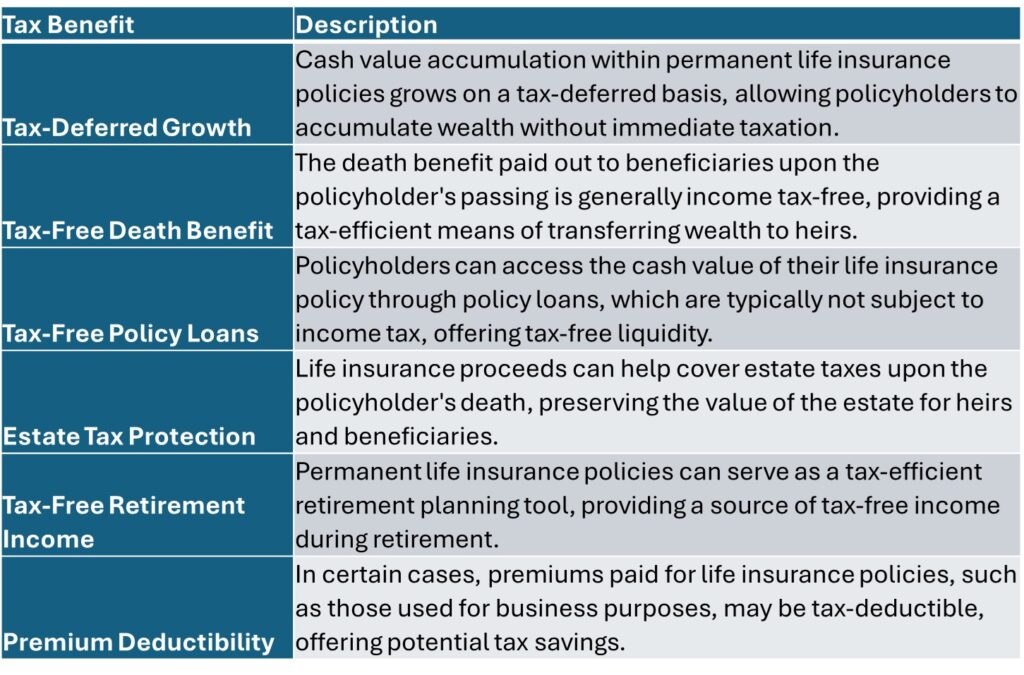
During the accumulation phase, the interest, dividends, and capital gains credited to the cash value grow on a tax-deferred basis. Policyholders do not pay annual state or federal income taxes on the internal earnings of the policy, provided the contract meets the definition of a life insurance contract under federal tax guidelines (IRC Section 7702).
Policy Loans and Withdrawals
Policyholders frequently access cash value during life via withdrawals up to the cost basis (premiums paid) or policy loans.
- Withdrawals: Withdrawals are generally treated on a First-In, First-Out (FIFO) basis up to the total amount of premiums paid, meaning they are income-tax-free.
- Loans: Loans taken against the cash value are not considered taxable income, as they are technically financial advances secured by the policy's cash value. However, if the policy lapses or is surrendered while a loan balance is outstanding, the accumulated loan amount can be treated as taxable gain in that tax year.
Frequently Asked Questions
Do beneficiaries have to pay state income tax on life insurance payouts in Washington?
No. Washington state does not levy a personal income tax, and life insurance death benefits received by a beneficiary are exempt from state income taxation, mirroring federal tax laws.
Are life insurance policies subject to the Washington state estate tax?
Yes, if the insured person retained incidents of ownership in the policy at the time of their death. Even though the payout is income-tax-free, the total value of the death benefit is added to the decedent's gross estate value for state estate tax calculation purposes.
Can an ILIT completely eliminate Washington estate tax on a policy?
When properly structured and executed, an Irrevocable Life Insurance Trust removes the life insurance proceeds from the insured's taxable estate, effectively shielding the death benefit from Washington state estate taxes. Professional legal and financial counsel is necessary to establish and fund an ILIT correctly.
How does Washington tax the cash value growth of a permanent life insurance policy?
Cash value growth inside a qualifying life insurance policy accumulates on a tax-deferred basis. Policyholders do not pay annual income taxes on internal interest or dividends credited to the policy's cash account.
Are insurance companies taxed on life insurance in Washington?
Yes. Insurance carriers licensed to do business in Washington pay a premium tax of approximately 2% on the gross premiums collected from residents within the state. This tax is managed at the corporate level and is factored into overall product pricing.
Next Actions for Policyholders
Evaluating the intersection of life insurance and Washington state tax laws requires a comprehensive review of your total estate size, policy ownership structure, and long-term financial goals. If your total net estate approaches or exceeds Washington's state estate tax threshold, consult with a licensed estate planning attorney or certified financial planner in Washington to determine whether restructuring your policies into an irrevocable trust or updating your beneficiary designations is necessary to protect your family's financial legacy.
Image Gallery