Why the Tax Break on 529 Plans Matters for Education Savings in 2026
The tax break on 529 plans is essential because it provides a triple-tax advantage: contributions grow tax-deferred, withdrawals for qualified education expenses are federal tax-free, and many states offer immediate tax deductions or c...
The tax break on 529 plans is essential because it provides a triple-tax advantage: contributions grow tax-deferred, withdrawals for qualified education expenses are federal tax-free, and many states offer immediate tax deductions or credits. These incentives significantly increase the net purchasing power of education savings compared to taxable investment accounts.
Contents
The Triple Tax Advantage: Why 529 Plans Stand Alone
As we navigate the financial landscape of 2026, the cost of higher education and specialized vocational training continues to outpace general inflation. In this environment, the efficiency of your savings vehicle is just as important as the performance of the underlying investments. The 529 plan, legally known as a "qualified tuition program" under Section 529 of the Internal Revenue Code, remains the most potent tool for families due to its unique tax structure.
The primary reason the tax break matters is the elimination of "tax drag." In a standard taxable brokerage account, investors are required to pay taxes on interest, dividends, and realized capital gains annually. Over a 10- to 20-year horizon, these recurring tax payments significantly erode the compounding effect of the portfolio. Inside a 529 plan, every dollar of growth remains in the account to be reinvested. When the funds are eventually withdrawn for qualified education expenses, the entire gain—which may represent a substantial portion of the total account value—is exempt from federal income tax.
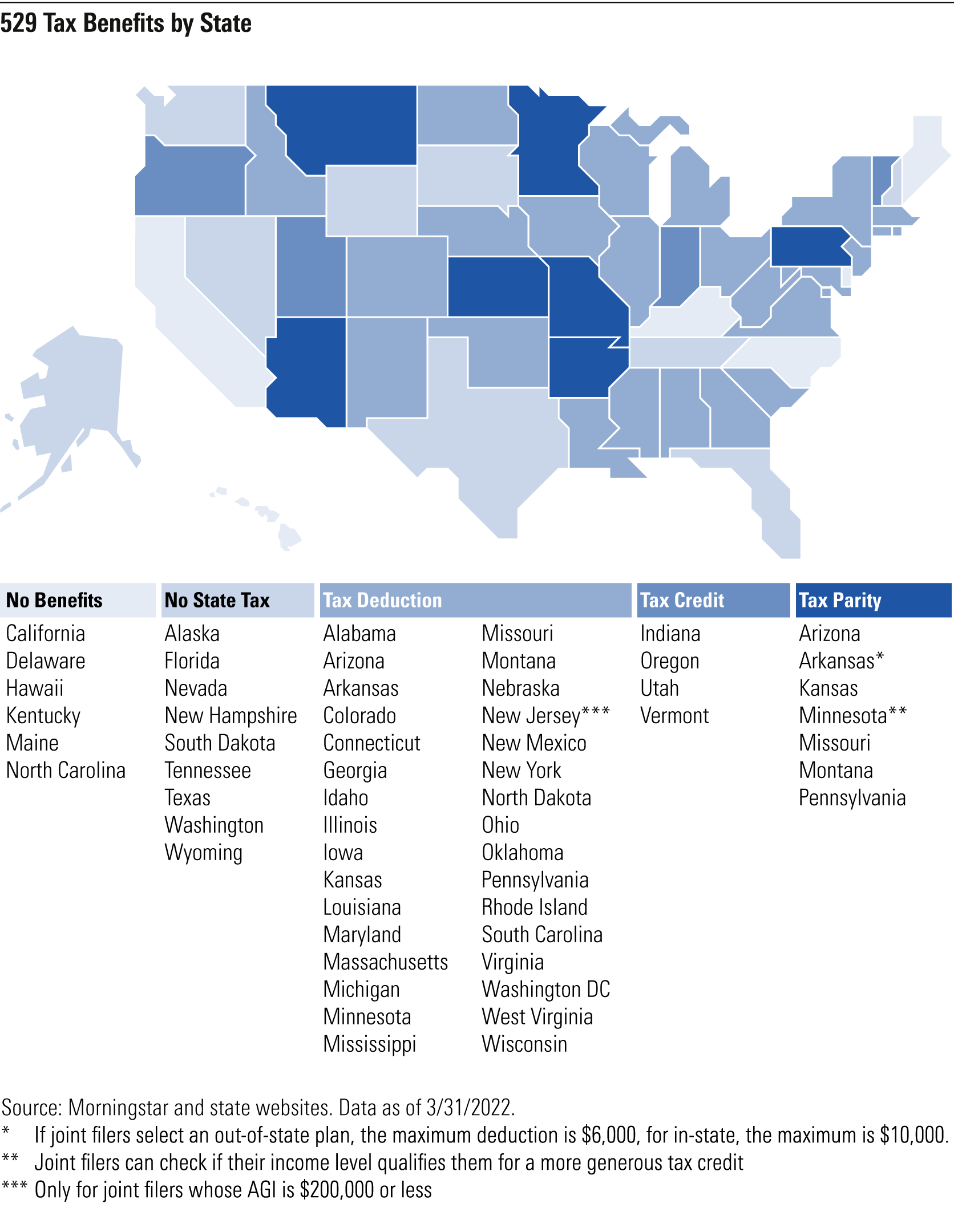
Furthermore, the state-level tax break offers an immediate "return on investment." As of 2026, the majority of U.S. states provide either a tax deduction or a tax credit for 529 contributions. For families in high-tax jurisdictions, this can represent an instant 5% to 10% savings on the money they were already planning to set aside for education. This immediate benefit reduces the effective cost of the contribution, making it easier for families to meet their long-term savings goals.
Expanding the Definition of Qualified Expenses
Historically, 529 plans were viewed strictly as "college savings" accounts. However, legislative shifts over the past decade have fundamentally changed why the tax break matters by expanding the utility of the funds. In 2026, these accounts are versatile "education" accounts rather than just "university" accounts.
Qualified distributions now cover a wide range of costs that directly impact a student’s ability to succeed. These include:
- Tuition and Fees: Applicable to undergraduate and graduate programs at accredited institutions.
- Room and Board: For students enrolled at least half-time, including off-campus housing costs up to the university's "cost of attendance" figures.
- Technology and Tools: Computers, peripheral equipment, software, and internet access required for enrollment.
- K-12 Tuition: Up to $10,000 per year, per beneficiary, can be used for tuition at public, private, or religious elementary and secondary schools.
- Apprenticeship Programs: Fees, books, supplies, and equipment required for participation in a program registered and certified with the Secretary of Labor.
- Student Loan Repayment: A lifetime limit of $10,000 per beneficiary (and an additional $10,000 for each of the beneficiary’s siblings) can be used to pay down qualified education loans.
This expanded scope ensures that the tax-advantaged growth can be utilized regardless of the beneficiary's specific career path, whether they pursue a traditional four-year degree, a technical certification, or an apprenticeship in the trades.
The SECURE 2.0 Impact: Eliminating the Fear of Overfunding
One of the most significant reasons the 529 tax break matters in 2026 is the solution to the "trapped funds" problem. For years, parents hesitated to overfund 529 plans, fearing that if a child received a scholarship or chose not to attend college, the earnings would be subject to income tax and a 10% penalty upon withdrawal.
The SECURE 2.0 Act introduced a revolutionary provision that allows for the rollover of leftover 529 funds into a Roth IRA for the beneficiary. This effectively transforms an education savings vehicle into a retirement starter kit. By 2026, this provision has become a cornerstone of multi-generational wealth planning.
However, this tax-advantaged transition is subject to specific requirements:
- The 15-Year Rule: The 529 account must have been open for at least 15 years before a rollover can occur.
- The 5-Year Rule: Any contributions (and the earnings on those contributions) made within the last five years are ineligible for rollover.
- Lifetime Limit: There is a $35,000 lifetime cap per beneficiary for these rollovers.
- Annual Limits: The amount rolled over in a single year cannot exceed the annual Roth IRA contribution limit (minus any other contributions made to the Roth IRA for that year).
This change ensures that the tax breaks enjoyed during the accumulation phase are not "lost" if the funds aren't used for education, provided the family follows these regulatory guardrails.
Comparative Analysis: 529 Plans vs. Alternatives
To understand why the 529 tax break is superior, it is helpful to compare it against other common savings methods. While Roth IRAs and taxable accounts offer flexibility, they often lack the combined benefits of high contribution limits and specific state tax incentives.
| Feature | 529 Education Plan | Taxable Brokerage Account | Roth IRA (for Education) |
|---|---|---|---|
| Federal Tax on Growth | Tax-free for qualified use | Taxed (Capital Gains/Dividends) | Tax-free |
| State Tax Deduction | Available in most states | None | None |
| Contribution Limits | High (often $500k+ per state) | No limit | Low (Annual IRS limit) |
| Penalty-Free Use | Education only* | Any purpose | Contributions any time; Earnings for education only |
| FAFSA Impact | Minimal (Parent-owned) | Significant (Student-owned) | Not reported as asset |
| Rollover Potential | Yes (to Roth IRA up to $35k) | N/A | N/A |
*Non-qualified 529 withdrawals are subject to tax and a 10% penalty on earnings.
Strategic Wealth Transfer and Estate Planning
Beyond the immediate tax savings for tuition, 529 plans serve as a sophisticated estate planning tool. The IRS allows for "superfunding," a practice where a donor can make five years' worth of gift-tax-excluded contributions in a single year. In 2026, this remains a preferred method for grandparents to remove significant assets from their taxable estate while maintaining a level of control over how the money is eventually spent.
Because the account owner retains the right to change the beneficiary or even revoke the account (subject to taxes and penalties), the 529 plan offers a unique blend of asset removal for estate tax purposes and flexibility for the donor. Additionally, as of 2024 and continuing through 2026, changes to the FAFSA (Free Application for Federal Student Aid) mean that distributions from grandparent-owned 529 plans no longer count as student income, which previously could have reduced financial aid eligibility by up to 50%. This makes the tax-free growth even more valuable for families looking to balance self-funding with potential institutional aid.
Common Pitfalls: When the Tax Break Doesn't Apply
While the benefits are substantial, the tax break on 529 plans is conditional. It is vital to understand the "Qualified Distribution" rules to avoid unintentional tax liabilities.
A common mistake occurs when families withdraw funds for "non-qualified" expenses. These often include:
- Transportation Costs: Gas, airfare, and parking for commuting to campus are generally not qualified.
- Health Insurance: Even if required by the university, insurance premiums are usually not a qualified 529 expense.
- Consumer Electronics for Personal Use: While a computer needed for classes is covered, a gaming console or a smartphone generally is not.
If funds are used for these items, the earnings portion of the withdrawal is taxed as ordinary income and hit with a 10% federal penalty. However, there are exceptions to the penalty (but not the income tax). If a beneficiary receives a scholarship, the account owner can withdraw an amount equal to the scholarship value penalty-free, though they will still owe income tax on the earnings portion of that withdrawal.
Maximizing the 529 Tax Advantage in 2026
To get the most out of the 529 tax break, investors should prioritize the following actions:
- Check for State Parity: While most states offer a deduction only for their own state's plan, some states (known as "parity states") allow a deduction for contributions to any state's 529 plan. Check your local regulations to ensure you aren't sacrificing a superior investment portfolio for a tax break that you could have received elsewhere.
- Automate for Compounding: The tax-free growth benefit scales with time. Even small, automated monthly contributions benefit from the lack of annual tax drag, leading to a significantly larger terminal value.
- Coordinate with Education Credits: Be careful not to "double-dip." You cannot use 529 funds for the same expenses used to claim the American Opportunity Tax Credit (AOTC) or the Lifetime Learning Credit (LLC). Strategic families use cash or loans for the first $4,000 of tuition to maximize the AOTC and then use the 529 plan for the remainder.
- Monitor the 15-Year Clock: If you are considering the Roth IRA rollover option for a child, ensure the account is opened early—even with a small amount—to start the 15-year holding period requirement.
FAQ
Can I use a 529 plan for a trade school or vocational program?
Yes. As long as the institution is an "eligible educational institution" that participates in the federal student aid program (has an OPE ID), 529 funds can be used tax-free. This includes many vocational schools, technical institutes, and even some foreign universities.
What happens to the tax break if the beneficiary doesn't go to college?
You have several options to preserve the tax advantages. You can change the beneficiary to a "member of the family" of the original beneficiary (including siblings, parents, or even cousins) without tax consequences. Alternatively, you can use the SECURE 2.0 rollover provision to move up to $35,000 into a Roth IRA for the beneficiary, provided the account has been open for 15 years.
Is there a limit to how much I can contribute to a 529 plan?
There are no annual contribution limits set by the IRS, but there are aggregate limits set by each state, which typically range from $235,000 to over $550,000 per beneficiary. However, contributions are considered gifts for tax purposes. In 2026, you must stay within the annual gift tax exclusion (or use the five-year superfunding rule) to avoid reporting the gift to the IRS.
Do I lose the state tax break if I move to another state?
Generally, no. You typically do not have to "repay" a state tax deduction if you move out of that state, though you will no longer be able to claim a deduction in your old state. Your new state may or may not offer a deduction for contributions to your existing plan, depending on their "parity" laws.
Summary of Next Actions
To capitalize on the 529 tax break, first verify your state's specific tax incentive—whether it is a deduction or a credit—and the maximum amount eligible. If your state offers a "parity" deduction, compare your home state's plan against top-rated national plans for lower fees and better investment options. Finally, establish your account as early as possible to maximize the tax-deferred compounding period and to start the 15-year clock for potential Roth IRA rollovers.
Image Gallery