Adam Jones Musician Overview: Career, Gear, Style, and Visual Legacy
Adam Jones is an American musician, songwriter, and visual artist best known as the lead guitarist and visual director for the progressive metal band Tool. Renowned for his atmospheric Drop-D riffs, complex time signatures, and relianc...
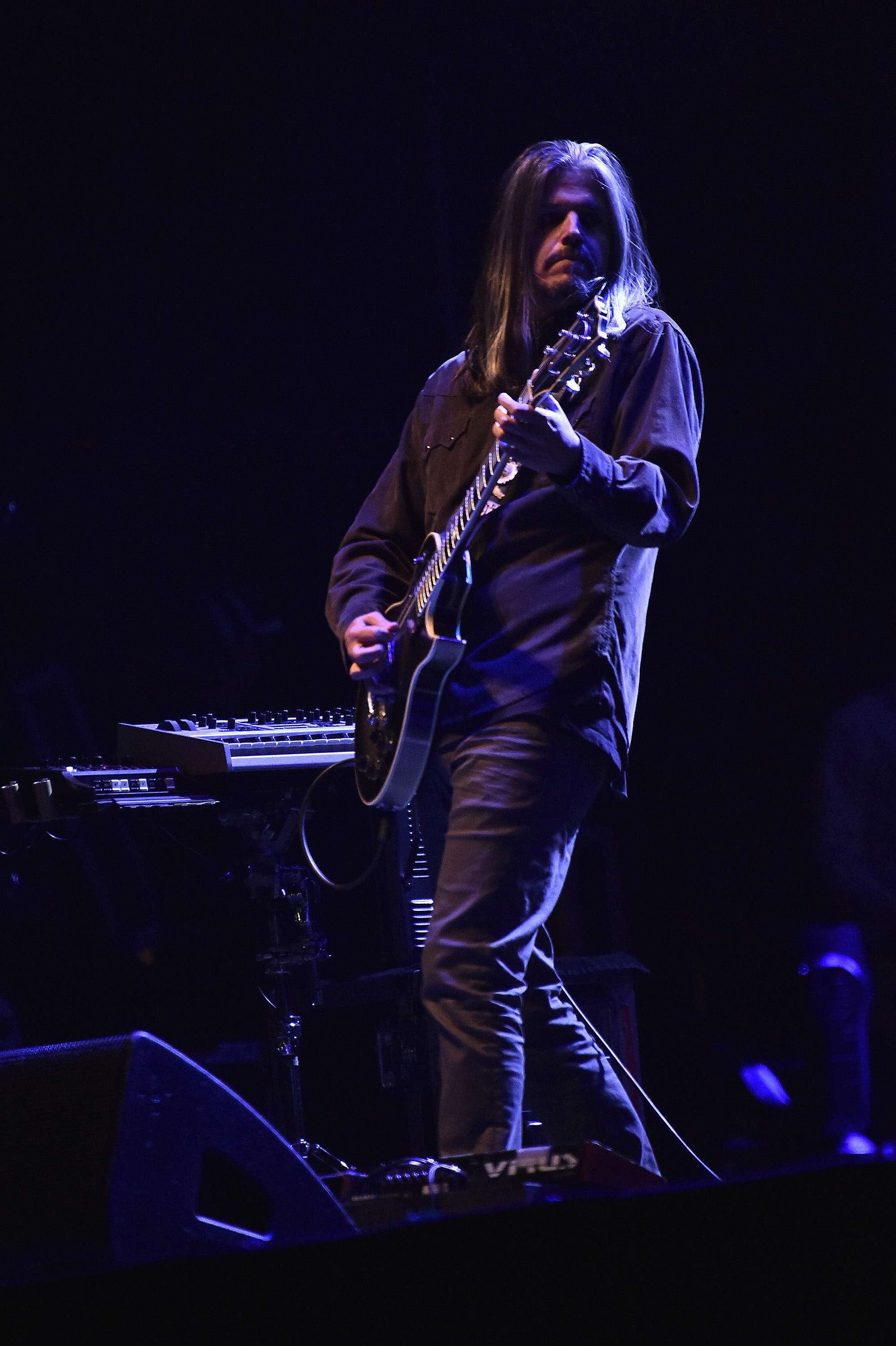
Adam Jones is an American musician, songwriter, and visual artist best known as the lead guitarist and visual director for the progressive metal band Tool. Renowned for his atmospheric Drop-D riffs, complex time signatures, and reliance on vintage Gibson Les Paul Silverburst guitars, Jones has shaped modern heavy music while directing the band's award-winning stop-motion music videos and surreal album artwork.
Contents
Early Life, Musical Beginnings, and Hollywood FX Career
Adam Thomas Jones was born on February 20, 1965, in Park Ridge, Illinois, and raised in Libertyville, Illinois. His early musical education began not with the electric guitar, but with classical instrumentation. As a child, Jones studied violin and later played upright bass in his school orchestra. This foundational training in classical music structure, dynamics, and pitch relationships deeply influenced his later approach to rock composition.
During his high school years, Jones transitioned to electric guitar and formed the garage band Electric Sheep alongside guitarist Tom Morello, who later achieved international fame with Rage Against the Machine and Audioslave. While Morello pursued political science and music in academia, Jones focused on fine arts, sculpture, and film design.
In the late 1980s, Jones relocated to Los Angeles to attend the Hollywood Makeup Academy and the Make-up Designory. His mastery of sculpting, clay animation, and special makeup effects quickly earned him positions at premier Hollywood creature shops, including Stan Winston Studio, Rick Baker's makeup studio, and Industrial Light & Magic.
Before committing full-time to Tool, Jones spent several years working as a special effects artist, sculptor, and designer on major motion pictures:
- Jurassic Park (1993): Contributed to character sculpting and animatronic dinosaur construction under Stan Winston.
- Terminator 2: Judgment Day (1991): Worked on practical makeup effects and puppet fabrication for the T-1000 and damage sequences.
- Predator 2 (1990): Assisted with creature design, molding, and latex body suit creation.
- Ghostbusters II (1989): Fabricated prop elements and creature masks.
- Dances with Wolves (1990): Designed realistic prosthetic animatronic animals used during dangerous stunt sequences.
This background in visual storytelling and special effects directly informed Tool's aesthetic identity, distinguishing the group from their contemporary 1990s alternative metal peers.
Formation of Tool and Sonic Evolution
In 1989, Jones met vocalist Maynard James Keenan through a mutual acquaintance in Los Angeles. Impressed by Keenan’s vocal demo tape, Jones suggested forming a band. They recruited neighbor Danny Carey to play drums and bassist Paul D'Amour to complete the line-up. Tool was officially formed in 1990.
- Tool (Formed 1990)
- Adam Jones (Guitar / Visuals)
- Maynard James Keenan (Vocals)
- Danny Carey (Drums)
- Paul D'Amour / Justin Chancellor
Tool released their debut EP, Opiate, in 1992, followed by their full-length breakthrough Undertow in 1993. The album featured dark, heavy guitar arrangements that contrasted with the prevailing grunge sound of the Pacific Northwest. Following the departure of D'Amour in 1995, British bassist Justin Chancellor joined the band, establishing the definitive instrumental trio of Jones, Chancellor, and Carey.
The release of Ænima (1996) marked a turning point toward progressive rock, avant-garde arrangements, and spiritual themes. Jones shifted his guitar playing from straightforward heavy riffs to multi-layered, rhythmic textures. Tool cemented their reputation as progressive metal titans with subsequent releases:
- Lateralus (2001): Featured intricate song structures based on mathematical sequences (such as the Fibonacci sequence in the title track), microtonal guitar bends, and seamless transitions.
- 10,000 Days (2006): Demonstrated deep pedalboard manipulation, talk-box solos, and extended ambient guitar passages.
- Fear Inoculum (2019): Highlighted 10-plus-minute compositions where Jones balanced soaring melodic leads with syncopated percussive riffing, earning the band a Grammy Award for Best Metal Performance for the track "7empest."
Throughout Tool’s catalog, Jones’s guitar work serves as both a melodic lead and a rhythmic anchor, working in tight unison with Carey's polyrhythmic drumming and Chancellor's drive-heavy basslines.
Signature Gear, Guitar Rig, and Amplification
Adam Jones’s guitar tone is one of the most recognizable in modern rock. Rather than relying on high-gain digital modeling or software emulation, Jones achieves his thick, articulate sound through vintage vacuum-tube amplifiers, specific electric guitar constructions, and a carefully balanced analog pedalboard.
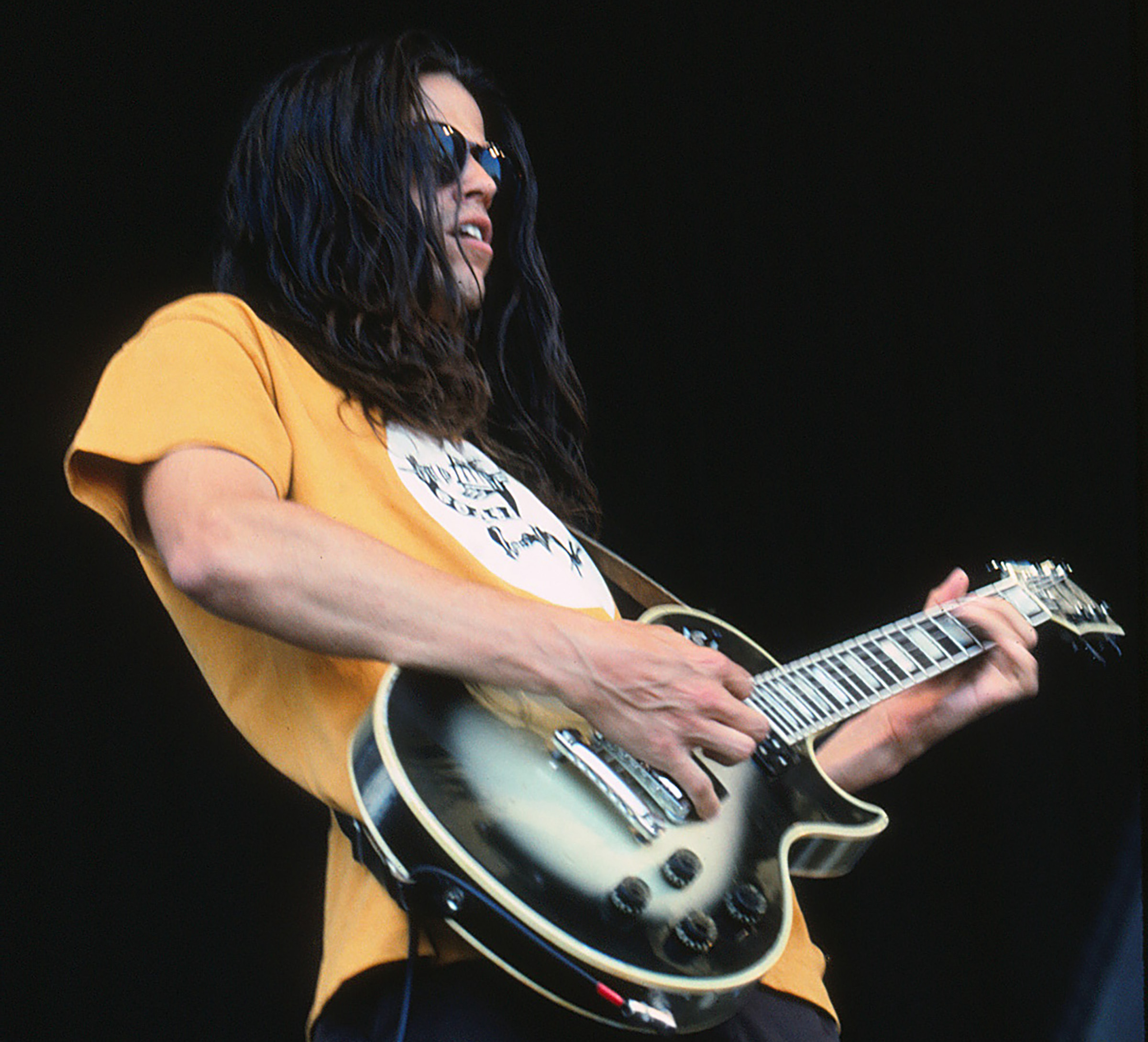
The 1979 Gibson Les Paul Custom Silverburst
The foundation of Jones’s tone is the vintage 1979 Gibson Les Paul Custom Silverburst. Gibson introduced the Silverburst finish in the late 1970s, applying a teardrop spray pattern containing metallic silver powder paint over a mahogany body and maple top. Over decades, the nitrocellulose lacquer and bronze particles in the paint oxidize, shifting the color to a greenish-bronze hue and subtly altering the wood's resonance.
Jones favors these specific guitars due to their heavy mass, thick neck profiles, and high sustain. He keeps his original 1979 models equipped with an original Gibson Norlin-era neck pickup in the neck position and a high-output Seymour Duncan SH-6b Distortion humbucker in the bridge position.
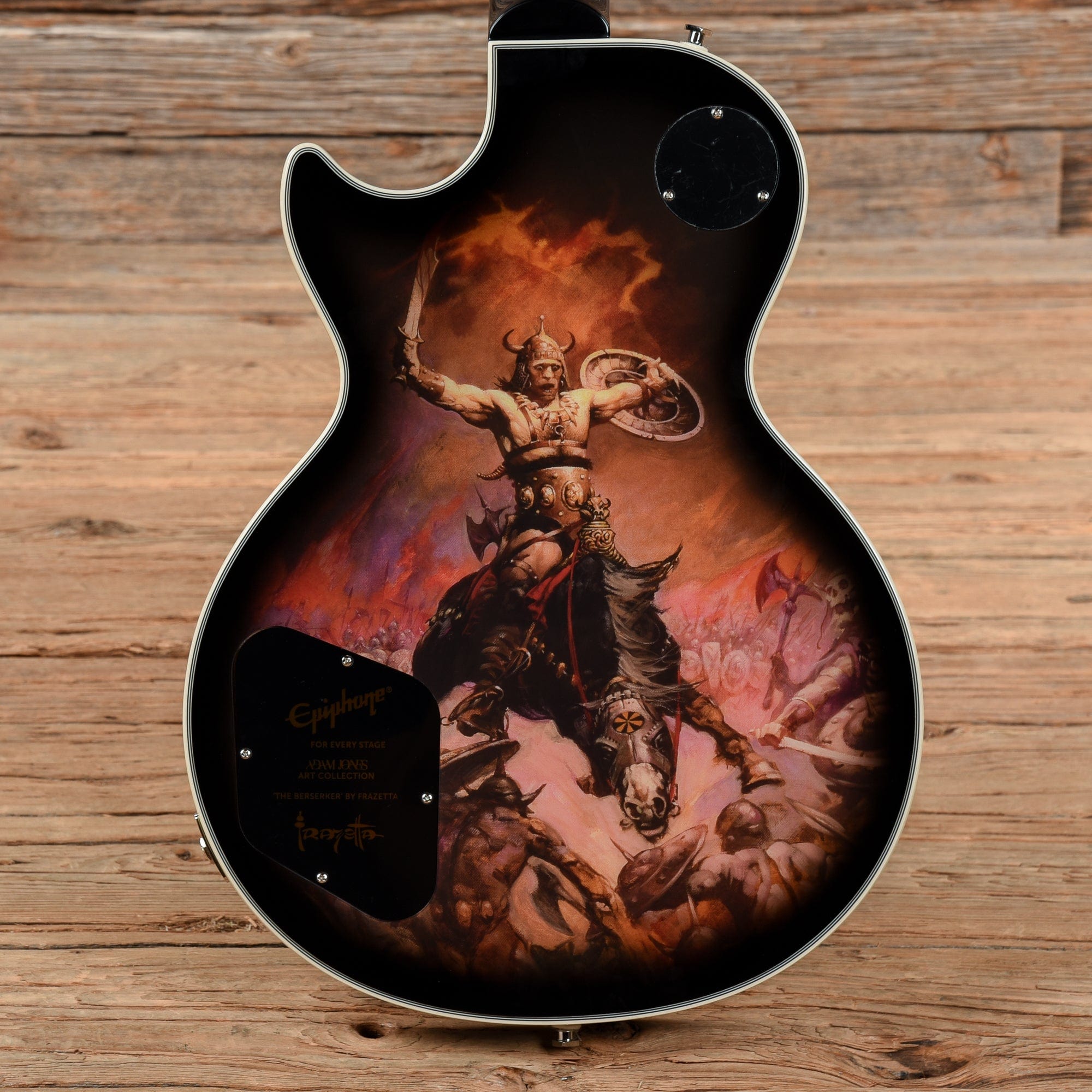
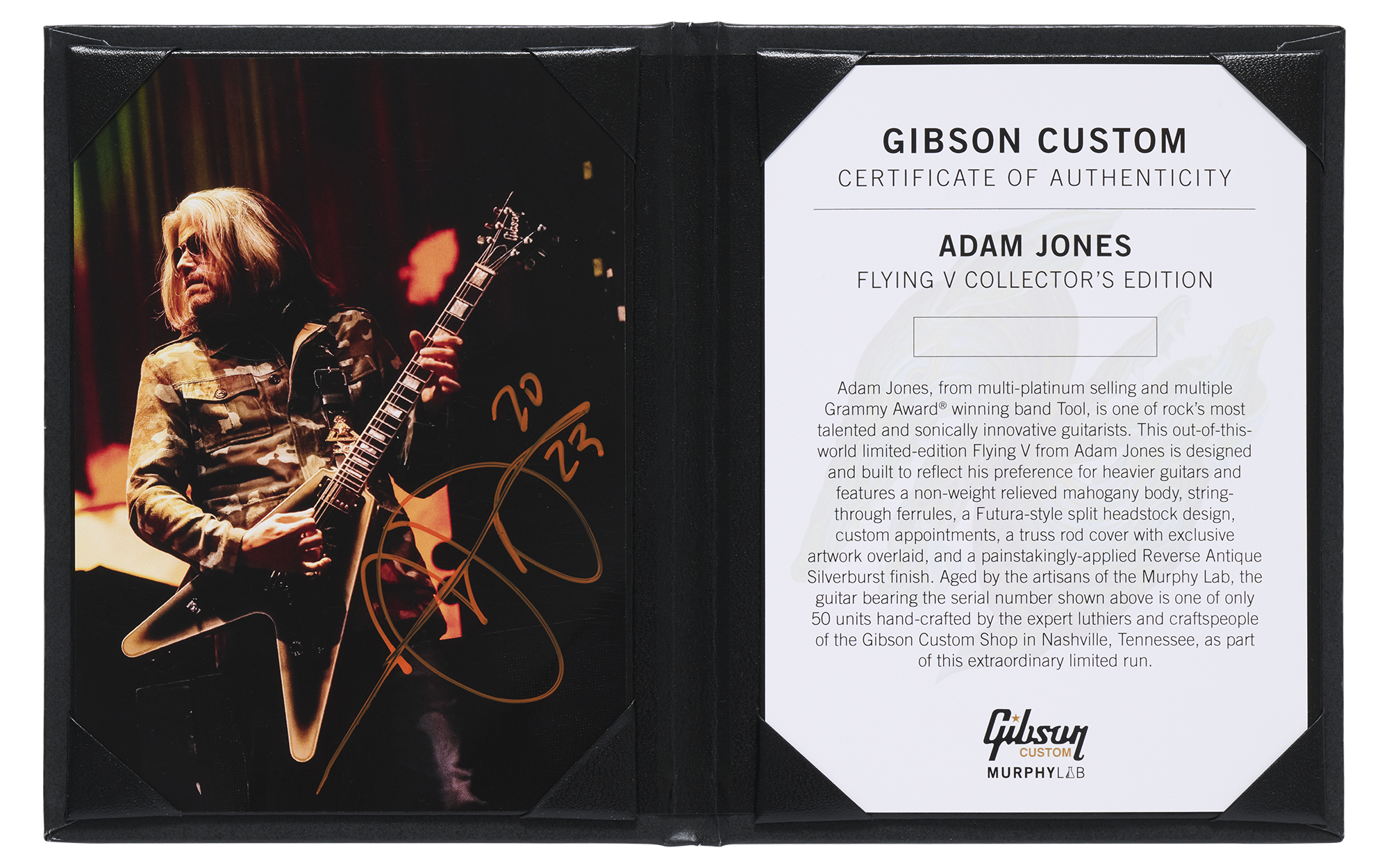
In recognition of his impact on guitar culture, Gibson released official recreation lines via the Gibson Custom Shop and Epiphone, accurately copying every detail, scratch, and pickup configuration of Jones's original instrument.
Multi-Amp Signal Blending
Jones does not rely on a single amplifier head to generate his rhythm and lead tones. Instead, his live and studio signal is split into three distinct vacuum-tube amplifier channels running simultaneously:
- Diezel VH4 (Blueface 1990s Model): Positioned at the core of his rig, Channel 3 of the Diezel provides razor-sharp distortion, extreme transient clarity, and deep low-end punch without turning muddy during complex chords.
- 1976 Marshall Super Lead 1959 (100-Watt Head): Modified by amp technician Harry Kolbe or Paul Rivera, this amp supplies rich upper-midrange rasp, vintage tube saturation, and immediate pick-attack response.
- Mesa/Boogie Dual Rectifier (2-Channel Vintage) or Riviera Head: Blended underneath to add low-frequency sub-bass fullness and smooth out high-end sizzle.
By mixing the output of these three amplifiers through separate 4x12 speaker cabinets loaded with Celestion Vintage 30 speakers, Jones creates a wide, multi-dimensional wall of sound that sounds unified both live and in recording environments.
Effects Pedalboard and Sound Design
While Jones avoids over-processing his natural guitar tone, his pedalboard contains strategic tools for spatial delays, aggressive modulation sweeps, and non-traditional texture generation:
- Boss BF-2 Flanger: Used prominently on tracks like "Stinkfist" and "Forty Six & 2." Jones sets the pedal to a tight, metallic manual sweep that emphasizes mechanical harmonics.
- Boss DD-3 Digital Delay: Used for rhythmic slap-back effects, pitch-shifting self-oscillation, and long ambient repeats.
- Dunlop Heil Talk Box: Connected to a dedicated amplifier output, enabling vocal-like filter sweeps on tracks such as "Jambi."
- MXR Micro Amp: Serves as a clean boost to push the front end of his amplifiers into natural overload during solos.
- Dunlop BB535 Cry Baby Wah: Configured with a narrow sweep range for expressive filter adjustments during syncopated passages.
- Non-Traditional Tools: Jones frequently utilizes an E-Bow (Handheld Electronic Bow) for infinite sustain and has occasionally used an Epilady (electric hair remover) near his pickups to induce fast, rhythmic electromagnetic interference.
Technical Gear Summary
The following table details the key equipment components that form Adam Jones’s live and studio signal chain:
| Equipment Category | Specific Model / Make | Primary Function in Rig | Notable Song Example |
|---|---|---|---|
| Primary Guitar | 1979 Gibson Les Paul Custom Silverburst | Core tonal foundation; heavy sustain and thick midrange | "Lateralus", "Schism" |
| Bridge Pickup | Seymour Duncan SH-6b Distortion | High output, aggressive harmonics, tight low-end response | "7empest", "Vicarious" |
| Primary High-Gain Amp | Diezel VH4 (Blueface, Channel 3) | Deep frequency punch, fast transient response, clarity | "The Pot", "Pneuma" |
| Midrange Crunch Amp | 1976 Marshall Super Lead 1959 (Modded) | Upper-midrange bite and tube saturation | "Forty Six & 2", "Stinkfist" |
| Flanger Modulation | Boss BF-2 Flanger | Metallic filter sweeps and jet-plane modulation | "Ænema", "Frame by Frame" |
| Vocal Filter Effect | Dunlop Heil HT1 Talk Box | Expressive vocal synth sound driven by guitar signal | "Jambi", "Rosetta Stoned" |
| Sustain / Drone Tool | E-Bow / Pick Scrapes | Continuous string vibration without pick attack | "Third Eye", "Reflection" |
Compositional Philosophy and Playing Technique
Adam Jones’s approach to guitar playing is defined by restraint, structural intent, and textural rhythm rather than traditional blues-based shredding. His compositional techniques can be broken down into several distinct styles:
1. Drop-D Tuning Foundation
Nearly all of Tool's discography is written in Drop-D tuning (D-A-D-G-B-E). Lowering the sixth string by a whole step allows Jones to execute fifth-interval power chords using a single finger across the bottom three strings. This setup enables rapid positional jumps across the fretboard and leaves his remaining fingers free to play upper-register melodic accents simultaneously.
2. Microtonal Pitch Bending and Volume Swells
Jones frequently uses subtle fret-bending and finger-slides to create microtonal tension. Rather than bending notes to standard quarter or half-step increments, he pulls strings slightly out of equal temperament to evoke uncomfortable, hypnotic atmospheres. He also utilizes his guitar's volume pot to roll off pickup output, transitioning seamlessly from clean, ambient swells to full-gain rhythm parts.
3. Syncopation and Odd Time Signatures
Working alongside drummer Danny Carey, Jones designs guitar riffs that span unusual meters, including 5/4, 7/8, 9/8, 11/8, and 13/8 time. Instead of playing straight quarter-note rhythms over these complex structures, Jones uses muted percussive strikes (palm muting) and syncopated triplets to lock in with the drum kit's accent patterns.
- Time Signature: 7/8 Metric Pattern
- Count: | 1 - 2 - 3 | 4 - 5 | 6 - 7 |
- Guitar Accent Sequence:
- [Palm Mute]
- [Open D Drone]
- [Harmonic Slide]
4. Triplet Palm Muting and Open-D String Droning
A signature element of Jones's playing is his fast triplet palm-muting technique. By muting the low D string near the bridge saddle and picking rapid downward-upward strokes, he creates an engine-like chugging rhythm. He frequently contrasts this tight muting by letting the low open D string ring out completely while shifting octaves or fifths on the higher strings.
Visual Artistry, Video Direction, and Packaging
Beyond his role as Tool's guitarist, Adam Jones acts as the band's visual director. Utilizing his Hollywood background, Jones directed or co-directed the majority of Tool's music videos, which stand out for their avoidance of standard performance clips in favor of dark, surrealist stop-motion animation.
Stop-Motion Music Videos
Videos such as "Sober," "Prison Sex," "Stinkfist," "Ænema," and "Vicarious" feature handcrafted claymation puppets, organic biomechanical structures, and moving armature set pieces. Influenced by surrealist animators the Brothers Quay, painter Zdzisław Beksiński, and artist H.R. Giger, Jones created visual narratives that mirrored the unsettling, cathartic nature of the music.
Fine Art and Album Packaging Innovations
Jones oversees physical album design for Tool, transforming CD and vinyl releases into multi-sensory art objects:
- Ænima (1996): Incorporated a lenticular multi-image casing that created an animated optical illusion when moved.
- 10,000 Days (2006): Packaged with built-in stereoscopic 3D lenses integrated directly into the CD hard cover, allowing fans to view 3D artwork created by painter Alex Grey and designed by Jones.
- Fear Inoculum (2019): Featured a limited-edition physical package containing a rechargeable 4-inch HD video screen with custom video footage, a 2-watt speaker, and a 30-page artwork booklet.
Jones has also collaborated with renowned visionaries like Alex Grey to integrate sacred geometry, anatomical illustrations, and esoteric imagery into Tool’s stage backdrops, light shows, and merchandise line.
Frequently Asked Questions
What guitar does Adam Jones play most frequently?
Adam Jones primarily plays a vintage 1979 Gibson Les Paul Custom Silverburst. He owns multiple original late-1970s Silverburst models, featuring a Seymour Duncan SH-6b Distortion pickup in the bridge position and an original Gibson humbucker in the neck position.
Did Adam Jones work on Hollywood movies before Tool?
Yes. Before turning to full-time music, Jones worked as a makeup artist, sculptor, and special effects technician on blockbuster films including Jurassic Park, Terminator 2: Judgment Day, Predator 2, Ghostbusters II, and Dances with Wolves.
What guitar tuning does Adam Jones use in Tool?
Adam Jones plays primarily in Drop-D tuning (D-A-D-G-B-E). This tuning lowers the 6th string by a whole step, enabling fast power-chord fingerings, deep low-end resonance, and intricate finger placement across the upper fretboard.
How does Adam Jones create his signature flange sound?
Jones uses a vintage Boss BF-2 Flanger pedal. Rather than setting it for wide, sweeping modulation, he adjusts the manual and resonance controls tightly to create a metallic, vocal-like comb filter effect heard on tracks like "Stinkfist" and "Forty Six & 2."
What amplifiers make up Adam Jones's live rig?
Jones uses a multi-amp blend that splits his guitar signal into three simultaneous amplifiers: a vintage 1990s Diezel VH4 (Blueface), a modified 1976 Marshall Super Lead 1959 100-watt head, and a Mesa/Boogie Dual Rectifier (or Riviera head).
Practical Takeaways for Musicians and Fans
For guitarists, audio engineers, and rock enthusiasts studying Adam Jones’s legacy, several core principles emerge from his decades-long career:
- Prioritize Tone Sculpting Over Excessive Processing: Achieve clarity and punch by blending complementary amplifier voices—combining high-gain articulation (like a Diezel) with vintage tube midrange bite (like a Marshall)—rather than relying on high digital gain settings.
- Master Dynamic Restraint: Focus on song structure, palm-muting variations, and atmospheric volume adjustments. Allowing room for bass and drums to breathe yields heavier sounding drop-sections than playing fast solos continuously.
- Integrate Multi-Disciplinary Art Forms: Treat cover design, packaging, light shows, and video visuals as essential extensions of the music itself to build a recognizable artistic identity.
- Explore Non-Standard Musical Accessories: Experiment with tools like E-Bows, talk boxes, slider techniques, and microtonal bends to expand the sound palette of the traditional electric guitar.
Image Gallery