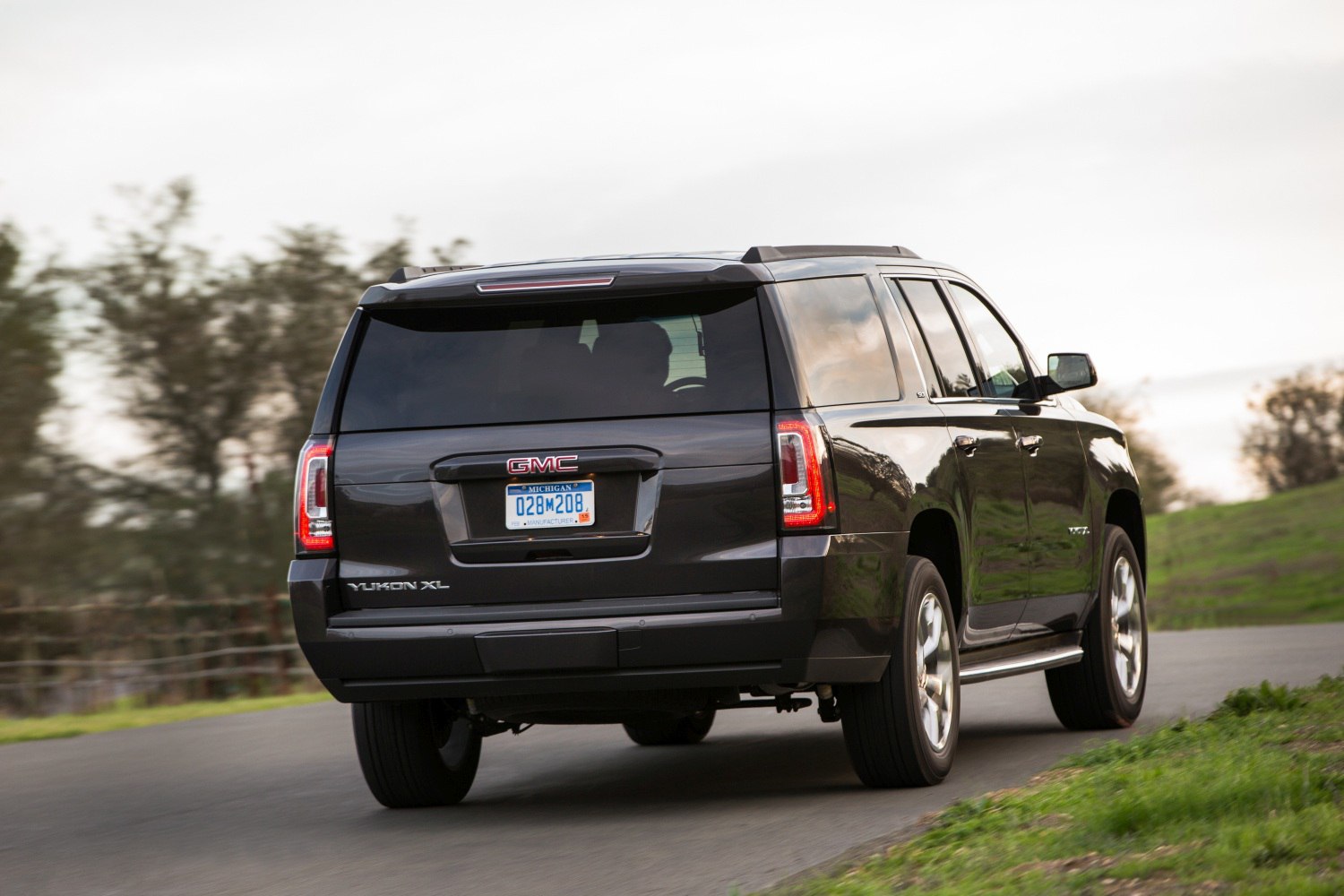
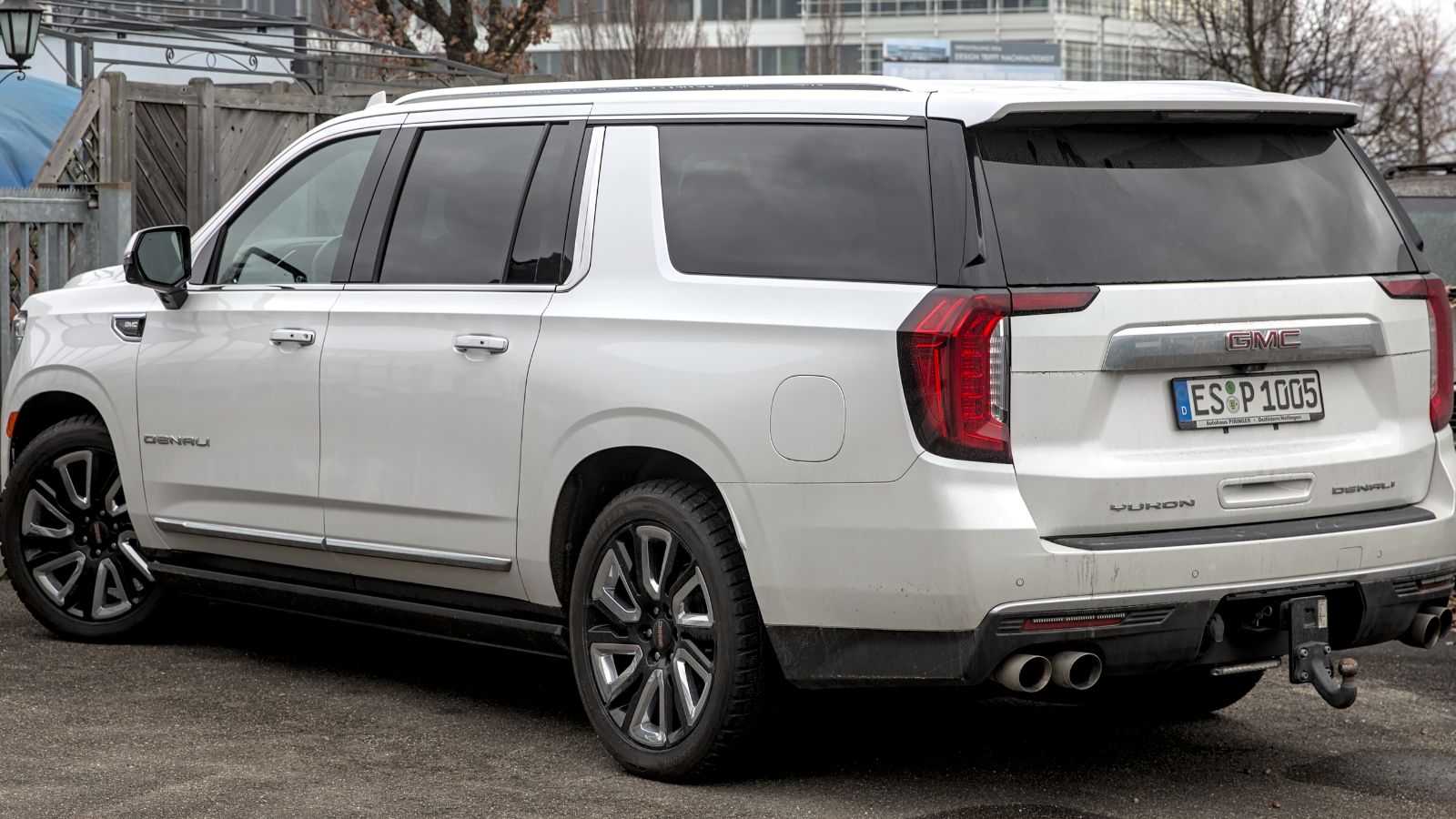
Why the GMC Yukon Denali's Fuel Economy Matters More Than You Think
While buyers of high-end luxury SUVs often focus on premium leather, towing capacity, and ride comfort, the GMC Yukon Denali’s fuel economy plays a pivotal role in total cost of ownership, driving range, and vehicle depreciation. Evalu...
While buyers of high-end luxury SUVs often focus on premium leather, towing capacity, and ride comfort, the GMC Yukon Denali’s fuel economy plays a pivotal role in total cost of ownership, driving range, and vehicle depreciation. Evaluating fuel efficiency between the 6.2L V8 and 3.0L Duramax diesel engine option reveals critical operational and financial tradeoffs.
Contents
The Financial Impact: Beyond the Premium Sticker Price
Purchasing a vehicle in the price tier of a GMC Yukon Denali often leads buyers to assume that fuel economy is a secondary concern. However, operating costs accumulate rapidly over standard ownership cycles. Fuel consumption represents one of the largest variable costs in vehicle ownership, directly influencing the total cost of ownership (TCO) alongside depreciation and insurance.
For full-size luxury SUVs, the difference between an engine averaging 16 miles per gallon (mpg) combined and one averaging 23 mpg combined translates into thousands of dollars over five years of regular driving. Calculating fuel expenses requires considering fuel type specifications alongside raw consumption figures.
Annual Fuel Cost = (Annual Mileage / Vehicle Combined MPG) × Price Per Gallon
The standard 6.2L EcoTec3 V8 engine requires premium unleaded gasoline (91 octane or higher) to achieve its rated output of 420 horsepower and 460 lb-ft of torque. Conversely, the available 3.0L Duramax Turbo-Diesel runs on Ultra-Low Sulfur Diesel (ULSD). Because premium gasoline and diesel prices fluctuate independently across regional markets, evaluating fuel efficiency requires looking at cost-per-mile rather than mpg alone.
A driver covering 15,000 miles per year in a 6.2L V8 Yukon Denali averaging 16 mpg combined consumes roughly 937.5 gallons of fuel annually. If premium gasoline averages $4.25 per gallon, the annual fuel expense reaches approximately $3,984.
By contrast, the same 15,000 miles driven in a 3.0L Duramax Turbo-Diesel Yukon Denali averaging 23 mpg combined requires approximately 652 gallons of diesel. Even if diesel costs $4.40 per gallon, the annual expense totals roughly $2,869. That creates an annual savings of $1,115, amounting to over $5,500 over a five-year period.
Powertrain Options: 6.2L V8 vs. 3.0L Duramax Turbo-Diesel
Understanding why fuel economy varies drastically across the Yukon Denali lineup requires examining the engineering behind its primary powertrains. GMC pairs both engines with a Hydra-Matic 10-speed automatic transmission, but their combustion cycles, torque curves, and efficiency strategies differ fundamentally.
6.2L EcoTec3 V8 Engine
The standard engine for the Yukon Denali is a naturally aspirated 6.2-liter V8 utilizing overhead valve (OHV) architecture with direct injection and Variable Valve Timing (VVT).
To balance performance with efficiency, General Motors equips the 6.2L V8 with Dynamic Fuel Management (DFM). Unlike older Active Fuel Management systems that deactivated fixed cylinder banks (switching between 8 and 4 cylinders), DFM operates with 17 different cylinder patterns. It continuously calculates engine load to deactivate anywhere from one to seven cylinders, allowing the engine to run as a small-displacement motor under light cruise conditions.
- Horsepower: 420 hp @ 5,600 RPM
- Torque: 460 lb-ft @ 4,100 RPM
- Recommended Fuel: Premium Unleaded (91+ Octane)
- EPA Estimated Fuel Economy (2WD): 14 City / 20 Highway / 16 Combined
- EPA Estimated Fuel Economy (4WD): 14 City / 18 Highway / 16 Combined
Despite advanced cylinder deactivation, moving a full-size body-on-frame SUV weighing between 5,600 and 6,000 pounds requires substantial energy. In stop-and-go traffic, cylinder deactivation rarely engages, resulting in city ratings near 14 mpg.
3.0L Duramax I6 Turbo-Diesel Engine
The primary alternative powertrain is the 3.0-liter Inline-Six Duramax Turbo-Diesel (LZ0 engine architecture). Built with an aluminum block and cylinder head to minimize weight penalties over the front axle, this engine utilizes inline geometry for continuous balance and reduced mechanical friction.
Diesel engines operate at higher compression ratios than spark-ignition gasoline engines, yielding greater thermal efficiency. The inline-six layout allows optimal exhaust scavenging to drive the variable-geometry turbocharger (VGT), generating peak torque at just 1,500 RPM.
- Horsepower: 305 hp @ 3,750 RPM
- Torque: 495 lb-ft @ 1,500 RPM
- Recommended Fuel: Ultra-Low Sulfur Diesel / B20 Biodiesel Compatible
- EPA Estimated Fuel Economy (2WD): 21 City / 27 Highway / 23 Combined
- EPA Estimated Fuel Economy (4WD): 20 City / 26 Highway / 22 Combined
Because the Duramax produces maximum torque low in the RPM band, the 10-speed transmission keeps engine speeds below 2,000 RPM during highway cruising, resulting in efficient fuel consumption.
Driving Range and Practical Utility
Fuel economy in a full-size luxury SUV directly affects operational range—the distance the vehicle can travel between gas station stops. For family road trips, executive transport, or remote travel, highway cruising range is a key practical convenience factor.
The standard GMC Yukon Denali features a 24.0-gallon fuel tank, while the extended-wheelbase Yukon XL Denali carries a 28.3-gallon fuel tank. When combined with the engine options, maximum single-tank highway cruising range varies significantly:
- Yukon Denali 6.2L V8 (24.0 gal tank): 24.0 gal × 20 mpg highway = 480 miles maximum theoretical range
- Yukon Denali 3.0L Duramax (24.0 gal tank): 24.0 gal × 27 mpg highway = 648 miles maximum theoretical range
- Yukon XL Denali 6.2L V8 (28.3 gal tank): 28.3 gal × 20 mpg highway = 566 miles maximum theoretical range
- Yukon XL Denali 3.0L Duramax (28.3 gal tank): 28.3 gal × 26 mpg highway = 735 miles maximum theoretical range
A 3.0L Duramax Yukon XL can travel over 700 miles on a single tank under ideal conditions, reducing fuel stop frequency on cross-country drives.
| Cruising Range Comparison | Range |
|---|---|
| Yukon Denali 6.2L V8 | 480 Miles |
| Yukon Denali 3.0L Diesel | 648 Miles |
| Yukon XL 6.2L V8 | 566 Miles |
| Yukon XL 3.0L Diesel | 735 Miles |
Efficiency Under Load: Towing Impacts
The Yukon Denali offers a maximum conventional towing capacity between 7,500 and 8,400 pounds, depending on engine selection and driveline layout (2WD vs. 4WD). Towing heavy trailers dramatically reduces fuel economy in all vehicles, but the magnitude of efficiency loss depends on engine design.
Gasoline engines, including the 6.2L V8, enrich their air-fuel mixtures under heavy load to manage cylinder temperatures, causing fuel economy to drop during towing. When pulling a 6,000-pound trailer, a 6.2L V8 Yukon Denali often yields 8 to 11 mpg.
The 3.0L Duramax Turbo-Diesel maintains higher thermal efficiency under heavy loads. Because its peak torque of 495 lb-ft is available at 1,500 RPM, the engine pulls heavy trailers without requiring high engine speeds or gear hunting. When pulling a similar load, the 3.0L Duramax routinely delivers 12 to 15 mpg, preserving range and reducing fuel costs during long-distance towing.
Technical and Operational Factors Influencing Real-World MPG
While EPA test cycles provide normalized metrics for comparison, real-world fuel economy in a Yukon Denali depends on environmental factors, driving profiles, and mechanical maintenance.
Aerodynamics and Speed
The Yukon Denali has a large frontal surface area, giving it a relatively high coefficient of drag for a passenger vehicle. Aerodynamic drag increases exponentially with speed ($Drag \propto Velocity^2$). Driving a Yukon Denali at 75 mph requires substantially more energy than driving at 65 mph. Drivers who routinely travel above 70 mph on highways experience a sharp drop in fuel economy, particularly in the 6.2L V8 variant.
Curb Weight and Payload
The standard Yukon Denali weighs approximately 5,600 to 5,800 pounds, while the extended Yukon XL Denali approaches 6,000 pounds unloaded. Adding passenger payload, cargo, or aftermarket roof boxes adds weight and aerodynamic resistance, forcing the engine to work harder during acceleration.
Idle Time and Remote Start
Full-size luxury SUVs feature high electrical loads from multi-zone climate control, heated and ventilated seats, infotainment systems, and onboard power outlets. Prolonged idling—especially using remote start functions to warm up or cool down the cabin—burns fuel while registering 0.0 mpg, lowering average trip economy.
Yukon Denali Powertrain Specification Matrix
The following table provides a technical comparison of current Yukon Denali powertrains, detailing EPA estimates, fuel capacities, calculated ranges, and operating parameters.
| Vehicle Specification / Feature | 6.2L EcoTec3 V8 (2WD) | 6.2L EcoTec3 V8 (4WD) | 3.0L Duramax I6 (2WD) | 3.0L Duramax I6 (4WD) |
|---|---|---|---|---|
| Engine Architecture | Pushrod V8, Direct Injection | Pushrod V8, Direct Injection | DOHC Inline-6 Turbo-Diesel | DOHC Inline-6 Turbo-Diesel |
| Horsepower @ RPM | 420 hp @ 5,600 RPM | 420 hp @ 5,600 RPM | 305 hp @ 3,750 RPM | 305 hp @ 3,750 RPM |
| Torque @ RPM | 460 lb-ft @ 4,100 RPM | 460 lb-ft @ 4,100 RPM | 495 lb-ft @ 1,500 RPM | 495 lb-ft @ 1,500 RPM |
| Transmission Type | 10-Speed Automatic | 10-Speed Automatic | 10-Speed Automatic | 10-Speed Automatic |
| Fuel Type Requirement | Premium Unleaded (91+) | Premium Unleaded (91+) | Ultra-Low Sulfur Diesel | Ultra-Low Sulfur Diesel |
| EPA City Rating | 14 mpg | 14 mpg | 21 mpg | 20 mpg |
| EPA Highway Rating | 20 mpg | 18 mpg | 27 mpg | 26 mpg |
| EPA Combined Rating | 16 mpg | 16 mpg | 23 mpg | 22 mpg |
| Fuel Tank Capacity (Standard) | 24.0 Gallons | 24.0 Gallons | 24.0 Gallons | 24.0 Gallons |
| Fuel Tank Capacity (XL Variant) | 28.3 Gallons | 28.3 Gallons | 28.3 Gallons | 28.3 Gallons |
| Est. Range - Standard (Hwy) | ~480 Miles | ~432 Miles | ~648 Miles | ~624 Miles |
| Est. Range - XL Variant (Hwy) | ~566 Miles | ~509 Miles | ~735 Miles | ~735 Miles |
| Max Towing Capacity | 8,200 lbs | 8,000 lbs | 8,100 lbs | 7,900 lbs |
Data sources: EPA fuel economy ratings and GMC manufacturer technical specifications.
Market Value, Environmental Factors, and Resale Retention
Beyond immediate operating costs, fuel economy affects broader ownership dynamics, including asset depreciation and resale liquidity.
Resale Value Trajectory
Used market buyers often prioritize lower running costs. Used full-size SUVs with thirsty V8 engines can suffer accelerated depreciation during periods of high fuel prices. Conversely, diesel-powered Yukon Denali models historically retain strong resale value due to their longevity, towing efficiency, and lower overall fuel consumption.
For buyers who retain vehicles past the 60,000-mile mark, the total cost of ownership curve favors high-efficiency powertrains. Lower lifetime fuel consumption can offset the initial purchase cost of the vehicle and preserve resale demand.
Corporate and Fleet Budgeting
Many Yukon Denalis serve as livery vehicles, executive transport shuttles, or fleet vehicles. Fleet operators manage strict operating budgets based on cost-per-mile metrics. Fleet managers often favor the 3.0L Duramax option because its lower fuel consumption reduces variable costs over high annual mileage cycles (e.g., 30,000 to 50,000 miles per year).
Livery Fleet Annual Cost (40,000 miles/year):
- 6.2L V8 Denali (16 mpg combined @ $4.25/gal) = $10,625
- 3.0L Diesel Denali (23 mpg combined @ $4.40/gal) = $7,652 Annual Operating Margin Improvement Per Vehicle = $2,973
Practical Methods to Optimize Fuel Economy in a Yukon Denali
Owners seeking to maximize efficiency from either engine option can employ several practical operational strategies:
- Maintain Recommended Tire Pressures: Heavy luxury vehicles are sensitive to tire inflation pressures. Running tires just 3 to 5 PSI below the manufacturer's door-jamb recommendation increases rolling resistance, reducing fuel economy by up to 2%.
- Utilize Eco and Cruise Control Modes: Using adaptive cruise control on long highway stretches smoothes out throttle inputs, allowing Dynamic Fuel Management (on V8 models) or low-RPM lugging (on Diesel models) to operate at peak efficiency.
- Minimize Roof Top Accessories: Carrying empty roof racks, cargo boxes, or crossbars introduces aerodynamic drag. Removing unused roof accessories can restore 1 to 2 highway mpg.
- Monitor Diesel Exhaust Fluid (DEF) and Regeneration Cycles (Diesel Models): For Duramax owners, avoiding excessive idle time prevents premature clogging of the Diesel Particulate Filter (DPF), reducing frequent active regeneration cycles that consume additional diesel fuel.
- Smooth Throttle Application: Accelerating smoothly from stops allows the 10-speed transmission to shift early through lower gears, keeping engine RPMs within their optimal efficiency window.
Frequently Asked Questions
Does the GMC Yukon Denali require premium gasoline?
Yes, for models equipped with the 6.2L EcoTec3 V8 engine, GMC recommends 91-octane premium unleaded fuel for optimal power output and fuel efficiency. Operating on regular 87-octane fuel causes the engine computer to retard timing to prevent engine knock, reducing horsepower and increasing fuel consumption.
Is the 3.0L Duramax diesel engine more fuel-efficient than the 6.2L V8?
Yes. The 3.0L Duramax Turbo-Diesel yields an EPA-estimated combined rating of 22 to 23 mpg, compared to 16 mpg combined for the 6.2L V8. This represents an approximate 40% improvement in overall fuel efficiency under standard driving conditions.
How far can a GMC Yukon Denali travel on a single tank of fuel?
Cruising range depends on the engine choice and chassis model. A standard Yukon Denali with the 3.0L Duramax engine can travel nearly 650 highway miles on its 24-gallon tank. The extended Yukon XL Denali diesel variant, with its 28.3-gallon tank, can achieve up to 735 miles of highway driving on a single tank.
Does towing significantly reduce the fuel economy of a Yukon Denali?
Yes, towing heavy loads reduces fuel economy across all engine options. However, the 3.0L Duramax diesel retains higher efficiency under load, typically delivering 12 to 15 mpg while towing, whereas the 6.2L V8 drops to roughly 8 to 11 mpg under similar conditions.
How does Dynamic Fuel Management (DFM) work on the 6.2L V8 engine?
Dynamic Fuel Management is an active cylinder deactivation system. It evaluates engine load demands 80 times per second and can deactivate anywhere from one to seven cylinders in 17 different patterns, reducing fuel consumption during light-load cruising.
Final Recommendation: Selecting the Right Engine for Your Usage Profile
When selecting a GMC Yukon Denali, evaluating fuel economy requires matching your engine choice to your driving habits and financial priorities:
- Choose the 3.0L Duramax Turbo-Diesel if you prioritize maximum cruising range, high annual mileage driving, frequent long-distance towing, or minimal overall fuel costs. The diesel powertrain provides high low-end torque and lower cost-per-mile operating economics.
- Choose the 6.2L EcoTec3 V8 if your driving profile values maximum horsepower (420 hp), traditional V8 exhaust sound, rapid high-speed acceleration, and lower local availability constraints on diesel fuel, and if higher fuel costs are less of a concern relative to overall performance.
Understanding fuel economy metrics allows buyers and fleet managers to accurately project total ownership costs and select a vehicle setup that fits their long-term operational needs.
Image Gallery