Is the Priscilla Movie Based on a True Story? Fact vs. Fiction in Sofia Coppola’s Film
The 2023 biographical drama Priscilla, directed by Sofia Coppola, is based on a true story. The film directly adapts Priscilla Presley’s 1985 bestselling autobiography, Elvis and Me, co-written with Sandra Harmon. It chronicles the rea...
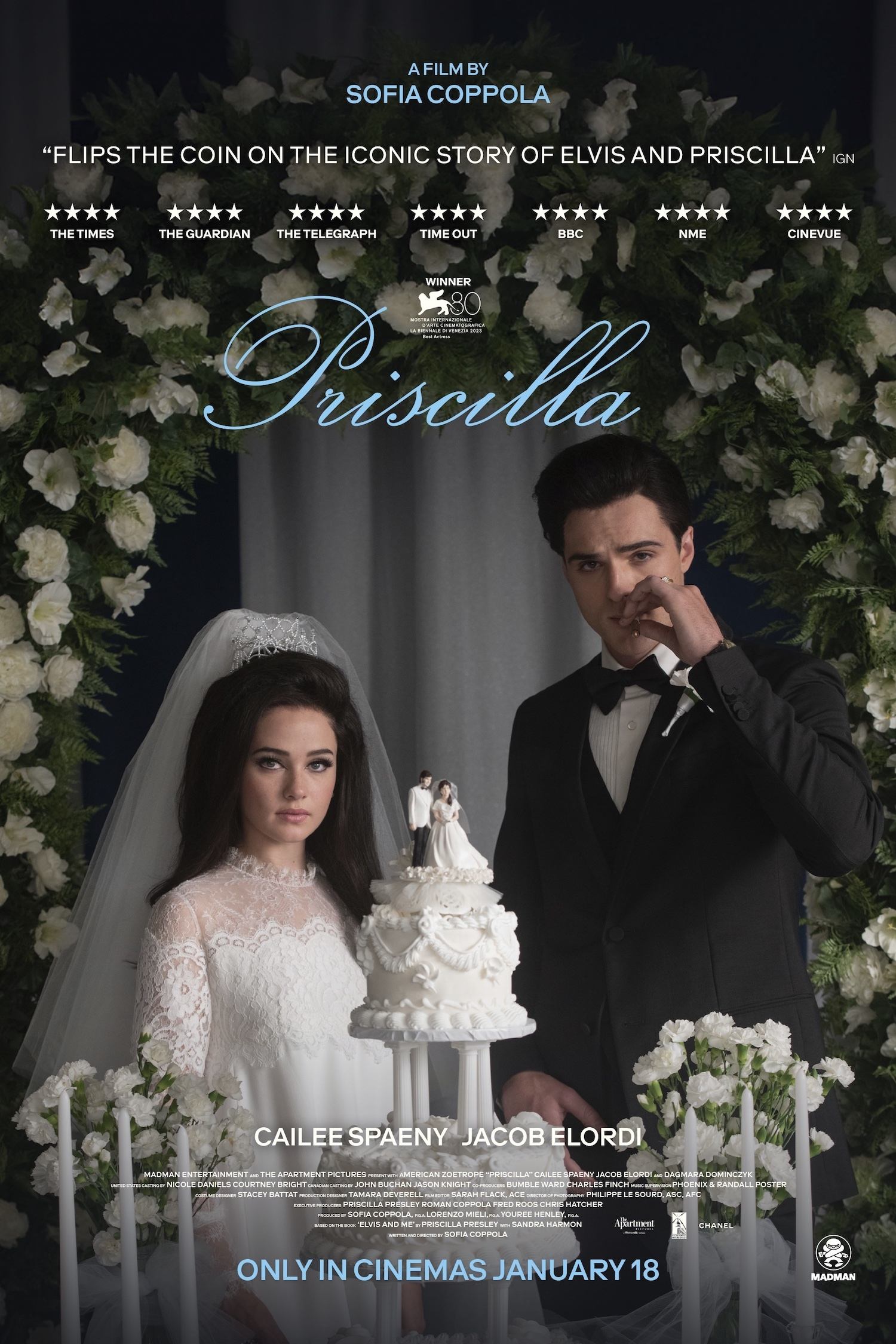
The 2023 biographical drama Priscilla, directed by Sofia Coppola, is based on a true story. The film directly adapts Priscilla Presley’s 1985 bestselling autobiography, Elvis and Me, co-written with Sandra Harmon. It chronicles the real-life relationship between Priscilla Beaulieu and rock star Elvis Presley from their initial meeting in 1959 to their eventual separation in 1973.
Contents
While the narrative closely reflects Priscilla Presley’s personal memories and perspective, cinematic storytelling requires certain artistic choices, structural compression, and visual symbolism. Understanding how the film aligns with real historical events—and where it artistic liberties were taken—requires examining its primary source material, estate reactions, and the specific historical context of the Presley household.
The Primary Source: Adapting Elvis and Me
To evaluate the factual accuracy of Priscilla, one must look at its source material. Sofia Coppola adapted her screenplay directly from Elvis and Me, which Priscilla Presley published twelve years after her divorce from Elvis and eight years after his death in 1977.
Because the movie relies almost exclusively on this single autobiographical text, it reflects a deeply subjective, first-person narrative. Rather than operating as an objective documentary or a sweeping musical biopic like Baz Luhrmann’s 2022 film Elvis, Coppola’s adaptation deliberately confines its perspective to Priscilla’s lived reality inside the Presley sphere.
Priscilla Presley served as an executive producer on the project, granting director Sofia Coppola direct access to her personal recollections, archival photographs, and stylistic guidance. Consequently, the film does not attempt to cross-examine Priscilla’s account with third-party testimonies from Elvis's entourage (the "Memphis Mafia") or music industry executives. Instead, it maintains strict fidelity to how Priscilla experienced her adolescence, marriage, and ultimate departure from Graceland.
Timeline of Real Events Featured in the Movie
The film covers fourteen key years in Priscilla Beaulieu Presley’s life, spanning from late 1959 to early 1973. The major milestones depicted in the film correspond directly to established historical records:
The 1959 Meeting in West Germany
In September 1959, 14-year-old Priscilla Beaulieu met 24-year-old Elvis Presley at a party at his rented home in Bad Nauheim, West Germany, where Elvis was serving in the U.S. Army. The 10-year age gap and the nature of their initial courtship are portrayed in the film as recorded in Elvis and Me. Elvis’s interest in Priscilla, his charm, and his promises to her parents—air defense Captain Paul Beaulieu and Ann Beaulieu—to keep her safe and bring her home on time reflect the documented history of their courtship overseas.
Moving to Graceland and the High School Years
After Elvis returned to the United States in 1960, the two maintained contact via telephone. In October 1962, Priscilla’s parents permitted her to visit Elvis in Memphis, Tennessee, under strict conditions: she was to live with Elvis’s father, Vernon Presley, and stepmother, Dee Stanley, and attend an all-girls Catholic school, Immaculate Conception Cathedral School.
As depicted in the film, Priscilla gradually spent more time at Graceland than at Vernon’s house. She completed her senior year of high school while navigating Elvis’s nocturnal lifestyle, personal wardrobe preferences, and frequent absences during Hollywood film shoots.
Marriage, Motherhood, and Isolation at Graceland
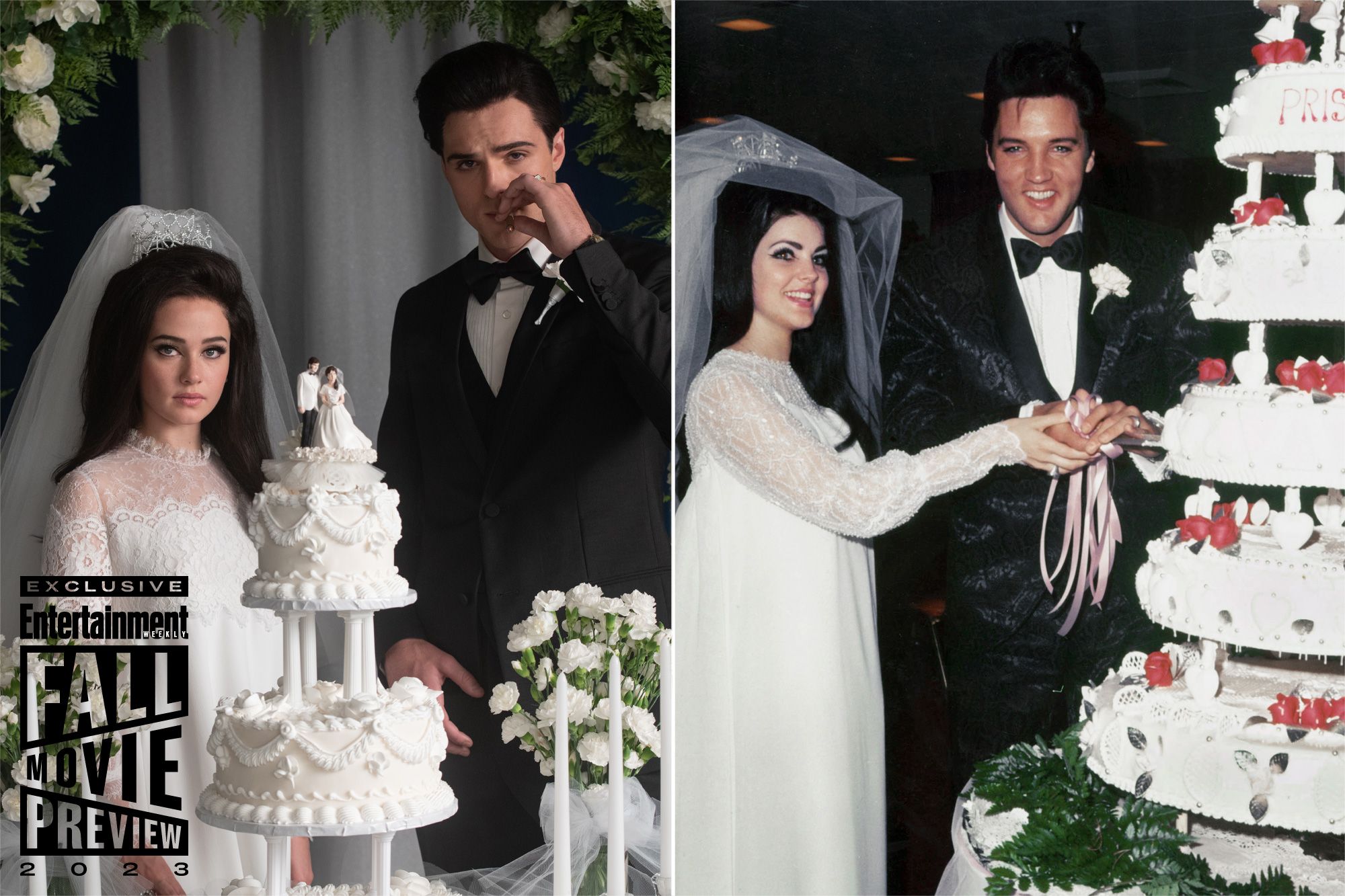
Elvis and Priscilla were married on May 1, 1967, in a brief eight-minute ceremony at the Aladdin Hotel in Las Vegas, Nevada, organized by Elvis’s manager, Colonel Tom Parker. Exactly nine months later, on February 1, 1968, Priscilla gave birth to their only child, Lisa Marie Presley.
The film details the intense isolation Priscilla felt during this period. While Elvis spent months in Los Angeles and Las Vegas surrounded by his inner circle, Priscilla remained primarily at Graceland, expected to be available and impeccably presented whenever he returned.
The 1973 Separation and Divorce
The movie concludes with Priscilla driving away from Graceland in 1973. In reality, Priscilla informed Elvis of her intention to leave the marriage in early 1972, leading to their legal separation in February 1972 and a final divorce decree on October 9, 1973. The ending of the film captures her decision to establish an independent identity outside of Elvis’s shadow, fulfilling the core narrative arc of her memoir.
Fact vs. Dramatization: How Accurate Is Priscilla?
While Priscilla is faithful to the spirit and text of Elvis and Me, distinct artistic and practical differences exist between historical reality and the feature film.
Control, Pills, and Mood Swings
The film portrays Elvis controlling Priscilla’s makeup, hair color (requesting she dye it black), dress styles, and daily schedule, alongside his growing dependence on prescription sedatives and amphetamines. Historical documentation, memoirs from estate employees, and interviews with Priscilla support these depictions. Elvis frequently dictated the aesthetic presentation of the women in his life and suffered from severe mood swings heightened by substance use.
However, some screen violence and emotional outbursts were stylized for dramatic effect. For instance, an incident in which Elvis throws a chair during a song selection process reflects an event described in the book, though the movie compresses the surrounding context to heighten the dramatic tension of the scene.
The Absence of Elvis Presley’s Original Music
One of the most noticeable differences between the film and real life is the soundtrack. Elvis Presley Enterprises (EPE), which is majority-owned by Authentic Brands Group alongside the Presley estate, denied permission for the film to use Elvis’s original master recordings or compositions controlled by his publishing catalog.
Rather than weakening the narrative, director Sofia Coppola used this legal restriction to emphasize Priscilla’s emotional state. The soundtrack features period-appropriate tracks, modern covers, and original music by the indie rock band Phoenix (fronted by Coppola's husband, Thomas Mars). The deliberate absence of Elvis's iconic voice reinforces Priscilla's feelings of detachment from his public superstar persona.
What the Movie Condenses or Omits
To maintain a cinematic runtime of under two hours, several historical details and secondary figures were condensed or excluded:
- Secondary Relationships: The movie omits significant periods of Priscilla's life, including her temporary romantic connection with karate instructor Mike Stone prior to the final separation, which played a notable role in the final breakdown of the marriage.
- Extended Family Dynamics: The movie simplifies the complex relationships within Graceland, focusing primarily on Elvis, Priscilla, Vernon Presley, and grandmother Minnie Mae Presley, while streamlining the presence of the broader extended family and numerous staff members.
- Hollywood Trips: While the film shows Priscilla visiting Los Angeles, it minimizes her involvement in the Hollywood social scene to concentrate on her domestic isolation at Graceland.
Side-by-Side Comparison: Real Life vs. The Film
| Historical Element | Real-Life History | Depiction in Priscilla (2023) |
|---|---|---|
| Primary Source | Elvis and Me (1985 autobiography by Priscilla Presley and Sandra Harmon). | Directly adapted screenplay written and directed by Sofia Coppola. |
| Priscilla’s Age at Meeting | 14 years old (September 1959 in Bad Nauheim, West Germany). | Depicted accurately based on the book's initial chapters. |
| Graceland Relocation | Moved to Memphis in 1962–1963; lived partially with Vernon Presley before shifting to Graceland. | Streamlined to show her rapid transition into living at Graceland. |
| High School Graduation | Graduated from Immaculate Conception High School in Memphis in May 1963. | Portrayed accurately, highlighting the contrast between her school life and night schedule. |
| Elvis’s Music Catalog | Elvis Presley recorded hundreds of hit tracks throughout their relationship. | Original recordings excluded due to music licensing denials by Elvis Presley Enterprises. |
| Estate Involvement | Priscilla Presley served as Executive Producer; Elvis Presley Enterprises did not participate. | Priscilla provided personal guidance; estate withheld music rights. |
| End of Marriage | Separated in 1972; final divorce granted October 9, 1973. | Ends with Priscilla leaving Graceland in 1973 set to Dolly Parton's "I Will Always Love You." |
Reactions from Priscilla Presley, Lisa Marie Presley, and the Estate
The announcement and release of Priscilla generated distinct reactions from different members of the family and managers of the Presley legacy.
Priscilla Presley’s Endorsement
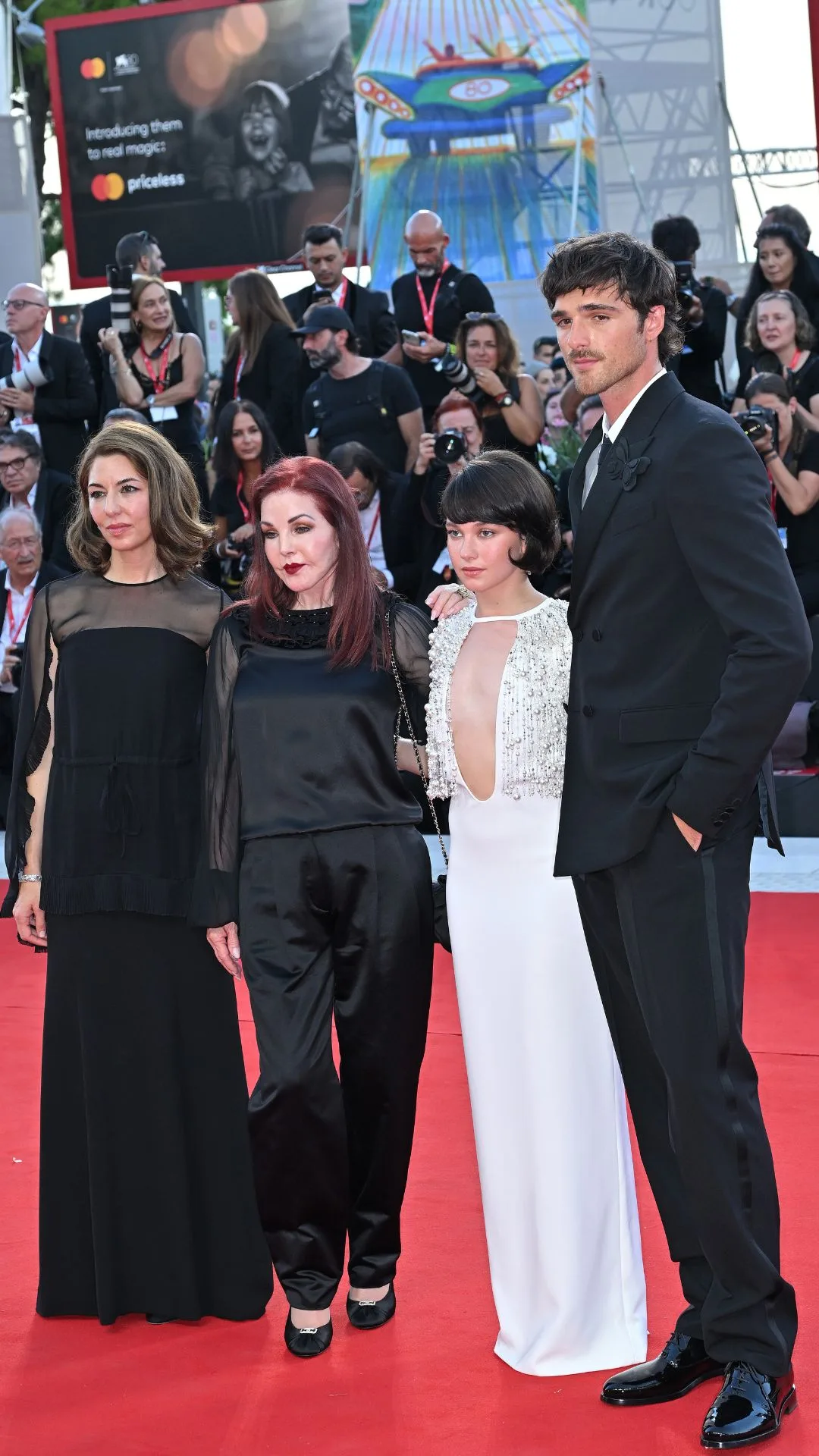
Priscilla Presley publicly supported the film from its early production stages through its premier at the Venice International Film Festival in September 2023. Speaking to reporters at the festival, she stated:
"It’s very difficult to sit and watch a film about you, about your life, about your love. But Sofia did an amazing job. She did her homework... and I really supported the movie for her."
Priscilla praised actors Cailee Spaeny (who won the Volpi Cup for Best Actress for her portrayal of Priscilla) and Jacob Elordi for their performances, confirming that the film captured the complex dynamic of her early relationship with Elvis.
Lisa Marie Presley’s Concerns
Before her tragic death in January 2023, Lisa Marie Presley expressed significant misgivings about how her father was portrayed in early drafts of the script. In private emails sent to Sofia Coppola in late 2022 (later reported by news outlets including Variety), Lisa Marie voiced concern that the script presented a one-sided, overly villainous depiction of Elvis Presley that did not match her memories of her father.
Coppola responded respectfully, stating her goal was to portray the nuance of their personal life rather than demonize Elvis, emphasizing that the story was explicitly told from Priscilla's perspective as a young girl growing up in that environment.
Why Sofia Coppola Focused on Subjective Experience
Sofia Coppola’s direction intentionally frames the story as a subjective coming-of-age experience rather than an objective historical summary. Biopics often struggle with balancing historical completeness against compelling narrative focus. By narrowing the scope to Priscilla’s physical surroundings—the heavy curtains, quiet hallways, wardrobe choices, and long periods of waiting—the movie explores themes of isolation, celebrity control, and female agency.
This stylistic choice explains why certain public historical events (such as Elvis’s 1968 Comeback Special or famous concert tours) happen off-screen or via background television broadcasts. The film remains steadfastly in Priscilla's personal world, capturing what she saw, felt, and experienced within the walls of Graceland.
Frequently Asked Questions
Did Priscilla Presley help make the movie Priscilla?
Yes. Priscilla Presley served as an executive producer on the film. She consulted directly with writer-director Sofia Coppola, provided access to personal archives, answered historical questions, and promoted the film alongside the cast at film festivals and premieres.
How old were Elvis and Priscilla when they met in real life?
Elvis Presley was 24 years old and serving in the U.S. Army when he met Priscilla Beaulieu in West Germany in September 1959. Priscilla was 14 years old at the time. They married eight years later in May 1967, when Priscilla was 21 and Elvis was 32.
Is the movie Priscilla accurate to the book Elvis and Me?
Yes, the movie is a faithful adaptation of Priscilla Presley's 1985 autobiography Elvis and Me. While Sofia Coppola streamlined certain subplots and condensed time periods for screen pacing, the dialogue, character dynamics, and key life events match the published account closely.
Why is there no Elvis music in the movie Priscilla?
Elvis Presley Enterprises (EPE), which controls the licensing for Elvis’s recorded music, declined Sofia Coppola's request to feature his original tracks in the film. As a result, the production relied on contemporary covers, period music by other artists, and an original score by the band Phoenix.
Does the movie show Elvis Presley’s death?
No. The movie concludes in 1973 when Priscilla leaves Graceland and chooses to end their marriage. Elvis Presley died four years later, on August 16, 1977. Because the film focuses entirely on Priscilla's period with Elvis, his death falls outside the timeframe of the narrative.
Key Takeaway and Further Exploration
The movie Priscilla is an accurate translation of Priscilla Presley's personal memoir, offering a focused window into her early life and marriage to Elvis Presley. Rather than presenting a definitive history of Elvis's career, the film serves as a character study of a young woman growing up inside a unique historical pressure cooker.
To gain a deeper understanding of the history behind the film, readers can consult Priscilla Presley's 1985 memoir Elvis and Me or examine official biographical materials maintained by the Graceland Archives.
Image Gallery