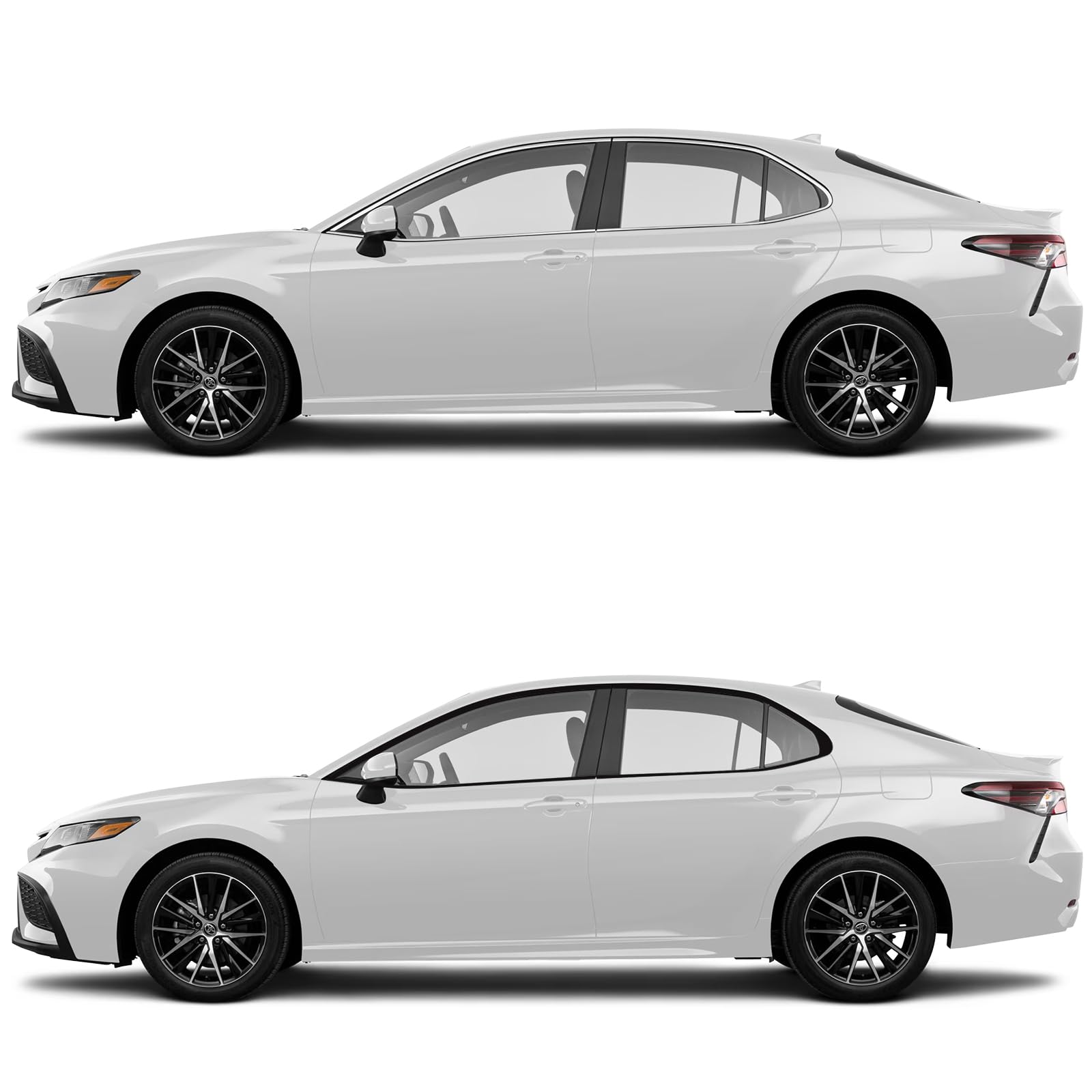
Exploring the Fastest Camry Trim: Performance Evolution and Specifications
The fastest Camry trim is the eighth-generation Toyota Camry TRD, equipped with a 3.5-liter V6 engine producing 301 horsepower. While the ninth-generation Camry transitioned exclusively to a four-cylinder hybrid powertrain focusing on...
The fastest Camry trim is the eighth-generation Toyota Camry TRD, equipped with a 3.5-liter V6 engine producing 301 horsepower. While the ninth-generation Camry transitioned exclusively to a four-cylinder hybrid powertrain focusing on efficiency and all-wheel-drive traction, the V6-powered TRD variant remains the benchmark for raw acceleration and straight-line performance in the vehicle's history.
Contents
When automotive enthusiasts discuss midsize family sedans, the Toyota Camry rarely serves as the primary subject for raw performance discussions. For decades, the Camry built its legendary reputation on reliability, comfort, and fuel efficiency rather than track capability or aggressive quarter-mile times.
However, Toyota shifted this narrative by introducing specialized performance trims that altered the sedan's personality. Understanding the fastest Camry trim requires examining the mechanical specifications, powertrain developments, suspension engineering, and historical context that allowed a practical commuter car to wear a track-ready badge.
The Historical Context of Camry Performance
For the first seven generations of its lifecycle, the Toyota Camry prioritized quiet rides, plush suspension tuning, and dependable four-cylinder or V6 engines. Performance aspirations were largely left to sibling vehicles like the Toyota Supra or the Celica. The most powerful Camry engines were designed for effortless highway passing and smooth power delivery rather than sporty driving dynamics.
The turning point arrived during the eighth generation (XV70), built on the Toyota New Global Architecture (TNGA-K) platform. This foundational shift lowered the vehicle's center of gravity, increased chassis rigidity, and permitted independent multi-link rear suspension geometry. Toyota realized the TNGA platform possessed dynamic potential well beyond traditional family transportation.
This realization led to the establishment of Toyota Racing Development (TRD) variants for several models in the lineup, bringing factory-engineered handling and distinct aerodynamic enhancements to the mainstream sedan market.
The Ultimate Contender: The Camry TRD V6
Introduced for the 2020 model year and produced through the 2024 model year, the Camry TRD stands as the absolute fastest Camry trim ever offered to the public. Unlike standard hybrid variants optimized for fuel economy, the TRD model focused heavily on powertrain responsiveness and dynamic handling performance.
Powertrain and Acceleration Metrics
At the heart of the Camry TRD lies a naturally aspirated 3.5-liter V6 engine (designated 2GR-FKS). This motor utilizes a combination of direct injection and port injection (D-4S) alongside variable valve timing to generate 301 horsepower at 6,600 rpm and 267 lb-ft of torque at 4,700 rpm.
Power is routed to the front wheels via an 8-speed Direct Shift automatic transmission featuring paddle shifters.
- 0-60 mph Time: Approximately 5.8 seconds
- Quarter-Mile Time: Roughly 14.3 seconds at 100 mph
- Top Speed: Electronically limited to 135 mph
While modern sports cars achieve faster sprint times, a sub-six-second 0-60 mph capability remains respectable for a front-wheel-drive midsize sedan. The V6 delivers linear power delivery without the turbo lag typical of modern forced-induction four-cylinder competitors.
Suspension and Chassis Upgrades
Raw engine output alone does not make a car fast. The TRD engineering team implemented comprehensive chassis modifications to ensure the vehicle could handle corners as effectively as it accelerated in a straight line:
- Stiffer Springs: Front and rear coil rates were increased by 31% and 25% respectively, reducing body roll during aggressive cornering.
- Unique Dampers: Specially tuned shock absorbers provide damping characteristics tailored to track environments and spirited backroad driving.
- Thicker Sway Bars: Solid stabilizer bars front and rear increase roll stiffness and improve turn-in response.
- Chassis Braces: Additional underbody braces stiffen the platform, enhancing steering feedback and structural integrity under heavy cornering loads.
Aerodynamics and Exterior Styling
The exterior of the Camry TRD features a functional aerodynamic body kit developed in wind tunnel testing facilities. The package includes a front splitter, side aero skirts, trunk-mounted rear spoiler, and a rear diffuser. These elements reduce aerodynamic lift at highway speeds and contribute to high-speed stability.
Furthermore, the car rides on lightweight 19-inch matte-black alloy wheels that reduce unsprung weight, wrapped in sticky summer tires for enhanced mechanical grip.
Comparative Performance Analysis of Camry Generations
To contextualize the performance of the fastest Camry trim, it is helpful to examine how different generations and engine configurations compare across acceleration and handling metrics.
| Trim & Generation | Engine Type | Horsepower | Torque (lb-ft) | 0-60 mph (Estimated) | Drive Type |
|---|---|---|---|---|---|
| 2020–2024 Camry TRD (8th Gen) | 3.5L V6 | 301 hp | 267 lb-ft | 5.8 seconds | FWD |
| 2018–2024 Camry XSE V6 (8th Gen) | 3.5L V6 | 301 hp | 267 lb-ft | 5.8 seconds | FWD |
| 2025+ Camry AWD (9th Gen) | 2.5L 4-Cyl Hybrid | 232 hp (Net) | Varies | 7.0–7.2 seconds | Electronic AWD |
| 2012–2014 Camry SE V6 (7th Gen) | 3.5L V6 | 268 hp | 248 lb-ft | 6.1 seconds | FWD |
| 2007–2011 Camry SE V6 (6th Gen) | 3.5L V6 | 268 hp | 248 lb-ft | 6.5 seconds | FWD |
As shown in the comparison, the eighth-generation V6 models share the crown for raw acceleration, but the TRD variant distinguishes itself through specialized suspension tuning, larger brakes (12.9-inch rotors with dual-piston calipers), and a cat-back dual exhaust system that provides an aggressive acoustic profile.
The Ninth Generation Shift: Efficiency and AWD
Following the discontinuation of the V6 engine after the 2024 model year, the ninth-generation Toyota Camry (introduced for the 2025 model year) shifted exclusively to the fifth-generation Toyota Hybrid System (THS 5).
The new top-tier powertrains pair a 2.5-liter four-cylinder engine with electric motor-generators. Front-wheel-drive models produce 225 net horsepower, while Electronic On-Demand All-Wheel Drive variants generate 232 net horsepower.
While the ninth-generation Camry offers superior all-weather traction and enhanced fuel economy exceeding 45 mpg in daily driving, it cannot match the peak horsepower or the high-RPM pull of the discontinued 3.5-liter V6 found in the eighth-generation TRD and XSE trims.
Consequently, the 2020–2024 Camry TRD retains its undisputed title as the fastest-accelerating and most performance-focused Camry ever built.
Frequently Asked Questions
Is the Camry TRD faster than the Camry XSE V6?
In terms of straight-line acceleration, the Camry TRD and the Camry XSE V6 share the exact same 301-horsepower 3.5-liter V6 engine and 8-speed automatic transmission, resulting in identical 0-60 mph times of roughly 5.8 seconds. However, the TRD is faster and more capable around corners due to its stiffer chassis bracing, lowered sport suspension, lighter wheels, and functional aerodynamic body kit.
What is the top speed of the fastest Camry trim?
The top speed of the V6-powered Toyota Camry TRD is electronically limited to 135 miles per hour. While the engine possesses the power to reach higher velocities, factory speed limiters are programmed based on the speed ratings of the original equipment manufacturer tires and stability system calibrations.
Why did Toyota discontinue the V6 Camry?
Toyota discontinued the 3.5-liter V6 engine across its lineup—including the Camry and Avalon—to comply with stricter corporate average fuel economy (CAFE) standards and lower fleet-wide carbon emissions. The automaker transitioned its midsize sedan platform entirely to high-efficiency hybrid powertrains that balance responsive low-end torque with exceptional fuel economy.
Can you modify a hybrid Camry to be faster than a Camry TRD?
While aftermarket tuners can modify suspension components, wheels, and aesthetic elements on newer hybrid Camrys, significantly increasing power output on modern hybrid systems presents complex engineering challenges. The integration of electric motor controllers, battery output limits, and planetary gear transmission designs makes extracting substantially higher horsepower from the hybrid powertrain difficult compared to tuning traditional internal combustion engines.
What maintenance considerations apply to the Camry TRD V6?
The 3.5-liter V6 engine in the Camry TRD requires regular maintenance typical of high-output naturally aspirated motors. Owners should adhere strictly to synthetic oil change intervals, inspect the specialized suspension components and brake pads regularly due to aggressive driving use, and monitor the condition of the summer performance tires, which typically wear faster than standard all-season rubber.
Conclusion and Next Actions
For enthusiasts seeking the ultimate expression of straight-line power and factory-tuned handling in a Toyota sedan, the eighth-generation Camry TRD V6 remains the definitive choice. Prospective buyers should search the used market for well-maintained 2020–2024 models, verifying service records and inspecting suspension and tire wear. Those prioritizing all-weather traction and modern fuel economy will find the ninth-generation hybrid models more suitable for daily commuting.
Image Gallery