Master of Science in Business Analytics: The Complete Guide to the Degree in 2026
A Master of Science in Business Analytics (MSBA) is a specialized graduate degree that integrates data science, statistical modeling, and business strategy to solve complex organizational problems. It equips professionals with the tech...
A Master of Science in Business Analytics (MSBA) is a specialized graduate degree that integrates data science, statistical modeling, and business strategy to solve complex organizational problems. It equips professionals with the technical proficiency to manage big data and the leadership skills to translate quantitative insights into actionable business decisions across various industries.
Contents
In the 2026 professional landscape, the MSBA has moved from a niche technical credential to a foundational requirement for leadership in data-driven sectors. As organizations move beyond simple descriptive analytics toward sophisticated autonomous systems and generative AI integration, the demand for "analytics translators"—professionals who understand both the code and the commerce—has reached an all-time high. This guide explores the curriculum, career outcomes, and strategic value of pursuing an MSBA in the current market.
Defining the MS in Business Analytics
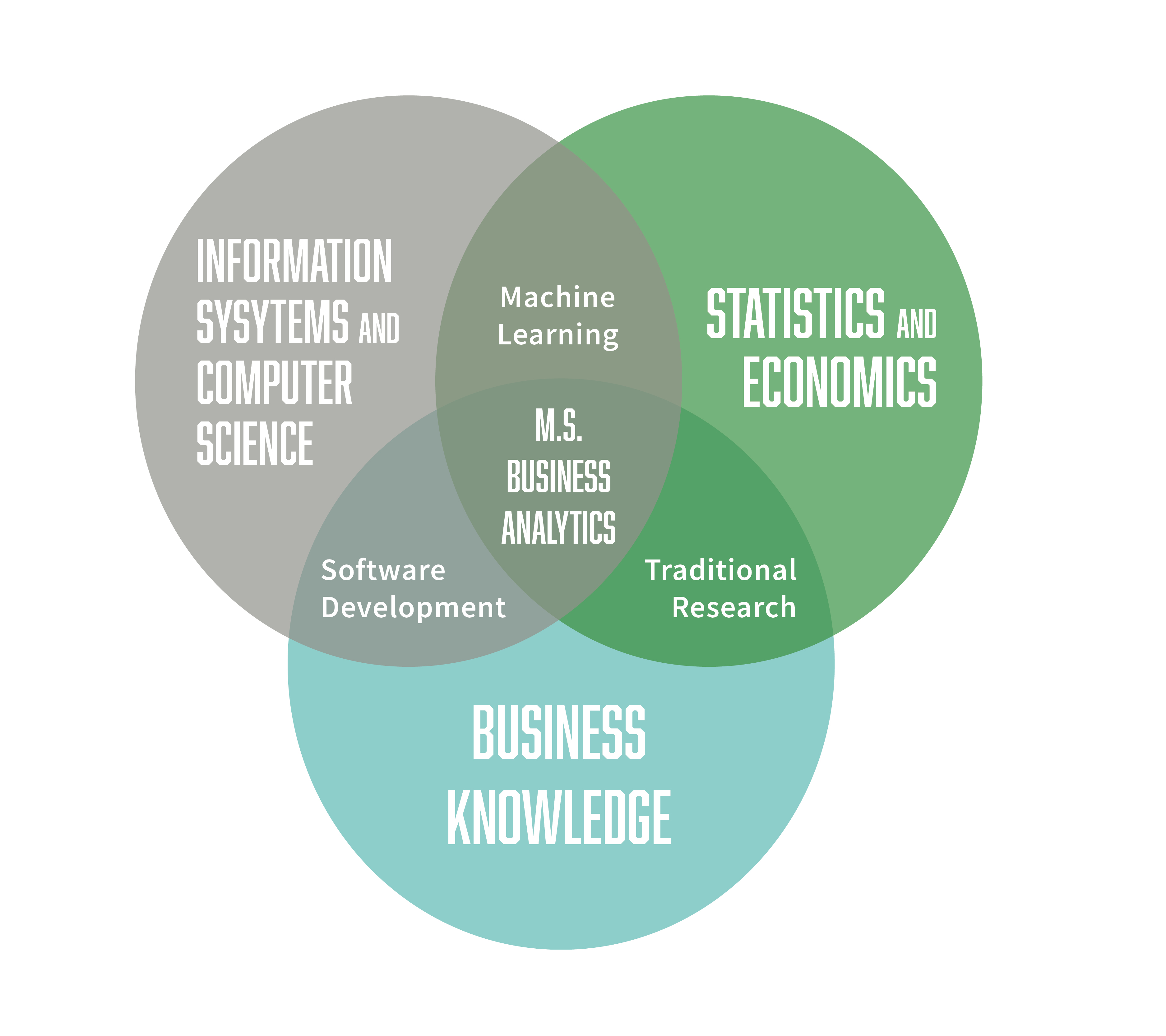
The MS in Business Analytics is designed to bridge the gap between pure computer science and traditional business management. While a Master’s in Data Science might focus heavily on the mathematical theory behind algorithms and a traditional MBA focuses on high-level organizational leadership, the MSBA occupies the middle ground. It is focused on the application of data to business contexts.
By 2026, the definition of "business analytics" has expanded significantly. It is no longer just about creating dashboards; it encompasses the management of the entire data lifecycle, including data engineering, ethical AI governance, and prescriptive modeling. Students in these programs learn to ask the right business questions, identify the necessary data sets, apply the appropriate statistical models, and communicate the findings to stakeholders who may not have a technical background.
Core Curriculum and Technical Pillars
The curriculum of a modern MSBA program is typically structured around three main types of analytics: descriptive (what happened), predictive (what will happen), and prescriptive (how can we make it happen). Most accredited programs require 30 to 45 credit hours and can be completed in 10 to 18 months of full-time study.
Programming and Data Management
At the heart of the MSBA is technical literacy. Students are expected to master several programming languages and data management tools. Python and R remain the dominant languages for statistical computing and machine learning. However, by 2026, there is an increased emphasis on SQL (Structured Query Language) for database management, as well as cloud-based platforms like Snowflake and Databricks. Understanding how to query and manipulate large-scale datasets in the cloud is now a non-negotiable skill for any analytics professional.
Machine Learning and Artificial Intelligence
While once an elective, machine learning (ML) is now a core component of the MSBA. Students explore supervised and unsupervised learning, neural networks, and natural language processing (NLP). In 2026, special attention is given to Generative AI (GenAI) and its enterprise applications. This includes learning how to fine-tune Large Language Models (LLMs) for specific business data and understanding the architectural requirements for implementing AI agents within an organization’s workflow.
Data Visualization and Communication
The ability to "tell a story with data" is what distinguishes an MSBA graduate from a data engineer. Courses in data visualization use tools like Tableau, Power BI, and Python libraries like Plotly or Seaborn. The goal is to move beyond static charts and create interactive environments where executives can explore different business scenarios. This pillar also includes "soft skills" training, focusing on executive presence and the ability to simplify complex mathematical concepts for non-technical audiences.
Admissions Requirements and Prerequisites
Entering an MSBA program requires a blend of quantitative readiness and professional intent. While many programs accept students from diverse undergraduate backgrounds—including humanities and social sciences—the most successful candidates typically demonstrate a strong foundation in mathematics.
- Quantitative Background: Applicants are generally expected to have completed coursework in calculus, linear algebra, and basic statistics. Some programs offer "bridge courses" for those who lack these prerequisites but have strong professional experience.
- Standardized Testing: As of 2026, many top-tier institutions have moved to a "test-optional" or "test-recommended" policy for the GRE and GMAT. However, strong scores in the quantitative sections of these exams can still significantly bolster an application, particularly for competitive programs.
- Programming Proficiency: Many programs now require a baseline knowledge of Python or R prior to matriculation. This is often verified through a technical assessment or the completion of a certified online prerequisite module.
- Professional Experience: While some programs cater to "pre-experience" students (those coming directly from undergraduate studies), many elite MSBA degrees prefer 2 to 5 years of work experience, as it provides the context necessary to apply analytics to real-world business problems.
Career Opportunities and Salary Outlook in 2026
The career trajectory for MSBA graduates remains one of the strongest in the global economy. According to the U.S. Bureau of Labor Statistics, roles related to data science and mathematical science are projected to grow significantly faster than the average for all occupations through 2030.
Common Job Titles
- Business Intelligence (BI) Analyst: Focuses on historical data to identify trends and improve current operations.
- Data Scientist: Develops new algorithms and models to predict future outcomes and optimize business processes.
- Analytics Manager: Leads teams of analysts and ensures that data projects align with the company’s strategic goals.
- Supply Chain Analyst: Uses data to optimize logistics, reduce waste, and improve delivery timelines.
- Operations Research Analyst: Uses advanced mathematical and analytical methods to help organizations solve problems and make better decisions.
Salary Expectations
In 2026, the starting salary for an MSBA graduate from a reputable program typically ranges from $95,000 to $130,000 in the United States, depending on the industry and geographic location. For those moving into management roles or specialized sectors like Fintech or Healthtech, total compensation packages (including bonuses and equity) frequently exceed $160,000 within three years of graduation.
Comparing MSBA vs. MBA vs. MS in Data Science
Choosing between these three degrees depends on your career goals. The following table highlights the primary differences in focus, technical depth, and typical career outcomes.
| Feature | MS in Business Analytics (MSBA) | Master of Business Administration (MBA) | MS in Data Science (MSDS) |
|---|---|---|---|
| Primary Focus | Data-driven decision making | Organizational leadership & strategy | Algorithm development & math |
| Technical Depth | Moderate to High | Low to Moderate | High |
| Target Audience | Aspiring analysts and tech managers | Future executives and general managers | Aspiring researchers and engineers |
| Math Requirement | Statistics, Calculus, Linear Algebra | Basic Quantitative Methods | Advanced Calculus, Probability Theory |
| Coding Intensity | Heavy (Python, R, SQL) | Light (Excel, some SQL) | Very Heavy (Python, C++, Java) |
| Core Outcome | Actionable business insights | Team and resource management | Scalable technical systems |
Program Costs and Return on Investment (ROI)
The financial commitment for an MSBA can be substantial. In 2026, tuition for a full-time program ranges from $35,000 at public state universities to over $90,000 at elite private institutions.
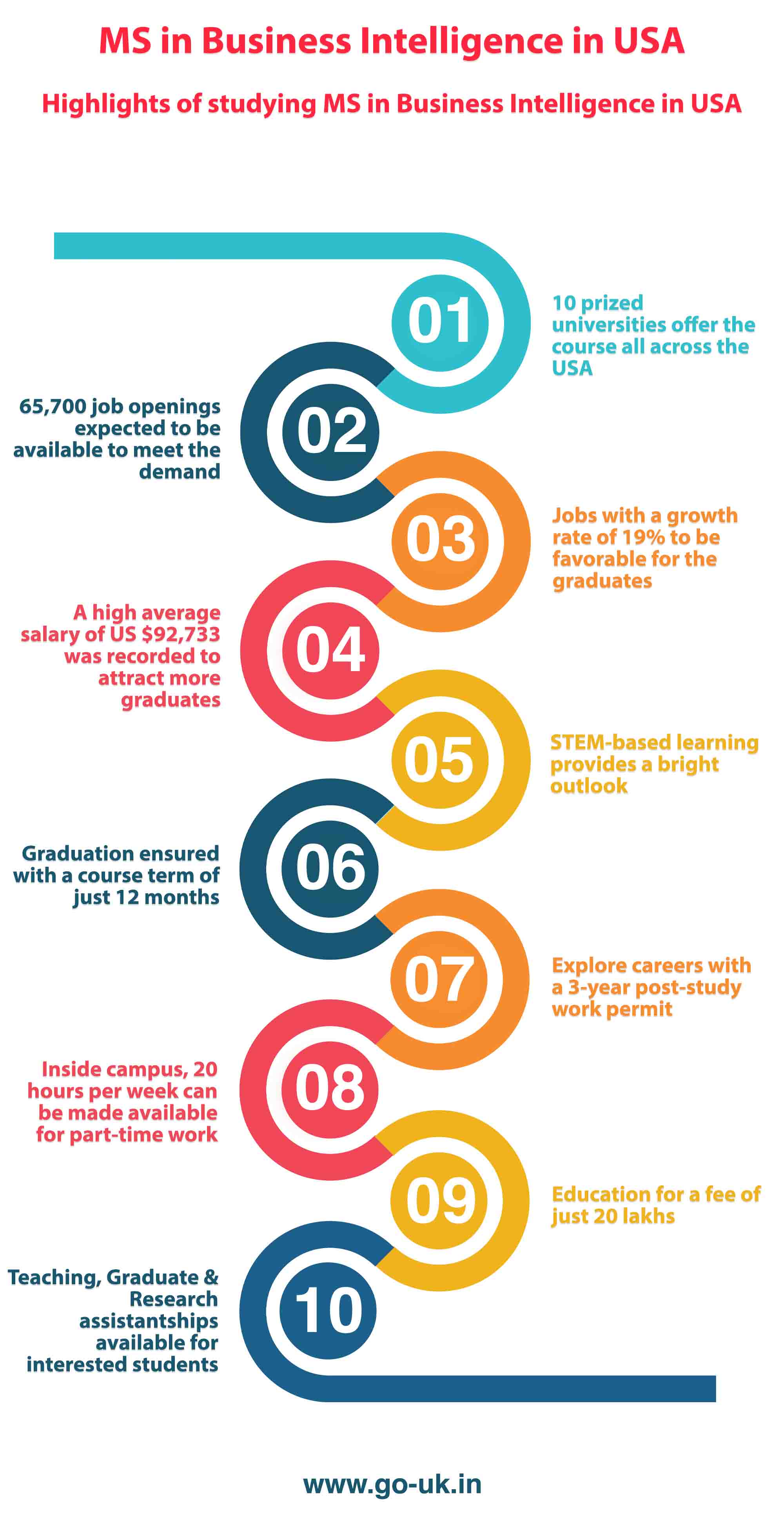
When calculating ROI, it is essential to consider the "opportunity cost" (lost wages while studying) versus the "salary lift" (the increase in annual earnings post-graduation). Most graduates report a 30% to 50% increase in salary immediately after completing the degree. Furthermore, many MSBA programs are designated as STEM programs in the United States, which allows international students on F-1 visas to apply for a 24-month extension of their Optional Practical Training (OPT), totaling 36 months of work authorization. This makes the MSBA one of the most popular degrees for international students seeking a career in the U.S. tech or finance sectors.
Choosing the Right Format: Online vs. On-Campus
By 2026, the gap in quality between online and on-campus MSBA programs has virtually disappeared. Many top-ranked universities now offer "dual-modality" options.
- On-Campus Programs: These offer the highest level of networking, access to career fairs, and face-to-face interaction with faculty. They are ideal for those looking to pivot careers entirely or those who benefit from structured, immersive environments.
- Online Programs: These are designed for working professionals who do not want to leave their current roles. They often offer "asynchronous" learning, allowing students to watch lectures and complete assignments on their own schedule. High-quality online programs will still include "synchronous" sessions (live video classes) to ensure engagement.
- Hybrid Programs: These combine online coursework with 2-3 mandatory in-person "residencies" or "immersions" on campus. This is often the best of both worlds, providing flexibility with occasional high-impact networking opportunities.
Ethical Considerations and the Future of Analytics
As we move through 2026, MSBA programs have significantly increased their focus on Data Ethics and Governance. As businesses rely more on automated decision-making, the risk of algorithmic bias becomes a critical liability. Graduates are now trained to audit models for fairness, ensure data privacy compliance (such as GDPR or CCPA), and navigate the complex legal landscape of AI-generated content.
The future of the degree lies in "Prescriptive AI." Rather than simply reporting that "sales will drop next month," the 2026-era business analyst is expected to use optimization algorithms to say, "To prevent the sales drop, we should reallocate 15% of the marketing budget from social media to email retargeting, which has a 92% probability of stabilizing revenue."
Frequently Asked Questions
Is an MS in Business Analytics worth it if I already know Python and SQL?
Yes, because technical skills are only half of the equation. An MSBA teaches you the framework for applying those skills to specific business domains like finance, marketing, and supply chain. It also provides the institutional credibility and networking opportunities necessary to move into high-level strategy and management roles that are often inaccessible to self-taught programmers.
Can I transition into Business Analytics from a non-technical background?
Absolutely. Many programs specifically design their first semester to level the playing field. If you have strong logical reasoning skills and a willingness to learn math and coding, you can succeed. It is recommended to complete a few introductory courses in statistics or Python on platforms like Coursera or edX before applying to prove your interest and aptitude.
What is the difference between Business Analytics and Business Intelligence?
Business Intelligence (BI) is generally concerned with the present and the past—using dashboards to see how the business is currently performing. Business Analytics is more forward-looking, using statistical models to predict future trends and prescribe specific actions to influence those outcomes.
How long does it take to complete an MSBA?
Most full-time programs take 10 to 12 months. Part-time programs for working professionals typically take 18 to 24 months. Some accelerated "bootcamp-style" degrees may be completed in as little as 9 months, though these are often extremely intensive.
Is the GRE/GMAT required for MSBA programs in 2026?
Many schools have made standardized tests optional to attract a wider range of applicants. However, for "M7" business schools or top-10 engineering programs, a high GRE or GMAT score is still a powerful differentiator. Always check the specific requirements of your target schools, as policies change annually.
Practical Recommendations for Prospective Students
If you are considering an MSBA, your first step should be a thorough self-audit of your quantitative skills. Before investing in an application, ensure you are comfortable with basic algebra and have an interest in problem-solving through data.
Once ready, focus on programs that carry AACSB or EQUIS accreditation, as this ensures the curriculum meets global business education standards. Additionally, prioritize schools that offer a "capstone project" where you work with a real company on a real data problem. This hands-on experience is often more valuable to recruiters than your GPA. In 2026, the most successful graduates are those who can not only build a model but can also stand in a boardroom and explain why that model matters for the company’s bottom line.
Image Gallery