Optimizing Dealership Operations with Level 5 Advertising CRM and Marketing Software
Level 5 Advertising provides automotive dealerships with a sophisticated software ecosystem, primarily centered around its proprietary Fuel platform. This technology functions as an advanced marketing-CRM hybrid that integrates first-p...
Level 5 Advertising provides automotive dealerships with a sophisticated software ecosystem, primarily centered around its proprietary Fuel platform. This technology functions as an advanced marketing-CRM hybrid that integrates first-party data, inventory management, and omnichannel automation to streamline lead generation and conversion for modern automotive retail environments.
Contents
The automotive retail landscape in 2026 demands more than just a static database of customer names; it requires a dynamic system capable of predicting buyer behavior and automating personalized outreach. Level 5 Advertising’s software suite serves this exact purpose by sitting atop or integrating deeply with a dealership’s existing Dealer Management System (DMS) and primary Sales CRM. By leveraging the Fuel platform, dealerships can transition from reactive selling to proactive, data-driven inventory marketing.
The Architecture of the Level 5 Fuel Platform
At the core of Level 5 Advertising’s offering is the Fuel platform. Unlike a traditional CRM that focuses primarily on task management for sales reps, Fuel is designed as an inventory-centric marketing and lead management engine. It treats every vehicle on the lot as a unique marketing asset and every customer interaction as a data point for future attribution.
Inventory-Based Automation
One of the primary technical advantages of the Level 5 software is its direct sync with the dealership’s DMS. In 2026, the speed of inventory turnover is critical. The software automatically identifies new arrivals, price changes, and aged inventory. It then triggers automated marketing campaigns across search, social, and display channels without manual intervention. This ensures that the CRM is always populated with leads interested in specific, available units, rather than generic brand inquiries.
First-Party Data Integration
With the total sunsetting of third-party cookies in previous years, the importance of a CRM’s ability to manage first-party data is paramount. Level 5’s software excels at capturing and refining data from the dealership’s own website and service drive. This data is then used to create "lookalike" audiences that are statistically more likely to purchase, effectively turning the CRM into a predictive modeling tool.
Bridging the Gap: Marketing Automation vs. Sales CRM
A common point of confusion for dealership principals is whether Level 5 Advertising’s software replaces legacy systems like VinSolutions, Elead, or Reynolds & Reynolds. In practice, Level 5's software acts as a Lead Management and Attribution Layer that enhances these legacy systems.
While a traditional CRM is used for logging calls and printing buyers' orders, Level 5’s software focuses on the "pre-lead" and "active-lead" phases. It tracks the customer journey from the first ad click through to the final sale, providing the BDC (Business Development Center) and marketing teams with a clear picture of which channels are actually driving revenue.
Strategic Benefits of the Dual-Layer Approach:
- Enhanced Lead Scoring: Leads coming through the Level 5 ecosystem are scored based on their interaction with inventory pages, not just the submission of a form.
- Reduced Lead Decay: Automated responses and dynamic content delivery keep the prospect engaged during the critical first 30 minutes of the buying cycle.
- Attribution Clarity: Dealerships can see exactly which specific vehicle ad led to a walk-in, allowing for better budget allocation.
Technical Specifications and Implementation
Implementing Level 5 Advertising’s CRM software requires a coordinated effort between the agency’s technical team and the dealership’s IT or operations manager. Because the system relies on high-fidelity data, the "plumbing" of the installation is the most critical phase.
Integration Requirements
To fully utilize the Fuel platform in 2026, dealerships must provide secure API access to their DMS. The software supports all major providers, including CDK Global and Reynolds & Reynolds. Additionally, the dealership’s website must be tagged with the Level 5 proprietary tracking pixel to monitor real-time inventory engagement.
User Interface and Accessibility
The dashboard is designed for three distinct user personas:
- The Dealer Principal/GM: High-level views of ROI, cost-per-sale, and inventory turn rates.
- The Marketing Director: Granular control over ad spend, creative assets, and channel performance.
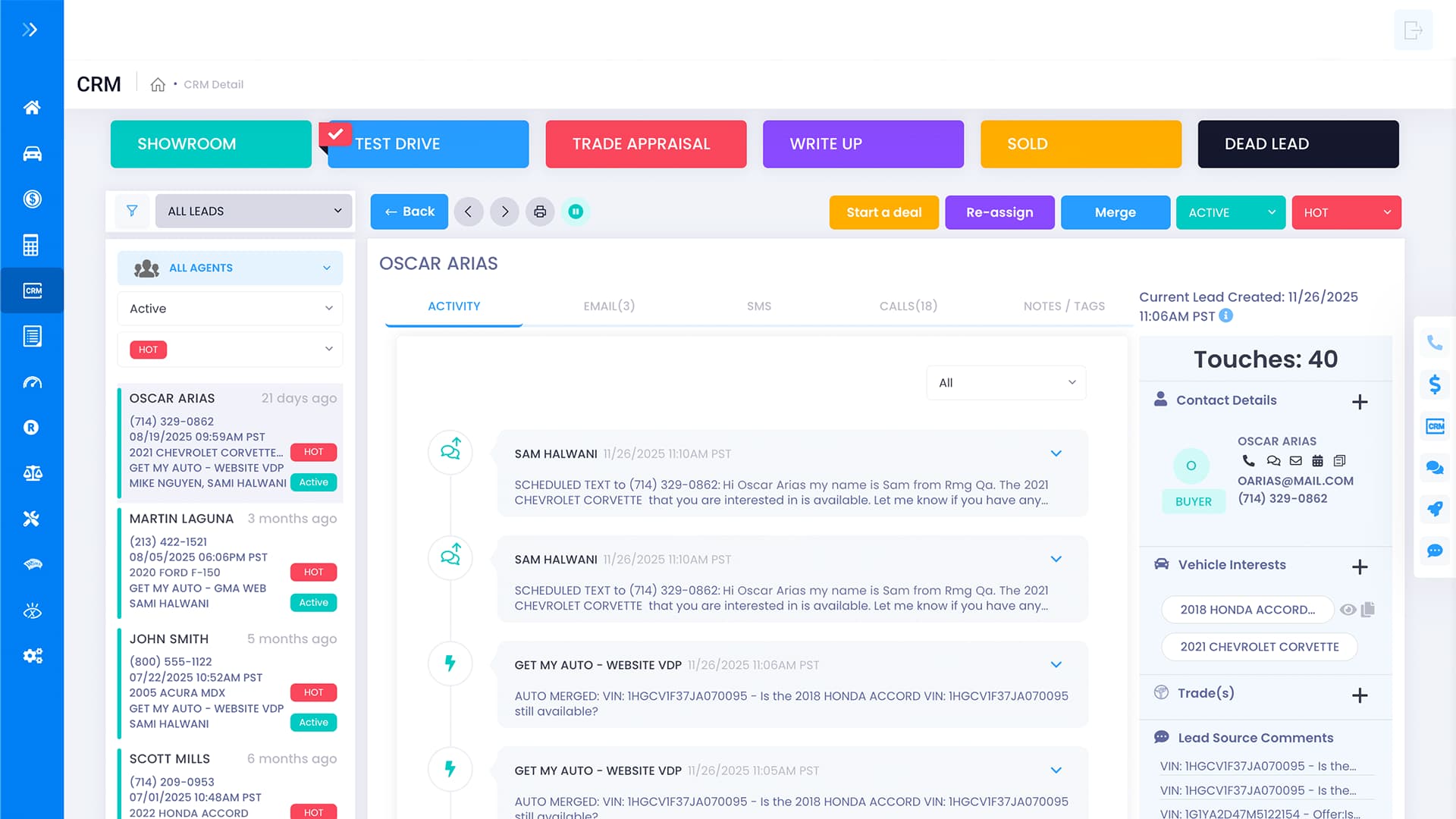
- The BDC/Sales Manager: Real-time lead alerts with detailed behavioral history (e.g., "This customer viewed the 2024 F-150 four times in the last 48 hours").
Comparative Analysis: Level 5 Fuel vs. Traditional CRMs
To understand the value proposition, it is helpful to compare the functional focus of Level 5’s software against the standard CRMs found in most showrooms.
| Feature | Traditional Sales CRM | Level 5 Fuel Platform |
|---|---|---|
| Primary Focus | Sales process and compliance | Lead generation and marketing ROI |
| Data Source | Manual entry and basic web forms | DMS sync and real-time behavioral tracking |
| Inventory Handling | Static list for quoting | Dynamic ad triggering based on stock |
| Communication | Template emails/SMS | Personalized, AI-driven omnichannel retargeting |
| Attribution | Last-click or manual input | Multi-touch algorithmic attribution |
| Reporting | Sales rep activity (calls/emails) | Full-funnel efficiency and inventory velocity |
Maximizing ROI Through Data Hygiene and Lead Scoring
In the 2026 automotive market, "lead volume" is a vanity metric. What matters is "lead quality" and "conversion velocity." Level 5 Advertising’s software addresses this by applying rigorous data hygiene protocols. The software automatically filters out bots and low-intent "tire kickers" before they ever reach the sales floor's desk.
The Role of AI in Lead Prioritization
The 2026 iteration of the Fuel platform utilizes machine learning to assign a "Propensity to Buy" score to every contact in the database. A customer who has visited the service department twice in the last six months and has recently spent more than five minutes on the "Trade-In Value" page of the website will be flagged as a high-priority lead. This allows the BDC to focus their outbound efforts on the 20% of leads that are likely to generate 80% of the month's sales.
Service-to-Sales Transition
One of the most underutilized assets in a dealership is the service drive. Level 5’s CRM software integrates service records to identify "equity mining" opportunities. If a customer is in for a high-cost repair and the software detects they have significant equity in their vehicle, it can automatically generate a personalized "upgrade" offer, sent via the customer’s preferred communication channel.
Common Challenges and Troubleshooting
While the software is robust, its effectiveness is heavily dependent on the quality of the data it receives. Dealerships often encounter "data fragmentation" where the information in the DMS does not match the website's inventory.
- DMS Sync Errors: If a vehicle is sold but not marked as "delivered" in the DMS, the Level 5 software may continue to spend marketing dollars on that unit. Regular auditing of the DMS-to-Fuel sync is required.
- Lead Duplication: In an omnichannel environment, a customer might submit a lead via Facebook and later via the website. Level 5’s software uses "deduplication" logic based on email and phone hashes to ensure the BDC isn't chasing the same person through multiple records.
- Over-Automation: There is a risk of desensitizing customers with too many automated touches. Managers should regularly review the frequency caps within the Fuel dashboard to maintain a balance between persistence and annoyance.
Frequently Asked Questions
Does Level 5 Advertising software replace my current CRM?
No, it is not a total replacement for a sales CRM like VinSolutions or Elead. Instead, it serves as a powerful marketing and lead-enrichment layer. It handles the "top of the funnel" (attracting and scoring leads) and then pushes high-quality data into your existing CRM for the sales team to execute the final transaction and paperwork.
How does the software handle "Cookieless" tracking in 2026?
The platform relies on first-party data and server-side tracking. By using the dealership’s own domain and customer-provided information (from service appointments or previous sales), the software creates a persistent ID for each customer that does not rely on third-party cookies, ensuring marketing remains compliant and effective.
What is the typical setup time for a new dealership?
A standard implementation takes between 30 and 45 days. This window includes the API integration with the DMS, the installation of tracking pixels on the website, the ingestion of historical sales data for lookalike modeling, and the training of the dealership’s marketing and BDC staff.
Can the software manage multi-rooftop dealer groups?
Yes. The Fuel platform is designed with an enterprise architecture. Group-level managers can view aggregated data across all locations to compare performance, while individual store managers only see the data relevant to their specific rooftop. This is particularly useful for shifting inventory between locations based on local demand trends.
What kind of support does Level 5 provide for the software?
Level 5 Advertising provides a dedicated account manager and a technical support team. Because they operate as a full-service agency, they don't just provide the software; they also manage the creative assets and strategy that run through it, providing a "managed software" experience rather than a "self-service" SaaS model.
Practical Recommendation for Dealerships
For dealerships looking to modernize their tech stack in 2026, the first step is to conduct a Data Audit. Before implementing Level 5 Advertising’s software, ensure that your DMS records are clean and that your BDC has a clear process for handling enriched leads.
The most successful implementations occur when the dealership views Level 5 not just as a software provider, but as a strategic partner. Start by integrating your inventory feed and setting up the basic attribution tracking. Once the data begins to flow, use the "Propensity to Buy" scoring to reorganize your BDC’s daily task list. By focusing your most expensive human assets (your salespeople) on the highest-quality leads generated by the software, you will see a measurable decrease in cost-per-sale and an increase in total units moved.
Image Gallery