Understanding the Army Nurse Corps: Roles, Responsibilities, and Career Paths in 2026
The Army Nurse Corps role entails serving as a commissioned officer responsible for the health and well-being of Soldiers, their families, and veterans. These professionals provide high-quality nursing care in diverse environments, ran...
The Army Nurse Corps role entails serving as a commissioned officer responsible for the health and well-being of Soldiers, their families, and veterans. These professionals provide high-quality nursing care in diverse environments, ranging from state-of-the-art medical centers to mobile field hospitals in austere conditions, while leading multidisciplinary medical teams to ensure force readiness.
Contents
The Dual Identity of the Army Nurse
To understand what the nurse role in the U.S. Army entails, one must first recognize that an Army Nurse is both a professional healthcare provider and a commissioned officer. In 2026, the Army Nurse Corps (ANC) remains a vital component of the Army Medical Department (AMEDD). Unlike civilian nursing, where the focus is primarily on clinical outcomes within a fixed facility, an Army Nurse’s "MOS" (technically referred to as an Area of Concentration or AOC for officers) involves a broader spectrum of leadership, tactical proficiency, and clinical expertise.
The core mission is "to provide responsive, innovative, and evidence-based nursing care to support the readiness of the Total Force." This means that while you may spend most of your time in a hospital setting, you are always prepared to deploy and provide care in environments that civilian nurses rarely encounter. This duality requires a commitment to maintaining physical fitness standards, participating in military tactical training, and developing leadership skills that transcend bedside care.
Primary Nurse Areas of Concentration (AOC)
While many refer to the role generally as an "Army Nurse MOS," the Army categorizes nurses by specific AOCs based on their specialty. In 2026, the Army continues to offer specialized paths that allow nurses to focus on specific patient populations or clinical environments.
66H: Medical-Surgical Nurse
The 66H AOC is the most common entry point for new Army Nurses. These professionals provide care for patients with a wide variety of medical and surgical conditions. The role involves managing complex patient loads, administering medications, and coordinating with physicians and therapists. However, in the Army, a 66H is also a leader of enlisted personnel (68W Medics and 68C Practical Nursing Specialists), often serving as a Charge Nurse or Ward OIC (Officer in Charge) earlier in their career than their civilian counterparts.
66T: Emergency Room Nurse
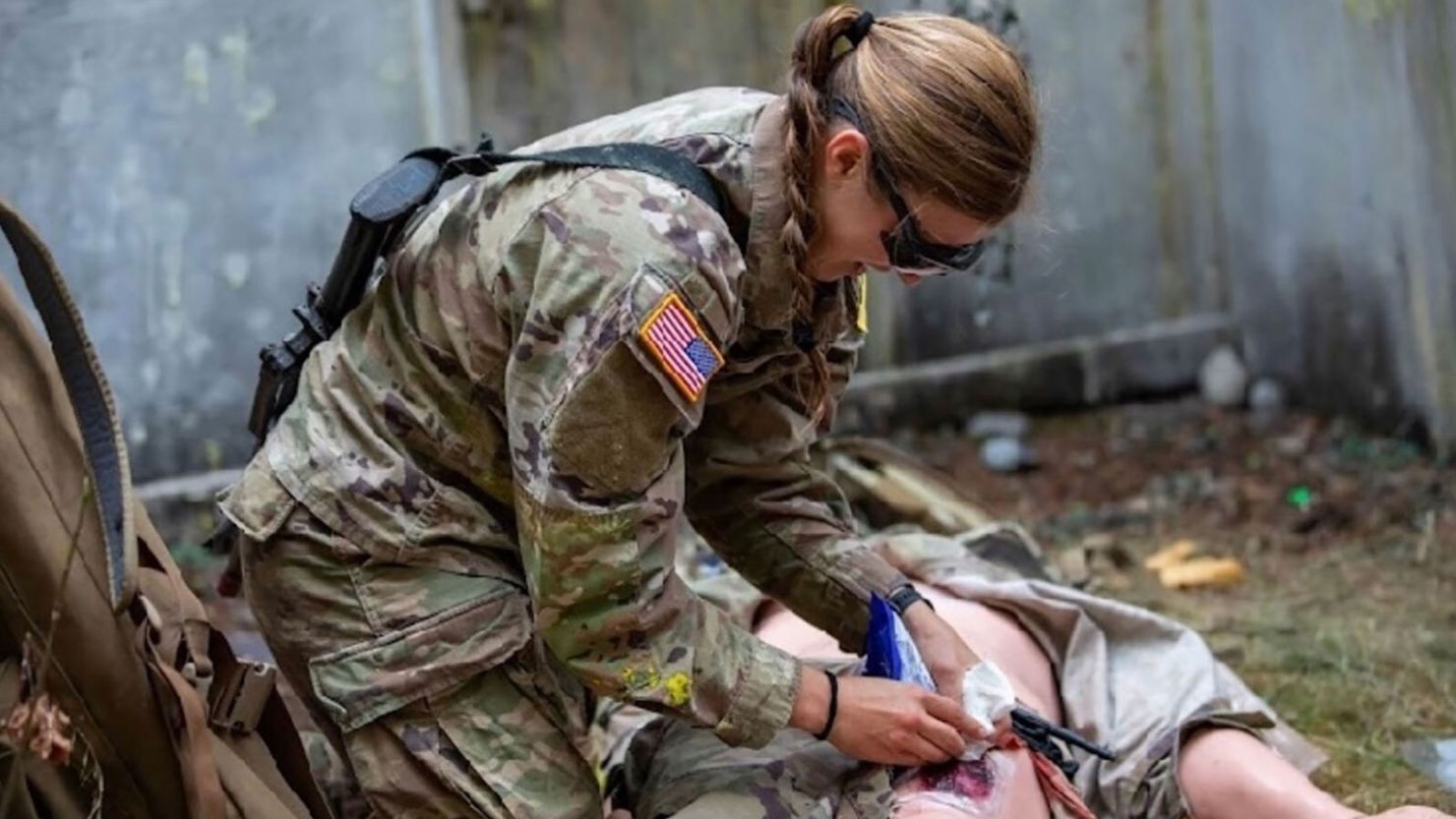
ER Nurses in the Army are trained to handle high-acuity trauma and emergency situations. This role is critical during deployments. They must be experts in triage, stabilization, and prepare patients for medical evacuation (MEDEVAC). The 66T role requires rapid decision-making and the ability to function under extreme pressure, often with limited resources in field environments.
66F: Nurse Anesthetist (CRNA)
The Certified Registered Nurse Anesthetist role is one of the most highly regarded in the Army. CRNAs provide anesthesia care for all types of surgical cases. In the Army, they often practice with a high degree of autonomy, especially in forward-deployed surgical teams where they may be the sole anesthesia provider. The Army offers a robust Doctorate of Nursing Practice (DNP) program for qualified nurses looking to transition into this AOC.
66E: Operating Room Nurse
OR Nurses manage the perioperative environment. They ensure sterile fields, assist surgeons, and manage the technical equipment required for complex surgeries. In the military context, this includes being proficient in mobile surgical units that can be set up and torn down in a matter of hours.
| AOC Code | Specialty Title | Primary Environment | Key Responsibility |
|---|---|---|---|
| 66H | Medical-Surgical Nurse | Fixed Hospitals / Clinics | General patient care and ward management. |
| 66T | Emergency Nurse | ER / Forward Resuscitative Teams | Trauma stabilization and triage. |
| 66F | Nurse Anesthetist | Surgical Units / Field Hospitals | Administering anesthesia and pain management. |
| 66G | OB/GYN Nurse | Family Medical Centers | Labor, delivery, and postpartum care. |
| 66W | Psychiatric Nurse | Medical Centers / Behavioral Health | Mental health support and combat stress control. |
| 66P | Family Nurse Practitioner | Outpatient Clinics | Primary care and disease prevention. |
Eligibility and Entry Requirements
Becoming an Army Nurse is a competitive process that requires meeting both professional and military standards. In 2026, the requirements remain rigorous to ensure that officers are capable of handling the mental and physical rigors of service.
- Education: You must possess a Bachelor of Science in Nursing (BSN) from a program accredited by the Commission on Collegiate Nursing Education (CCNE) or the Accreditation Commission for Education in Nursing (ACEN). While some branches of service have historically accepted Associate Degrees, the Army Nurse Corps strictly requires a BSN for commissioned officers.
- Licensing: You must hold a current, valid, and unrestricted nursing license from a U.S. state, territory, or the District of Columbia.
- Citizenship: You must be a U.S. citizen.
- Age: Generally, applicants must be between 21 and 42 years of age at the time of commissioning, though age waivers are occasionally available for specialized roles with prior experience.
- Physical Fitness: Nurses must meet the Army's height and weight standards and pass the Army Combat Fitness Test (ACFT). This test measures functional fitness through six events, including deadlifts, power throws, and a two-mile run.
- Security Clearance: As a commissioned officer, you must be able to obtain a Secret security clearance.
The Training Pipeline: From Civilian to Officer
Once accepted into the Army Nurse Corps, your journey begins with the Direct Commissioning Course (DCC) or the AMEDD Basic Officer Leader Course (BOLC) at Fort Sam Houston, Texas.
Basic Officer Leader Course (BOLC)
BOLC is designed to transition healthcare professionals into the military way of life. It is not "boot camp" in the traditional sense, but it involves significant physical training, leadership development, and classroom instruction. You will learn about military customs and courtesies, the U.S. Army's organizational structure, and tactical medical operations.
A significant portion of BOLC focuses on Medical Support Operations (MSO). You will participate in field exercises where you learn how to set up field hospitals, manage mass casualty (MASCAL) situations, and operate within the "Chain of Survival" from the point of injury to a fixed medical facility (Role 1 through Role 4 care).
Clinical Nurse Transition Program (CNTP)
For new graduates, the Army provides the CNTP. This is a residency-like program that lasts approximately six months. It pairs new nurses with experienced preceptors in a clinical setting to ensure they develop the bedside skills necessary to function independently. This program is highly regarded because it bridges the gap between nursing school theory and the realities of high-stakes military medicine.
Day-to-Day Life and Duty Stations
The day-to-day life of an Army Nurse varies significantly based on their assignment. In 2026, nurses are stationed at Military Treatment Facilities (MTFs) across the globe.
- Fixed Facilities: Major hospitals like Brooke Army Medical Center (BAMC) in Texas or Landstuhl Regional Medical Center in Germany operate much like large civilian trauma centers. Nurses work shifts (often 12 hours), participate in multidisciplinary rounds, and manage patient care using advanced electronic health records.
- Operational Units: Nurses assigned to Brigade Combat Teams (BCTs) or Multifunctional Medical Battalions (MMBs) spend more time in the field. Their focus is on medical readiness, training medics, and preparing for deployments.
- Global Opportunities: Army Nurses have the unique opportunity to live and work in places like South Korea, Italy, Hawaii, and Japan. Each location offers a different clinical focus, from supporting active-duty paratroopers to caring for the large retiree populations overseas.
Compensation and Professional Benefits
One of the primary reasons professionals choose the Army Nurse Corps over civilian nursing is the comprehensive benefit package. In 2026, the financial and professional incentives are designed to retain high-quality talent.
Competitive Pay and Allowances
An Army Nurse's pay is composed of several parts:
- Basic Pay: Based on rank and years of service.
- Basic Allowance for Housing (BAH): A tax-free stipend to cover housing costs, which varies by geographic location.
- Basic Allowance for Subsistence (BAS): A tax-free allowance for meals.
- Incentive Pay: Specialized nurses (like CRNAs or Operating Room nurses) often receive additional specialty pay to remain competitive with civilian salaries.
Educational Advancement
The Army is a leader in nursing education. Through the Long-Term Health Education and Training (LTHET) program, the Army pays for nurses to obtain advanced degrees (Masters or Doctorate) while remaining on active duty with full pay and benefits. In exchange, the nurse typically agrees to an additional service obligation. This allows nurses to become Nurse Practitioners, CRNAs, or Clinical Nurse Specialists without accruing student debt.
Loan Repayment
The Health Professions Loan Repayment Program (HPLRP) can provide significant financial relief for those who entered the service with existing nursing school debt. Depending on the current needs of the Army, this program can pay off a substantial portion of qualifying loans in exchange for years of service.
Challenges of the Role
While the benefits are significant, the role of an Army Nurse is demanding. You are subject to the needs of the Army, which may include:
- Deployments: Being away from family for months at a time to support operations worldwide.
- Frequent Relocations: Moving every 3 to 4 years (Permanent Change of Station or PCS) is standard, which can be challenging for families.
- High Accountability: As an officer, you are responsible for the actions of those under your command. This includes administrative, disciplinary, and professional oversight.
Frequently Asked Questions
Do Army Nurses go through combat training?
Yes. While they do not attend the same "Basic Training" as enlisted soldiers, they attend BOLC, which includes weapons qualification, land navigation, and tactical medical training. They are expected to be able to defend themselves and their patients if necessary.
Can I choose my specialty as an Army Nurse?
New nurses usually start in Medical-Surgical nursing (66H). After gaining experience (usually 2 years), you can apply for specialty "long courses" in areas like Critical Care, ER, or the Operating Room. The Army selects candidates based on performance and current personnel needs.
Is the Army Nurse Corps different from the Army Reserve or National Guard?
Yes. Active Duty nurses work for the Army full-time. Reserve and National Guard nurses typically serve one weekend a month and two weeks a year, maintaining civilian nursing jobs the rest of the time. However, they can be mobilized for active duty during emergencies or deployments.
What is the highest rank an Army Nurse can achieve?
The Army Nurse Corps is headed by the Chief of the Army Nurse Corps, who typically holds the rank of Major General (O-8). It is possible for a nurse to rise through the ranks from Second Lieutenant (O-1) to General officer positions.
How does 2026 military nursing differ from previous years?
In 2026, there is a heavier emphasis on prolonged casualty care (care provided when evacuation is delayed) and the integration of advanced telehealth and AI-assisted diagnostics in the field. The role has become more technically complex as medical technology evolves.
Final Recommendation
If you are a nurse who thrives on leadership, variety, and a sense of mission, the Army Nurse Corps offers a career path that is difficult to replicate in the civilian sector. The first step for anyone interested is to contact an AMEDD Recruiter—specifically a medical officer recruiter, rather than a general enlisted recruiter—to discuss your qualifications and the current incentives for the 2026 fiscal year. This role requires a commitment to both the science of nursing and the discipline of military service, but for those who fit the profile, it provides unparalleled professional growth and the honor of caring for the nation's defenders.
Image Gallery