How to Choose the Best Blanket for Summer Sleeping
To choose the best summer blanket, prioritize natural, breathable fibers with high moisture-wicking capabilities, such as linen, bamboo, or eucalyptus-derived Lyocell. Look for lightweight constructions like waffle weaves or muslin, an...
To choose the best summer blanket, prioritize natural, breathable fibers with high moisture-wicking capabilities, such as linen, bamboo, or eucalyptus-derived Lyocell. Look for lightweight constructions like waffle weaves or muslin, and ensure the fabric weight (GSM) is low to prevent heat trapping while maintaining the psychological comfort necessary for deep sleep.
Contents
High-quality sleep is foundational to health, yet rising global temperatures and seasonal heatwaves make maintaining a cool sleep environment increasingly difficult. As of 2026, the bedding industry has pivoted toward advanced textile engineering to solve the "hot sleeper" dilemma. Choosing the right summer blanket is no longer just about picking something thin; it is about understanding the intersection of thermal conductivity, moisture management, and textile architecture.
Understanding the Science of Summer Sleep
The human body undergoes a natural thermoregulation process as part of the circadian rhythm. To initiate sleep, your core body temperature must drop by approximately two to three degrees Fahrenheit. When your bedding traps heat, it prevents this cooling process, leading to fragmented sleep, night sweats, and reduced REM cycles.
A summer blanket serves a dual purpose. Psychologically, most people require the "weight" of a covering to feel secure—a biological vestige of our need for protection. Functionally, however, that covering must act as a heat exchanger. It should allow warm air to escape while simultaneously pulling sweat away from the skin and evaporating it into the room. This process is known as evaporative cooling, and it is the primary mechanism that keeps you comfortable during a humid July night.
Primary Fabric Choices for Maximum Breathability
The material of your blanket is the most significant factor in its performance. Synthetic materials like standard polyester are generally avoided in summer because they are hydrophobic (they repel water) and have low breathability, effectively creating a "plastic bag" effect. Instead, focus on the following high-performance natural and semi-synthetic fibers.
Linen: The Gold Standard for Heat Dissipation
Linen, derived from the flax plant, is arguably the most effective summer fabric. Its fibers are thicker than cotton but have a lower thread count by design, which allows for significant airflow. Linen can absorb up to 20% of its weight in moisture before even feeling damp. In 2026, linen remains a premium choice because it is naturally antimicrobial and becomes softer with every wash, lasting decades if cared for properly.
Bamboo and Viscose
Bamboo-derived fabrics (often labeled as viscose or rayon) have gained immense popularity for their "cool-to-the-touch" sensation. Bamboo fibers are round and smooth, reducing skin irritation. More importantly, bamboo is highly hydrophilic. It wicks moisture away from the body at a rate significantly faster than cotton. For sleepers who suffer from intense night sweats, bamboo offers a silky texture that doesn't "cling" to the skin.
Eucalyptus (Tencel/Lyocell)
Tencel is a brand of Lyocell made from eucalyptus wood pulp. It is engineered for high-performance moisture management. The microscopic "fibrils" of Tencel fibers are structured to absorb and release moisture efficiently. According to research on textile thermoregulation, Lyocell can be more effective at cooling than even some specialized synthetic "cooling" fabrics because of its botanical origin and breathability.
Cotton Percale
If you prefer the feel of traditional cotton, the weave is more important than the material itself. You must choose Percale. Percale is a plain, one-under-one-over weave that results in a matte, crisp finish. It feels like a cool hotel sheet. Avoid Sateen weaves in the summer, as the denser weave structure traps more heat.
The Role of Weight and Construction
Beyond the fiber type, the way a blanket is constructed determines how much air can move through it. In 2026, "Air-Loop" and cellular technologies are the industry standards for summer comfort.
Waffle and Honeycomb Weaves
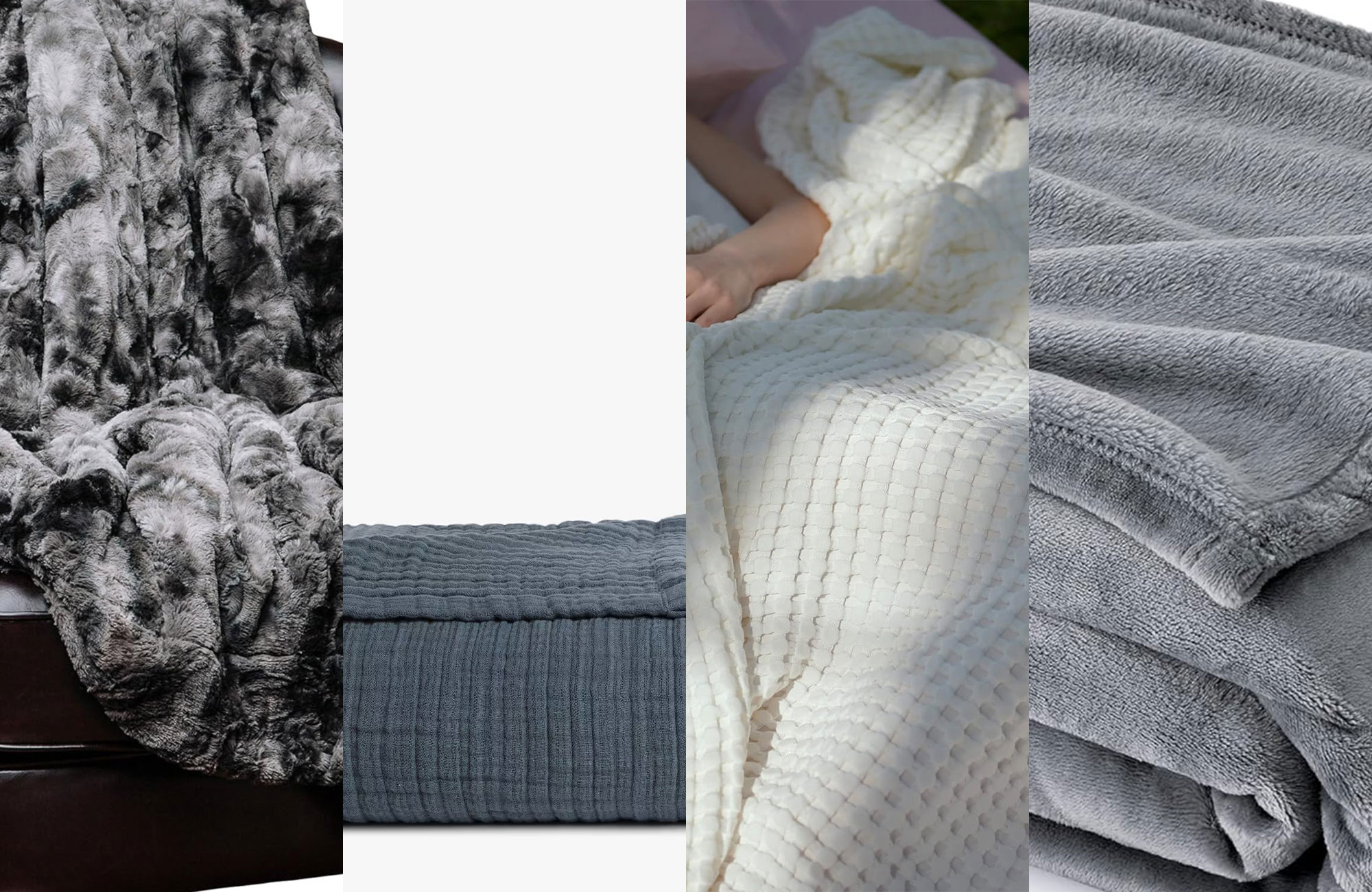
A waffle weave creates a three-dimensional surface area. This design serves two functions: it creates small pockets of air that provide a buffer between you and the blanket, and it increases the surface area available for moisture evaporation. A waffle weave blanket feels more substantial than a flat sheet but remains significantly cooler than a standard knit.
Muslin and Gauze
Muslin is a loosely woven cotton fabric that is traditionally used for baby swaddles, but it is an excellent adult summer bedding choice. "Four-layer" or "six-layer" muslin blankets provide the "loft" and "squish" of a comforter without the insulation. The loose weave allows for maximum gas exchange (CO2 and heat leaving, fresh air entering).
GSM: The Technical Measurement of Weight
When shopping, look for the GSM (Grams per Square Meter). This tells you the density of the fabric.
- Summer Weight: 100–250 GSM.
- All-Season: 250–400 GSM.
- Winter/Heavy: 400+ GSM. For a dedicated summer blanket, staying under 250 GSM ensures the material is light enough to prevent heat retention.
Comparison of Summer Blanket Materials
| Material | Breathability | Moisture Wicking | Durability | Best For |
|---|---|---|---|---|
| Linen | Exceptional | High | Very High | Humidity & Longevity |
| Bamboo | High | Exceptional | Moderate | Night Sweats & Softness |
| Tencel | High | High | High | Eco-conscious & Cooling |
| Cotton Percale | Moderate | Moderate | High | Traditional Crisp Feel |
| Cotton Gauze | High | Moderate | Moderate | Lightweight Texture |
Cooling Weighted Blankets: Is It Possible?
Many sleepers rely on weighted blankets for anxiety relief or sensory processing disorders, but traditional weighted blankets are notoriously hot due to polyester fill and thick covers. By 2026, "cooling weighted blankets" have evolved into two distinct categories:
- Open-Knit Weighted Blankets: These blankets do not use "fill" or "beads." Instead, they are made from heavy, hand-knitted loops of weighted yarn (usually cotton or Tencel). The large holes in the knit allow for total airflow, providing the weight without the heat.
- Glass Bead Construction: If you prefer a traditional-looking weighted blanket, ensure it uses glass beads rather than plastic poly-pellets. Glass conducts heat more efficiently than plastic, and when paired with a bamboo or Lyocell cover, it stays significantly cooler.
Maintenance and Care for Optimal Performance
To maintain the cooling properties of your summer blanket, you must prevent the fibers from becoming clogged with body oils and skin cells.
- Wash Frequently: In summer, wash your blanket every 1-2 weeks. Use a gentle, pH-neutral detergent.
- Avoid Fabric Softeners: This is a critical technical tip. Fabric softeners work by coating fibers in a thin layer of wax/oil to make them feel "soft." This coating destroys the moisture-wicking properties of bamboo and Tencel and clogs the breathable pores of linen.
- Low Heat Drying: High heat can damage the structural integrity of "cooling" fibers like Tencel. Whenever possible, line dry or use the lowest heat setting on your dryer to maintain the fabric's "crisp" or "cool" feel.
Common Mistakes to Avoid
- Prioritizing Thread Count: High thread count (e.g., 800-1000) is actually a disadvantage in summer. High thread count means the threads are packed more tightly, which restricts airflow. For summer, a lower thread count (200-400) in a high-quality fiber is superior.
- Using Synthetic "Cooling" Treatments: Some blankets are treated with chemicals or "phase-change materials" (PCM) that feel cold to the touch initially but lose their effectiveness once they reach your body temperature. Natural fibers offer more consistent, long-term thermoregulation throughout the night.
- Over-layering: It is tempting to use a top sheet and a summer blanket. However, every layer creates a new "boundary layer" of air. For the most effective cooling, many experts suggest using only a high-quality linen or bamboo blanket directly against the skin.
FAQs
Can I use a summer blanket if I keep my air conditioning very low?
Yes. If your room is kept below 68°F (20°C) via AC, you may actually need an "all-season" weight (around 300 GSM) or a layered muslin blanket. The goal is to prevent a "chill" while still allowing the body to vent heat. A cotton waffle weave is often the perfect "bridge" for AC users.
Does the color of the blanket affect sleep temperature?
While dark colors absorb more light energy (heat) from the sun, this is generally irrelevant inside a bedroom at night. However, light colors (whites, creams, pastels) can create a "psychological cooling" effect, making the sleep environment feel airier and less oppressive.
Why does my "cooling" blanket feel warm after an hour?
This usually happens with synthetic blankets that use surface-level cooling treatments. Once the material absorbs your body heat, it has nowhere to "put" it because the fibers aren't breathable. Switching to a natural fiber like linen or a knit-style weighted blanket solves this by allowing the heat to pass through rather than storing it.
Are bamboo blankets better than cotton for allergies?
Generally, yes. Bamboo and linen are naturally more resistant to dust mites and mold than low-quality cotton. Since summer heat and humidity can increase allergen activity, choosing a hypoallergenic material can improve breathing and sleep quality.
How do I know if a blanket is "breathable" before buying it?
A simple "breath test" can work: hold the fabric to your mouth and try to blow air through it. If you feel significant resistance, the fabric will trap heat. If air passes through easily, it is a good candidate for summer sleep.
Final Recommendation
For the absolute best summer sleeping experience in 2026, invest in a 100% French or Belgian Linen blanket or a Tencel-based waffle weave blanket. These materials offer the most scientifically supported thermoregulation and moisture management. If you require weight for comfort, opt for a hand-knitted Tencel weighted blanket to ensure you receive deep pressure stimulation without the risk of overheating.
Image Gallery