The Coolest Marvel Characters: Defining Icons of Style, Power, and Narrative Depth
Defining the coolest Marvel characters involves evaluating a unique blend of visual design, innovative power sets, and the emotional resonance of their personal journeys. From the supernatural aesthetic of Ghost Rider to the complex ps...
Defining the coolest Marvel characters involves evaluating a unique blend of visual design, innovative power sets, and the emotional resonance of their personal journeys. From the supernatural aesthetic of Ghost Rider to the complex psychological layers of Moon Knight, these characters stand out through their enduring cultural impact and distinct presence across comics and cinema.
Contents
The concept of "cool" in the Marvel Universe is rarely about raw power alone. While heavy hitters like Thor or the Hulk possess immense strength, characters often categorized as the coolest are those who embody a specific archetype—the lone wanderer, the tortured anti-hero, or the brilliant strategist—with a visual flair that translates perfectly from the page to the screen. In 2026, as the Marvel Multiverse continues to expand, our understanding of these characters has evolved, blending classic comic lore with modern cinematic interpretations.
The Aesthetic Pioneers: Visual Design as a Catalyst for Cool
In the world of graphic storytelling, a character’s "cool factor" often begins with their silhouette. Visual shorthand allows readers to immediately identify a character’s temperament and world. Two characters that consistently top lists for their visual impact are Ghost Rider and Moon Knight.
Ghost Rider (Johnny Blaze and Robbie Reyes)
Few images in pop culture are as striking as a flaming skull clad in leather. Whether it is Johnny Blaze on his hell-cycle or Robbie Reyes in his fortified muscle car, Ghost Rider represents the "Rule of Cool" in its purest form. The character’s appeal lies in the juxtaposition of the macabre and the heroic.
The Spirit of Vengeance operates on a supernatural plane that contrasts sharply with the street-level heroics of characters like Daredevil. The visual effects associated with the Penance Stare—a move that forces villains to feel the pain they have inflicted on others—combine moral justice with a terrifyingly cool execution. In 2026, Ghost Rider remains a pinnacle of Marvel design because his look has remained largely unchanged since his debut in Marvel Spotlight #5 (1972), proving that true style is timeless.
Moon Knight (Marc Spector)
While Ghost Rider leans into the infernal, Moon Knight (Marc Spector) leans into the ethereal. Clad in stark, luminescent white to ensure his enemies see him coming, Moon Knight’s cool factor is derived from his unpredictability and psychological complexity.
His status as the "Fist of Khonshu" allows for a unique aesthetic that blends ancient Egyptian mythology with modern tactical gear. The multi-personality aspect of Marc Spector, Steven Grant, and Jake Lockley adds a narrative "cool" that few other characters can match. It’s not just about the cape and the crescent darts; it’s about the internal struggle of a man who serves a god of vengeance while questioning his own sanity.
The Enigmatic Anti-Heroes: Complexity Over Perfection
The shift from the "Golden Age" of perfect heroes to the "Modern Age" of flawed protagonists solidified the popularity of the anti-hero. These characters are cool because they are relatable in their imperfections and uncompromising in their methods.
Wolverine (Logan)
Wolverine is the quintessential Marvel cool character. His appeal stems from his mystery, his rugged independence, and his "best there is at what I do" attitude. From a technical design standpoint, Logan’s retractable adamantium claws are one of the most functional and iconic weapons in fiction.
Wolverine’s cool factor is also bolstered by his longevity. Having lived through centuries of conflict, he carries a weary wisdom that contrasts with the youthful optimism of the X-Men. His ability to heal from almost any wound makes him a relentless force, but it is his struggle to retain his humanity despite his animalistic urges that provides the character’s true depth.
Venom (Eddie Brock and Symbiotes)
Venom transformed from a terrifying antagonist into one of Marvel’s most stylish anti-heroes. The symbiotic relationship offers a visual fluidity that artists love to exploit—shifting shapes, tendrils, and a monstrous visage that subverts the traditional "hero" look. The coolness of Venom lies in the "edge" he brought to the Marvel Universe in the late 80s and early 90s, a legacy that continues to resonate in 2026. The dynamic between Eddie Brock and the Symbiote creates a "buddy cop" energy that is both dark and humorous, making him a perennial fan favorite.
Cosmic Cool: Philosophical Depth and Galactic Scale
Characters who inhabit the "Cosmic" side of Marvel often possess a detached, philosophical coolness that sets them apart from the frantic energy of Earth-based heroes.
The Silver Surfer (Norrin Radd)
The Silver Surfer is the embodiment of minimalist cool. A chrome-plated man on a surfboard traveling through the vacuum of space is a concept that shouldn't work, yet it remains one of Jack Kirby’s greatest designs. Norrin Radd’s coolness comes from his noble sacrifice and his profound loneliness.
As the former herald of Galactus, the Surfer carries the weight of worlds on his shoulders. His power cosmic allows him to manipulate matter and energy, but he often chooses to use his abilities for reflection and pacifism. This intellectual approach to heroism, combined with a sleek, aerodynamic design, makes him one of the most sophisticated characters in the Marvel canon.
Doctor Doom (Victor Von Doom)
It is a common adage in comics that a hero is only as good as their villain, and Doctor Doom is arguably the coolest villain in the Marvel Universe. Doom is the rare character who masters both high-level science and ancient sorcery.
His coolness is rooted in his absolute confidence and his imposing armor. Unlike many villains who seek destruction, Doom genuinely believes he is the only one capable of leading humanity to a peaceful future—albeit under his iron fist. His mask hides a scarred face and a wounded pride, making his quest for dominance deeply personal. In any room he enters, Doom is the most dangerous and commanding presence, a feat he accomplishes through sheer force of will and intellect.
Comparing Attributes of the Coolest Characters
To understand why these characters resonate, it is helpful to compare the elements that define their public perception. The following table breaks down the primary "cool" drivers for several top-tier Marvel entities.
| Character | Primary Aesthetic | Power Source | Archetype | Cultural Impact |
|---|---|---|---|---|
| Wolverine | Rugged/Tactical | Mutation/Science | The Lone Wolf | Highest (X-Men Icon) |
| Ghost Rider | Supernatural/Horror | Infernal Pact | The Vengeful Spirit | High (Visual Icon) |
| Silver Surfer | Minimalist/Cosmic | Power Cosmic | The Philosopher | Moderate (Cult Classic) |
| Moon Knight | Mythological/White | Divine/Tech | The Unreliable Hero | High (Modern Appeal) |
| Doctor Doom | Regal/Medieval Tech | Science & Magic | The Mastermind | Highest (Villain Standard) |
| Spider-Gwen | Urban/Neon | Radioactive Spider | The Modern Variant | High (Style Pioneer) |
The Modern Vanguard: Spider-Gwen and Miles Morales
In the mid-2020s, the definition of cool has shifted toward inclusivity and modern urban aesthetics. Characters like Miles Morales and Gwen Stacy (Spider-Gwen/Ghost-Spider) have redefined what a Marvel hero looks and sounds like.
Spider-Gwen (Gwen Stacy)
Spider-Gwen’s design is widely considered one of the best in modern comic history. The use of a white, black, and neon pink color palette, combined with a hood, created a look that felt instantly contemporary. Her coolness is tied to her background as a drummer in a band and her status as an outsider in her own universe. She represents a fusion of music, street art, and superheroics that resonates heavily with younger audiences and those looking for a fresh take on the Spider-Man mythos.
Miles Morales
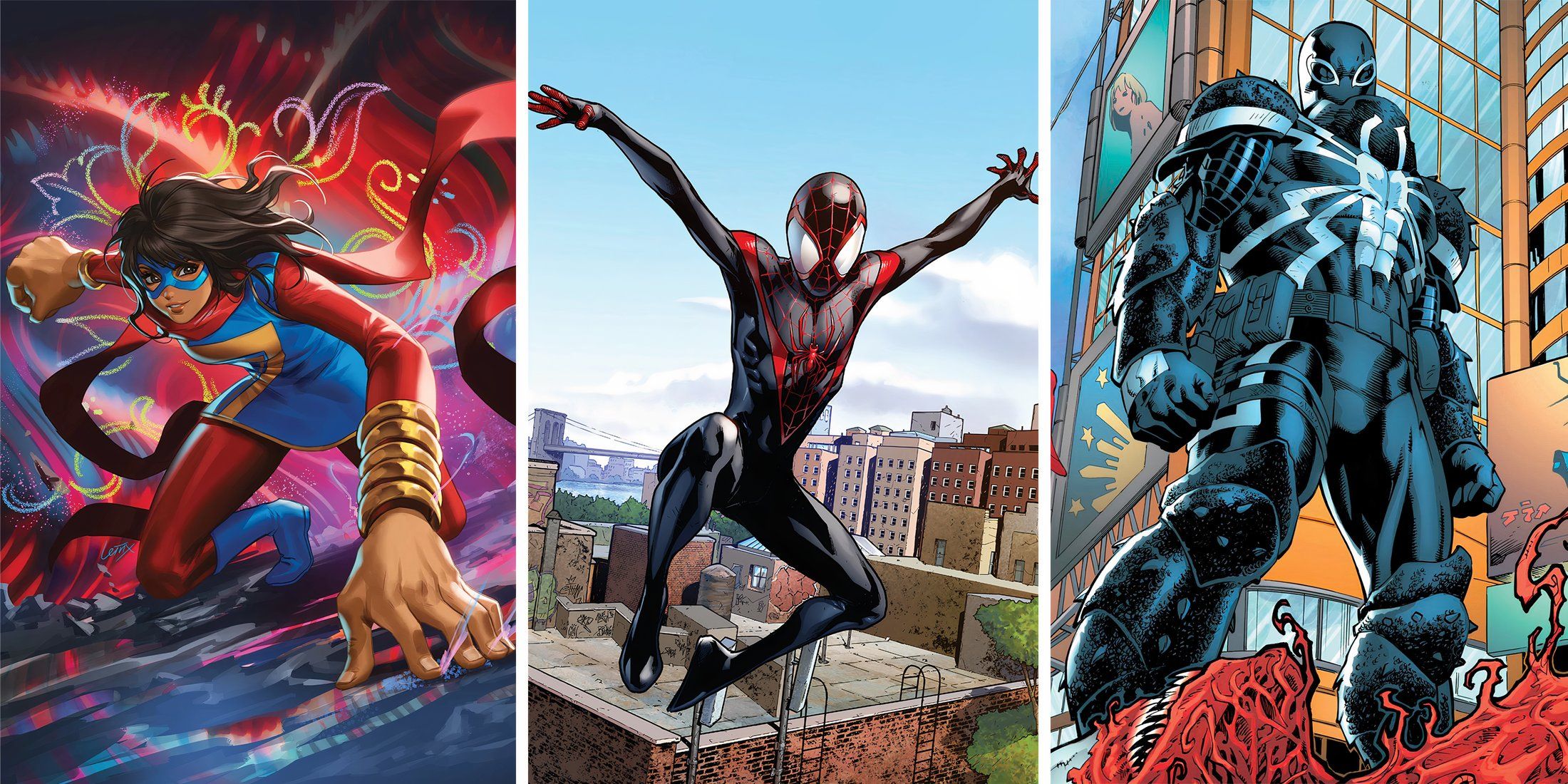
Miles Morales brought a new level of "cool" to the Spider-Man mantle by introducing elements of hip-hop culture, Brooklyn-centric storytelling, and unique powers like bio-electricity (Venom Blast) and invisibility. Miles is cool because he represents a bridge between the classic Marvel legacy and the diverse, fast-paced world of 2026. His journey of finding his own identity while standing in the shadow of Peter Parker is a narrative arc that provides both vulnerability and immense payoff.
Why Technical Depth Matters in Character "Coolness"
A character’s coolness is often sustained by the technical details of their lore. When writers establish clear rules for a character's powers—and then find creative ways to break or stretch those rules—it creates a sense of engagement for the reader.
For instance, Magik (Illyana Rasputina) is often cited as a cool character because of the specific mechanics of her powers. She is a mutant with the ability to teleport through "stepping discs," but those discs travel through a demonic dimension called Limbo. Because she is also the Sorceress Supreme of that dimension, she wields the Soulsword. This intersection of mutant biology, interdimensional physics, and high fantasy magic creates a "cool" factor that is grounded in complex, consistent world-building.
Frequently Asked Questions
Who is considered the coolest Marvel villain?
Doctor Doom is widely regarded as the coolest Marvel villain due to his combination of sovereign leadership, scientific genius, and mastery of the mystic arts. Unlike many villains, Doom has a clear code of honor and a visual design—his iconic mask and green tunic—that has remained powerful for over 60 years.
What makes a Marvel character "cool" rather than just "strong"?
Coolness is defined by a character’s attitude, visual uniqueness, and narrative "edge." While the Sentry is arguably stronger than Wolverine, Wolverine is considered cooler because of his mystery, his stoic personality, and the iconic nature of his claws and fighting style.
Has the "coolest" character changed over time?
Yes. In the 1960s, "cool" was often defined by scientific brilliance (Mr. Fantastic). In the 90s, it shifted to "extreme" aesthetics and anti-heroes (Venom, Cable). By 2026, coolness is often a blend of classic design and modern cultural relevance, as seen with characters like Miles Morales and Moon Knight.
Does a character's "coolness" depend on their movie portrayal?
While the Marvel Cinematic Universe (MCU) has significantly increased the popularity of characters like Iron Man and the Guardians of the Galaxy, a character’s core "coolness" usually originates in the comics. Cinema provides the "visual proof," but the depth is established in the source material.
Who is the coolest female Marvel character?
Characters like Magik, Black Widow, and Spider-Gwen are frequently cited. Magik offers a dark, mystical edge; Black Widow provides a grounded, "super-spy" coolness; and Spider-Gwen represents a modern, artistic reimagining of the superhero archetype.
Practical Recommendation for Exploring Marvel Lore
To truly appreciate the coolest characters in the Marvel Universe, it is recommended to explore specific "defining runs" rather than just watching the films. For Wolverine, the 1982 Wolverine mini-series by Chris Claremont and Frank Miller is essential. For Moon Knight, the Jeff Lemire or Jed MacKay runs provide the psychological depth that defines his modern cool. Understanding the history and technical evolution of these characters allows fans to see past the flashy powers and appreciate the design and narrative choices that have kept them relevant into 2026.
Image Gallery