The Action Park Rides That Proved Most Dangerous: A History of Risk and Liability
Action Park’s most dangerous rides included the Alpine Slide, which caused hundreds of abrasions and one fatality; the Tidal Wave Pool, where three people drowned; and the Cannonball Loop, a water slide featuring a vertical loop that c...
Action Park’s most dangerous rides included the Alpine Slide, which caused hundreds of abrasions and one fatality; the Tidal Wave Pool, where three people drowned; and the Cannonball Loop, a water slide featuring a vertical loop that caused frequent head injuries and dental trauma. These attractions defined the park’s reputation for extreme physical risk.
Contents
Operating in Vernon, New Jersey, from 1978 to 1996, Action Park remains the most notorious example of unregulated amusement park design in American history. Often nicknamed "Traction Park" or "Class Action Park," the facility was a testing ground for experimental engineering and questionable safety protocols. By the time it closed its original iteration, the park had been linked to at least six confirmed fatalities and countless thousands of injuries.
Looking back from 2026, the legacy of Action Park serves as a foundational case study for insurance adjusters, civil engineers, and safety regulators. To understand how these rides functioned—and why they failed—requires an analysis of the specific mechanics and the lack of oversight that allowed them to operate.
The Alpine Slide: A Record of Frequent Injury
The Alpine Slide was arguably the most dangerous ride in terms of total injury volume. Unlike modern mountain coasters that are fixed to a rail, the Alpine Slide utilized a long, winding track made of concrete, fiberglass, and asbestos. Riders sat on small carts with a rudimentary handbrake that was often non-functional or poorly understood by guests.
Mechanical Failures and Friction Burns
The primary danger of the Alpine Slide was the "ejection" factor. Riders attempting to achieve maximum speed would often navigate the banked turns too quickly, causing the cart to fly off the track. Because the track was surrounded by jagged rocks and abrasive soil, the resulting "Action Park Rash"—a combination of deep friction burns and lacerations—became a common sight at the park’s first-aid stations.
The carts themselves were a significant liability. The wheels were often worn down, and the handbrakes were prone to snapping or locking up. In 1980, the Alpine Slide claimed the park’s first life when 19-year-old George Larsson Jr. was thrown from his cart after the brake failed. He struck his head on a rock, leading to his death several days later. Despite this, the ride continued to operate for years, symbolizing the park's "ride at your own risk" philosophy.
The Cannonball Loop: An Engineering Nightmare
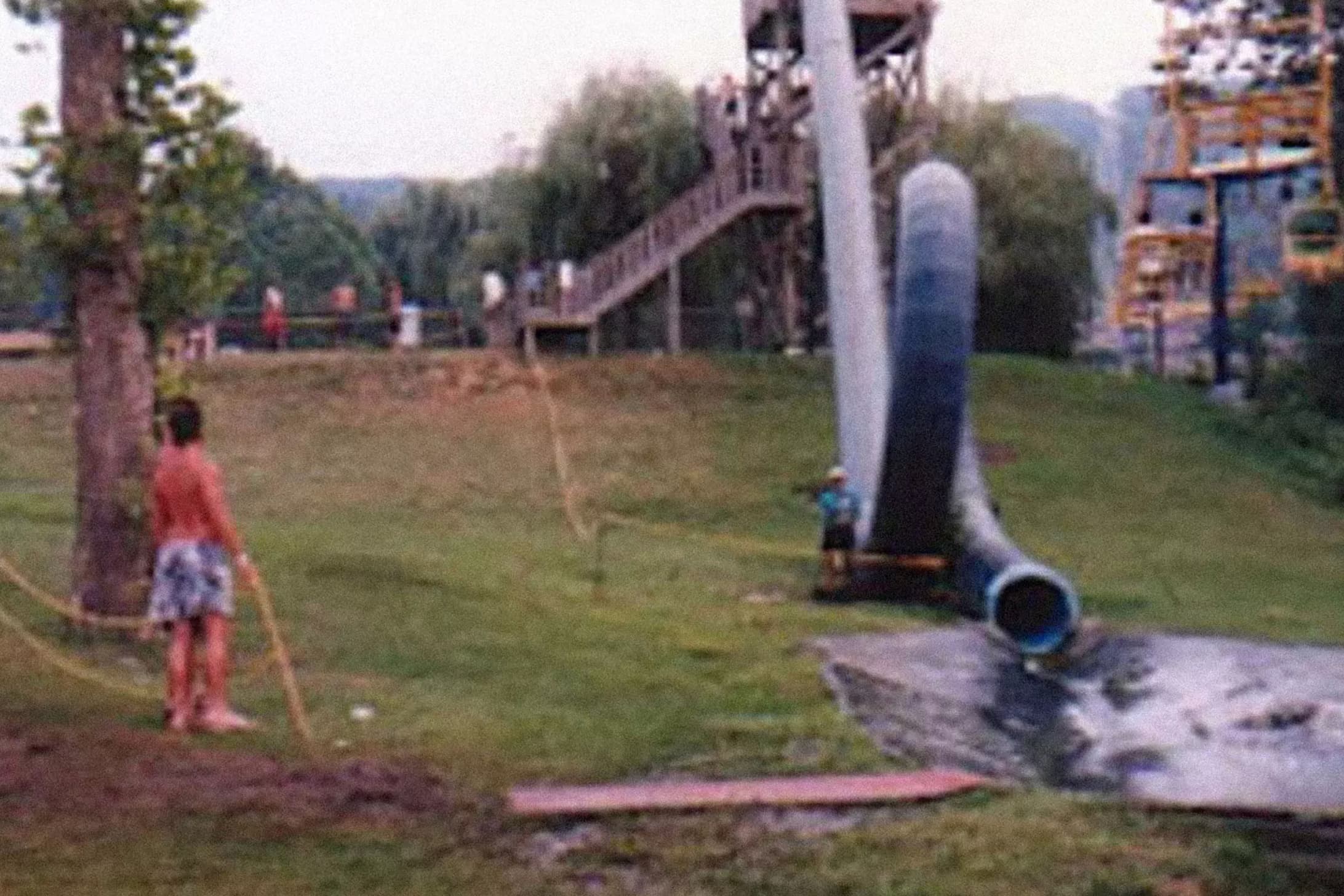
If the Alpine Slide was the park's most frequent offender, the Cannonball Loop was its most visually terrifying. Developed in the mid-1980s, this water slide featured a complete vertical loop at the end of a steep descent. It was an attempt to apply roller coaster physics to a human body sliding through a tube, but it lacked the necessary restraints or calculations to ensure safety.
Physics and Physical Impact
The ride was only open for a few weeks in the summer of 1985 before being shut down by the New Jersey Advisory Board on Carnival-Amusement Ride Safety. The physics of the loop were inherently flawed for several reasons:
- Centrifugal Force vs. Friction: If a rider did not have enough momentum, they would fall from the top of the loop onto the bottom of the tube. If they had too much momentum, the G-forces were high enough to cause "sandbagging" of the neck and spine.
- Inadequate Padding: Employees reported that the interior of the loop was padded with foam that frequently came loose. Riders often exited the slide with bloody noses or lost teeth after hitting the interior walls.
- The Exit Problem: The loop was so tight that it slowed riders down significantly, occasionally leaving them stuck at the bottom of the loop where they would have to be pulled out through a side hatch.
Legendary stories from former employees suggest that the park’s founder, Gene Mulvihill, offered $100 to any staff member willing to test the loop. Those who did often emerged with bruises and disorientation, leading to the installation of sandbags that were reportedly torn to shreds during testing.
The Tidal Wave Pool: "The Grave Pool"
Water parks today use highly sophisticated wave-generation technology and strict lifeguard-to-guest ratios. Action Park’s Tidal Wave Pool, however, was an early iteration that proved lethal. It earned the nickname "The Grave Pool" after three separate drownings occurred there between 1982 and 1987.
Operational Hazards
The pool was approximately 100 feet wide and 250 feet long, capable of holding up to 1,000 people. The waves were generated by large fans and could reach heights of 40 inches. Several factors contributed to the high mortality rate:
- Crowd Density: On peak days, the pool was so crowded that lifeguards could not see the bottom or distinguish between a struggling swimmer and someone playing.
- Water Exhaustion: The waves were relentless, and the lack of "calm" intervals meant that weak swimmers quickly became exhausted.
- The "Deep End" Design: Unlike modern zero-entry pools, the deep end of the Tidal Wave Pool was a sudden drop-off where the machinery created turbulent undercurrents that could pin swimmers against the floor.
According to reports from former lifeguards, they were often rescuing up to 30 people per day. The sheer volume of rescues overwhelmed even the most diligent staff, many of whom were teenagers with minimal training.
The Kayak Experience and Electrical Hazards
While many Action Park injuries were the result of gravity and speed, the Kayak Experience introduced a different kind of danger: electrocution. This ride featured a narrow, man-made whitewater course where guests navigated small kayaks through turbulent water.
In 1982, 27-year-old George Lopez was tipped out of his kayak. When he attempted to stand up and get back in, he was exposed to a massive electrical current. The underwater fans used to create the "whitewater" had experienced a short circuit. Two other family members were also injured while trying to pull him to safety. Lopez died shortly after at a nearby hospital. The ride was eventually drained and closed permanently, but it highlighted the park's systemic failure to maintain electrical and mechanical infrastructure.
Comparison of Most Dangerous Attractions
The following table summarizes the risks associated with the most notorious attractions at Action Park.
| Ride Name | Primary Hazard | Known Fatalities | Primary Injury Type |
|---|---|---|---|
| Alpine Slide | High-speed ejection from track | 1 | Friction burns, fractures, head trauma |
| Tidal Wave Pool | Drowning due to turbulence/crowds | 3 | Asphyxiation, water inhalation |
| Cannonball Loop | Improper G-force/Impact | 0 (Short-lived) | Dental trauma, concussions, lacerations |
| Kayak Experience | Electrical short circuit | 1 | Electrocution |
| Tarzan Swing | Cold water shock/High fall | 1 | Heart failure (shock), limb fractures |
| Super Speedboats | Collisions/Fumes | 0 | Carbon monoxide inhalation, blunt force |
The Tarzan Swing and Temperature Shock
The Tarzan Swing was a deceptively simple ride: a 20-foot cable swing over a deep pool of water. While it appeared safe compared to the Cannonball Loop, it was responsible for one death in 1984.
The water in the pool was fed by a natural mountain spring and was exceptionally cold, often staying below 60°F (15°C) even in the heat of summer. When guests dropped from the swing into the water, the sudden "cold shock response" could cause a gasp reflex, leading to water inhalation, or in extreme cases, cardiac events. The 1984 fatality occurred when a guest suffered a heart attack triggered by the sudden temperature change and subsequent shock. Additionally, many riders failed to let go of the rope at the right time, swinging back into the concrete platform or landing awkwardly in the shallow areas of the pool.
Regulatory Impact and the End of the "Wild West" Era
The carnage at Action Park was not merely a matter of bad luck; it was a result of the unique regulatory environment in New Jersey at the time. Gene Mulvihill, the park's owner, was known for his "creative" approach to law and insurance. He famously created his own offshore insurance company—London International Assurance—to bypass the need for traditional liability coverage that would have surely been denied or prohibitively expensive.
The closure of the park in 1996 and its eventual transition into the more modern Mountain Creek Resort marked the end of an era. The high injury rates led to a massive overhaul of New Jersey’s amusement ride safety laws. Today, the state has some of the strictest inspection requirements in the country, largely as a direct reaction to the incidents at Action Park.
Safety Standards in 2026
In 2026, amusement park safety is governed by sophisticated sensor technology and real-time monitoring. Modern water slides use water-flow sensors to ensure riders are spaced correctly, and Alpine-style coasters now utilize magnetic braking systems and "always-on" rail locks to prevent derailment. The "physics by trial and error" approach used at Action Park is now legally and ethically impossible in the modern industry.
Frequently Asked Questions
Was Action Park ever shut down by the government?
The park faced numerous fines and temporary ride closures from the New Jersey Department of Labor and Industry. However, it was never permanently shuttered by the state for safety reasons alone. Instead, financial difficulties, including the bankruptcy of Great American Recreation (the parent company), led to its closure in 1996.
How many people actually died at Action Park?
There are six confirmed deaths linked directly to the rides at Action Park: three drownings in the Wave Pool, one death on the Alpine Slide, one electrocution on the Kayak Experience, and one heart attack on the Tarzan Swing. Many other injuries went unreported or were settled out of court.
Is the park still open today under a different name?
Yes. The site is currently occupied by Mountain Creek Resort. While the resort operates a water park on the same hillside, the rides are built to modern safety standards and do not include the original "dangerous" attractions. A brief attempt to revive the "Action Park" name occurred in 2014, but it was largely a branding exercise for a much safer facility.
Why was the Cannonball Loop only open for a month?
State regulators ordered the ride closed after a series of injuries were reported almost immediately upon its opening. The lack of proper engineering meant that even "successful" rides often resulted in minor injuries like bloody noses or bruised limbs. The ride was dismantled and sat as a rusted monument to the park's excess for many years.
Did employees receive special training?
Historically, no. Most staff members were local teenagers, often under the age of 18, with minimal training in life-saving or mechanical maintenance. The "Wild West" atmosphere extended to the employees, who were often seen ignoring safety rules themselves or operating machinery while intoxicated.
Expert Recommendation for Modern Visitors
When visiting amusement parks in 2026, always check the State Inspection Decal near the entrance of a ride. Modern safety is a collaborative effort between engineers, operators, and guests. While the "thrill" of Action Park is a fascinating historical footnote, the lack of redundant safety systems is a reminder of why strict regulation and liability insurance are essential for public safety. Always follow height and weight requirements, as these are calculated based on the specific physics of the ride’s design.
Image Gallery