How to Manage Northern Corn Leaf Spot: A Comprehensive Agronomic Guide
To manage Northern Corn Leaf Spot (NCLS), prioritize selecting resistant corn hybrids and implementing a two-year crop rotation away from maize. Effective management integrates scouting during the silking stage, reducing surface residu...
To manage Northern Corn Leaf Spot (NCLS), prioritize selecting resistant corn hybrids and implementing a two-year crop rotation away from maize. Effective management integrates scouting during the silking stage, reducing surface residue through tillage where appropriate, and applying targeted fungicides when disease pressure exceeds economic thresholds in high-value seed or commercial fields.
Contents
Northern Corn Leaf Spot, caused by the fungal pathogen Bipolaris zeicola (formerly known as Helminthosporium carbonum), is a significant foliar disease that can impact corn yields and grain quality. While often considered less aggressive than its relative, Northern Corn Leaf Blight (NCLB), NCLS can become economically damaging under specific environmental conditions or within susceptible inbred lines. In 2026, as climate variability shifts humidity patterns across the Corn Belt, understanding the nuances of this pathogen is essential for maintaining stable productivity.
Understanding the Pathogen: Bipolaris zeicola
The first step in management is distinguishing Northern Corn Leaf Spot from other foliar diseases like Gray Leaf Spot or Northern Corn Leaf Blight. NCLS is unique because it exists in several distinct physiological races (Race 0, 1, 2, 3, and 4), each producing different symptoms and targeting different parts of the plant.
Race 1 is arguably the most historically significant. It produces a specialized chemical known as the Hc-toxin, which disables the corn plant’s natural defense mechanisms. While most modern commercial hybrids carry the Hm1 gene that provides resistance to this toxin, the race remains a major concern for seed corn producers working with susceptible inbred lines. Race 2 and Race 3 are more common in commercial production fields, characterized by their specific lesion shapes—Race 2 typically forms small, oblong spots, while Race 3 produces long, linear lesions that can be mistaken for other diseases.
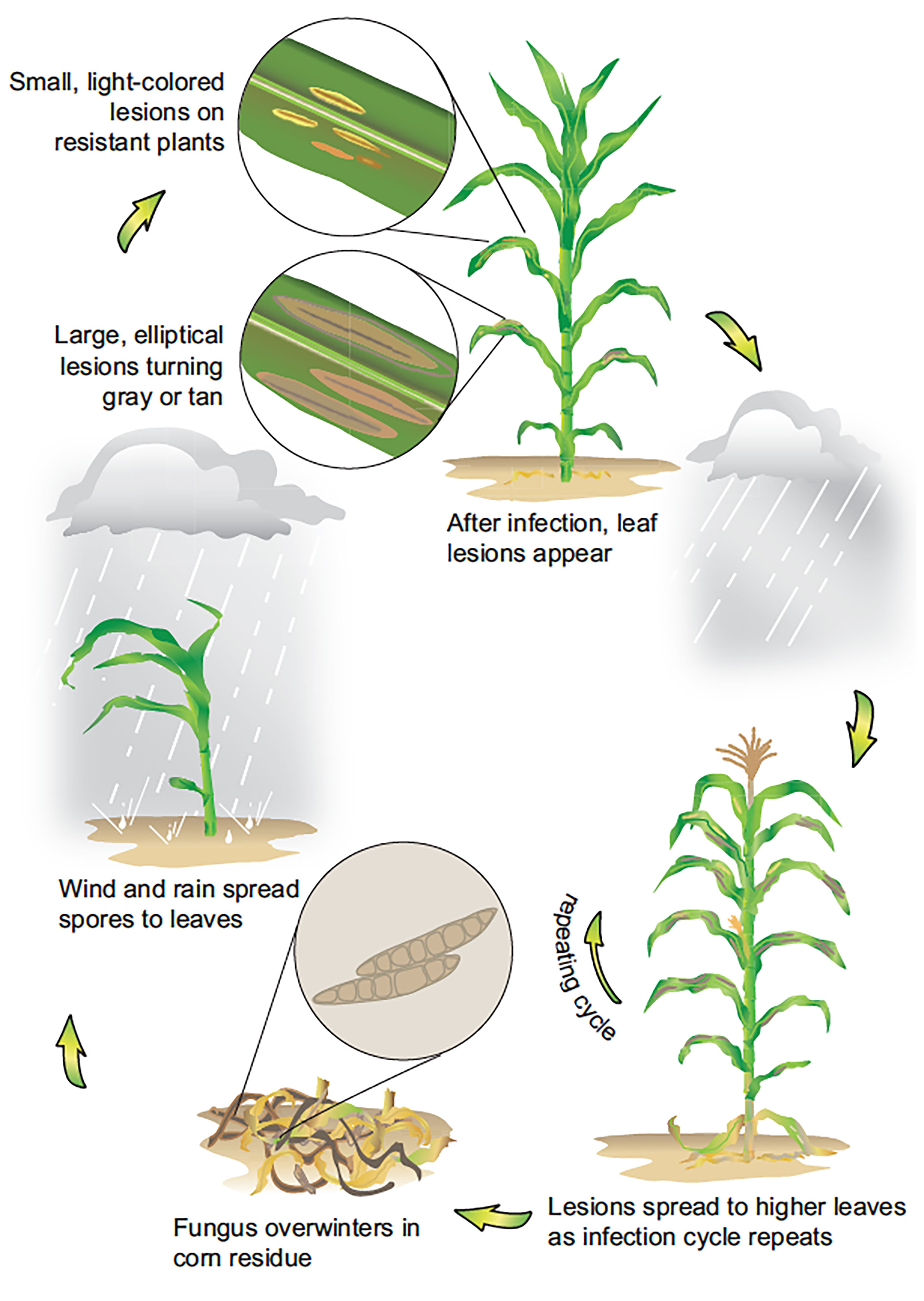
Because the fungus overwinters in crop residue, the presence of the pathogen is largely determined by previous field history. The spores (conidia) are spread by wind and splashing rain. Once a spore lands on a leaf, it requires a period of leaf wetness and moderate temperatures (typically 65°F to 85°F) to germinate and infect the host tissue.
Identification and Symptomology
Effective management relies on accurate field scouting. Identifying NCLS early allows for timely intervention before the disease moves into the upper canopy, where it can interfere with grain fill.
Race-Specific Lesions
- Race 1: Symptoms appear as tan, oval lesions (roughly 0.5 to 1 inch long) often showing distinct concentric rings, giving them a "target" appearance. This race can infect leaves, husks, and even the ears, leading to black mold on the kernels.
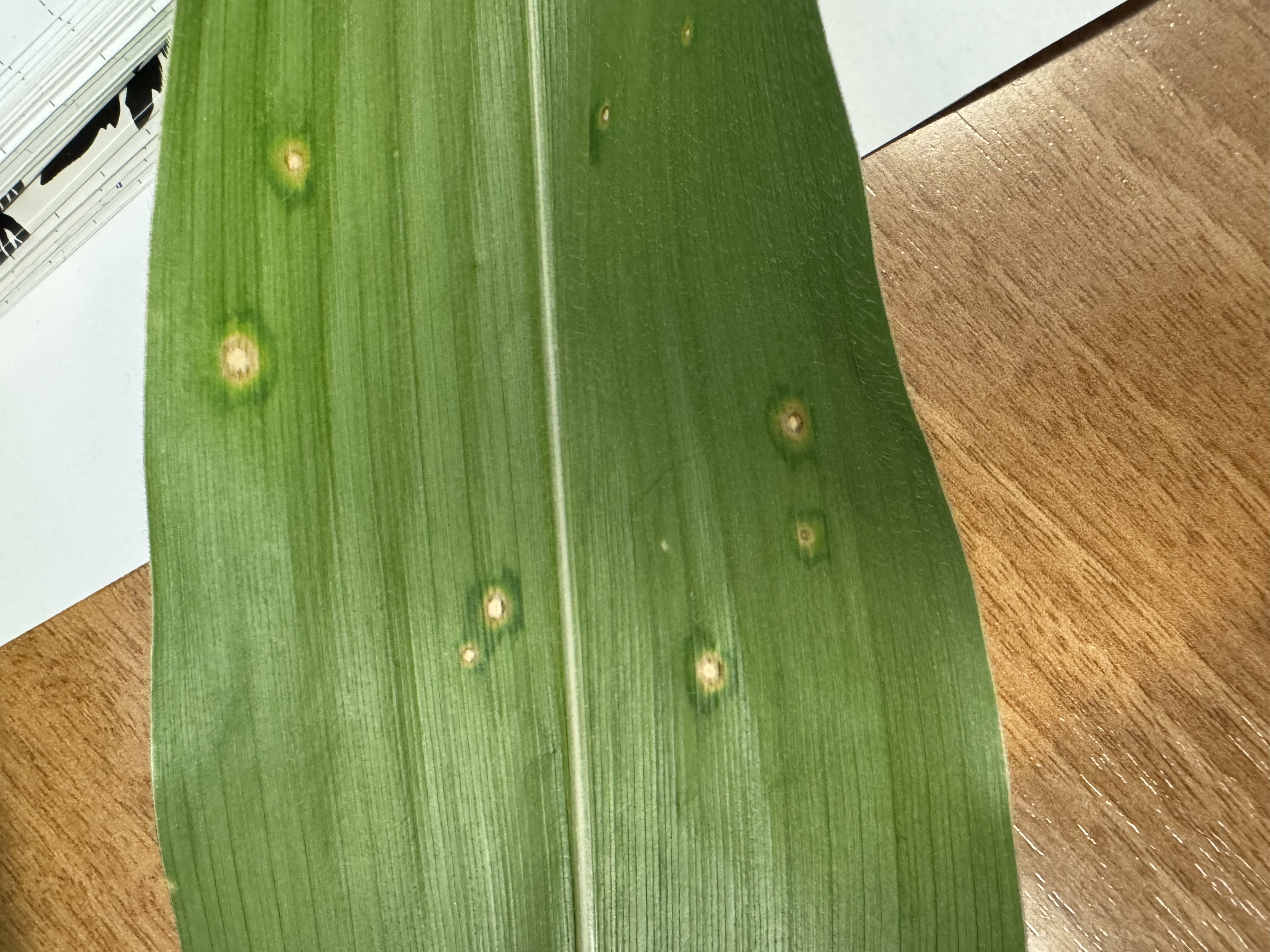
- Race 2: This race produces small, circular to chocolate-colored spots. These lesions rarely exceed 1 cm in length. While they may appear numerous, they often remain localized unless the hybrid is highly susceptible.
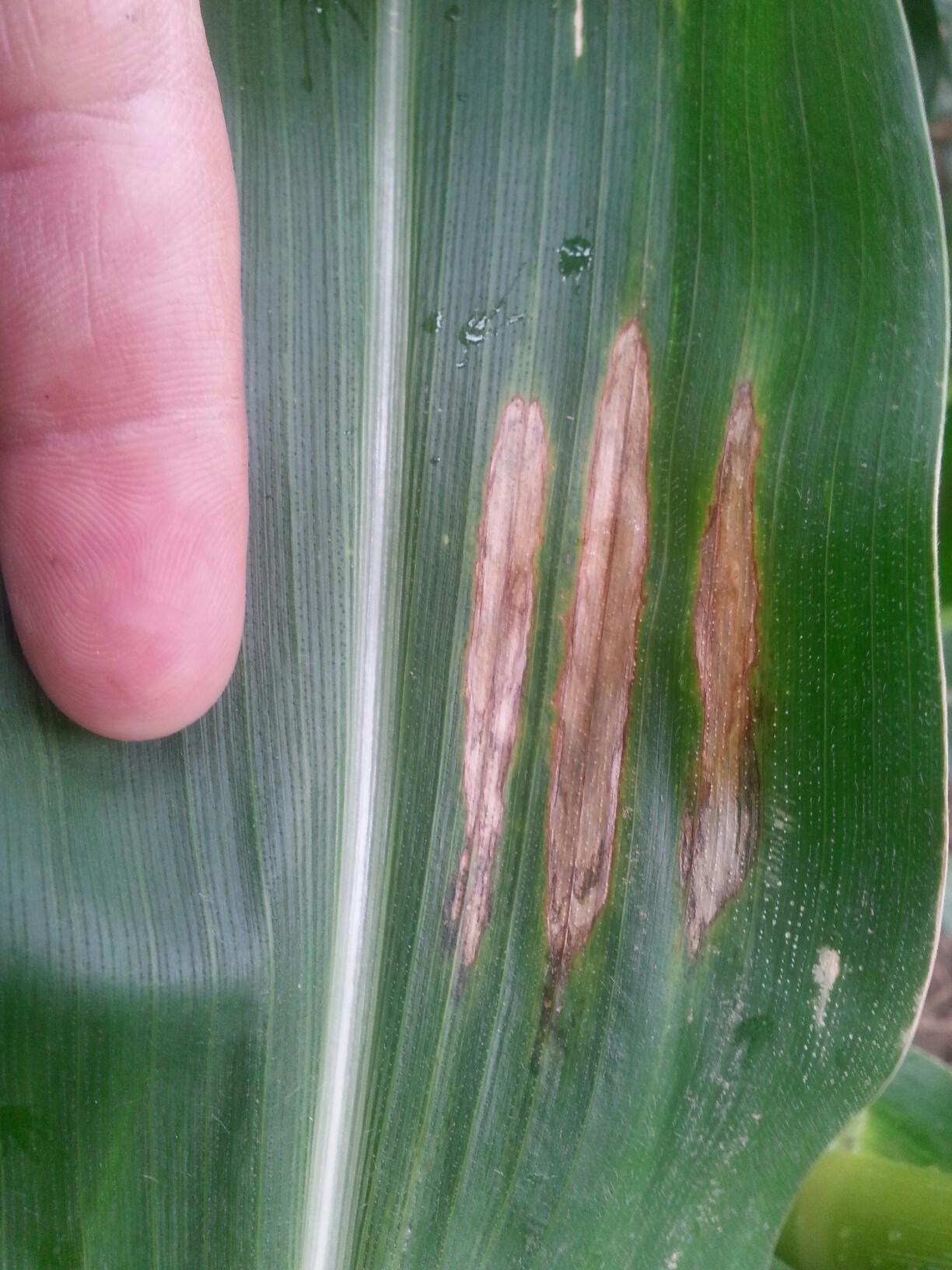
- Race 3: The most frequently encountered race in many regions, Race 3 produces narrow, linear lesions that are tan or grayish. These lesions are usually restricted by the leaf veins, appearing as long streaks that can reach up to 1 inch in length.
- Race 4: Similar to Race 2, this race causes circular spots but is less commonly documented as a primary yield-robber in commercial settings.
Scouting Protocols
Scouting should begin prior to tasseling (VT) and continue through the R3 (milk) stage. Focus on the lower leaves first, as the disease moves upward from the soil-borne residue. In 2026, high-resolution drone imagery and multispectral sensors are increasingly used to identify "hot spots" of fungal stress, but physical "boots on the ground" remain the gold standard for confirming the specific pathogen through lesion morphology.
Genetic Resistance: The Primary Line of Defense
The most cost-effective and environmentally sustainable way to manage NCLS is through the selection of resistant hybrids. Most modern corn breeding programs incorporate high levels of partial resistance (quantitative resistance) to NCLS.
Hybrid Selection Criteria
When reviewing hybrid performance trials, look for "NCLS" or "Leaf Spot" ratings. A rating of 7 or higher on a 1-9 scale (where 9 is most resistant) is generally sufficient for fields with a history of the disease. In regions where Race 1 is prevalent, ensure the hybrid possesses the dominant Hm1 or Hm2 genes. These genes encode an enzyme called HC-toxin reductase, which detoxifies the fungal toxin, rendering the pathogen harmless to the plant.
It is important to note that resistance is often "leaky," meaning even resistant plants may show small, restricted lesions under high disease pressure. However, the goal of genetic resistance is not to eliminate every spot, but to slow the secondary spread of the fungus and protect the leaf area index (LAI) during the critical grain-filling period.
Cultural Control and Residue Management
Since Bipolaris zeicola survives the winter in corn stover, any practice that accelerates the decomposition of residue will reduce the initial inoculum for the following season.
Crop Rotation
A simple one-year rotation to a non-host crop, such as soybeans, alfalfa, or wheat, can significantly reduce the fungal population. However, in high-pressure areas or fields under continuous corn, a two-year rotation away from maize may be required to clear the residue completely. The fungus is host-specific to corn and certain grasses, so rotating to broadleaf crops effectively "starves" the pathogen.
Tillage Practices
In conventional tillage systems, burying infected residue with a moldboard plow or aggressive discing speeds up microbial breakdown. This removes the "launchpad" for spores to reach the lower leaves of the next corn crop. For growers committed to no-till or reduced-tillage systems, management must lean more heavily on hybrid resistance and chemical controls, as the residue remains on the surface and can harbor viable spores for several years.
Irrigation and Canopy Management
High humidity within the canopy favors infection. In irrigated fields, avoiding frequent, light applications that keep the leaves wet for extended periods can help. Instead, deeper and less frequent irrigation cycles allow the canopy to dry out between applications, disrupting the infection cycle of the fungus.
Chemical Control and Fungicide Efficacy
Fungicides are an essential tool for managing NCLS when environmental conditions favor disease and cultural controls are insufficient. However, the decision to spray must be based on economic thresholds and the growth stage of the corn.
Timing the Application
The most critical window for fungicide application is between the VT (tasseling) and R1 (silking) stages. Applications during this period provide the maximum protection for the "ear leaf" and the leaves above it, which contribute the majority of the carbohydrates required for ear development. Applications made after the R3 (milk) stage rarely provide an economic return unless disease pressure is catastrophic.
Selecting the Right Product
As of 2026, several classes of fungicides are highly effective against NCLS. Using a product with multiple modes of action (MOA) is recommended to prevent the development of fungicide resistance.
| Fungicide Class | FRAC Code | Mode of Action | Best Use Case |
|---|---|---|---|
| Strobilurins | 11 | Quinone outside Inhibitors (QoI) | Preventative; provides long-lasting protection and "greening" effect. |
| Triazoles | 3 | Demethylation Inhibitors (DMI) | Curative/Systemic; stops the growth of existing fungal infections. |
| SDHIs | 7 | Succinate Dehydrogenase Inhibitors | Excellent residual activity; often mixed with DMI or QoI for broad-spectrum control. |
Always consult the Fungicide Resistance Action Committee (FRAC) guidelines to ensure you are rotating chemistries. Over-reliance on a single MOA, particularly Strobilurins, has led to resistance issues in other corn pathogens like Frogeye Leaf Spot, and caution is warranted for NCLS as well.
Economic Thresholds and Decision Making
Not every field with NCLS needs a fungicide treatment. To determine if an application is warranted, consider the following checklist:
- Field History: Is there a history of NCLS in this field or the immediate vicinity?
- Hybrid Susceptibility: Is the hybrid rated low for foliar health or specifically susceptible to NCLS?
- Weather Forecast: Is the forecast calling for extended periods of humidity, fog, or rain?
- Disease Progression: Has the disease reached the leaf below the ear leaf prior to silking?
- Crop Value: Is this a high-value seed production field or food-grade corn, where kernel quality is paramount?
If you answer "Yes" to three or more of these questions, a fungicide application is likely to be profitable. In commercial grain corn, if lesions are only found on the lowest leaves (near the soil) and the weather turns dry, the plant may naturally outgrow the threat without chemical intervention.
Common Management Mistakes to Avoid
- Misdiagnosis: Mistaking Race 3 of NCLS for Northern Corn Leaf Blight. NCLB lesions are typically much larger and cigar-shaped. Using the wrong resistance genes or fungicide timing based on a misidentification can lead to wasted resources.
- Late Application: Waiting until the entire canopy is covered in spots before spraying. Fungicides are primarily preventative; they cannot "cure" dead leaf tissue. They are designed to protect healthy tissue from new infections.
- Ignoring Weed Hosts: Certain grassy weeds can serve as alternative hosts for Bipolaris zeicola. Effective weed control in and around field borders helps reduce the overall fungal load in the micro-environment.
FAQ: Frequently Asked Questions
Can Northern Corn Leaf Spot survive in the soil?
No, the fungus does not survive freely in the soil. It survives on infected corn residue (stalks and leaves) left on the soil surface. Once the residue decomposes completely, the pathogen loses its primary habitat and dies off. This is why crop rotation is so effective.
Is NCLS more dangerous than Gray Leaf Spot?
Generally, no. Gray Leaf Spot (GLS) is typically more aggressive and widespread in the central Corn Belt. However, NCLS can be more devastating to specific inbred lines used in seed production. In commercial fields, the management for both is similar, and many fungicides control both pathogens simultaneously.
Does NCLS affect grain quality or just yield?
It can affect both. By reducing the leaf area available for photosynthesis, the plant may cannibalize its stalks to fill the kernels, leading to stalk rot and lodging. Race 1 of NCLS can also directly infect the ear, causing a black, sooty rot on the kernels which significantly reduces grain quality and marketability.
Are there organic options for managing Northern Corn Leaf Spot?
Organic management relies almost entirely on "avoidance" strategies: aggressive crop rotation (3+ years), selecting highly resistant non-GMO hybrids, and ensuring optimal soil health to promote rapid residue breakdown. Copper-based fungicides are sometimes used in organic systems, but their efficacy on NCLS is limited compared to synthetic options.
How do I know which "Race" is in my field?
Determining the exact race usually requires laboratory analysis or a highly experienced agronomist. However, for most commercial growers, the specific race matters less than the overall disease pressure. If you see linear streaks, it is likely Race 3; if you see circular spots, it is likely Race 2 or 4.
Final Recommendation for 2026
For the 2026 growing season, the most robust management plan for Northern Corn Leaf Spot involves a "defense-first" posture. Prioritize the selection of hybrids with high scores for NCLS resistance, especially if you are practicing no-till or continuous corn. Supplement this genetic defense with a rigorous scouting program starting two weeks before tasseling. If environmental conditions remain wet and lesions are observed moving toward the ear leaf, apply a multi-mode-of-action fungicide at the VT/R1 stage to safeguard your yield potential and ensure high-quality grain.
Image Gallery