How Robert Peace Died and the Complex Meaning Behind His Tragic End
Robert Peace died on May 18, 2011, in Newark, New Jersey, after being shot in a basement apartment used for a marijuana cultivation operation. His death was the result of a violent altercation related to the underground drug trade, mar...
Robert Peace died on May 18, 2011, in Newark, New Jersey, after being shot in a basement apartment used for a marijuana cultivation operation. His death was the result of a violent altercation related to the underground drug trade, marking a tragic end for a man who had earned a degree in molecular biophysics and biochemistry from Yale University.
Contents
The story of Robert Peace is not merely a true-crime vignette; it is a profound sociological case study. It explores the immense friction between the American promise of upward mobility and the systemic gravity of poverty, race, and the "war on drugs." To understand how he died is to look at the mechanics of a crime; to understand what it means is to look at the structural failures of the American Dream in the 21st century.
The Circumstances of May 18, 2011
The physical details of Robert Peace's death are stark. On a Wednesday in mid-May 2011, Newark police responded to reports of gunfire at a residence on Smith Street. In the basement of the home, they discovered Peace, age 30, suffering from fatal gunshot wounds. The location was not a typical residence but a sophisticated "grow house" where high-grade marijuana was being cultivated and processed for sale.
Investigations revealed that Peace had been living a double life for years. While many of his Yale classmates were ascending the ladders of corporate law, medicine, and academia, Peace had returned to his home city of Newark. There, he navigated the dangerous intersections of the illicit drug market. His death was a direct consequence of the volatility inherent in that market—a world where disputes are settled with violence rather than litigation.
The tragedy was amplified by the proximity of his death to his potential. At the time of his murder, Peace was a teacher at St. Benedict’s Preparatory School, his own alma mater, where he was revered by students and faculty alike. The juxtaposition of a brilliant scientist and beloved educator dying in a drug-related shooting sent shockwaves through both the Newark community and the Ivy League circles he had once inhabited.
The Duality of an Ivy League Trajectory
To understand the meaning of Robert Peace’s death, one must first understand the trajectory of his life. Peace was a brilliant student from a disenfranchised neighborhood in Newark. His mother, Jackie Peace, worked tirelessly in a school cafeteria to provide for him, while his father, "Skeet," was incarcerated for a double murder—a conviction that Robert spent much of his life trying to overturn, believing his father was innocent.
Peace’s admission to Yale University was funded by a wealthy benefactor who saw his potential at St. Benedict’s. At Yale, Peace was a "man apart." He excelled in one of the university’s most difficult majors—Molecular Biophysics and Biochemistry—and was a standout athlete on the water polo team. However, even in the hallowed halls of New Haven, Peace maintained a side business selling marijuana to his wealthy peers.
This duality was not just a means of making money; it was a bridge between two worlds that rarely touch. Peace was able to navigate the elite social structures of Yale while maintaining the street-level sensibilities required to survive and thrive in Newark. This "code-switching" is a common requirement for high-achieving individuals from marginalized backgrounds, but for Peace, the stakes were exceptionally high.
Why a Yale Graduate Remained in the Drug Trade
One of the most frequent questions regarding Robert Peace is why a man with a Yale degree in a STEM field would choose to remain involved in the drug trade. The answer is a complex blend of loyalty, financial pressure, and psychological alienation.
1. Financial Responsibility and "The Tax"
For many first-generation college students from impoverished backgrounds, "making it" does not just mean personal success; it means becoming the financial engine for an entire extended family and social circle. Peace felt a crushing responsibility to provide for his mother and to fund his father’s legal appeals. The entry-level salaries available to a recent graduate, even one from Yale, often paled in comparison to the immediate, tax-free cash flow generated by the marijuana trade.
2. The Lack of a Safety Net
While his Yale peers had family connections, inheritance, and safety nets that allowed them to take risks or accept low-paying internships, Peace had none. Any professional failure for Peace meant a return to zero. The drug trade, while dangerous, was a sector where he felt he had agency and control—a domain where his intelligence yielded immediate results.
3. Alienation from the Corporate World
After graduation, Peace traveled to Rio de Janeiro and later worked in laboratory settings. However, he often felt alienated by the stifling culture of professional environments that did not know how to accommodate his background or his identity. This sense of not belonging in the "white-collar" world led him back to the streets of Newark, where his identity was never questioned.
What His Death Means: The Societal Implications
The death of Robert Peace, as chronicled in the 2014 biography by Jeff Hobbs and the 2024 film adaptation directed by Chiwetel Ejiofor, serves as a powerful critique of several American institutions.
The Myth of the Meritocracy
Peace’s life challenges the idea that "talent plus hard work" is a guaranteed ticket out of poverty. Despite possessing world-class talent and working harder than many of his peers, Peace was still tethered to the socioeconomic realities of Newark. His story suggests that education alone cannot solve the problems of systemic inequality if the individual is still required to carry the weight of a broken community on their back.
The Burden of the "Exception"
When a person from a marginalized background succeeds, they are often treated as an "exception" that proves the system works. This places an immense psychological burden on the individual. Peace was not allowed to simply be a student; he had to be a representative of his race and his city. The pressure to be perfect and to "save" everyone around him likely contributed to the risks he took.
The Failure of Urban Policy and the War on Drugs
Peace’s death occurred at a time when the "war on drugs" was still heavily criminalizing the very substances that are now being legalized and corporatized across the United States. The irony of Peace’s life is that today, his knowledge of biochemistry and his experience in cultivation might have made him a successful entrepreneur in the legal cannabis industry. Instead, in 2011, it made him a target for violence and a subject for criminal prosecution.
Timeline of Key Events in the Life and Legacy of Robert Peace
| Year | Event | Significance |
|---|---|---|
| 1980 | Birth of Robert DeShaun Peace | Born in Newark, New Jersey, to Jackie Peace and Robert "Skeet" Douglas. |
| 1987 | Father's Incarceration | Skeet is convicted of a double murder, a defining trauma for Robert. |
| 1998 | Enrollment at Yale University | Enters Yale on a full scholarship provided by a private benefactor. |
| 2002 | Graduation from Yale | Earns a degree in Molecular Biophysics and Biochemistry. |
| 2002-2004 | Travels and Teaching | Travels to Rio de Janeiro; begins teaching at St. Benedict’s Prep. |
| 2011 | Death on Smith Street | Shot and killed in a Newark grow house at the age of 30. |
| 2014 | Publication of Biography | The Short and Tragic Life of Robert Peace by Jeff Hobbs is published. |
| 2024 | Film Adaptation | The film Rob Peace, directed by Chiwetel Ejiofor, is released to critical acclaim. |
The Role of Jeff Hobbs and the Literary Legacy
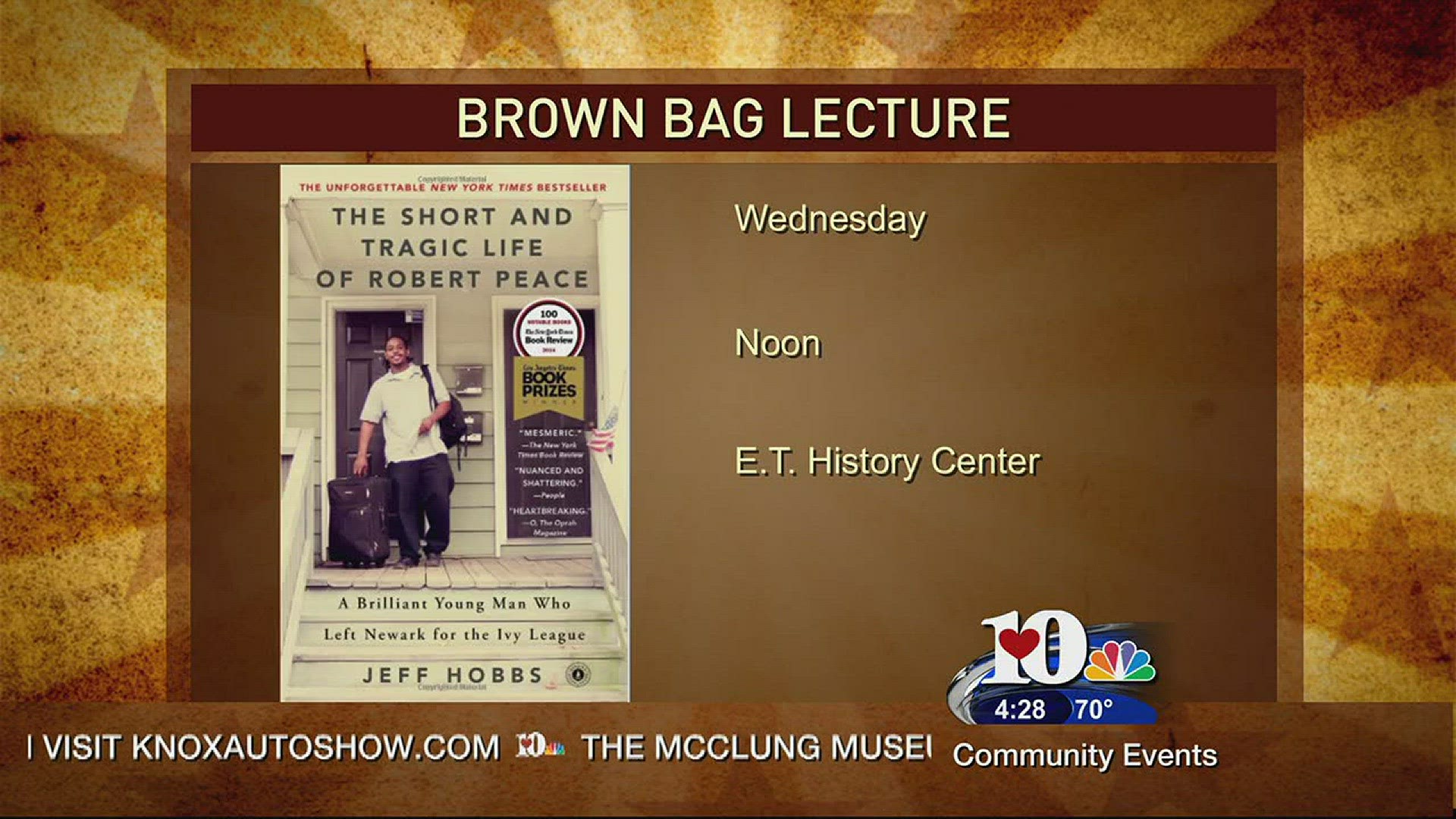
The story of Robert Peace reached a national audience primarily through the biography written by his Yale roommate, Jeff Hobbs. The book, The Short and Tragic Life of Robert Peace, is noted for its intimate, non-judgmental look at a man who defied easy categorization.
Hobbs spent years interviewing Peace’s friends, family, and associates to reconstruct the life of a man who was inherently private. The book's success lies in its refusal to offer simple answers. It does not paint Peace as a saint, nor does it dismiss him as a criminal. Instead, it presents him as a brilliant, loyal, and deeply flawed individual caught in a web of circumstances that were partially of his own making and partially the result of centuries of systemic history.
By 2026, the book has become a staple in sociology and African American studies courses at universities across the country. It serves as a primary text for discussing "the "dual life" and the psychological toll of social mobility.
Analysis of Systemic Traps
Peace's death highlights what sociologists call "the trap of the transition." When individuals move from one social class to another, they often find themselves in a "no-man's land." They are no longer fully at home in their original environment, but they are not fully accepted or comfortable in their new, elite environment.
Peace’s involvement in the marijuana trade was a way to maintain his status in Newark. In his neighborhood, being a "big man" who could provide jobs and resources was a form of leadership. Paradoxically, the very intelligence that allowed him to succeed at Yale allowed him to build a more successful (and therefore more dangerous) drug operation than his peers who had stayed on the street.
FAQ: Understanding the Life and Death of Robert Peace
Did Robert Peace have a criminal record before his death?
Robert Peace had minimal contact with the legal system compared to the scale of his operations. He was known to be extremely cautious and used his scientific background to professionalize his work. However, the lack of a significant record did not protect him from the extrajudicial violence of the underground economy.
Why didn't his Yale friends help him?
Many of his Yale friends were unaware of the extent of his involvement in the drug trade. Peace was masters at compartmentalization; he kept his Newark life almost entirely separate from his New Haven life. While friends offered him job leads and support, they could not address the deep-seated psychological and financial pressures he felt regarding his family and his identity.
Was anyone ever convicted for the murder of Robert Peace?
The investigation into Peace's death was complicated by the "code of silence" often found in drug-related homicides in high-crime areas. While there were suspects and the police identified the motive as a robbery or a turf dispute, the case remained a stark example of the difficulties in prosecuting violent crimes within the illicit drug trade.
What was the impact of the 2024 film on his legacy?
The 2024 film, Rob Peace, brought the story to a new generation. It shifted some of the focus from the "tragedy" to the "humanity" of Peace, emphasizing his love for his father and his brilliance as a scientist. It sparked renewed discussions about the need for social programs that support high-achieving students from marginalized backgrounds long after they graduate.
Is the house where he died still there?
The area of Newark where Peace died has seen various stages of redevelopment and struggle since 2011. While the physical structure may remain, the site serves as a somber reminder for the local community of the loss of one of their brightest minds.
Final Recommendations for Further Exploration
To truly grasp the weight of how Robert Peace died and what it means, readers should move beyond the headlines. The biography by Jeff Hobbs remains the most comprehensive source for understanding the nuances of his character. Additionally, exploring the works of sociologists like Sudhir Venkatesh (Gang Leader for a Day) can provide broader context on why brilliant individuals in impoverished areas often turn to the underground economy.
For those interested in policy, the life of Robert Peace is a call to action regarding the support systems for first-generation college students. Success is not just about getting into an Ivy League school; it is about having the structural support to stay in the professional world once the degree is earned. Peace's story remains a vital, painful reminder that until we address the roots of systemic inequality, talent will continue to be lost to the streets.
Image Gallery