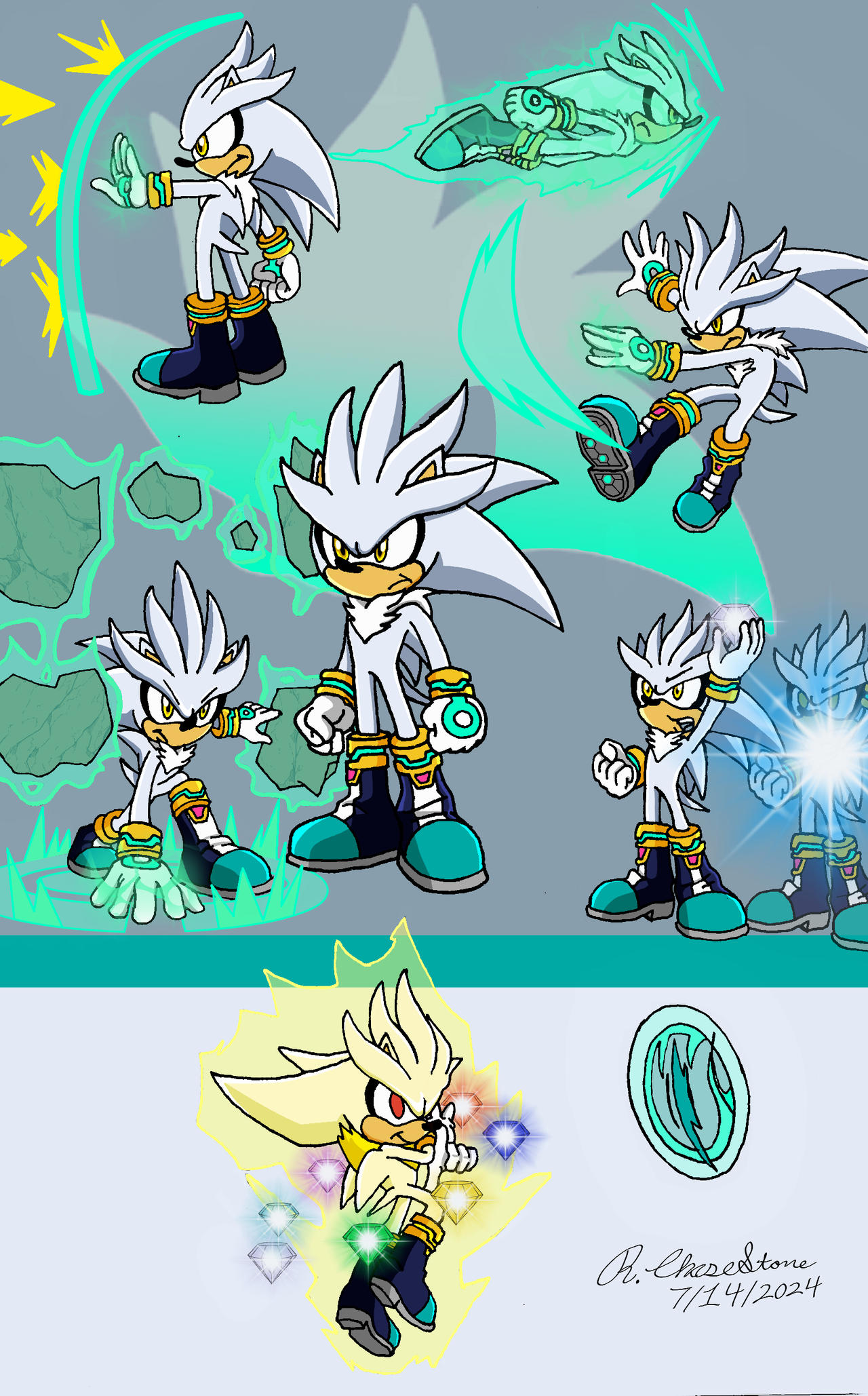
Silver the Hedgehog in the Virtual Arena: A Startup Lens
The integration of Silver the Hedgehog into the 2026 virtual arena serves as a foundational case study for startups focusing on spatial computing and competitive gaming. By analyzing Silver’s psychokinetic abilities and "future-fixer"...
The integration of Silver the Hedgehog into the 2026 virtual arena serves as a foundational case study for startups focusing on spatial computing and competitive gaming. By analyzing Silver’s psychokinetic abilities and "future-fixer" narrative through a startup lens, entrepreneurs can identify high-value opportunities in physics-based UI design, predictive AI modeling, and decentralized intellectual property (IP) management. This framework treats the character not just as a digital asset, but as a technical blueprint for navigating the complexities of the modern metaverse.
Contents
The Future-State Mindset: Silver’s Role in Modern Entrepreneurship
In the landscape of 2026, the "Virtual Arena" is no longer a niche concept; it is the primary battleground for attention, commerce, and digital identity. For a startup, adopting a "Silver the Hedgehog lens" means operating with a future-state mindset. Silver, originally introduced in the 2006 Sonic the Hedgehog release, is defined by his origin in a devastated future and his quest to prevent that reality by intervening in the present. This mirrors the Lean Startup methodology, where founders identify a "broken" future—market inefficiency or consumer pain points—and work backward to build a viable solution today.
Startups in the virtual arena often struggle with short-termism, focusing on immediate trends like generative asset flipping. However, the Silver lens encourages a focus on sustainability and legacy. Just as Silver seeks to extinguish the "Iblis Trigger" to save his timeline, successful startups must identify the "triggers" of failure in their industry—be it high user churn, toxic communities, or hardware limitations—and develop preemptive technical solutions.
The Archetype of the "Disruptor"
Silver is frequently portrayed as a disruptor to the status quo held by Sonic (speed) and Shadow (power). In the virtual arena, speed and power are often commodified. Startups that win in 2026 are those that introduce a third pillar: Utility through Manipulation. Silver’s psychokinesis allows him to interact with the environment in ways other characters cannot, providing a metaphor for startups that leverage unique tech stacks to manipulate market data or user experiences in ways their larger, "faster" competitors cannot.
Navigating the 2026 Virtual Arena: Market Dynamics and Entry
The virtual arena of 2026 is characterized by hyper-realistic physics engines and the widespread adoption of OpenXR 3.0 standards. For a startup looking to incorporate an entity like Silver or develop similar mechanics, understanding the entry requirements is critical.
Technical Prerequisites for Entry
- Haptic Integration: High-fidelity haptic suits and gloves are now standard for competitive play. Startups must ensure their software supports "Force Feedback 2.0" to simulate the resistance felt during psychokinetic lifting.
- Latency Thresholds: In a virtual arena, psychokinetic mechanics (like Silver’s) require sub-5ms latency to prevent "spatial dissonance," where the visual movement of an object lags behind the user's mental command.
- Cross-Platform Interoperability: Any startup focusing on character-driven arenas must utilize decentralized identity protocols, allowing users to carry their "Silver-class" avatars across different gaming ecosystems without losing metadata or earned skins.
Market Positioning: The Niche of the "Tactical Specialist"
While "speed-runner" startups focus on rapid user acquisition, a Silver-focused startup lens suggests a focus on the Tactical Specialist. This involves creating niche environments where strategy and environmental manipulation are more valuable than raw reflex speed. By targeting the "Silver demographic"—users who prefer cerebral, physics-heavy gameplay—startups can capture a loyal, high-LTV (Life-Time Value) segment of the market that is often overlooked by AAA developers focused on mass-market twitch shooters.
Strategic Implementation: Using Telekinetic Mechanics as a Startup USP
Silver’s primary mechanic, psychokinesis (PK), offers a wealth of inspiration for Unique Selling Propositions (USPs) in the software sector. In 2026, the transition from 2D screens to 3D spatial environments is complete, and UI/UX design has pivoted toward "Intent-Based Interaction."
Psychokinesis as a UX Metaphor
Traditional "point and click" is dead in the virtual arena. Startups can look at Silver’s PK as a model for Spatial UI. This involves:
- Volumetric Grabbing: Designing interfaces where users "pull" data or windows toward them using hand tracking, mimicking Silver's ability to grab projectiles.
- Environmental Utility: Creating platforms where the world itself is the UI. If a user can "levitate" a menu or "toss" a task into a bin using gesture-based psychokinesis, the friction of digital work is significantly reduced.
Predictive AI and "Future Sight"
Silver’s narrative often involves knowing what happens next. Startups can implement this through Predictive Analytics Engines. In a competitive arena, an AI that predicts an opponent's move based on previous patterns—and displays this as a "pre-visualization" for the player—directly mimics Silver’s time-traveling perspective. This provides a tangible advantage in both gaming and professional simulation environments, such as stock market visualization or surgical training.
Risk Mitigation: Avoiding the "Iblis Trigger" of Technical Debt
In the Sonic lore, the Iblis Trigger is a catastrophic event that dooms the future. For a startup, the "Iblis Trigger" is Technical Debt. Silver’s journey is one of trial and error, often marked by the realization that his actions have unintended consequences.
Identifying Scalability Bottlenecks
Startups often rush to launch their "Virtual Arena" MVP (Minimum Viable Product) without considering the long-term load on servers or the fragility of their code. To avoid a catastrophic failure in 2026, developers must:
- Modularize Physics Engines: Ensure that physics-heavy characters like Silver do not crash instances when interacting with hundreds of objects simultaneously.
- Implement Immutable Audit Trails: Use blockchain-based logging to track every interaction within the arena. This prevents "chronological inconsistencies" (bugs/exploits) that can ruin a startup’s reputation.
The Problem of Misidentification
Silver’s greatest character flaw is his tendency to be misled by others (such as Mephiles). Startups face a similar risk in Market Misalignment. Using the Silver lens, a founder must be wary of "Mephiles-like" advisors or venture capitalists who push for short-term gains that destroy the long-term vision of the product. Rigorous verification of market data and "Zero-Trust" architectural principles are essential safeguards.
Comparative Analysis: Strategic Frameworks for the Virtual Arena
The following table compares the business strategies associated with the primary archetypes found in the virtual arena of 2026. This helps a startup decide if the "Silver Lens" is the correct path for their specific goals.
| Feature | The Sonic Strategy (Agility) | The Shadow Strategy (Authority) | The Silver Strategy (Innovation) |
|---|---|---|---|
| Market Focus | Rapid User Growth (Mass Market) | Premium/High-Net-Worth Segments | Technical/Physics Enthusiasts |
| Primary USP | Low Latency & High Speed | Security & Brand Power | Environmental Manipulation/AI |
| Risk Profile | High Churn / Burn Rate | High Barrier to Entry | High R&D Costs |
| Monetization | Micro-transactions (Skins) | Exclusive Memberships | Utility-Based Licensing (SaaS) |
| Tech Stack | Edge Computing | Encryption & Sovereignty | Spatial Physics & Predictive AI |
Resource Allocation: Building the "Hedgehog Trio" Team
A startup cannot survive on a Silver lens alone. Successful ventures in the 2026 virtual arena require a balance of three core roles, often referred to in industry circles as the "Hedgehog Trio" of management.
- The Sonic (CEO/Growth): The individual who moves fast, breaks things, and handles the public-facing momentum of the company.
- The Shadow (CTO/Security): The "Ultimate Lifeform" of coding who ensures the platform is unhackable and maintains the core infrastructure with ruthless efficiency.
- The Silver (CPO/Visionary): The Chief Product Officer who looks at the future, designs the "psychokinetic" features that disrupt the market, and ensures the product solves the problems of the next decade, not just next month.
Startups that lack a "Silver" often find themselves building products that are obsolete by the time they reach the market. Conversely, those with too much "Silver" and not enough "Sonic" may never launch their "perfect" future-proofed product.
Frequently Asked Questions
What is the "Silver the Hedgehog" startup lens?
It is a strategic framework that applies the character's traits—psychokinesis, future-focused motivation, and environmental manipulation—to the development of startups in the virtual reality and spatial computing sectors. It emphasizes innovation and predictive tech over raw speed or market dominance.
Is Silver the Hedgehog officially used by startups in 2026?
While SEGA remains the owner of the IP, many startups in 2026 use Silver as a "design archetype" or mascot for internal development sprints focused on physics-based gaming. Formal licensing through SEGA's "Enterprise Meta-Partnership" program is required for commercial use of the character's likeness.
How does psychokinesis translate to business value?
In a business context, psychokinesis represents "Environmental Utility." This refers to a company's ability to create software that allows users to manipulate complex data sets or virtual environments intuitively using hand-tracking or neural interfaces, rather than traditional, slower input methods.
What are the main costs associated with entering the 2026 virtual arena?
Startups face three primary costs: Spatial Computing R&D (approx. $500k - $2M), IP Licensing (variable based on character popularity), and Server Infrastructure capable of handling real-time physics synchronization across decentralized nodes.
Why is 2026 a significant year for this topic?
By 2026, the hardware limitations of earlier VR iterations have been solved, and the market has shifted toward "Competitive Spatial Athletics." Silver’s character mechanics, which were technically difficult to implement in 2006, have become the benchmark for high-end virtual interaction in 2026.
Strategic Recommendation
For startups looking to adopt the Silver the Hedgehog lens, the first step is to audit your physics-based interaction model. In the virtual arena of 2026, users are no longer satisfied with static environments. You must build a platform where every object has mass, inertia, and the potential to be manipulated. Focus on "Zero-Touch" interfaces and predictive AI that anticipates user intent before the gesture is complete. By solving the technical hurdles of "psychokinetic" interaction today, you position your startup to lead the inevitable shift toward fully immersive, intent-driven virtual environments. Avoid the "Iblis Trigger" of technical debt by building on modular, scalable architectures from day one.
Image Gallery