Understanding the Kettlebell Back for Safer Lifts
Safe kettlebell training requires mastering the stabilization of the spine, often referred to as managing the "kettlebell back." This involves maintaining a neutral lumbar-pelvic alignment through proper bracing, hinging mechanics, and...
Safe kettlebell training requires mastering the stabilization of the spine, often referred to as managing the "kettlebell back." This involves maintaining a neutral lumbar-pelvic alignment through proper bracing, hinging mechanics, and thoracic mobility. By syncing the core musculature with the movement of the bell, you can protect your vertebral discs and surrounding soft tissues from shear force during high-velocity or high-repetition ballistic movements.
Contents
The Biomechanics of the Kettlebell Back
When discussing the "kettlebell back," we are primarily focused on the interaction between the thoracic spine (upper back), lumbar spine (lower back), and the hips. Unlike traditional weightlifting, where the load often remains steady or travels in a predictable vertical path, kettlebell training—especially the swing, snatch, and clean—introduces dynamic, eccentric, and centripetal forces.
The lower back is designed for stability rather than mobility. During a kettlebell lift, the objective is to allow the hips to provide the range of motion while the spine remains in a neutral, braced position. When the lumbar spine loses this neutrality—a phenomenon known as lumbar flexion or "rounding the back"—the load is transferred from the core muscles to the passive structures of the spine, such as the intervertebral discs and ligaments. Over time, this leads to micro-trauma and, eventually, injury.
The Role of Intra-Abdominal Pressure
The foundation of a safe kettlebell back is not muscular back strength alone, but rather intra-abdominal pressure (IAP). Many beginners mistakenly believe that "tightening the abs" is synonymous with sucking the stomach in. In reality, safe lifting requires a Valsalva-like maneuver or "bracing."
To create effective IAP:
- Inhale deeply into the diaphragm, expanding the abdominal wall in 360 degrees.
- Imagine someone is about to punch you in the stomach and brace your core outward against your belt or waistband.
- Maintain this tension throughout the entire duration of the lift, including the peak of the backswing.
This pressurized core acts like an internal splint, providing a rigid wall that prevents the spine from collapsing under the weight of the kettlebell.
The Hinge: Where Safe Lifts Begin
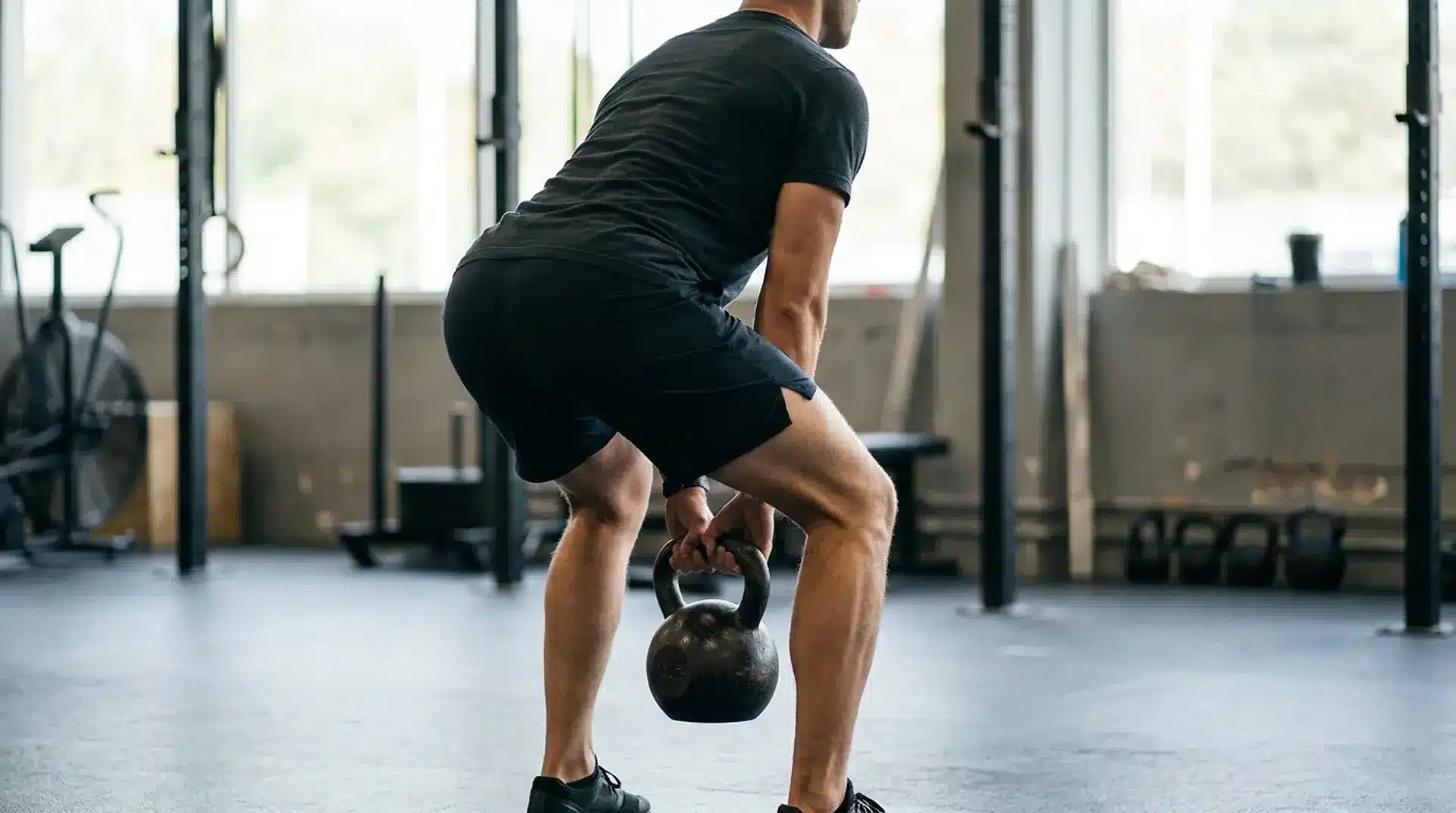
The most common point of failure for the kettlebell back occurs at the hinge. A common error is squatting rather than hinging. A squat involves significant knee flexion and a more vertical torso, which is acceptable for specific variations but dangerous if applied to the kettlebell swing.
The hinge is a horizontal movement pattern. The hips should travel backward as if you are trying to touch your glutes to a wall behind you. As the hips move back, the chest naturally descends, but it should not collapse toward the floor. If the chest drops too low, the back is forced to compensate by rounding. A helpful cue is to keep the shoulders "packed" or pulled away from the ears, creating tension in the lats. This lat engagement acts as a bridge between the arms and the core, stabilizing the thoracic spine.
Comparing Movement Patterns and Risk Factors
Understanding the difference between improper form and optimal mechanics is crucial for long-term joint health. The following table highlights common errors and their biomechanical consequences.
| Error | Mechanical Consequence | Risk Category |
|---|---|---|
| Lumbar Rounding | Excessive disc shear | High (Acute injury) |
| Hyper-extension | Facet joint compression | Moderate (Chronic) |
| Shoulder Protraction | Loss of thoracic stability | Moderate (Stability) |
| Knee-Dominant Swing | Reduced glute recruitment | Low (Performance) |
Technical Essentials for Spinal Integrity
Beyond the brace and the hinge, you must consider the "kettlebell back" in relation to the descent of the bell. The kettlebell should travel high between the legs, near the crease of the hip. If the bell hangs too low—near the knees—the lever arm becomes too long, exponentially increasing the torque on the lumbar spine.
To maintain the correct trajectory:
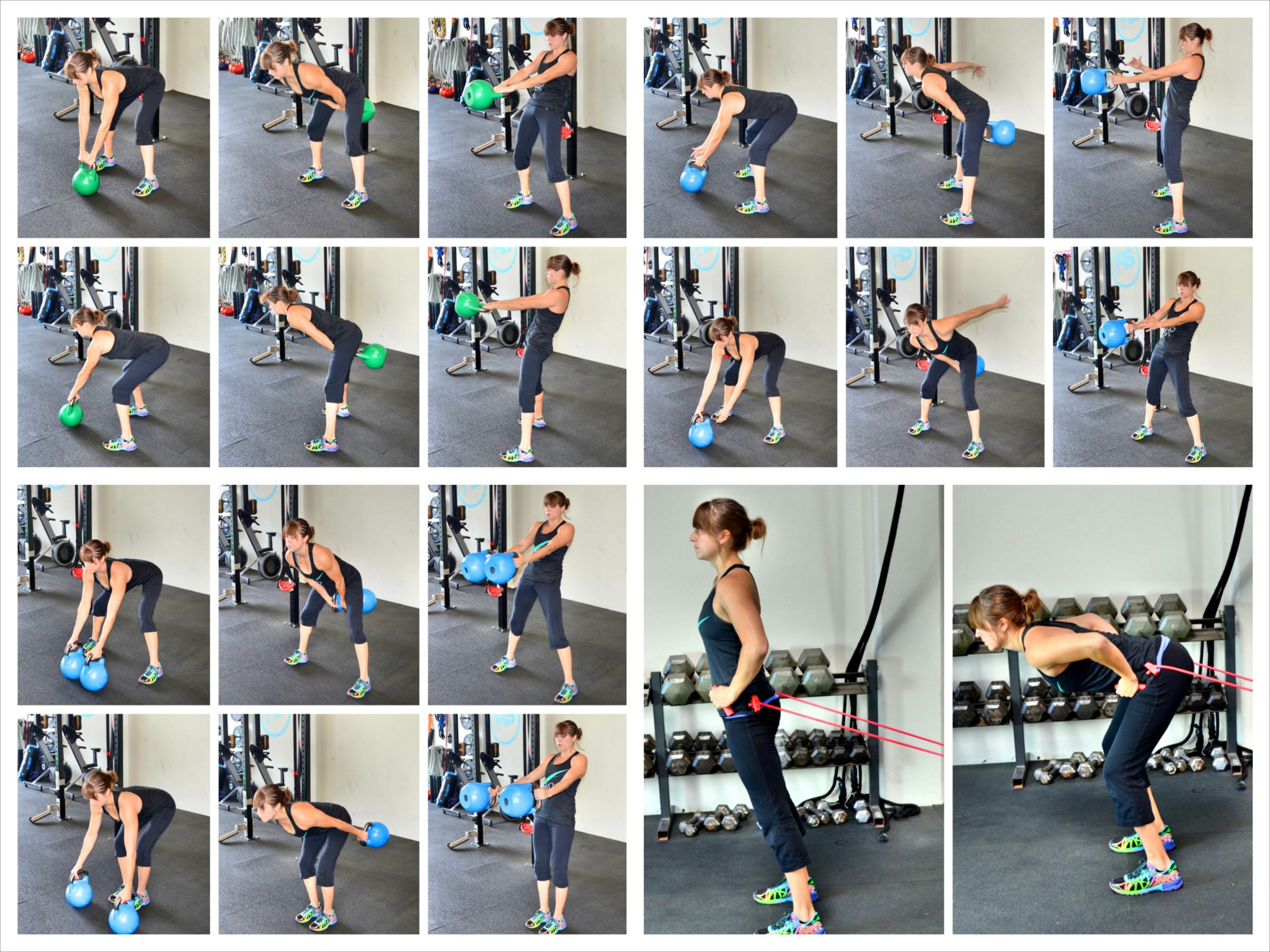
- The Hike Pass: Treat the start of every swing like a hike pass in football. The bell starts in front of you, and you pull it back aggressively into your groin area. This ensures the bell stays close to your center of gravity.
- The "Packed" Shoulder: Keeping the lats tight prevents the kettlebell from pulling the shoulders forward. If the upper back rounds, the lower back will follow suit. Focus on "breaking the handle" of the kettlebell by trying to bend it in half, which helps activate the back muscles.
- Visual Focus: Keep your gaze fixed on a spot about 10 to 15 feet in front of you. Looking down encourages the head and neck to drop, which often triggers rounding of the upper back.
Progressive Loading and Volume Management
Even with perfect form, the back is susceptible to fatigue. A common mistake is training to failure with heavy bells before mastering the movement pattern with lighter weights. In 2026, fitness coaching emphasizes "greasing the groove" or practicing high-frequency, low-fatigue sessions to build technical mastery.
If you find that your form breaks down after 10 repetitions, your working set should be limited to 5 or 8 repetitions. Fatigue is the enemy of spinal safety. When the stabilizer muscles of the core tire, they can no longer maintain the "kettlebell back," and the spine becomes vulnerable. Stop the set before your form degrades, not when you physically can no longer move the bell.
Frequently Asked Questions
Why does my lower back hurt after kettlebell swings? Back pain typically occurs because of a loss of neutral spine alignment during the backswing, often caused by the kettlebell hanging too low or the hips failing to hinge properly. Ensure you are hinging at the hips and keeping the bell high in your groin.
Is back rounding ever acceptable in kettlebell training? No, in the context of standard swing and overhead movements, the spine should remain neutral. While some specialized strength disciplines may utilize rounded-back techniques for specific deadlift variations, this is not appropriate for ballistic kettlebell exercises where the bell is moving at high velocity.
How do I know if my core is braced correctly? A correct brace is felt in the front, sides, and back of your midsection. If you can still easily breathe into your chest or if your belly remains soft, you are not braced. Use a weightlifting belt as a tactile cue; if you cannot push your stomach out against the belt, your core is not properly engaged.
Can weak hamstrings cause back pain during kettlebell lifts? Yes. If your hamstrings lack the necessary mobility or strength to facilitate a deep hip hinge, your body will instinctively round the lumbar spine to reach the bell or achieve the desired range of motion. Prioritize hamstring flexibility and glute activation drills to support a healthier hinge.
How often should I train with kettlebells to avoid strain? Frequency depends on your conditioning, but focus on quality over volume. Aim for 3 to 4 sessions per week, ensuring you incorporate at least one day of rest between high-intensity sessions to allow your spinal stabilizers and CNS to recover.
Practical Recommendation for Safer Lifts
If you are just beginning or returning to training, start by practicing the "dead swing." Place the kettlebell on the floor, assume a proper hinge position, and perform a single swing, returning the bell to the floor after each repetition. This forces a "reset" of your posture and spinal alignment. Do not progress to continuous swings until you can demonstrate a perfect, neutral-spine hinge for 10 consecutive dead swings. Consistency in this baseline movement is the most effective safeguard against back injury in the long term.
Image Gallery