The Legacy and Relationship of George W. Bush and Barack Obama: A Comparative Analysis
The relationship between George W. Bush and Barack Obama is defined by a historic transition of power during a global financial crisis, contrasting political ideologies, and a lasting post-presidency friendship. While their policies on...
The relationship between George W. Bush and Barack Obama is defined by a historic transition of power during a global financial crisis, contrasting political ideologies, and a lasting post-presidency friendship. While their policies on healthcare, foreign intervention, and the economy differed significantly, their mutual commitment to institutional stability remains a cornerstone of 21st-century American political history.
Contents
The 2008-2009 Presidential Transition: A Gold Standard
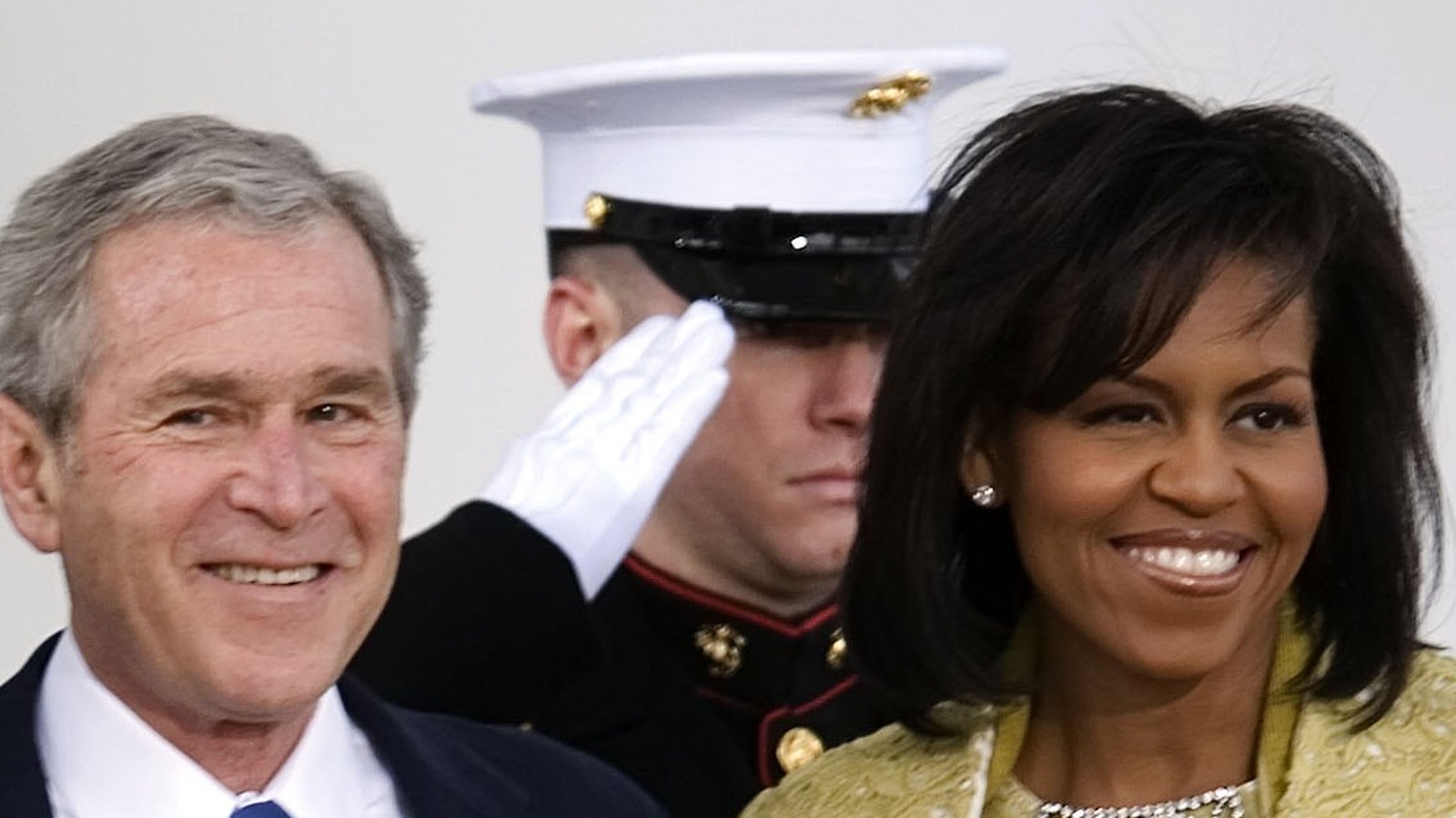
As we look back from 2026, the transition between the 43rd and 44th presidents remains the benchmark for executive cooperation. In late 2008, the United States faced the most significant economic collapse since the Great Depression. Despite their ideological differences and the heated nature of the 2008 election, the Bush administration made an unprecedented effort to ensure the incoming Obama team was prepared.
President George W. Bush gave specific instructions to his staff to provide the Obama team with everything they needed. This included joint briefings on national security and the economy. The cooperation was most visible in the passage and implementation of the Troubled Asset Relief Program (TARP). Although the program was initiated under Bush, its continued execution was vital for the Obama administration's early efforts to stabilize the banking sector.
The transition was not merely about logistics; it was about the survival of the financial system. Bush’s willingness to coordinate with his successor prevented a vacuum of leadership during a period of extreme market volatility. Historians frequently cite this period as a rare moment where the continuity of the American state took precedence over partisan victory.
Economic Crisis Management: From TARP to the Recovery Act
The economic legacies of George Bush and Obama are inextricably linked by the Great Recession. George W. Bush entered office during the tail end of the dot-com bubble and navigated the economic fallout of the September 11 attacks. His primary economic tools were broad tax cuts, known as the Bush Tax Cuts of 2001 and 2003, which aimed to stimulate growth through supply-side incentives.
However, the housing market collapse in 2007-2008 forced a shift toward federal intervention. Bush signed the initial bank bailouts, a move that was deeply unpopular with his base but deemed necessary by his Treasury Department.
When Barack Obama took office in 2009, he inherited an economy losing hundreds of thousands of jobs per month. His primary response was the American Recovery and Reinvestment Act of 2009 (ARRA), a nearly $800 billion stimulus package focused on infrastructure, education, and unemployment benefits. While Bush’s approach leaned toward tax relief, Obama’s focused on government spending and social safety nets.
By the end of Obama's second term, the unemployment rate had dropped significantly from its 10% peak in 2009. The debate between the two eras often centers on whether Bush’s deregulation contributed to the crisis and whether Obama’s regulatory response, specifically the Dodd-Frank Wall Street Reform and Consumer Protection Act, slowed or stabilized the subsequent recovery.
Foreign Policy Evolution: The War on Terror and the Shift in Strategy
Foreign policy represents the most stark contrast between George Bush and Obama, though significant continuities existed. The Bush Doctrine was characterized by unilateralism and preemption, leading to the invasions of Afghanistan in 2001 and Iraq in 2003. Bush’s "Global War on Terror" sought to reshape the Middle East through democratic promotion and military force.
Barack Obama campaigned on ending the Iraq War and shifting the focus back to Afghanistan. His administration moved toward a policy of multilateralism and "leading from behind." Obama prioritized targeted operations—most notably the 2011 raid that killed Osama bin Laden—and the use of drone technology over large-scale troop deployments.
Despite the rhetorical shift, Obama found it difficult to fully disengage from the conflicts started under Bush. He presided over a "surge" in Afghanistan in 2009 and later returned U.S. forces to Iraq to combat the rise of ISIS. Both presidents struggled with the long-term stability of the region, demonstrating that while tactics may change (e.g., from ground invasions to drone strikes and special forces), the geopolitical challenges of the Middle East remained persistent across both administrations.
Domestic Legacies: Healthcare, Education, and Social Reform
In domestic policy, both presidents sought to expand the federal role in sectors traditionally managed by states or the private sector.
- Education: George W. Bush signed the No Child Left Behind Act (NCLB) in 2001, which introduced federal standards and testing to public schools. Obama continued the focus on standards through the Race to the Top initiative, which used competitive grants to encourage states to adopt "Common Core" standards.
- Healthcare: Bush expanded healthcare coverage through Medicare Part D, which provided prescription drug coverage for seniors—a major expansion of the welfare state. Obama’s signature achievement was the Affordable Care Act (ACA), or "Obamacare." While Bush’s reform was a market-based addition to an existing program, Obama’s reform sought to restructure the entire insurance market and provide near-universal coverage.
- Social Issues: The two presidents held fundamentally different views on social issues like marriage equality and reproductive rights. Bush’s tenure was marked by a conservative judicial philosophy, while Obama’s appointments to the Supreme Court (Sotomayor and Kagan) were instrumental in the eventual legalization of same-sex marriage nationwide.
The Post-Presidency Relationship: Civility in a Polarized Era
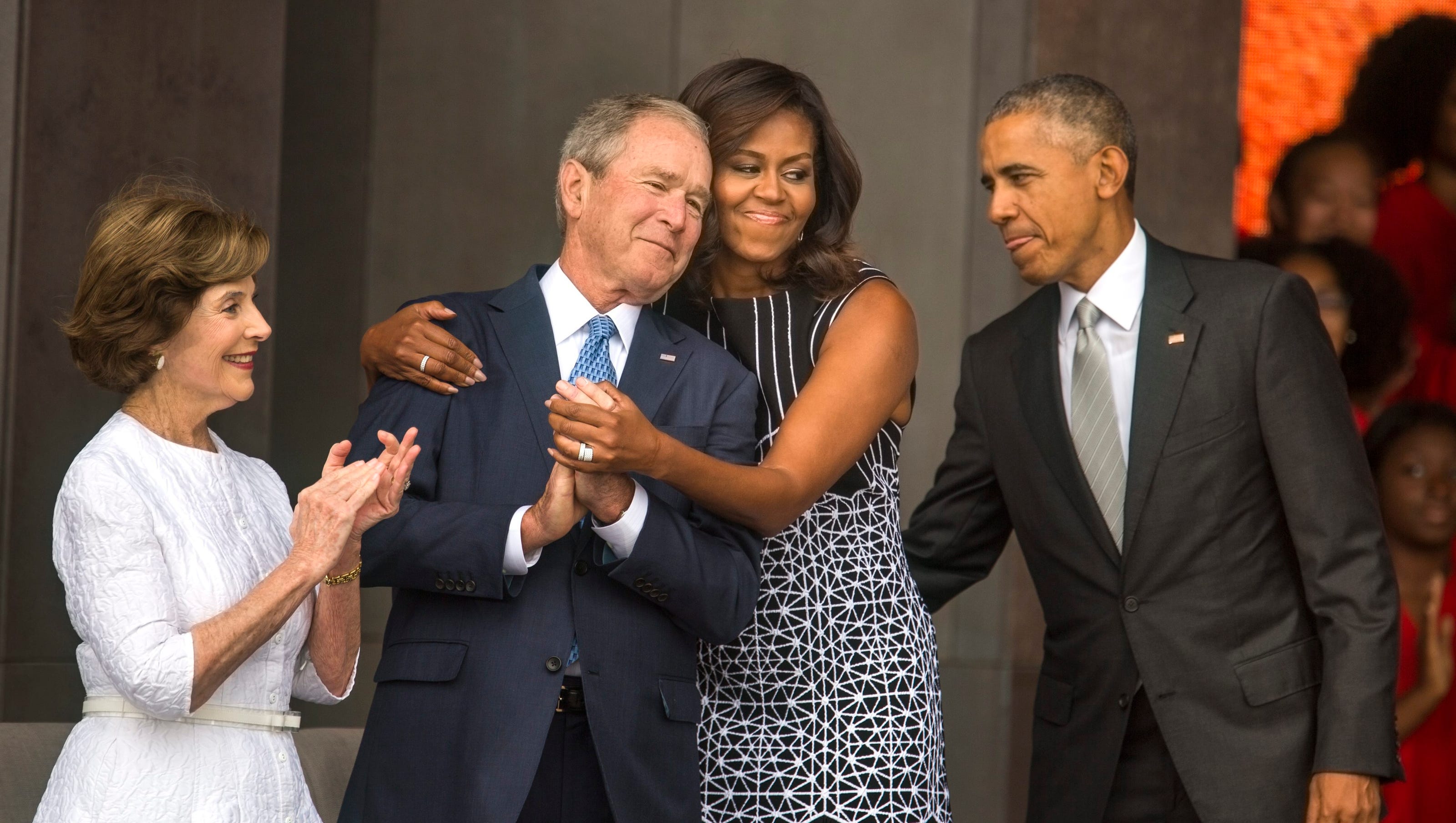
Perhaps the most surprising development since 2017 has been the visible personal friendship between the Bush and Obama families. In an era of heightened political polarization, images of George W. Bush and Michelle Obama sharing a laugh or a piece of candy at national events have gone viral, serving as a reminder of a bygone era of bipartisan decorum.
This relationship is more than just social. Both men have used their post-presidential platforms to defend the institutions of democracy. As of 2026, they frequently appear together at events for the Presidents’ Circle and other non-partisan initiatives. Their bond is rooted in the "Ex-Presidents Club," a small group of individuals who understand the unique pressures of the Oval Office.
Bush has often spoken about his respect for Obama’s dignity and the difficulty of the job he inherited. Obama, in turn, has praised Bush’s commitment to the peaceful transfer of power and his work on global health initiatives like PEPFAR (President's Emergency Plan for AIDS Relief), which Obama continued to fund and expand during his own presidency.
Comparative Overview of the Bush and Obama Administrations
The following table summarizes the key differences and similarities between the 43rd and 44th presidencies across major policy areas.
| Feature | George W. Bush (2001–2009) | Barack Obama (2009–2017) |
|---|---|---|
| Primary Economic Policy | Supply-side tax cuts (Bush Tax Cuts) | Keynesian stimulus (Recovery Act) |
| Healthcare Signature | Medicare Part D (Prescription Drugs) | Affordable Care Act (Obamacare) |
| Foreign Policy Doctrine | Unilateralism / Preemption | Multilateralism / Diplomacy |
| Major Conflict(s) | Iraq War, Afghanistan War | Intervention in Libya, ISIS Campaign |
| Education Policy | No Child Left Behind (NCLB) | Race to the Top / Common Core |
| Financial Regulation | Deregulation focus (pre-2008) | Dodd-Frank Act (post-2008) |
| Supreme Court Picks | Roberts, Alito | Sotomayor, Kagan |
| Key Environmental Action | Cleared Skies Act (Proposed) | Paris Climate Agreement |
Frequently Asked Questions
How did the 2008 financial crisis affect both presidents?
The crisis defined the end of the Bush presidency and the beginning of the Obama presidency. Bush initiated the federal intervention with the TARP program to prevent a total banking collapse. Obama expanded this intervention with the 2009 stimulus package and the auto industry bailout. Both presidents were forced to use massive federal spending to stabilize an economy that was in freefall during their transition period.
What is the most significant policy they both supported?
Both presidents were staunch supporters of PEPFAR, the program to combat HIV/AIDS globally, particularly in Africa. Originally launched by Bush, it is considered one of his greatest legacy achievements. Obama not only maintained the program but expanded its scope to include broader global health initiatives. This remains a rare area of total bipartisan agreement between the two administrations.
How did their views on immigration differ?
Interestingly, both presidents were relatively aligned on the need for "Comprehensive Immigration Reform." Bush attempted to pass a reform bill in 2007 that included a path to citizenship, but it was blocked by his own party. Obama similarly pushed for reform and eventually signed the DACA (Deferred Action for Childhood Arrivals) executive order when legislative efforts failed. Both faced significant domestic opposition to their immigration policies.
Are George Bush and Obama friends?
Yes, in their post-presidency years, they have developed a visible and public friendship. They often sit together at state funerals, library openings, and other official functions. They have both stated that the shared experience of the presidency transcends political differences, and they maintain a high level of mutual respect.
What was the "Bush-Obama" drone policy?
The use of unmanned aerial vehicles (drones) for targeted killings began under the Bush administration but was dramatically scaled up during the Obama administration. This continuity in counterterrorism strategy is often cited by critics as an area where the two presidents were more similar than their campaign rhetoric suggested.
Practical Recommendation for Further Study
To gain a deeper understanding of the intersection between these two presidencies, researchers and students of political science should examine the official records of the 2008-2009 transition held by the National Archives. These documents provide a detailed look at how two opposing political teams worked together to manage a national emergency. Additionally, comparing the Bush Institute's policy papers with the Obama Foundation's initiatives offers insights into how both men continue to influence American civic life in 2026.
Image Gallery