Why Selling Options for Income Can Surprise You
Selling options to generate recurring income appeals to many investors seeking cash flow, but the underlying mechanics, risk profiles, and potential for sudden capital loss often catch participants off guard. Unlike traditional buy-and...
Selling options to generate recurring income appeals to many investors seeking cash flow, but the underlying mechanics, risk profiles, and potential for sudden capital loss often catch participants off guard. Unlike traditional buy-and-hold investing, writing options involves asymmetric risk where the potential reward is strictly capped by the premium collected, while the exposure to adverse market movements can far exceed that initial credit. Understanding the technical realities, margin requirements, and behavioral traps of option selling helps market participants approach this strategy with realistic expectations.
Contents
The Allure of Premium Collection and Cash Flow
Generating regular cash flow from an existing portfolio is a primary goal for many retail and institutional investors. Strategies such as writing covered calls or cash-secured puts are frequently marketed as reliable ways to monetize sideways-moving markets or enhance the yield of a stagnant stock holding.
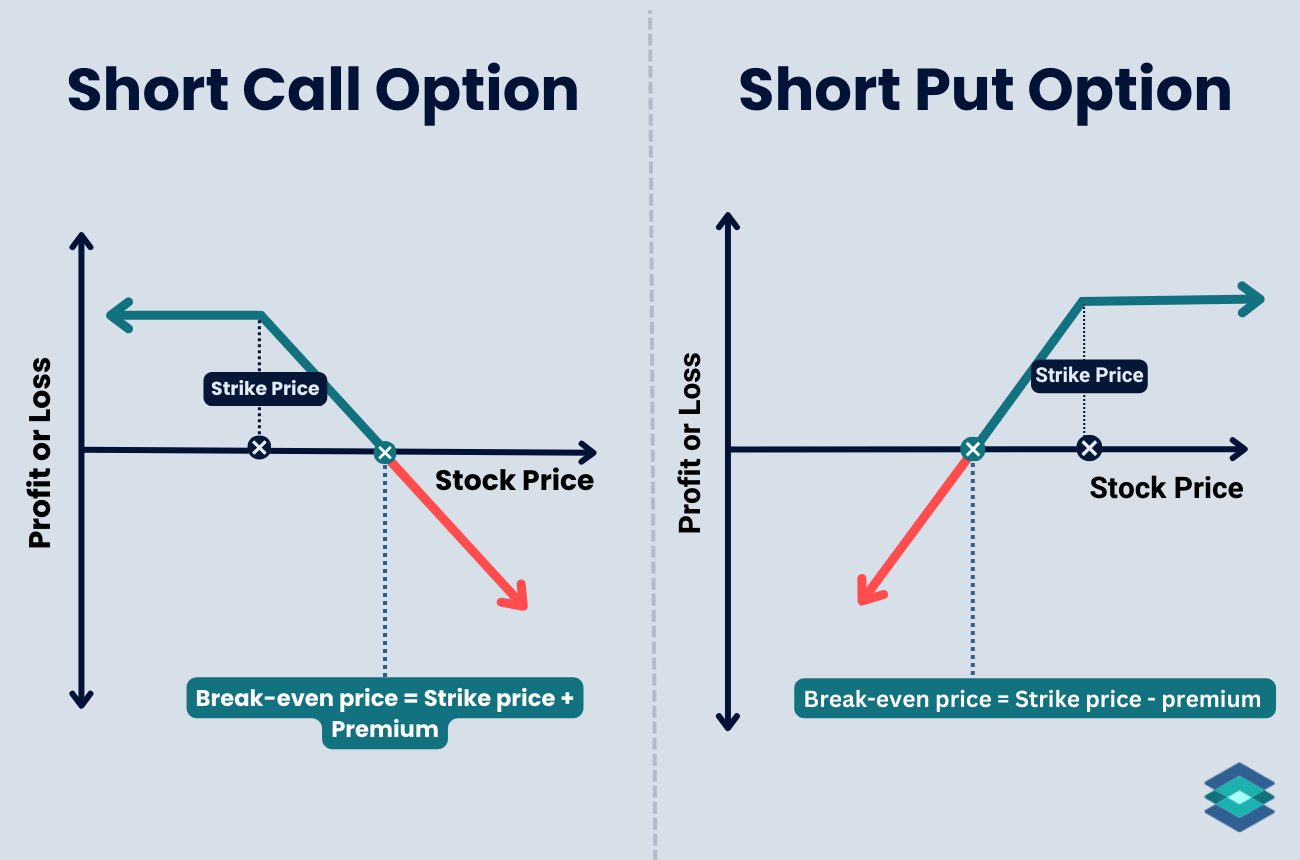
When an investor sells an option, they collect an upfront cash payment known as the premium. This transaction transfers the right, but not the obligation, to buy or sell the underlying asset from the buyer to the seller. For investors who wish they had bought a stock at a lower price, selling a cash-secured put allows them to collect income while waiting for a pullback. For those already holding shares, selling a covered call provides a modest cushion against minor market declines while generating immediate yield.
However, the psychological comfort of receiving cash immediately can obscure the true nature of the obligation being assumed. The premium is not free money or a bonus dividend; it is compensation for bearing the tail risk of the underlying security.
Core Mechanisms: How Selling Options Differs from Buying
To understand why selling options frequently surprises traders, one must examine the mechanics of option pricing and Greeks. Options are wasting assets whose value decays over time, a phenomenon measured by the Greek variable Theta. Option sellers seek to profit from this time decay, allowing contracts to expire worthless or be bought back at a lower price.
While time decay works in favor of the seller, other market forces can work aggressively against them.
- Delta: Measures the expected change in option price per dollar change in the underlying asset. A short option position has negative delta, meaning losses accumulate as the underlying asset moves against the position.
- Gamma: Measures the rate of change in delta. High gamma near expiration can cause option prices to swing violently on small moves in the underlying asset, creating sudden margin pressures for sellers.
- Vega: Measures sensitivity to implied volatility. When market volatility spikes, option prices rise across the board. For a net seller of options, rising volatility increases the liability of open positions, often forcing them to buy back contracts at a significant loss.
Option Selling Strategies Comparison
| Strategy | Primary Objective | Max Profit Potential | Max Risk Exposure | Typical Assignment Risk |
|---|---|---|---|---|
| Covered Call | Income generation on long stock | Premium received + upside to strike price | Substantial (minus premium received if stock drops to zero) | Obligation to sell shares at strike price if ITM |
| Cash-Secured Put | Income generation or stock acquisition | Premium received | Substantial (Strike price $\times$ 100 minus premium received) | Obligation to buy shares at strike price if ITM |
| Credit Spread | Defined-risk income generation | Net premium received | Difference between strikes minus net premium | Early assignment or max loss on leg breach |
The Reality of Tail Risk and Black Swan Events
The most common and severe surprise for option sellers is the sudden impact of tail risk—rare, extreme market events that lie outside normal statistical distributions. Because option sellers collect small, frequent wins and suffer infrequent but massive losses, their return distribution resembles a negative skew.
Consider a trader who consistently sells out-of-the-money puts on stable equities to harvest monthly income. For months or years, the strategy may yield steady, predictable returns. This creates a false sense of security, often leading the trader to increase position size or leverage. When a macroeconomic shock, sudden regulatory shift, or industry-wide crisis occurs, the underlying asset can gap down violently through multiple strike prices.
During such events, liquidity in the options market can dry up, widening bid-ask spreads and making it prohibitively expensive to close losing positions. The seller may be forced to accept deep losses or take delivery of a collapsing asset at an inflated strike price, turning a modest income-generating trade into a catastrophic capital depletion event.
Margin Calls and Leverage Traps
Many option-selling strategies are executed within margin accounts, which allow brokers to lend capital against existing securities to satisfy collateral requirements. While margin enhances capital efficiency, it introduces severe operational hazards for option writers.
When a short option position moves significantly in-the-money (ITM), the broker recalculates the maintenance margin required to support the risk. If the account equity falls below this threshold, the broker issues a margin call.
- Immediate Notification: The broker demands immediate deposit of cash or eligible securities.
- Forced Liquidation: If the trader cannot meet the call within the mandated timeframe, the broker liquidates positions at prevailing market prices without regard for timing or loss minimization.
- Cascading Losses: Forced liquidations during volatile periods often occur at depressed bid prices, exacerbating portfolio damage and locking in realized losses.
Unlike long stock positions, where an investor can simply choose to wait out a market downturn, a leveraged short option position can trigger automated liquidations that permanently impair principal before the market has a chance to recover.
Tax Implications and Wash Sale Rules
Tax treatment for option sellers adds another layer of complexity that frequently surprises retail investors, particularly in taxable brokerage accounts.
In the United States, options on broad-based indexes (such as the S&P 500 index options, ticker SPX) often qualify for 60/40 tax treatment under Section 1256 of the Internal Revenue Code, where gains are taxed as 60% long-term capital gains and 40% short-term capital gains regardless of holding period. However, options on individual equities and exchange-traded funds (ETFs) do not share this benefit; profits are taxed at ordinary income tax rates if held for one year or less.
Furthermore, the IRS wash sale rule can trap option sellers who attempt to roll losing positions. If a trader sells an option at a loss and acquires a substantially identical option or stock within a 30-day window before or after the sale, the tax deduction for that loss is disallowed and added to the cost basis of the newly acquired position. This can result in unexpected tax liabilities at year-end, even for traders who experienced net losses over the course of the fiscal year.
Best Practices for Managing Option-Selling Risks
While selling options carries substantial risks, institutional and experienced retail traders utilize strict risk management protocols to mitigate potential pitfalls. Adopting these safeguards helps control exposure:
- Define Maximum Loss: Avoid naked or unhedged short options unless backed by adequate capital and deep risk tolerance. Utilize defined-risk structures like vertical credit spreads to cap worst-case scenarios.
- Diversify Across Sectors and Asset Classes: Do not concentrate short option exposure in a single stock, sector, or correlated group of equities. Spread risk across non-correlated underlying assets.
- Monitor Implied Volatility (IV): Sell options when IV is historically high and rich relative to realized volatility, rather than selling blindly into low-volatility environments where a sudden spike can overwhelm the position.
- Implement Strict Capital Allocation Limits: Never risk more than a small, predetermined percentage of total portfolio capital on any single option trade or strategy.
Frequently Asked Questions
What happens if a short option goes in-the-money?
When a short option moves in-the-money, the holder of the option has the right to exercise it. For a short call, the seller is obligated to sell the underlying shares at the strike price. For a short put, the seller is obligated to buy the shares at the strike price. This assignment can occur at any time prior to expiration for American-style options, often resulting in an unwanted equity position.
Are covered calls risk-free?
Covered calls are not risk-free. While owning the underlying stock cushions against total loss, a severe drop in the stock's price will still cause significant capital loss that the collected option premium may only partially offset. Furthermore, if the stock surges past the short call strike price, the investor's upside is capped, and their shares are called away.
Why do option prices rise when volatility increases?
Option prices include both intrinsic value and extrinsic (time and volatility) value. When market volatility increases, the probability of the underlying asset making large price swings in either direction rises. This higher uncertainty increases the value of the option contract for the buyer, which works directly against the short option seller.
What is a cash-secured put?
A cash-secured put is an option-selling strategy where the trader writes a put option and simultaneously sets aside enough cash in their brokerage account to purchase the underlying shares at the strike price if the option is assigned. This prevents the broker from needing to issue a margin loan if the put goes in-the-money.
How does time decay (Theta) benefit option sellers?
Time decay represents the erosion of an option's extrinsic value as it approaches its expiration date. Because options have a finite lifespan, their time value declines at an accelerating rate during the final weeks before expiration. Option sellers collect this decaying value as profit if the option expires worthless or can be repurchased for less than the initial credit received.
Conclusion and Next Actions
Selling options for income offers an appealing mechanism for generating cash flow, but it requires a sophisticated understanding of probability, margin management, and tail risk. Treating option selling as passive income without accounting for potential capital destruction can lead to severe financial setbacks. Before deploying capital into short option strategies, review your broker's margin agreements, establish strict position-sizing rules, and consider starting with defined-risk strategies to observe how market volatility impacts your portfolio.
Image Gallery