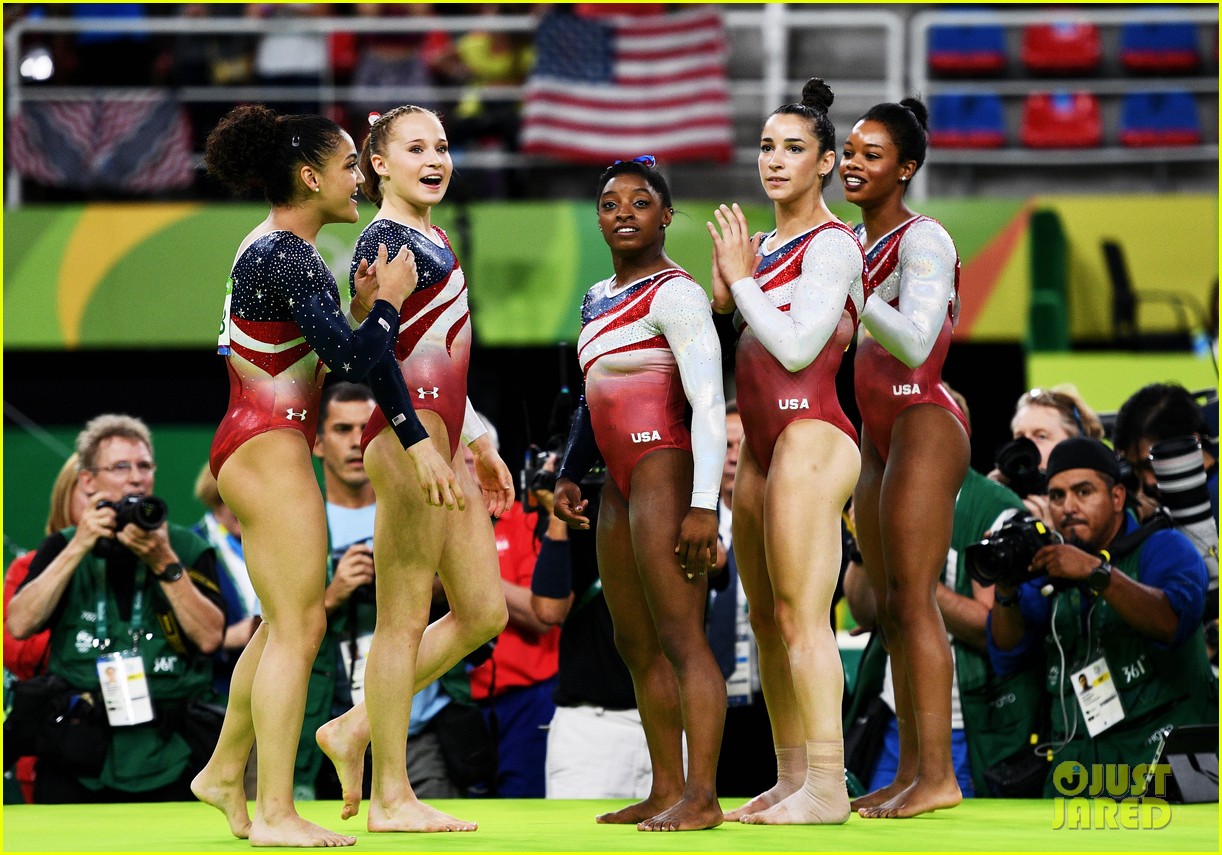
Why the 2016 Summer Olympics Women's Gymnastics Team Gold Still Inspires
The 2016 US Women’s Gymnastics team, famously known as the "Final Five," remains a pinnacle of athletic achievement because of their record-shattering 8.209-point margin of victory and their role as a cultural bridge. A decade after th...
The 2016 US Women’s Gymnastics team, famously known as the "Final Five," remains a pinnacle of athletic achievement because of their record-shattering 8.209-point margin of victory and their role as a cultural bridge. A decade after their gold medal win in Rio de Janeiro, their legacy continues to inspire through their advocacy for athlete mental health, their technical dominance that redefined the sport's scoring ceiling, and their resilience in the face of systemic institutional challenges.
Contents
The Architect of an Era: Understanding the "Final Five"
To understand why the 2016 gold medal still resonates in 2026, one must first understand the historical weight of the team’s moniker. Dubbed the "Final Five," the name carried a dual significance. First, it referenced the fact that the 2016 Games were the last to feature five-person teams before the International Gymnastics Federation (FIG) transitioned to four-person rosters for the 2020 (held in 2021) Tokyo Olympics. Second, it served as a tribute to Martha Karolyi, the longtime national team coordinator who retired immediately following the Rio Games.
The team—comprising Simone Biles, Aly Raisman, Gabby Douglas, Laurie Hernandez, and Madison Kocian—was more than just a collection of talented individuals; they were the culmination of a "semi-centralized" training system that had dominated the sport for 15 years. However, looking back from 2026, the Final Five are increasingly viewed as the catalyst for the shift from a culture of silence to one of athlete empowerment. They were the last team to win under the old regime but the first to truly demand a seat at the table regarding their own well-being.
The Mathematical Impossibility of Their Dominance
In the world of elite gymnastics, where medals are often decided by tenths or even hundredths of a point, the Final Five’s victory was an anomaly. They finished with a total score of 184.897, more than eight points ahead of the silver medalist Russian team. To put this in perspective, the gap between first and second place was larger than the gap between second and last place in the team finals.
The Technical Floor
The 2016 team did not just win; they essentially competed in a different league. Their collective "Difficulty" (D-scores) were so high that they could afford multiple falls and still win the gold. This technical surplus was driven largely by Simone Biles, who brought skills to the floor and vault that had never been performed by women in competition. However, the inspiration doesn’t just come from Biles. It comes from the depth of the roster:
- Madison Kocian provided a world-class Uneven Bars routine that secured the US lead in their historically weakest event.
- Aly Raisman delivered a masterclass in consistency and "power gymnastics," proving that longevity in the sport was possible well into a gymnast's 20s.
- Laurie Hernandez brought a level of performance artistry and "sticking" capability on the Balance Beam that set a new standard for composure.
- Gabby Douglas became the first reigning All-Around champion to return for a second Olympics and win team gold since the 1960s, proving that sustained excellence was achievable despite intense public scrutiny.
A Symbol of Resilience and Cultural Shift
While the 2016 victory was a celebration of athletic prowess, its lasting inspiration is inextricably linked to the courage shown by the team members in the years that followed. As the Larry Nassar abuse scandal came to light shortly after the Rio Games, the members of the Final Five, particularly Aly Raisman and Simone Biles, became the faces of a movement for justice and reform within USA Gymnastics and the US Olympic & Paralympic Committee.
In 2026, we look back at the Rio gold not just as a trophy, but as a moment of "strength before the storm." The team’s ability to perform at a historic level while carrying the weight of undisclosed trauma and institutional failure is a testament to their psychological fortitude. They didn't just win for a federation; they won for themselves and for each other. This narrative of reclamation—where the athletes took back their voices and their sport—is what provides the emotional depth to their 2016 achievement.
Representation and the "Biles Effect"
The 2016 team was the most diverse gymnastics squad in US history at that time. With two African American women (Biles and Douglas), one Latina (Hernandez), and two Caucasian women (Raisman and Kocian), the Final Five looked like the country they represented. This visual representation dismantled the antiquated "pixie" stereotype of the 1970s and 80s gymnastics, replacing it with a diverse image of powerful, muscular, and expressive women.
The "Biles Effect" began in earnest in 2016. By winning four gold medals in a single Games, Biles shifted the conversation from "who is the best right now" to "who is the greatest of all time." In 2026, as Biles remains a benchmark for every gymnast entering the elite circuit, the 2016 team gold stands as the foundational moment of her era—a moment where the world realized that the ceiling of human potential in gymnastics had been moved.
Statistical Breakdown of the 2016 Performance
The following table illustrates the specialized contributions of each member during the Team Final, showcasing the strategic depth that led to their historic margin.
| Athlete | Vault (Score) | Uneven Bars (Score) | Balance Beam (Score) | Floor Exercise (Score) | Primary Role |
|---|---|---|---|---|---|
| Simone Biles | 15.933 | 14.800 | 15.300 | 15.800 | All-Around Anchor |
| Aly Raisman | 15.833 | — | 15.000 | 15.366 | Floor/Vault Specialist & Captain |
| Laurie Hernandez | 15.100 | — | 15.233 | 14.833 | Beam/Performance Specialist |
| Madison Kocian | — | 15.933 | — | — | Uneven Bars Specialist |
| Gabby Douglas | — | 15.766 | — | — | Bars/Experience Specialist |
| Team Total | 46.866 | 46.499 | 45.533 | 45.999 | Overall Gold: 184.897 |
The Longevity of the "Grandma" and the Rookie
Another reason the 2016 team continues to inspire is the way they challenged age-related stigmas in gymnastics. Before Rio, elite female gymnastics was often viewed as a sport for teenagers who would "peak" at 16 and retire by 18.
Aly Raisman, nicknamed "Grandma" by her younger teammates, was 22 years old in Rio. Her performance—winning silver in the All-Around and Floor Exercise in addition to Team Gold—proved that a gymnast could be more powerful and more technically sound in her early 20s than she was as a teenager. This paved the way for the 2024 Olympic team, which featured several athletes in their mid-to-late 20s, including Biles herself.
Conversely, Laurie Hernandez, who was only 16 in Rio, inspired a generation of younger athletes through her infectious energy and "human emoji" persona. The balance between Raisman’s stoic leadership and Hernandez’s youthful exuberance created a team dynamic that felt accessible and human, rather than robotic and over-coached.
Legacy in the 2026 Landscape
As we navigate the gymnastics world of 2026, the 2016 team’s influence is visible in three distinct areas:
- Technical Standards: The difficulty levels set by Biles and Raisman in 2016 are still the benchmarks for international "start values."
- Athlete Autonomy: The 2016 team was the last to endure the strict Karolyi system. Their success gave them the platform to advocate for the more athlete-centric coaching models used today.
- Media Presence: From "Dancing with the Stars" to the "Gold Over America Tour," the Final Five parlayed their 2016 success into long-term careers, proving that gymnasts could be professional athletes with brand longevity well beyond their competitive years.
The 2016 team gold does not just represent a victory in a sports competition; it represents a turning point in the history of the sport. It was the moment the world saw the perfect intersection of peak physical performance and the beginning of a profound cultural awakening.
Frequently Asked Questions
Why was the 2016 team called the "Final Five"?
The name "Final Five" was chosen because the 2016 Rio Olympics was the last time a women's gymnastics team would consist of five members; the FIG changed the rules to four-person teams for the Tokyo 2020 cycle. It also honored the retirement of Martha Karolyi, the national team coordinator.
How much did the US win by in the 2016 team final?
The US won by a staggering 8.209 points over second-place Russia. This is considered one of the most dominant performances in the history of the sport, as the gap was larger than the margin between second and eighth place.
Who was the captain of the 2016 Olympic gymnastics team?
Aly Raisman served as the captain of the 2016 team. This was her second Olympics, having also served as a captain for the "Fierce Five" in London 2012.
Did all five members of the 2016 team win individual medals?
While all five won team gold, not all won individual medals. Simone Biles (4 gold, 1 bronze), Aly Raisman (2 silver), Laurie Hernandez (1 silver), and Madison Kocian (1 silver) all earned individual hardware. Gabby Douglas contributed significantly to the team score but did not medal in the Uneven Bars final.
What is the lasting legacy of the Final Five in 2026?
Their legacy is twofold: they established a technical standard of difficulty that remains the baseline for elite competition today, and they used their platform to spark institutional changes regarding athlete safety and mental health advocacy.
Professional Recommendation for Fans and Historians
To truly appreciate the inspiration of the 2016 team, students of the sport should look beyond the highlight reels of the Gold Medal ceremony. Study the transition between the 2012 "Fierce Five" and the 2016 "Final Five" to understand how the US program evolved from being "favorites" to being "untouchable." For those looking to support the current era of gymnastics, following the collegiate (NCAA) careers of subsequent gymnasts or attending the "Gold Over America" style tours provides a direct link to the professionalized, athlete-first world that the 2016 team helped build.
Image Gallery