Personal Loan for Anyone Who Needs Cash: Options, Eligibility, and Safe Borrowing
A personal loan provides a lump sum of cash repaid over time in fixed monthly installments. While no legitimate lender guarantees approval to literally everyone regardless of financial standing, diverse options exist for individuals ne...
A personal loan provides a lump sum of cash repaid over time in fixed monthly installments. While no legitimate lender guarantees approval to literally everyone regardless of financial standing, diverse options exist for individuals needing cash—ranging from traditional bank loans and credit unions to online lenders, bad-credit personal loans, and secured borrowing solutions.
Contents
Understanding Personal Cash Loans: Truth vs. Marketing Promises
When searching for a personal loan when urgent cash is required, borrowers frequently encounter aggressive marketing promises such as "instant guaranteed approval" or "no-credit-check cash loans." Understanding the regulatory reality and financial mechanics behind these offers is vital before submitting sensitive financial information.
In consumer finance, legitimate lenders operating in regulated markets evaluate creditworthiness to manage default risk and comply with federal and state lending regulations. Under the Consumer Financial Protection Bureau regulations and the Truth in Lending Act (TILA), financial institutions must clearly disclose total borrowing costs, including the Annual Percentage Rate (APR), finance charges, and payment schedules.
Total Cash Disbursed = Approved Loan Amount - Origination Fee
Lenders that claim to approve "anyone" without evaluating income or credit history usually fall into one of two categories: high-cost predatory lenders (such as payday or auto title lenders) or outright fraudulent advance-fee loan scams. Predatory products often charge annual percentage rates exceeding 300% to 400%, creating cycles of rolling debt that are difficult to escape. Safe borrowing requires evaluating legitimate lending structures designed to accommodate varying credit scores and income backgrounds while maintaining legal protections and capped rates.
Disclaimer: This article provides general financial educational information and does not constitute formal legal, accounting, or personalized financial advice. Borrowing regulations, interest rate caps, and loan availability vary significantly by state and legal jurisdiction.
Types of Personal Cash Loans Available
Different borrower profiles require different loan structures. Depending on your credit score, employment status, available collateral, and timeline, several standard personal loan formats exist in the market.
- Personal Cash Loan Options
- Unsecured Personal Loan (No collateral; credit & income dependent)
- Secured Personal Loan (Backed by CD, savings, or vehicle)
- Credit Union PALs (Lower rates; regulated max APR)
- Co-Signed / Joint Loans (Second person guarantees repayment)
Unsecured Personal Loans
Unsecured loans do not require physical asset collateral like a house or car. Banks, online financial technology companies, and credit unions evaluate applications based primarily on your credit history, income consistency, and existing debt load.
- Pros: Fast funding times (often within 24–48 hours); no risk of immediate asset seizure if default occurs (though credit damage and legal collections remain risks).
- Cons: Stricter qualification requirements; higher interest rates for lower credit scores.
Secured Personal Loans
A secured personal loan requires the borrower to pledge an asset as collateral, such as a savings account, certificate of deposit (CD), paid-off vehicle, or other valuable property.
- Pros: Lower minimum credit score requirements; higher maximum approval amounts; potentially lower interest rates because the lender's risk is reduced.
- Cons: Failure to make payments can lead to direct repossession or forfeiture of the pledged collateral.
Credit Union Payday Alternative Loans (PALs)
Federal credit unions offer specialized small-dollar cash loans called Payday Alternative Loans (PALs I and PALs II) governed by the National Credit Union Administration.
- Loan Amounts: PALs I range from $200 to $1,000; PALs II offer up to $2,000.
- Repayment Terms: 1 to 6 months for PALs I; 1 to 12 months for PALs II.
- Interest Rate Caps: Federal law caps the APR on PALs at 28%, making them substantially safer than traditional payday loans.
Co-Signed and Joint Personal Loans
If individual income or credit history is insufficient to secure approval, applying with a co-signer or co-borrower can unlock access to cash loans.
- Co-Signer: Agrees to assume full financial responsibility for the debt if the primary borrower defaults, though they do not have primary ownership of the loan proceeds.
- Joint Applicant: Shares both access to the funds and responsibility for monthly repayments from day one.
Core Eligibility Criteria for Cash Personal Loans
While requirements vary among financial institutions, virtually all legitimate lenders analyze four fundamental underwriting factors to determine approval and loan terms.
1. Credit Score Tiers and History
Lenders evaluate credit reports through bureaus like Equifax, Experian, or TransUnion. Credit ranges generally break down as follows:
- Excellent Credit (720–850): Access to lowest interest rates (often 6%–12% APR), fee waivers, and highest borrowing limits.
- Good Credit (670–719): Strong approval odds across traditional banks and online lenders with competitive rates.
- Fair Credit (580–669): Moderate options available, primarily through online lenders and credit unions; APRs typically range from 18% to 28%.
- Poor Credit (300–579): Limited unsecured options; higher reliance on secured personal loans, co-signers, or credit union alternative loans. High APRs (up to 35.99%) are standard.
2. Debt-to-Income Ratio (DTI)
DTI measures how much of your gross monthly income goes toward existing monthly debt obligations (rent/mortgage, credit cards, auto loans, student loans). Lenders calculate this as:
$$\text{DTI Ratio} = \left( \frac{\text{Total Monthly Debt Payments}}{\text{Gross Monthly Income}} \right) \times 100$$
Most conventional lenders prefer a DTI ratio below 36%, though specialized lenders may accept up to 45% or 50% if gross income is strong.
3. Income Verification and Employment Stability
Lenders must verify that you have a predictable, ongoing source of income to service monthly loan installments. Acceptable proof of income typically includes:
- Recent W-2 pay stubs or direct-deposit bank statements.
- Tax returns (Schedule C) and 1099 statements for self-employed, freelance, or gig-economy workers.
- Proof of non-employment income, such as Social Security Disability Insurance (SSDI), pension payments, alimony, or child support.
4. Basic Identification and Legal Prerequisites
To apply for a personal loan in the United States, applicants must satisfy baseline legal parameters:
- Minimum age of 18 (19 in certain states like Alabama and Nebraska).
- Valid government-issued photo ID (Driver's License, State ID, Passport).
- Valid Social Security Number (SSN) or Individual Taxpayer Identification Number (ITIN).
- Active checking or savings account for direct loan distribution and electronic debiting.
Comparing Cash Loan Options
The table below outlines common borrowing avenues for individuals seeking cash loans, highlighting differences in credit requirements, funding speeds, and average cost structures.
| Loan Type | Typical APR Range | Minimum Credit Score | Funding Speed | Primary Advantages | Main Risk / Limitation |
|---|---|---|---|---|---|
| Traditional Bank Loans | 6.00% – 24.00% | 660 – 700+ | 1 to 5 Business Days | High limits, competitive rates for strong credit | Strict qualification standards |
| Online Lenders | 8.00% – 35.99% | 580 – 600 | Same-day to 48 Hours | Fast online prequalification, flexible approval | Higher APR caps for poor credit |
| Credit Union PALs | Max 28.00% | None to Low (500+) | 1 to 3 Business Days | Regulated interest rate cap, low fees | Smaller maximum amounts ($1,000–$2,000) |
| Secured Personal Loans | 7.00% – 22.00% | 500 – 580 | 2 to 5 Business Days | Easier qualification, lower rates than unsecured | Collateral forfeiture upon default |
| Peer-to-Peer (P2P) | 9.00% – 35.99% | 600 – 640 | 3 to 7 Business Days | Diverse funding sources, transparent terms | Longer approval and funding process |
| Payday / Title Loans | 300.00% – 400.00%+ | No minimum check | Immediate / Same-Day | Immediate cash without credit check | Extreme predatory interest, debt trap risk |
Step-by-Step Guide to Applying for a Cash Personal Loan
Following a structured application approach helps protect your credit score, reduces unnecessary fees, and secures the best available terms.
- Step 1: Determine Needed Amount & Budget
- Step 2: Check Credit Reports (Soft Inquiry)
- Step 3: Prequalify with Multiple Lenders
- Step 4: Evaluate Terms, Fees & Effective APR
- Step 5: Submit Full Application & Documentation
- Step 6: Receive Funds & Establish Autopay
Step 1: Calculate Exact Cash Requirements
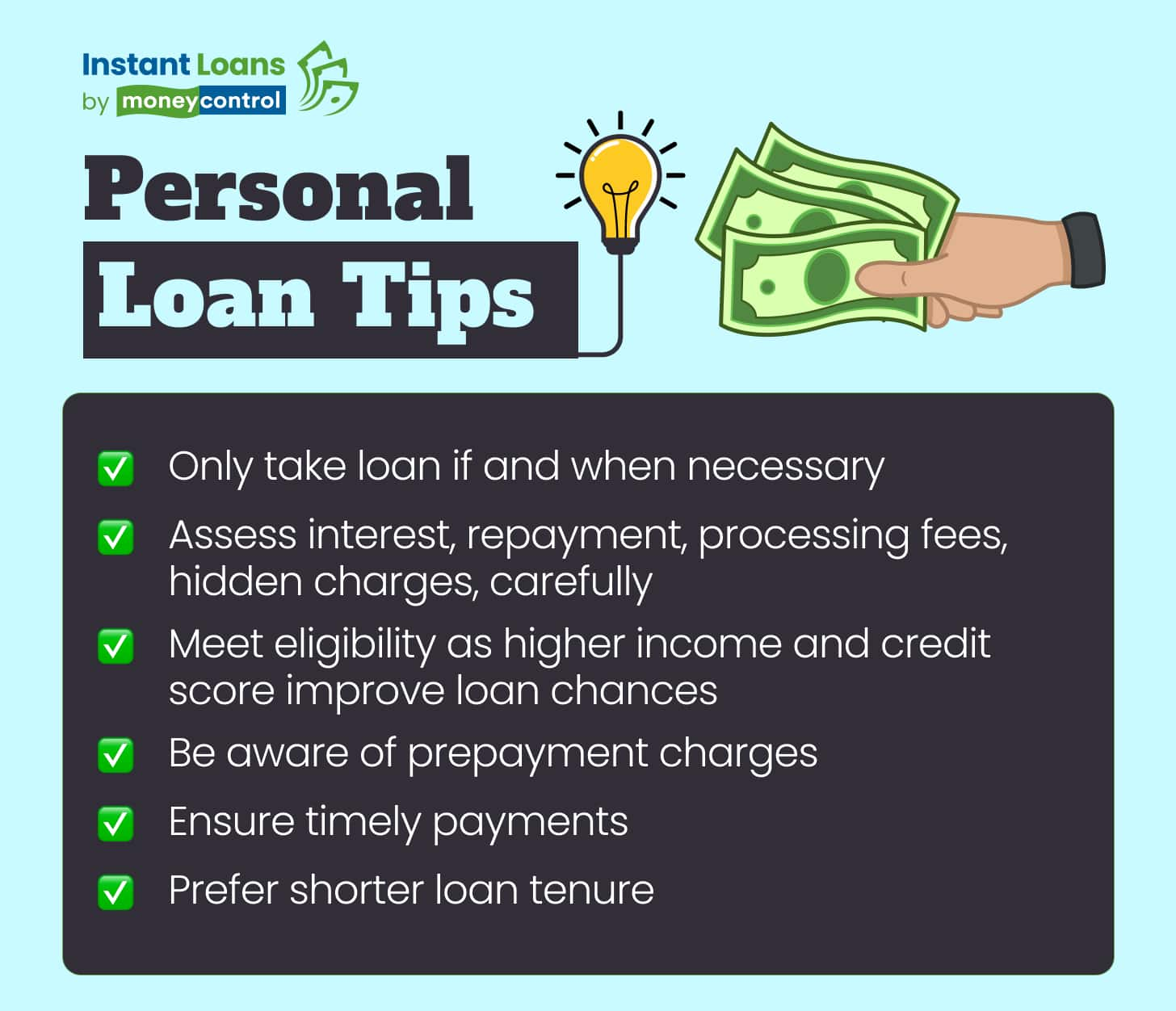
Borrow only the exact amount required. Borrowing extra cash "just in case" increases overall interest costs and elevates monthly obligation risk. Calculate precisely how much cash is needed and test your monthly budget against prospective payment amounts.
Step 2: Check Your Credit Reports
Obtain free credit reports from major credit bureaus via AnnualCreditReport.com or reputable credit monitoring platforms. Check for errors, delinquent accounts, or incorrect balances that could lower your score. Correcting erroneous reporting before applying can improve approval odds and lower rates.
Step 3: Prequalify Online
Many reputable online lenders and financial institutions offer prequalification using a soft credit inquiry. A soft inquiry allows you to view potential loan amounts, interest rates, and estimated monthly payments without affecting your credit score.
Step 4: Compare Terms, APRs, and Fees
Compare offer details carefully. Look beyond the principal monthly payment to analyze the underlying cost structure:
- Annual Percentage Rate (APR): Reflects both the base interest rate and mandatory upfront fees, providing the true annual cost of borrowing.
- Origination Fees: Deducted directly from your approved loan amount prior to disbursement (typically 1% to 10%). For example, a $5,000 loan with a 5% origination fee will net $4,750 in cash while requiring repayment of the full $5,000 principal plus interest.
- Loan Duration: Choose the shortest term with monthly payments you can comfortably afford. Longer terms reduce monthly payment amounts but significantly increase total interest paid over the life of the loan.
Step 5: Submit Formal Application and Verify Documents
Once you select the best lender offer, complete the formal application. This trigger a hard credit inquiry, which may temporarily lower your credit score by a few points. Upload required documents promptly:
- Government photo ID
- Proof of address (utility bill, lease agreement)
- Income documentation (pay stubs, tax documents, bank statements)
Step 6: Final Approval, Disbursement, and Setup
Upon final underwriting approval, review and sign the promissory note. Funds are typically transferred via Automated Clearing House (ACH) direct deposit into your bank account within one to three business days. Immediately configure automatic payments (autopay) to prevent late fees and earn common interest rate discounts (often 0.25% to 0.50%).
Costs, Risks, and Predatory Lending Protections
Borrowers in urgent need of cash are vulnerable to predatory financial products and fraudulent loan schemes. Recognizing red flags protects long-term financial health.
- Evaluating Total Borrowing Costs & Safety
- Standard Loan Costs
- Base Interest Rate
- Origination Fee (1%–10%)
- Late Payment Penalty Fees
- Total APR Calculation
- Predatory Red Flags
- Upfront Wire / Gift Card Fees
- "Guaranteed Approval" Claims
- No Ability-to-Pay Verification
- APRs Exceeding 36% Cap
- Standard Loan Costs
The 36% APR Threshold
Consumer advocacy organizations and federal regulations broadly consider 36% to be the maximum acceptable, sustainable APR for an unsecured consumer loan. Rates exceeding 36% make debt service difficult for low-to-moderate-income borrowers, rapidly compounding default risk.
Identifying Loan Scams
The Federal Trade Commission warns consumer cash seekers to watch for distinct scam indicators:
- Demands for Advance Fees: Legitimate lenders never require payment via gift cards, cryptocurrency, or peer-to-peer money transfers (like Zelle or Venmo) prior to issuing a loan. Real origination fees are deducted directly from loan proceeds, not demanded upfront.
- Guarantees Without Credit/Income Checks: Real financial institutions must evaluate your capacity to repay before disbursing capital. Unconditional approval promises are common fronts for identity theft or fee fraud.
- Unregistered Lenders or High-Pressure Tactics: Verify that the lender is registered and licensed to operate in your state before disclosing sensitive personal details like SSNs or direct-deposit bank numbers.
Responsible Alternatives When Personal Loan Qualification Fails
If traditional or bad-credit personal loans are inaccessible or carry unsustainable interest rates, explore these practical alternatives:
Employer Payroll Advances and Earned Wage Access (EWA)
Earned wage access platforms (such as EarnIn, Brigit, or employer-sponsored programs like DailyPay) allow employees to access money they have already earned before their scheduled payday. These services generally charge minor subscription fees or optional tips rather than high interest rates.
0% APR Intro Credit Card Promotions
Borrowers with good-to-excellent credit who need temporary cash or funding flexibility can evaluate credit cards offering 0% introductory APR periods on purchases or balance transfers (often lasting 12 to 21 months). Full repayment within the promotional window avoids all interest charges.
Local Nonprofits, Community Action Agencies, and Hardship Grants
Community organizations, religious institutions, and local government agencies often offer emergency financial assistance funds for utility payments, rent assistance, or emergency medical costs. These funds are grants or low-barrier assistance that do not require debt repayment.
Negotiating Direct Payment Extensions
If cash is needed to pay specific bills (utility providers, medical facilities, housing loans), contact creditors directly. Many billing departments offer zero-fee hardship deferment plans, interest-free payment extensions, or income-driven balance settlements that resolve immediate cash demands without requiring a new personal loan.
Frequently Asked Questions
Can I get a personal loan with non-traditional income or no formal job?
Yes, conventional job employment is not strictly required if you can document alternative, consistent income sources. Legitimate lenders accept income from self-employment, freelance work, retirement pensions, Social Security benefits, disability payments, child support, or investment dividends. You must provide official documentation, such as bank statements or tax returns, proving regular funds flow.
Is "guaranteed approval" on personal cash loans real?
No, "guaranteed approval" does not exist among legitimate, regulated lenders. Lawful financial institutions are legally required to assess a borrower's capacity to pay back debt. Advertisements guaranteeing approval regardless of income or credit usually represent predatory high-cost products (such as payday loans with 400%+ APRs) or fraudulent advance-fee scams designed to steal money or financial identities.
How fast can personal loan cash be deposited into my bank account?
Funding timelines depend on the lender type. Online lenders and specialized fintech platforms often provide decisioning within minutes and direct-deposit funds as quickly as the same day or next business day. Traditional brick-and-mortar banks and credit unions may take between one and five business days to process documentation, verify accounts, and disburse capital.
How do origination fees impact the total cash received?
An origination fee is an upfront administrative charge deducted directly from the gross loan amount before funds hit your account. If you accept a $10,000 personal loan with a 5% origination fee ($500), the lender disburses $9,500 in usable cash to your bank account. However, you remain responsible for repaying the full $10,000 principal plus ongoing interest accrued on the entire $10,000 sum.
Strategic Recommendations for Borrowers
- Calculate True Borrowing Costs: Always evaluate personal loan offers using the full Annual Percentage Rate (APR) rather than the simple interest rate. The APR accounts for origination fees and other mandatory charges, enabling clear head-to-head comparisons.
- Utilize Soft-Inquiry Prequalification: Protect your credit score by applying only through soft-pull prequalification forms across multiple lenders before submitting a final formal application.
- Cap Borrowing Rates at 36% APR: Avoid high-cost installment, payday, or title loans charging APRs above 36%. If qualifying for standard personal loans is not possible, prioritize credit union PALs, earned wage access, local non-profit grants, or formal creditor payment plans.
- Read Contract Terms Carefully: Verify prepayment penalty clauses, late payment fee schedules, and automatic withdrawal terms prior to signing any loan agreement.
Image Gallery