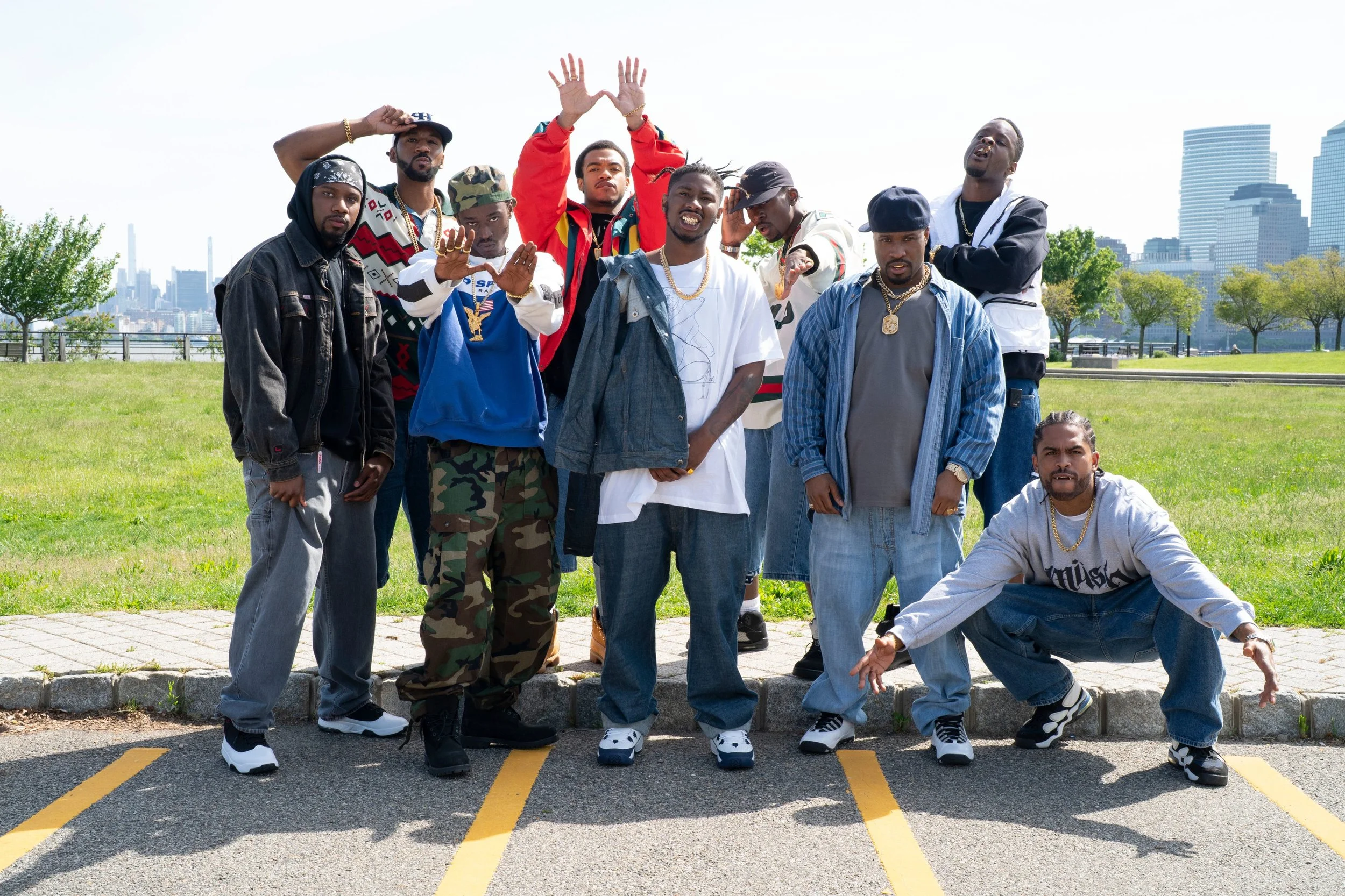
Gbenga Akinnagbe in the Wu-Tang Context: Portraying Mook in An American Saga
Gbenga Akinnagbe portrays John "Mook" Gibbons in the Hulu original series Wu-Tang: An American Saga. As the manager and older cousin to Bobby Diggs (RZA), Akinnagbe’s character serves as the essential bridge between the street-level su...
Gbenga Akinnagbe portrays John "Mook" Gibbons in the Hulu original series Wu-Tang: An American Saga. As the manager and older cousin to Bobby Diggs (RZA), Akinnagbe’s character serves as the essential bridge between the street-level survival of Staten Island and the professional structure of the music industry. His performance provides the narrative with a grounded, pragmatic perspective on the "Wu-Tang" business empire.
Contents
The Casting and Significance of Gbenga Akinnagbe
Gbenga Akinnagbe is perhaps best known for his chillingly efficient portrayal of Chris Partlow in the legendary HBO series The Wire. When he was cast in Wu-Tang: An American Saga, it signaled a specific intent by the show’s creators—RZA and Alex Tse—to ground the story in a gritty, high-stakes reality. Akinnagbe’s presence carries a weight of "urban drama" prestige, which helped elevate the series from a standard musical biopic to a complex exploration of systemic pressure and creative ambition.
In the context of Wu-Tang, Akinnagbe represents the "older head" wisdom. Unlike the younger members of the clan who are often driven by raw emotion or immediate survival instincts, his character, John "Mook" Gibbons, operates with a long-term vision. As of 2026, looking back at the series’ three-season run, Akinnagbe’s performance remains a standout for its subtlety. While the rappers are the stars of the stage, Akinnagbe portrays the man who ensures the stage actually exists.
The Character: Who is John "Mook" Gibbons?
John "Mook" Gibbons is not a rapper, but he is arguably as essential to the Wu-Tang Clan as any of the founding members. In the show, Mook is depicted as a stabilizing force. At the start of the 1990s, Staten Island—referred to by the clan as "Shaolin"—was a volatile environment where the lines between the drug trade and legitimate business were frequently blurred.
Mook’s primary function in the Wu-Tang context is that of a protector and a strategist. He is the one who understands that for Bobby (RZA) to succeed, he needs to be insulated from the day-to-day dangers of the streets while simultaneously maintaining the credibility that the streets provide. Akinnagbe plays this role with a quiet intensity, often using silence and deliberate speech to command respect from both his family and the rival factions within the boroughs.
The Role of Wu-Tang Management
Mook was the founder of Wu-Tang Management, a move that allowed the group to retain an unprecedented level of independence. In the series, we see Akinnagbe navigating the predatory landscape of the 1990s record industry. His character highlights a crucial theme: the importance of ownership. While many groups of that era were signed to exploitative contracts, the real-life Mook (and Akinnagbe's portrayal of him) insisted on the group's "diversified" strategy, where individual members could sign solo deals with different labels while the group remained a collective.
Narrative Function and Character Dynamics
Gbenga Akinnagbe’s character serves as a foil to several different personalities within the show. Understanding these dynamics is key to understanding his "context" within the Wu-Tang story:
- The Relationship with Bobby (RZA): Mook is Bobby’s older cousin. In the series, their relationship is one of mutual respect but also friction. Mook often has to reel in Bobby’s more esoteric or expensive creative impulses with the cold reality of their financial situation.
- The Bridge to the Street: Characters like Power and Divine are heavily involved in the logistics of the neighborhood’s economy. Mook occupies a middle ground, respected by the "hustlers" because of his history and pedigree, yet focused entirely on the transition to the "legit" world.
- The Industrial Negotiator: In scenes involving record labels, Akinnagbe portrays Mook as a man who refuses to be intimidated. This is a central part of the Wu-Tang mythos—the idea that they were "invading" the industry on their own terms rather than asking for permission.
Historical Accuracy vs. Creative Dramatization
While Wu-Tang: An American Saga is a "fictionalized" account, it adheres closely to the spiritual truth of the clan’s rise. The real John "Mook" Gibbons was instrumental in the group's early tours and the management of their business affairs.
In the real world, Mook was known for his "no-nonsense" approach. Akinnagbe captures this by avoiding the tropes of the "flashy manager." There are no gold chains or loud proclamations in his performance; instead, there is a professional focus. This historical fidelity is important because it validates the group's claim that they were organized like a "corporation" or a "government" rather than just a group of friends making music.
| Feature | Details of Gbenga Akinnagbe as Mook |
|---|---|
| Real-Life Entity | John "Mook" Gibbons (Founder of Wu-Tang Management) |
| Primary Motivation | Economic independence and family protection |
| Acting Style | Understated, authoritative, and pragmatic |
| Key Season Focus | Heavy presence in Seasons 1 and 2 during the formation of the business |
| Legacy Impact | Emphasized the "business" in "show business" for viewers |
Akinnagbe’s Performance in the Context of "The Wire"
For many viewers, it is impossible to discuss Gbenga Akinnagbe without referencing his role as Chris Partlow in The Wire. This creates a fascinating meta-context for his role in the Wu-Tang series.
In The Wire, Akinnagbe played a character who was the ultimate soldier—emotionless, efficient, and lethal. In Wu-Tang: An American Saga, he plays a character who is also efficient and authoritative, but for the purpose of building something rather than destroying it. Fans of his previous work will notice that he carries over that same sense of "stillness." He doesn't need to shout to be the most dangerous—or the most important—person in the room. This transition from a "soldier" of the drug trade (in The Wire) to a "manager" of a cultural movement (in Wu-Tang) provides a satisfying arc for the actor’s typecasting, showing the evolution of the "enforcer" archetype into a leadership role.
The Importance of Mentorship and Family
The "Wu-Tang context" is, at its heart, a story about family. The clan members often refer to each other as "Gods" or "brothers," but the biological family ties—like those between Bobby, Divine, and Mook—provided the actual framework for their trust.
Akinnagbe’s portrayal of Mook emphasizes the burden of being the one who has to say "no." Whether it’s telling a member they aren't ready for a track or managing the egos that naturally arise in a group of nine talented individuals, Mook is the glue. His presence in the series reminds the audience that the "Wu-Tang" brand wasn't just a result of RZA’s genius in the studio; it was the result of a coordinated effort by individuals who were willing to handle the unglamorous aspects of the business.
Evaluation of the Series in 2026
As of 2026, Wu-Tang: An American Saga has solidified its place as a cornerstone of hip-hop media. While other biopics often focus on the tragedy or the "rags-to-riches" cliches, the Wu-Tang series—largely through characters like Mook—focused on the process.
The show’s decision to keep Akinnagbe as a recurring force throughout the seasons allowed for a slow-burn development of the group’s infrastructure. In retrospect, his role is seen as the "connective tissue" of the story. Without Mook, the group’s internal squabbles might have dissolved the collective before Enter the Wu-Tang (36 Chambers) even hit the shelves. Akinnagbe’s performance ensures that the audience understands the stakes were not just musical, but generational.
Common Misconceptions About the Character
One common mistake viewers make is confusing Mook with other management figures or thinking he is a fictional composite. He is not. John "Mook" Gibbons is a very real person who continues to be a part of the Wu-Tang legacy.
Another misconception is that Akinnagbe’s character is an antagonist because he occasionally clashes with the "artistic" vision of the rappers. However, within the context of the series, his "antagonism" is actually a form of protection. He represents the "reality principle" in a world of dreams.
Frequently Asked Questions
Is Gbenga Akinnagbe’s character Mook a real person?
Yes, John "Mook" Gibbons is a real person. He was the manager of the Wu-Tang Clan and played a foundational role in the group’s business strategy, specifically the formation of Wu-Tang Management. He is also the cousin of RZA (Robert Diggs) and Mitchell "Divine" Diggs.
Which season of Wu-Tang: An American Saga is Gbenga Akinnagbe in?
Akinnagbe appears as a recurring and pivotal character across the series, with his role being particularly significant in the first and second seasons as the group navigates the transition from the streets to their first major record deal with Loud Records.
How does Akinnagbe’s role in Wu-Tang compare to his role in The Wire?
In The Wire, Akinnagbe played Chris Partlow, a ruthless enforcer. In the Wu-Tang context, he plays Mook, a strategic manager. While both characters share a calm, disciplined, and authoritative demeanor, Mook uses his influence to build a legitimate business empire, whereas Chris Partlow was an agent of the drug trade’s violence.
What is the relationship between Mook and RZA in the show?
Mook is Bobby Diggs' (RZA) older cousin. He acts as a mentor, protector, and business advisor. While Bobby provides the musical vision, Mook provides the organizational structure and street-level protection necessary for Bobby to focus on his art.
Did the real Mook have a say in how he was portrayed?
The series was executive produced by RZA and Method Man, with significant input from the estate and the living members/associates of the clan. The portrayal of Mook is widely considered to be an accurate reflection of his importance to the group's early success, as vetted by those who were actually there.
Practical Recommendation for Viewers
To fully appreciate Gbenga Akinnagbe's contribution to the Wu-Tang narrative, it is recommended to watch Wu-Tang: An American Saga alongside the documentary series Wu-Tang Clan: Of Mics and Men. While the Hulu series provides a dramatized version of Mook’s influence, the documentary provides the real-life interviews and archival footage that confirm the "managerial gravity" Akinnagbe brings to the screen. Pay close attention to the scenes in Season 2 where the group is negotiating their first major contracts; these sequences best showcase the "Mook" philosophy of independence that defined the Wu-Tang era.
Image Gallery