How Disney World Prepares for Hurricanes: Engineering, Operations, and Guest Safety
Walt Disney World prepares for hurricanes through a multi-tiered strategy combining storm-resistant structural engineering, specialized water management infrastructure, an internal weather monitoring network, and standardized operation...
Walt Disney World prepares for hurricanes through a multi-tiered strategy combining storm-resistant structural engineering, specialized water management infrastructure, an internal weather monitoring network, and standardized operational phased protocols. Located inland in Central Florida, the resort relies on self-contained utilities, strict building codes, and specialized resort management to protect guests, cast members, and physical assets during severe storms.
Contents
Inland Geography and Meteorological Tracking
Central Florida’s geographical positioning plays a foundational role in how Walt Disney World experiences tropical weather systems. Located approximately 40 miles inland from the Atlantic Coast and 60 miles from the Gulf of Mexico, the property benefits from a natural environmental buffer. As hurricanes make landfall, friction over land rapidly diminishes their wind velocity and structural organization before reaching the Orlando metropolitan region. Consequently, while coastal areas often face severe storm surges and extreme category wind loads, Disney World typically encounters weakened sustained winds, heavy rainfall, and severe localized gusts.
Despite this inland advantage, Disney maintains a continuous meteorological monitoring infrastructure. The resort operates an internal safety and weather operations desk that monitors live telemetry from the National Hurricane Center (NHC) and the National Weather Service (NWS). Disney meteorologists track atmospheric pressure, wind shear, sea surface temperatures, and projected track cones days in advance of potential threats. This continuous data stream informs corporate leadership when deciding whether to activate internal emergency protocols, adjust park operating hours, or issue full park closures.
By integrating meteorological tracking directly into daily operations management, Disney avoids reactive administrative decisions. Park leaders evaluate threshold triggers—such as sustained wind speeds of 35 mph, which force the shutdown of high-elevation rides and aerial transportation systems—well before tropical-storm-force winds arrive on site.
Structural Engineering and Building Codes
The physical infrastructure of Walt Disney World is engineered to withstand extreme environmental forces. The resort’s structures adhere to—and frequently exceed—the stringent guidelines set by the Florida Building Code, which requires commercial buildings in Central Florida to resist sustained winds ranging from 110 mph to over 140 mph, depending on building occupancy classifications.
Architectural Innovations and Structural Myths
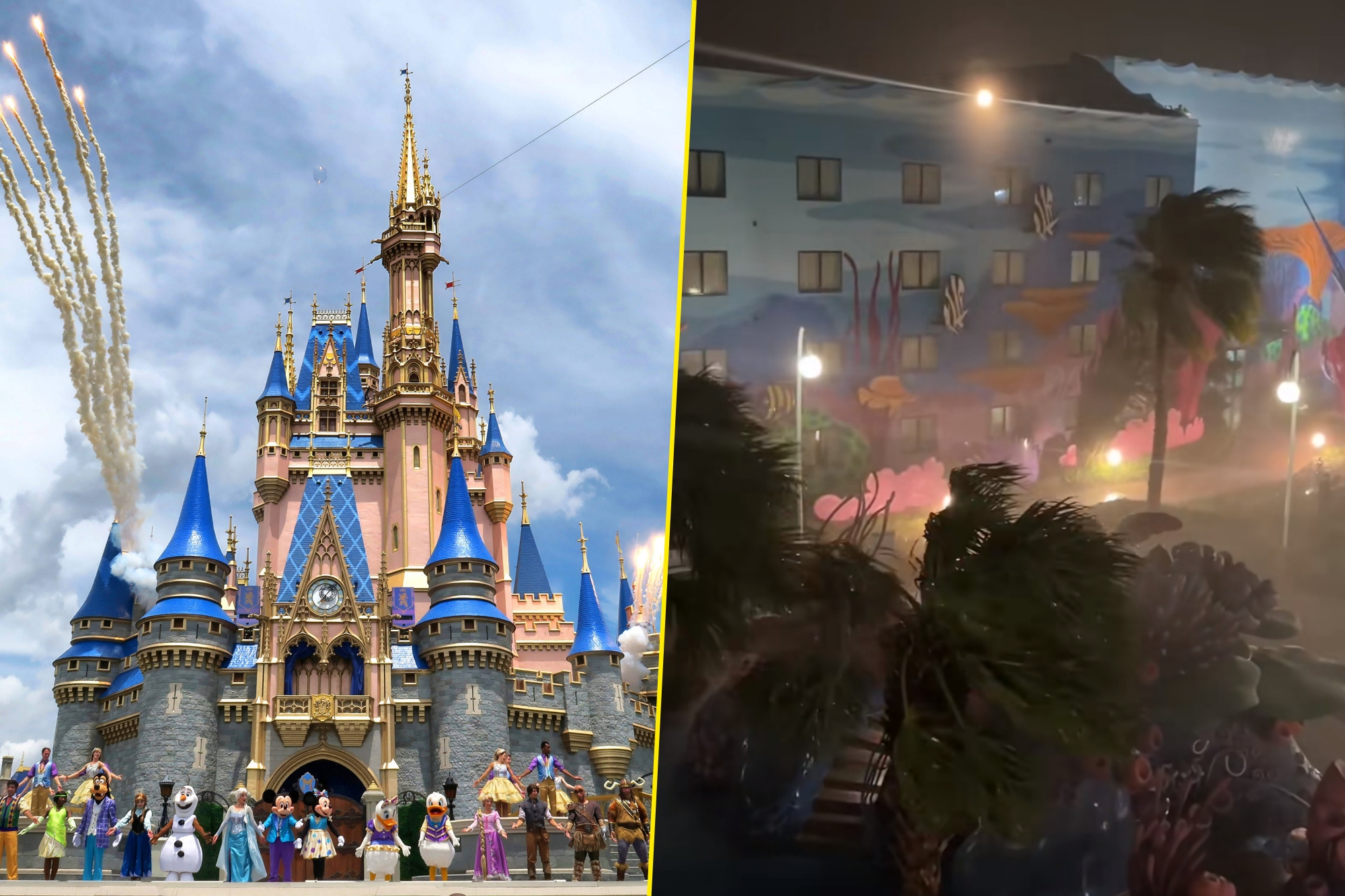
A persistent urban myth claims that Cinderella Castle in the Magic Kingdom can be disassembled or stripped of its spires when a hurricane approaches. In reality, the 189-foot landmark is a permanent structural powerhouse. The castle features a structural steel frame anchored to a reinforced concrete foundation extending deep into the bedrock. The exterior shell consists of fiberglass-reinforced gypsum plaster applied over concrete block masonry and metal lath. It was engineered to meet high-velocity hurricane zones without requiring structural alterations prior to a storm.
Similarly, iconic structures across the property utilize specialized structural geometry to dissipate wind loads:
- Spaceship Earth at EPCOT: The 180-foot geodesic sphere relies on a structural steel skeleton composed of 11,324 individual triangular facets. The sphere's double-walled design directs wind around its contours while allowing rain to channel internally through a dedicated drainage system into the park's lagoon network.
- Resort Hotels: Mid-rise and high-rise accommodations—such as Disney's Contemporary Resort and Disney's Riviera Resort—utilize post-tensioned poured concrete structures engineered to absorb lateral wind pressures without structural compromise.
Ride Vehicles and Outdoor Structures
During pre-hurricane prep, outdoor attraction assets undergo rigid stabilization. Thrill rides with exposed outdoor tracks, such as Test Track or Big Thunder Mountain Railroad, have their ride vehicles locked into secure indoor maintenance bays. Elevated transport networks, including the Disney Skyliner gondola system and the Monorail network, are taken out of service early. Skyliner cabins are dismounted or securely locked within storage facilities to prevent high-wind sway damage, while monorail trains are safely parked inside maintenance depots like the Shop Building near the Magic Kingdom.
Water Control Infrastructure and Drainage Systems
Flood mitigation is one of the most technical aspects of Disney World’s hurricane preparedness. Spanning over 25,000 acres across Orange and Osceola counties, the resort rests on land originally consisting of wetlands and low-lying topography. Managing storm run-off requires a complex hydraulic system managed historically by the Reedy Creek Improvement District and its administrative successors.
The property's flood prevention network relies on three core operational mechanisms:
- Self-Regulating Canals and Waterways: Disney features over 100 miles of interconnected drainage canals, natural waterways, and retention basins. This system continuously moves water away from guest areas, theme parks, and roadway networks into undeveloped conservation zones.
- Automated Water Control Structures: Dozens of physical levees and automated water control gates monitor water levels electronically. Prior to a hurricane's arrival, water management teams open downstream gates to lower water levels in lakes, lagoons, and canals throughout the property. This creates massive storage capacity for expected torrential rainfall.
- Pervious Paving and Drainage Grates: Theme park walkways, parking lots, and open plazas incorporate extensive sub-surface drainage networks. Heavy storm runoff drains directly into underground culverts rather than pooling on guest walkways, preventing localized flooding during intense rain events.
Because power outages can compromise municipal pumps, Disney’s water management facilities feature dedicated backup diesel generators, ensuring continuous operation regardless of regional grid failures.
Phased Operational Countdown Protocols
Disney’s hurricane preparation follows a strict chronologically staged operational playbook. Each stage dictates specific actions taken by cast members across engineering, horticulture, entertainment, and hotel operations.
- 72 to 48 Hours Out: Monitor NHC Track / Audit Supplies / Trim Landscaping
- 48 to 24 Hours Out: Lower Banners / Secure Outdoor Items / Stage Emergency Food
- 24 to 12 Hours Out: Transport Shutdown / Lock Down Rides / Final Park Closures
- 12 to 0 Hours Out: Landfalls / Indoor Shelter Mandate / Ride-Out Teams Deployed
72 to 48 Hours Before Expected Impact
- Supply Auditing: Emergency response teams conduct inventory checks on emergency rations, fuel reserves, backup generators, potable water supplies, and medical equipment across all resort properties.
- Horticultural Pruning: Resort landscape crews begin trimming large tree branches, palm fronds, and vulnerable vegetation to minimize flying debris hazards. Dead or weak branches are removed property-wide.
- Initial Coordination: Executive management enters daily briefings with local emergency management agencies, Orange and Osceola County officials, and regional energy providers.
48 to 24 Hours Before Expected Impact
- Staging and Securing Outdoor Equipment: Unanchored items across parks and resorts—including patio chairs, tables, trash receptacles, umbrellas, outdoor vending carts, and queue ropes—are collected and stowed in indoor storage rooms or tied down securely.
- Removal of Temporary Structures: Banners, outdoor signage, directional flags, and lightweight thematic decorations are taken down to prevent tear-offs and wind damage.
- Food & Beverage Staging: Resort kitchens begin preparing non-perishable food inventory, boxed lunch packs, and high-volume dining supplies for hotel guests who will be confined to resort properties during park closures.
24 to 0 Hours Before Expected Impact
- Transportation Decommissioning: High-wind transportation systems (Skyliner, ferryboats, water taxis, and Monorails) cease operations sequentially based on escalating wind thresholds. Bus transportation continues as long as roads remain safe and emergency curfews allow.
- Park Closures and Securing Infrastructure: Theme parks, water parks, and Disney Springs undergo phased closures. Construction sites on property lower crane booms, anchor scaffolding, and secure building materials.
- Activation of "Ride-Out Teams": Essential cast member teams—known as Ride-Out Teams—take up residence in secured facility locations across the property. These specialized groups include engineers, emergency responders, animal care technicians, and facility managers who remain on site throughout the storm to manage emergencies.
Resort Operations and Guest Management During Storms
When a hurricane forces theme park closures, guest operations shift entirely to Disney's on-site resort hotels. Disney resort buildings are designed as self-contained shelter facilities, equipped to keep thousands of stranded guests safe, fed, and entertained throughout the duration of extreme weather events.
In-Resort Guest Experience and Safety Protocols
During peak storm hours, emergency curfews mandate that guests remain inside their hotel rooms or main resort buildings. To reduce anxiety and maintain a positive atmosphere, Disney implements dedicated in-resort operational procedures:
- Lobby Activities and Character Pop-Ups: Character performers, entertainment hosts, and recreation staff lead games, craft workshops, movie marathons, and meet-and-greets in resort lobbies and conference spaces prior to complete room lockdowns.
- Continuous Emergency Communication: Guests receive room-wide communications via in-room television channels, text notifications, the My Disney Experience app, and printed notices delivered under guest room doors detailing storm updates, meal availability, and safety instructions.
- Pet Policy Accommodations: During official hurricane warnings, Disney temporarily relaxes strict pet restrictions at select non-pet-friendly resorts, allowing guests stranded with pets to keep them in their rooms safely.
Food and Beverage Operations
Providing continuous food service to tens of thousands of sheltered guests requires massive operational adaptation. Resort dining venues shift from standard menus to high-capacity buffet service or pre-packaged boxed meal kits containing sandwiches, fruit, snacks, and bottled water. Emergency food distribution points are established in hotel lobbies, preventing overcrowding in main dining halls.
Disney’s Official Hurricane Cancellation Policy
Disney maintains an official policy regarding severe weather cancellations to alleviate guest financial stress and manage booking logistics when natural disasters threaten Central Florida.
Policy Terms and Conditions
The official Disney Hurricane Policy states that if a hurricane warning is issued by the National Hurricane Center for the Orlando area—or for the guest’s place of residence—within 7 days of the scheduled arrival date, guests may reschedule or cancel their Walt Disney World direct-booked travel packages and hotel reservations without paying cancellation or change fees applied by Disney.
Coverage Scope and Exclusions
Understanding the distinction between covered and non-covered expenses is critical for vacation planning:
| Booking Element | Covered under Disney Hurricane Policy? | Policy Terms & Action Required |
|---|---|---|
| Disney Resort Room-Only Bookings | Yes | Cancel or reschedule without Disney fees within 7 days of NHC Warning. |
| Disney Vacation Packages (Room + Tickets) | Yes | Refunded or applied to rescheduled dates without Disney penalty. |
| Third-Party Airline Tickets | No | Subject to individual airline cancellation, rebooking, or fee-waiver policies. |
| Off-Site Hotels & Rental Cars | No | Subject to the terms of the independent rental agency or hotel operator. |
| Third-Party Travel Agencies / Services | Partial | Disney waives its internal fees, but third-party merchant fees may apply. |
| Special Event Tickets (e.g., Party Tickets) | Case-by-Case | Generally refunded or exchanged when events are officially canceled by Disney. |
Note: If a guest booked through a third-party travel agent or tour operator, the guest must contact that specific entity directly to adjust their reservation, though Disney waives its merchant-side penalties.
Post-Storm Recovery and Park Reopening Protocols
The transition from storm shelter mode back to standard park operations is executed rapidly through disciplined inspection routines. Once tropical-storm-force winds subside below safety thresholds, Ride-Out Teams and emergency maintenance crews initiate physical property assessments.
Structural Inspection and Debris Removal
Before any theme park opens to the public, every square foot of guest-accessible space undergoes rigorous safety verification:
- Tree and Landscaping Assessment: Arborists and facilities crews clear fallen branches, evaluate tree root stability along walkways, and sweep paths to eliminate tripping hazards.
- Structural and Facade Audits: Building inspectors examine exterior facades, signage, roof tiles, and temporary structures for structural compromise or loose paneling.
- Ride System Testing: Theme park ride engineers perform full mechanical, electrical, and sensor checks on every attraction. Outdoor roller coasters, water rides, and computerized transport systems undergo dry runs without passengers to verify that sensor tracks and emergency braking systems operate within exact tolerances.
- Animal Care Verification: At Disney’s Animal Kingdom, specialized animal care specialists inspect habitats, fencing structures, and night shelters. Outdoor animal habitats are cleared of debris and safety-checked before animals are released back into public view.
Thanks to dedicated infrastructure and substantial staffing, Disney World often completes these multi-point safety checks and reopens its parks within 24 to 48 hours after a hurricane passes.
Frequently Asked Questions
Has Disney World ever closed for a hurricane?
Yes, Disney World has closed its theme parks due to severe weather events in its history. Operational closures occurred for storms including Hurricane Floyd (1999), Hurricane Charley (2004), Hurricane Frances (2004), Hurricane Jeanne (2004), Hurricane Matthew (2016), Hurricane Irma (2017), Hurricane Dorian (2019), Hurricane Ian (2022), Hurricane Nicole (2022), and Hurricane Milton (2024). Closures typically last between 1 to 2 days while the storm passes and safety inspections are completed.
Does Cinderella Castle come apart during a hurricane?
No, Cinderella Castle does not come apart or disassemble for hurricanes. This is a persistent urban legend. The castle features a permanent steel framework anchored to a massive concrete foundation, surrounded by fiberglass-reinforced concrete panels designed to withstand severe wind forces well in excess of 110 mph without structural modification.
What happens if a hurricane warning is issued while I am at Disney World?
If a hurricane warning occurs while you are already staying at a Disney Resort hotel, you will be instructed to remain on resort property. Cast members will provide regular updates regarding park hours, dining options, and room safety protocols. Disney resort staff set up indoor entertainment in lobbies, offer boxed meal services, and ensure guest rooms remain supplied with power and essential utilities.
Are Disney World resort hotels designated public storm shelters?
No, Disney World resort hotels are not public storm shelters. Hotel accommodations during a hurricane are strictly reserved for registered resort guests and essential personnel. Unregistered visitors cannot check into a resort as a drop-in shelter during an active emergency event.
How does Disney keep power running during a severe hurricane?
Disney World maintains robust utility infrastructure built with underground electrical distribution lines, which shield utility wires from wind damage and falling tree limbs. Additionally, key facilities, central computer systems, animal habitats, and emergency services are backed up by heavy-duty industrial diesel generators.
What should guests pack if traveling to Disney World during hurricane season?
Guests visiting between June 1 and November 30 (official Atlantic hurricane season) should pack portable external phone chargers, small flashlights or headlamps, rain ponchos or waterproof jackets, waterproof footwear, basic over-the-counter medications, and non-perishable snacks. Having physical cash available is also recommended in case electronic payment terminals experience brief network disruptions.
Practical Recommendations for Travelers
If you are planning a trip to Walt Disney World during Atlantic hurricane season (June through November), proactive preparation ensures safety and minimizes administrative hassle:
- Book Directly with Disney or Reputable Agencies: Direct bookings streamline your ability to modify or cancel itineraries under Disney’s Hurricane Policy without dealing with intermediate vendor delays.
- Monitor Official NHC Advisories: Keep track of weather updates directly from the National Hurricane Center rather than relying solely on social media rumors.
- Purchase Comprehensive Travel Insurance: Ensure your travel insurance policy covers weather-related flight delays, missed connections, and off-site accommodation costs that fall outside Disney’s direct policy scope.
- Download and Update Essential Apps: Keep the My Disney Experience app updated and enable push notifications for immediate alerts regarding park operational hours, resort entertainment, and meal ordering during weather emergencies.
Image Gallery