The Best Places to Buy Duvet Covers: Top Retailers by Fabric, Budget, and Bedding Style
The best place to buy a duvet cover depends on your specific priorities regarding fabric composition, weave type, budget, and design aesthetic. Top retailers range from direct-to-consumer brands like Brooklinen and Parachute for crisp...
The best place to buy a duvet cover depends on your specific priorities regarding fabric composition, weave type, budget, and design aesthetic. Top retailers range from direct-to-consumer brands like Brooklinen and Parachute for crisp percale and washed linen, to luxury sustainable outfitters like Coyuchi, and budget-friendly stores like Target and IKEA.
Contents
Finding the ideal duvet cover requires evaluating more than just visual appeal. A duvet cover directly impacts sleep temperature regulation, skin comfort, and mattress hygiene. Because a cover protects your duvet insert from oils, sweat, and wear, selecting the right material and construction hardware ensures both long-lasting performance and effortless routine maintenance.
Core Evaluation Criteria: How to Choose a Quality Duvet Cover
Before selecting a retailer, evaluating the core mechanical and textile characteristics of a duvet cover ensures you invest in a product that matches your sleeping habits and care expectations.
- Duvet Cover Selection
- Fabric & Weave
- Percale: Crisp, cool (Hot sleepers)
- Sateen: Smooth, warm (Cold sleepers)
- Linen: Breathable, textured
- Bamboo/Tencel: Moisture-wicking
- Hardware & Fit
- Corner ties: 4 minimum (8 preferred)
- Closure: Hidden buttons or zipper
- Sizing: Matches insert dimensions
- Fabric & Weave
Material and Weave Properties
- Percale (Cotton): A plain grid weave (one yarn over, one yarn under) producing a matte, crisp texture similar to a classic button-down shirt. Percale offers high breathability and structural integrity, making it ideal for hot sleepers or warm climates.
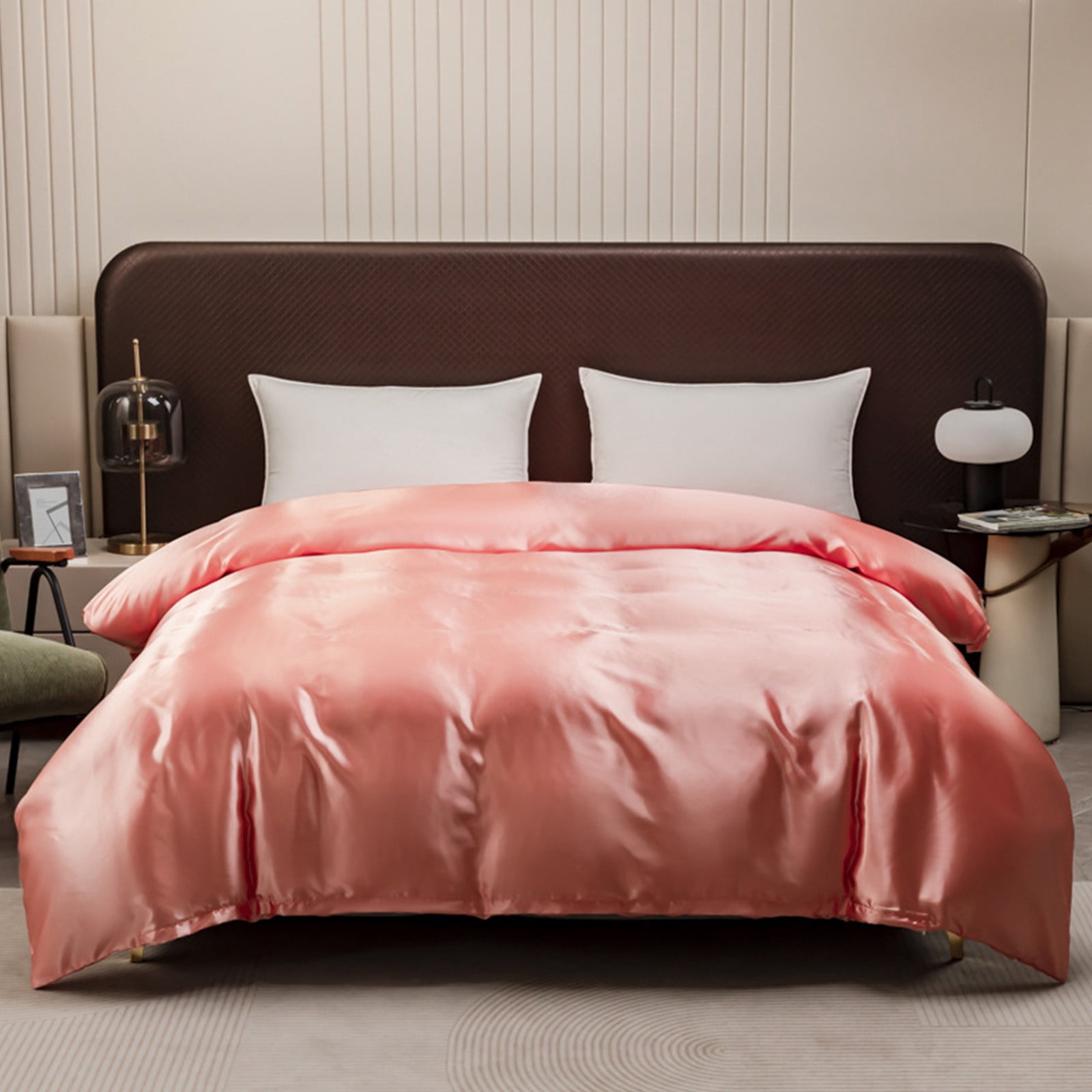
- Sateen (Cotton): A satin weave pattern (typically three or four yarns over, one yarn under) exposing more thread surface on the face of the fabric. This yields a lustrous sheen, silky drape, and denser feel that retains slightly more thermal energy than percale.
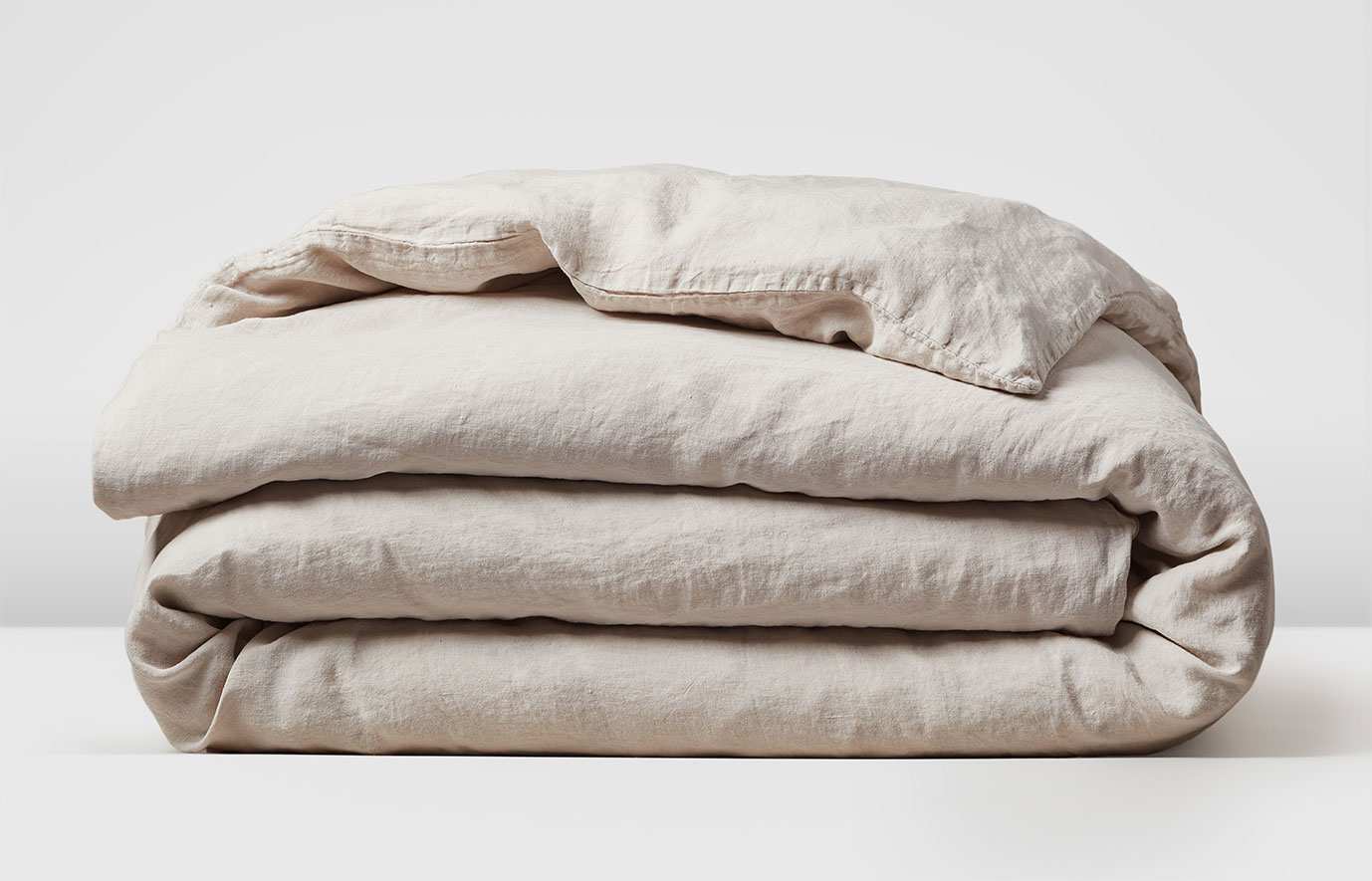
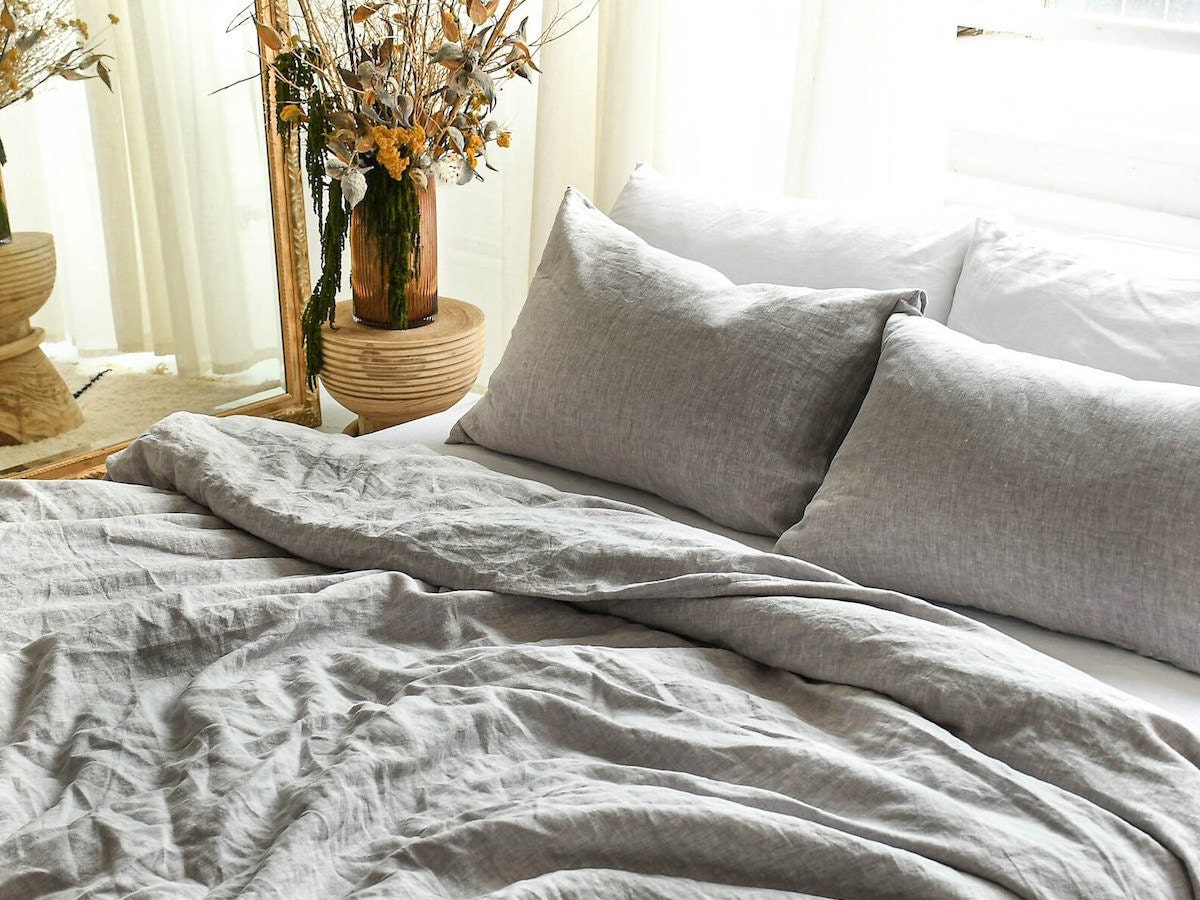
- Linen (Flax): Woven from natural flax fibers, linen features high air permeability and natural temperature-regulating properties. Linen fibers are thicker than cotton, creating a textured hand-feel that softens significantly over subsequent wash cycles.
- Bamboo Viscose & Tencel Lyocell: Regenerated cellulose fibers derived from bamboo or wood pulp. These fabrics provide exceptional silkiness, high moisture regain, and strong drape, making them suitable for sensitive skin.
Construction Details and Hardware
High-performing duvet covers include interior retention hardware to keep inserts aligned. Look for covers equipped with interior corner ties—or ideally, eight structural points including midpoint ties along each side—to prevent the insert from bunching or shifting toward one end.
For closures, heavy-duty hidden buttons (preferably clear or mother-of-pearl) or covered nylon zippers provide clean aesthetic profiles. Button closures generally endure commercial laundering better, whereas high-grade zipper closures offer faster bed-making turnarounds.
Thread Count and Fabric Weight Standards
Thread count measures the number of horizontal (weft) and vertical (warp) threads per square inch of woven cotton fabric. While marketing often highlights counts exceeding 600, legitimate single-ply cotton maxes out structural density between 300 and 400 threads per inch. Counts advertised above this threshold frequently rely on multi-ply yarns wound together, which increases weight and traps heat without adding true durability.
According to guidelines published by the Federal Trade Commission (FTC), thread count claims must accurately reflect single-ply thread counts to avoid misleading buyers. For non-cotton materials like linen, fabric weight is evaluated in grams per square meter (GSM) rather than thread count, with optimal linen duvet weights falling between 160 GSM and 190 GSM.
Top Retailers for Duvet Covers by Category
The list below outlines leading duvet cover suppliers based on manufacturing transparency, textile quality, price transparency, and design selection.
1. Best Overall for Modern Essentials: Brooklinen
Brooklinen has established a dominant market presence by streamlining direct-to-consumer bedding. Their flagship Luxe Sateen Duvet Cover (480 thread count, long-staple cotton) provides a smooth, subtle sheen with substantial structural heft. For hot sleepers, their Classic Percale Duvet Cover (270 thread count) offers a matte finish with exceptional breathability.
- Primary Materials: Long-staple Egyptian and Turkish cotton, Belgian flax linen.
- Key Features: Corner ties, large interior button closures, standard sizing adjustments for deep mattresses.
- Price Range: Mid-tier ($120 – $270 depending on size and material).
2. Best for Relaxed Linen and Architecture-Inspired Aesthetics: Parachute
Parachute focuses on natural, relaxed textures derived from high-grade raw materials. Their Venice Linen Duvet Cover, crafted from 100% European flax, is garment-washed for immediate softness without relying on chemical softeners. Parachute eschews synthetic dyes in favor of soft, neutral colorways that fit contemporary interior schemes.
- Primary Materials: European flax linen, long-staple Egyptian cotton percale, brushed cotton.
- Key Features: Minimalist envelope or hidden button closures, robust interior ties, STANDARD 100 certification by OEKO-TEX ensuring safety from harmful chemical substances.
- Price Range: Mid-to-high tier ($150 – $350).
3. Best for Luxury Flax Linen: Cultiver and Piglet in Bed
For buyers looking specifically for premium linen bedding, specialty houses like Cultiver and Piglet in Bed offer unmatched material quality. Cultiver uses 100% European flax woven at a substantial 165 GSM, pre-washed with enzymes for a supple hand-feel. Piglet in Bed specializes in yarn-dyed linen featuring vibrant patterns, stripes, and mix-and-match jewel tones.
- Primary Materials: Premium European flax linen.
- Key Features: Deep corner ties, durable continuous button tracks, highly breathable weave construction.
- Price Range: Luxury ($240 – $420).
4. Best Budget Options: Target (Threshold & Casaluna) and IKEA
Achieving proper bedding performance does not always require high expenditure. Target’s Threshold and Casaluna lines provide accessible entry points. Casaluna, in particular, offers 100% linen and heavy-weight linen-blend duvet covers at a fraction of luxury brand costs. IKEA delivers low-cost options made from cotton/viscose blends and simple percale weaves, utilizing envelope closures that simplify laundering.
- Primary Materials: BCI (Better Cotton Initiative) cotton, linen blends, viscose.
- Key Features: Basic corner ties on elevated lines, clear button closures, high machine-wash resilience.
- Price Range: Budget ($30 – $110).
5. Best for Certified Organic Textiles: Coyuchi and Boll & Branch
If environmental traceability and organic supply chains drive your decision, Coyuchi and Boll & Branch lead the industry. Coyuchi’s Crinkled Percale Duvet Cover uses 100% organic cotton certified under the Global Organic Textile Standard (GOTS), ensuring non-toxic processing from harvesting through finished weaving. Boll & Branch offers luxury organic sateen featuring long-staple organic cotton harvested under Fair Trade practices.
- Primary Materials: GOTS-certified organic cotton, organic linen.
- Key Features: Organic cotton closures, plastic-free packaging, low-impact dye processes.
- Price Range: Premium to luxury ($200 – $400).
Retailer and Material Comparison Table
The following table summarizes key operational parameters across leading duvet cover providers to help narrow your choice:
| Retailer / Brand | Primary Material Options | Weave / Fabric Weight | Closure Mechanism | Price Range (Queen Size) | OEKO-TEX / GOTS Certified | Best For |
|---|---|---|---|---|---|---|
| Brooklinen | Long-Staple Cotton, Linen | 270 TC Percale / 480 TC Sateen | Large Interior Buttons | $130 – $270 | Yes (OEKO-TEX) | Overall Value & Daily Comfort |
| Parachute | European Flax Linen, Cotton | ~170 GSM Linen / 250 TC Percale | Hidden Button | $190 – $330 | Yes (OEKO-TEX) | Neutral Aesthetics & Washed Linen |
| Cultiver | 100% European Flax | 165 GSM Woven Linen | Frame Buttons | $290 – $380 | Yes (OEKO-TEX) | High-End Artisanal Linen |
| Coyuchi | Organic Cotton, Linen | Organic Percale & Sateen | Covered Zipper / Buttons | $220 – $380 | Yes (GOTS & OEKO-TEX) | Strict Organic Standards |
| Target (Casaluna) | Linen, Cotton Sateen | Mid-weight Blend / 300 TC | Corner Ties & Buttons | $60 – $110 | Varies by line | Budget-Conscious Quality |
| Pottery Barn | Belgian Flax, Cotton Jacquard | 300-400 TC / Heavy Flax | Hidden Button | $120 – $260 | Yes (Select lines) | Patterned & Textured Styling |
Material Deep Dive: Matching Fabric to Sleeping Habits
Selecting the best place to buy your duvet cover requires aligning the material properties with your physiological sleep needs.
- Sleeper Profile Matching
- Hot / Night Sweats: Cotton Percale or Linen (High airflow)
- Cold / Winter Use: Cotton Sateen or Flannel (Heat retention)
- Sensitive Skin: Organic Bamboo or Tencel (Smooth surface)
Hot Sleepers and Night Sweats
If you experience night sweats or tend to overheat, choose fabrics with low thermal resistance and high vapor dispersion. Cotton percale and pure flax linen are optimal options. Percale’s basic grid construction leaves natural space between threads, allowing air to circulate freely across your torso. Linen’s natural hollow flax fibers quickly absorb excess body moisture and release it into ambient air.
Cold Sleepers and Winter Microclimates
If you struggle to stay warm, cotton sateen, cotton flannel, or heavy micro-flannel duvet covers offer elevated insulation. Sateen’s asymmetric weave pattern places more yarn surface on top, creating a denser barrier against cool ambient air. Flannel undergoes a mechanical brushing process that creates raised fibers, trapping warm air close to your body.
Sensitive Skin and Allergy Considerations
Individuals prone to skin irritation or contact dermatitis benefit from non-abrasive, highly uniform fiber surfaces. Tencel Lyocell and organic bamboo viscose offer extremely smooth filament surfaces that reduce friction against skin. Combining these fabrics with non-toxic certifications ensures minimal exposure to residual finishing chemicals or harsh synthetic dyes.
Sizing and Fit Guidelines
A common frustration when buying duvet covers is dimensional mismatch between the cover and the internal duvet insert. Using incorrect dimensions leads to empty corners, insert bunching, or sagging fabric profiles.
- Duvet vs. Cover Dimensions
- Duvet Insert: 90" x 92" / Duvet Cover: 90" x 90" (Ideal)
- A cover matching or up to 2 inches smaller than the insert yields a plump, filled appearance without internal sagging.
Standard Bedding Dimensions Chart
| Size Designation | Average Duvet Cover Dimensions | Average Duvet Insert Dimensions | Recommended Fit Strategy |
|---|---|---|---|
| Twin / Twin XL | 68" W x 86" L to 70" W x 92" L | 68" W x 88" L | Match exact width; insert can be 1-2" longer |
| Full / Queen | 88" W x 90" L to 90" W x 92" L | 90" W x 92" L | Insert should equal or exceed cover by 1-2" |
| Oversized Queen | 92" W x 96" L | 94" W x 98" L | Verify specialty sizing across same brand |
| King / Cal King | 104" W x 90" L to 106" W x 92" L | 106" W x 94" L | Ensure insert corners match corner tie placements |
To achieve a full, hotel-style appearance, select a duvet cover that matches your insert's dimensions precisely or is up to two inches smaller in width and length. Placing a larger insert inside a slightly smaller cover creates gentle compression, ensuring the internal fill extends into the far corners.
Maintenance and Care Best Practices
Improper laundering reduces duvet cover lifespan, causes premature fading, and damages hardware mechanisms like buttons and zippers.
Laundering Protocols by Material
- Preparation: Fasten all buttons or fully close zippers before washing to prevent tears or distortion along seam tracks. Turn the cover inside out to protect outer fabric finishes and preserve color intensity.
- Washing: Wash cotton and linen covers in cool to warm water (30°C to 40°C) using mild liquid detergent. Avoid fabric softeners—especially on linen and percale—as softeners deposit silicone residues that coat natural fibers, severely reducing breathability and moisture absorption.
- Drying: Line-dry natural fabrics whenever possible to prevent shrinkage. If using a mechanical tumble dryer, select low heat and remove the cover while slightly damp (approx. 90% dry) to reduce setting wrinkles and prevent fiber embrittlement.
Preserving Hardware Integrity
- Zipper Closures: Lubricate zipper teeth periodically by running a piece of wax paper along the length of open zippers if friction increases over time.
- Corner Ties: Tie interior anchors using quick-release slipknots rather than hard double-knots. Double-knots strain under tension during regular use, making untying for laundry cycles difficult and damaging seam anchor stitching.
Common Pitfalls to Avoid When Buying Duvet Covers
Avoid these frequent mistakes when purchasing a new duvet cover:
- Buying Based on Thread Count Alone: Focusing exclusively on high thread counts often leads to heavy, non-breathable bedding constructed from low-grade multi-ply threads. Prioritize staple length (e.g., long-staple or extra-long-staple cotton) over thread count numbers.
- Ignoring Insert Attachment Systems: Purchasing a cover without interior ties forces you to rely on external clips or safety pins to hold the insert in place, which can puncture fabric down-proof linings.
- Overlooking Return Policies: Bedding feel varies by individual sleeper. Confirm the retailer's trial period. Brands like Brooklinen offer generous 365-day return windows, whereas traditional department stores may restrict returns once bedding is unsealed.
- Failing to Pre-Wash New Covers: Factory finishing processes leave residual stiffness. Natural fibers like linen and cotton percale require 2-3 initial wash cycles to achieve their intended texture and drape.
Frequently Asked Questions
What is the primary difference between a duvet cover and a comforter?
A comforter is a single integrated bedding piece consisting of a decorative outer shell filled with synthetic or down insulation. A duvet cover acts as a removable protective casing—similar to a large pillowcase—that slips over a separate duvet insert. Duvet covers simplify washing because you launder only the cover rather than the bulky internal insert.
How do I stop a duvet insert from sliding around inside the cover?
Secure all interior corner ties on the cover to the matching loops on your duvet insert. If your insert lacks sewn corner loops, attach aftermarket duvet clips or insert a small safety pin through both the internal seam allowance of the cover and the outer corner seam of the insert.
What is the most durable fabric for a duvet cover?
High-density European flax linen and extra-long-staple cotton percale offer exceptional long-term durability. Flax fibers are inherently stronger than cotton fibers, resisting mechanical abrasion during washing. Extra-long-staple cotton (such as Supima or Egyptian varieties) features longer yarn strands that resist pilling and fraying over years of routine use.
Is thread count important when buying cotton duvet covers?
Thread count is useful only when evaluating single-ply cotton weaves. Look for a thread count between 200 and 400 for percale, and between 300 and 500 for sateen. Thread counts advertised above 600 generally indicate multi-ply yarns woven to artificially inflate numbers, yielding a heavier, less breathable fabric.
How often should a duvet cover be washed?
Wash your duvet cover every one to two weeks, following the same schedule as your bottom fitted sheets. If you sleep without a top flat sheet—so the duvet cover rests directly against your skin—wash the cover weekly to clear body oils, dead skin cells, and allergens.
Final Recommendation and Next Steps
To choose the best place for your duvet cover, start by identifying your primary requirement:
- For standard everyday performance: Explore Brooklinen (Luxe Sateen or Classic Percale) for dependable construction and a generous 365-day trial period.
- For maximum breathability and relaxed texture: Choose Parachute or Cultiver for premium European flax linen that softens over time.
- For eco-friendly certifications: Look to Coyuchi for GOTS-certified organic cotton constructed under strict non-toxic processing standards.
- For budget-conscious bedroom refreshes: Select Target’s Casaluna line or IKEA to obtain core functional features like corner ties and clean weaves at low price points.
Before ordering, measure your duvet insert’s length, width, and corner loop positions to ensure complete compatibility with your selected cover.
Image Gallery