Manny Pacquiao in Politics: From Boxing Ring to the Philippine Senate and Beyond
Manny Pacquiao’s political career spans over fifteen years, evolving from an unsuccessful congressional bid in 2007 to representing Sarangani in the House of Representatives, serving a six-year term as a Philippine Senator, and contest...
Manny Pacquiao’s political career spans over fifteen years, evolving from an unsuccessful congressional bid in 2007 to representing Sarangani in the House of Representatives, serving a six-year term as a Philippine Senator, and contesting the country's presidency in 2022. Grounded in grassroots philanthropy, evangelical social conservatism, and anti-corruption advocacy, his tenure reflects the complex intersection of sports stardom, populist governance, and institutional reform in the Philippines.
Contents
The Entry into Politics: From South Cotabato to Sarangani (2007–2016)
Manny Pacquiao’s initial foray into Philippine electoral politics occurred in May 2007, while he was at the peak of his international boxing fame. Running for a seat in the House of Representatives for the 1st District of South Cotabato under the Liberal Party banner, he challenged incumbent Representative Darlene Antonino-Custodio. Despite his widespread popularity as an athletic icon, voters drew a clear line between sports achievement and legislative readiness. Pacquiao lost the election by more than 37,000 votes, providing an early lesson in the dynamics of regional family dynasties and municipal political machines.
Recognizing the need for a stronger local political foundation, Pacquiao shifted his political base to neighboring Sarangani province—the hometown of his wife, Jinkee Pacquiao. In 2009, he established the local party People's Champ Movement (PCM) and formed tactical alliances with national coalitions, including the Lakas-KAMD party and later the Nacionalista Party.
Political Pathway:
- South Cotabato Defeat (2007)
- Sarangani Congressman (2010–2016)
- Philippine Senator (2016–2022)
- Presidential Candidate (2022)
- Political Alignment & Midterm Resurgence (2025–2026)
In the 2010 general elections, Pacquiao ran for Congressman of Sarangani's lone district, defeating Roy Chiongbian and ending a thirty-year political dominance by the Chiongbian family in the region. He assumed office in the 15th Congress of the Philippines and secured a second term unopposed in 2013 for the 16th Congress.
During his six years in the House of Representatives, Pacquiao’s approach to governance focused primarily on provincial development and direct aid. He funneled significant resources into Sarangani for infrastructure, medical assistance programs, housing projects, and agricultural support. However, his legislative attendance faced scrutiny. Competing in high-profile international boxing matches required months of off-site training in the United States, resulting in low attendance records in the House floor sessions—a critique that would follow him throughout his congressional career.
Senatorial Tenure (2016–2022): Legislative Priorities and Governance
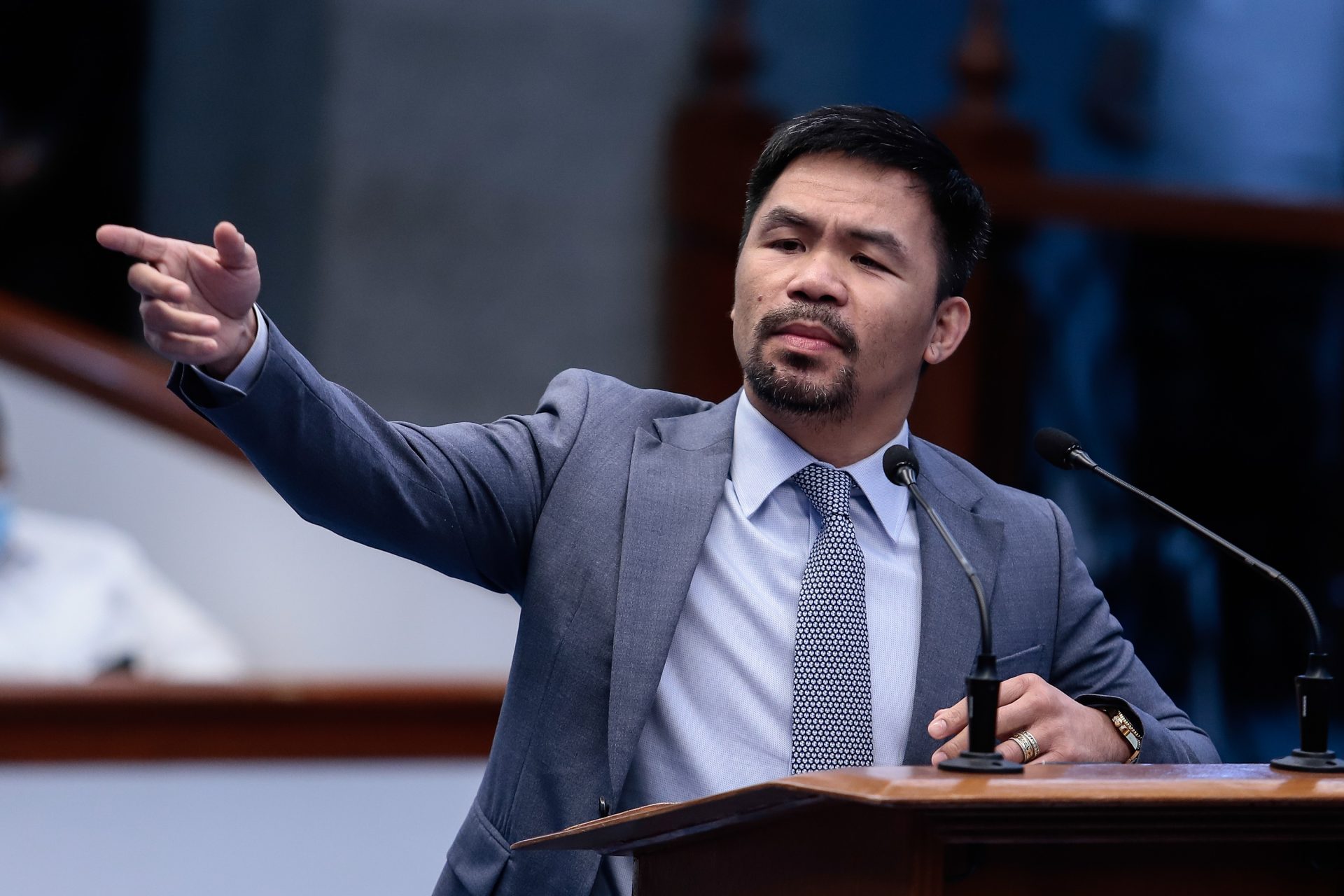
In May 2016, Pacquiao took his political career to the national stage by running for the Philippine Senate under the United Nationalist Alliance (UNA) coalition. He secured 16,050,546 votes, placing seventh among twelve elected senators in the national canvass. Taking his oath for a six-year senatorial term, Pacquiao sought to balance his ongoing professional boxing career with legislative responsibilities.
Key Legislative Achievements
As a member of the 17th and 18th Congresses, Pacquiao chaired the Senate Committee on Sports and the Committee on Ethics and Privileges. Over his tenure, he authored, co-authored, and sponsored several significant pieces of legislation that were enacted into law:
- National Academy of Sports Act (Republic Act No. 11470): Passed in 2020, this law established an institutionalized secondary educational system dedicated to developing promising student-athletes alongside a standard academic curriculum, complete with world-class sports facilities.
- Handbook for Overseas Filipino Workers (OFW) Act (Republic Act No. 11227): Aimed at protecting the rights of millions of Filipino migrant workers, this measure mandated the creation and distribution of a comprehensive handbook detailing worker rights, legal remedies, and contact details for diplomatic posts worldwide.
- National Bible Day Act (Republic Act No. 11163): Reflecting his evangelical faith, Pacquiao championed this law, which designates the last Monday of January as a national working holiday to celebrate the Bible's cultural and spiritual impact on Philippine society.
- Free Internet Access in Public Places Act (Republic Act No. 10929): Pacquiao co-sponsored this bipartisan law to install free public Wi-Fi networks in government buildings, public schools, state universities, and hospitals across the archipelago.
Key Laws Authored or Sponsored:
- RA 11470: National Academy of Sports Act
- RA 11227: OFW Handbook Rights Act
- RA 11163: National Bible Day Act
- RA 10929: Free Public Internet Access Act
Attendance and Committee Engagement
During his senatorial tenure, Pacquiao made a concerted effort to improve his legislative attendance compared to his House tenure. While pre-fight training camps still necessitated official leaves of absence, he actively participated in floor debates, Senate investigations, and committee hearings during session days. His legislative agenda consistently emphasized sports development, health and social welfare, labor protections, and anti-corruption mechanisms.
Ideological Stance, Social Conservatism, and Public Controversies
Pacquiao’s political philosophy is rooted in a combination of evangelical Christianity, socially conservative values, and populist economics. Having converted from Catholicism to born-again Christianity around 2012, his public statements and voting patterns heavily reflected his personal religious convictions.
Social Policies and Religious Convictions
Pacquiao maintained a staunchly conservative stance on major social issues facing the Philippine legislature:
- Same-Sex Marriage and LGBTQ+ Rights: Pacquiao consistently opposed the legal recognition of same-sex marriage and civil unions. In 2016, during a televised election interview, he voiced opposition to same-sex unions using harsh language that drew severe global condemnation. The comments led to international corporate sponsors, including Nike, terminating their endorsement contracts. Pacquiao subsequently issued an official apology for the specific phrasing used while reiterating his biblical opposition to same-sex marriage.
- Reproductive Health and Capital Punishment: He voiced opposition to certain aspects of the Responsible Parenthood and Reproductive Health Act of 2012. Additionally, during the presidency of Rodrigo Duterte, Pacquiao was one of the primary Senate advocates for reinstating the death penalty for severe drug-related offenses, citing both biblical references and national security arguments.
Relationship with the Duterte Administration
For much of his Senate term, Pacquiao was a key ally of President Rodrigo Duterte, supporting the administration's national security policies, infrastructure programs, and crackdown on illegal drugs. Both leaders hailed from the southern island of Mindanao, which fostered an initial political alliance. However, as the 2022 presidential election approached, this coalition fractured over governance, foreign policy regarding the West Philippine Sea, and public sector corruption scandals.
The 2022 Presidential Campaign and PDP-Laban Leadership Split
In December 2020, Manny Pacquiao assumed the position of national president of PDP-Laban (Partido Demokratiko Pilipino-Lakas ng Bayan), the ruling political party led by President Duterte. However, internal factional disputes soon destabilized the party structure.
PDP-Laban Internal Factional Split (2021):
- Pacquiao-Pimentel Wing: Anti-Corruption Platform / Coalition with PROMDI
- Cusi-Duterte Wing: Administration Continuity Faction
The Party Schism
By mid-2021, public disagreements escalated between Pacquiao and a rival faction led by Energy Secretary Alfonso Cusi and supported by President Duterte. Pacquiao publicly criticized the administration over alleged financial irregularities in the distribution of pandemic emergency relief funds at the Department of Social Welfare and Development (DSWD) and procurement at the Department of Health (DOH). He also criticized the administration's diplomatic stance toward Chinese maritime incursions in the South China Sea.
The conflict resulted in a dual leadership crisis, with both factions claiming legitimate ownership of the PDP-Laban banner. The Commission on Elections (COMELEC) eventually recognized the Cusi faction, forcing Pacquiao to file his presidential candidacy under the PROMDI (Progressive Movement for the Devotion of People) party, heading the regional MP3 Alliance.
The 2022 Presidential Campaign Platform
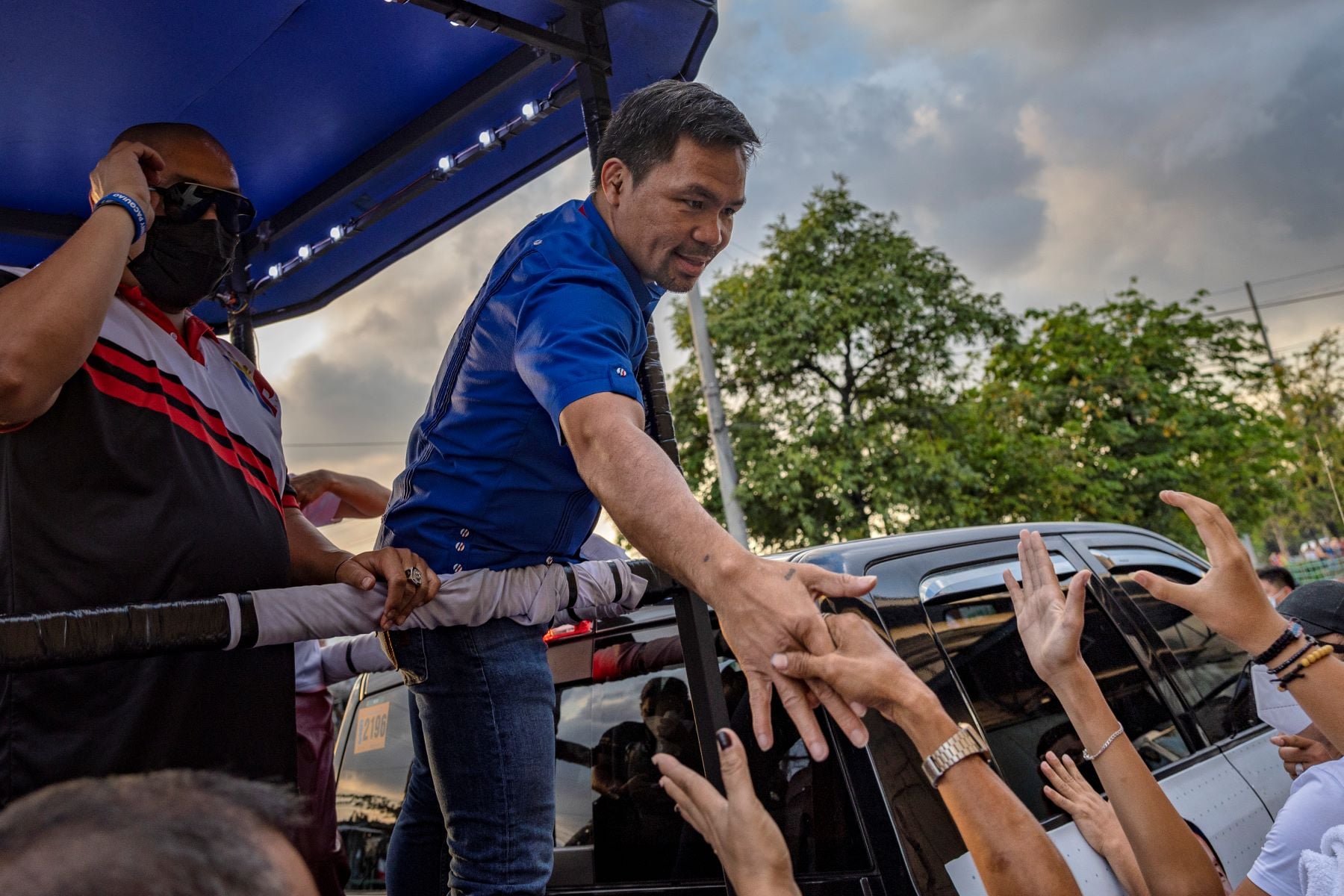
Pacquiao officially announced his candidacy for President of the Philippines in September 2021, announcing his formal retirement from professional boxing to focus entirely on public service. His presidential platform, titled "Mananalo Ang Mahirap" (The Poor Will Win), prioritized five major policy pillars:
- Anti-Corruption Crusade: Establishing a mega-prison facility dedicated to convicted corrupt government officials and creating specialized anti-corruption tribunals.
- Housing for All (Pabahay para sa Lahat): A pledge to build free, decent housing units for millions of impoverished Filipino families within five years.
- Economic Relief and Job Creation: Providing low-interest capital loans for micro, small, and medium enterprises (MSMEs) and raising national minimum wages.
- Judicial Reform: Speeding up court proceedings to ensure equal access to justice for lower-income litigants.
- Healthcare System Expansion: Strengthening the implementation of the Universal Health Care Law and increasing national allocations for rural healthcare centers.
Election Outcome
In the May 9, 2022 presidential election, Pacquiao faced a crowded field that included former Senator Ferdinand "Bongbong" Marcos Jr., Vice President Leni Robredo, and Manila Mayor Isko Moreno. Pacquiao finished third in the national count, garnering 3,663,113 votes (representing approximately 6.6% of total votes cast). His strongest support bases were concentrated in Region XII (SOCCSKSARGEN) and parts of Mindanao, where his local philanthropic record and regional identity resonated strongly. Following the canvassing of votes, Pacquiao accepted the election results and wished the incoming administration success.
Post-2022 Political Evolution and Strategic Outlook
Following the 2022 presidential election, Pacquiao maintained a visible profile in both civil society and national politics. Rather than withdrawing entirely from public life, he used his foundation—the Manny Pacquiao Foundation—to continue funding rural housing, disaster relief, and youth sports initiatives.
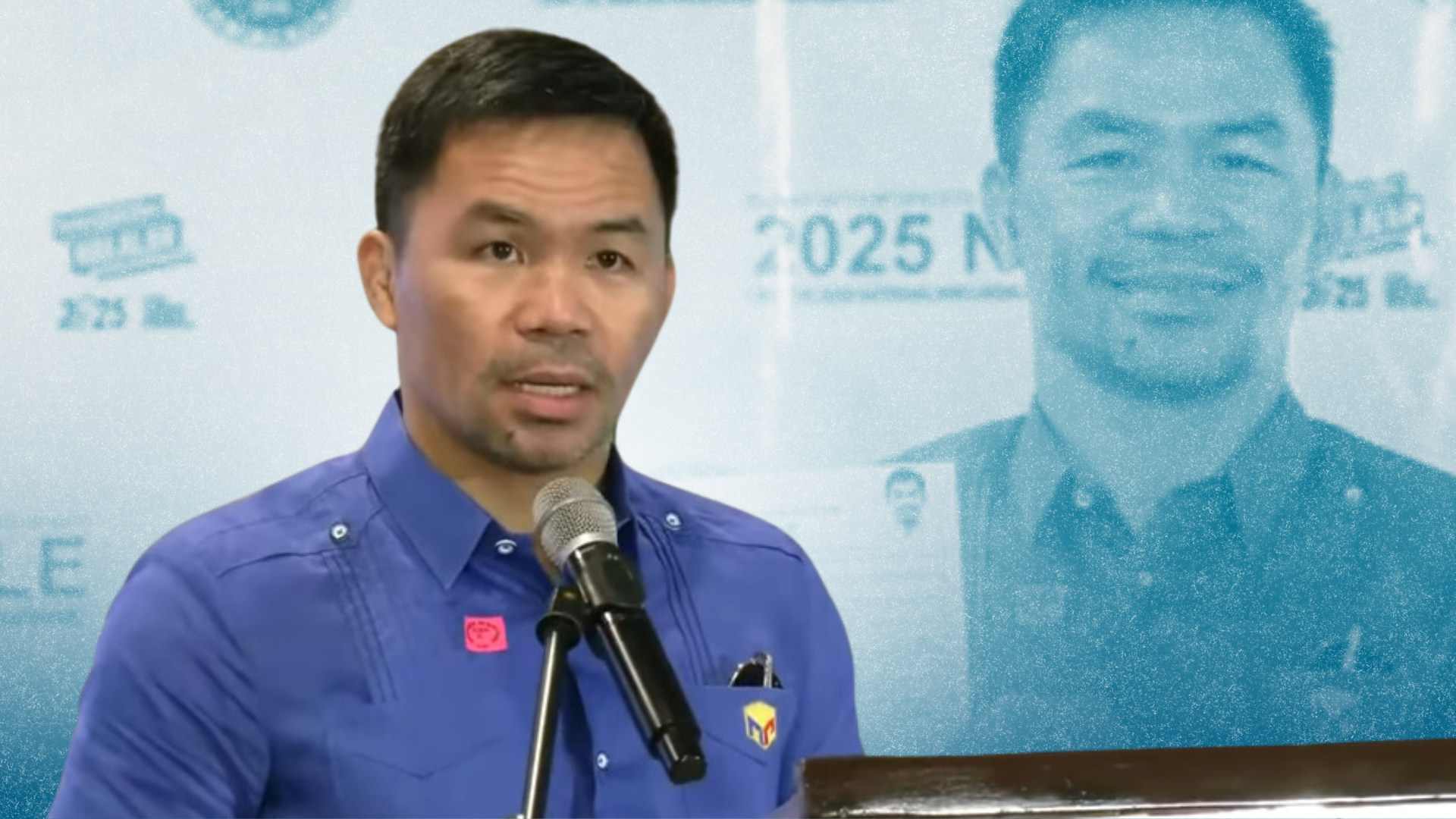
In late 2024, Pacquiao announced his return to national politics by filing a certificate of candidacy for the May 2025 Senate elections. Aligning with the administration coalition Alyansa para sa Pilipinas, his campaign focused on sports development, economic empowerment for low-income workers, and anti-corruption governance.
Pacquiao's political trajectory illustrates broader patterns in Philippine governance, where high-profile athletes and media personalities utilize national fame to build political platforms. While critics point to early challenges with legislative attendance and complex political affiliations, supporters emphasize his legislative focus on sports infrastructure, overseas workers, public internet access, and direct social welfare.
Comparative Overview of Political Milestones
| Year Span | Political Role / Office | Political Party / Coalition | Primary Policy / Focus Area | Notable Outcome / Status |
|---|---|---|---|---|
| 2007 | Congressional Candidate (South Cotabato 1st District) | Liberal Party | Local economic aid, sports youth programs | Defeated by Darlene Antonino-Custodio |
| 2010–2016 | Representative (Sarangani Lone District) | People's Champ Movement (PCM) / Lakas-CMD / UNA | Infrastructure development, provincial welfare, local healthcare | Served two consecutive terms (15th & 16th Congress) |
| 2016–2022 | Senator of the Philippines | UNA / PDP-Laban | Sports development (RA 11470), OFW protection (RA 11227), National Bible Day (RA 11163) | Completed full 6-year Senate term; chaired Sports and Ethics committees |
| 2020–2021 | PDP-Laban Party President | PDP-Laban (Pacquiao-Pimentel Wing) | Internal party organization, anti-corruption drive | Split from Duterte-Cusi faction over government corruption claims |
| 2022 | Candidate for President of the Philippines | PROMDI / MP3 Alliance | Anti-corruption, zero-cost social housing, economic relief for MSMEs | Placed 3rd nationally with over 3.66 million votes |
| 2025–2026 | Senatorial Candidate / Political Leader | Alyansa para sa Pilipinas / Federalism & Grassroots | Legislative modernization, sports expansion, anti-poverty legislation | Returned to national electoral arena |
Frequently Asked Questions
What political offices has Manny Pacquiao held?
Manny Pacquiao served as the Representative for the Lone District of Sarangani in the Philippine House of Representatives for two terms from 2010 to 2016. He was subsequently elected to the Philippine Senate, serving a six-year term from 2016 to 2022.
What were Manny Pacquiao's major legislative achievements as Senator?
As Senator, Pacquiao authored and sponsored key legislation, including Republic Act No. 11470 (establishing the National Academy of Sports), Republic Act No. 11227 (the Handbook for Overseas Filipino Workers Act), Republic Act No. 11163 (National Bible Day Act), and co-sponsored Republic Act No. 10929 (Free Internet Access in Public Places Act).
Why did Manny Pacquiao split with President Rodrigo Duterte in 2021?
Despite being early allies, Pacquiao split from President Duterte and his faction within PDP-Laban due to disagreements over public sector corruption and foreign policy. Pacquiao publicly criticized alleged financial irregularities in COVID-19 pandemic response spending at government agencies and pushed for a more assertive stance regarding Philippine sovereign rights in the West Philippine Sea.
How did Manny Pacquiao perform in the 2022 Philippine Presidential Election?
Pacquiao finished third in the May 2022 presidential race, securing 3,663,113 votes (approximately 6.6% of the national vote). He ran under the PROMDI / MP3 Alliance platform, focusing on anti-corruption, public housing, and economic relief for low-income citizens.
Did Manny Pacquiao retire from politics after losing the 2022 presidential election?
No. While Pacquiao stepped back from executive office to focus on civil society initiatives and exhibition sports events, he remained politically active. He subsequently launched a senatorial comeback campaign under the Alyansa para sa Pilipinas coalition for the 2025 Philippine midterm elections.
Summary of Political Career
Manny Pacquiao's evolution from a global boxing champion to a national political figure highlights the central role of celebrity, religion, and populist patronage in modern Philippine democracy. His legislative record shows concrete achievements in sports education, migrant worker support, and digital infrastructure. Understanding his political journey requires evaluating both his legislative contributions and the broader systemic dynamics of athlete-politicians operating within complex regional and national party structures.
Image Gallery