Understanding the Role of Men and Women: Socialization, Biology, and Modern Dynamics
Understanding the role of men and women requires examining the interplay between biological traits, historical necessities, and cultural socialization. While traditional paradigms assigned rigid provider and caregiver divisions based o...
Understanding the role of men and women requires examining the interplay between biological traits, historical necessities, and cultural socialization. While traditional paradigms assigned rigid provider and caregiver divisions based on physical labor demands, modern societies increasingly emphasize egalitarian partnerships, shared domestic responsibilities, and flexible identity expressions shaped by personal agency and economic realities.
Contents
Defining Gender Roles: Biology, Culture, and Socialization
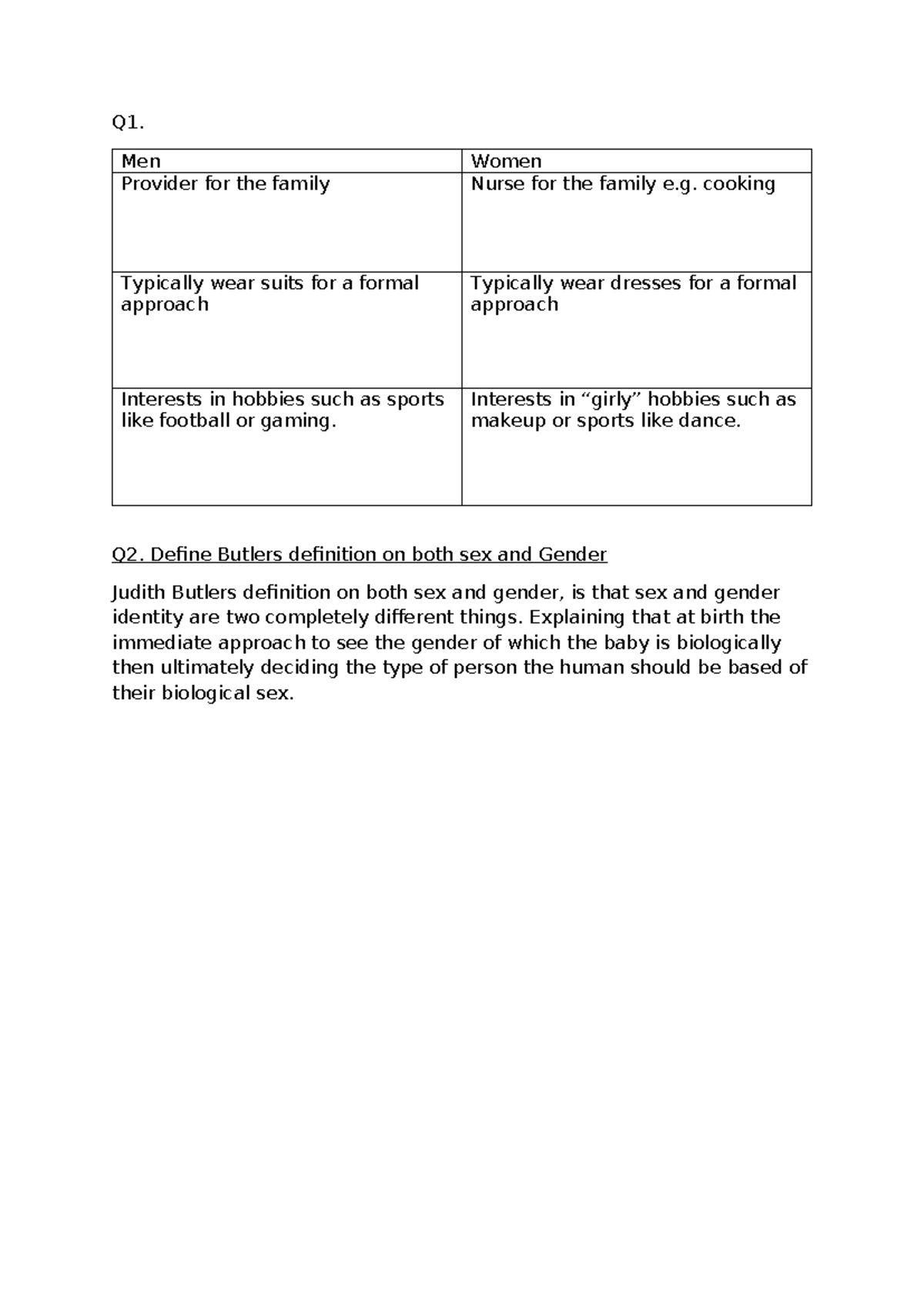
To understand how gender roles operate within society, it is essential to distinguish between biological sex and gender roles. Biological sex refers to the physiological, anatomical, and chromosomal attributes that define male, female, and intersex bodies. Gender roles, by contrast, represent the behavioral expectations, responsibilities, rights, and societal norms assigned to individuals based on their perceived sex.
Sociological research demonstrates that gender roles are not static; they are constructed through continuous cultural reinforcement and behavioral modeling.
Social Role Theory
Formulated by social psychologist Alice Eagly, Social Role Theory posits that the division of labor within a society drives the development of gender stereotypes and expectations. Historically, physical differences—such as upper-body strength and childbearing capacity—led to a division of labor where men engaged in tasks requiring physical mobility or defense, while women managed child rearing and domestic production.
Over time, these practical divisions became institutionalized. Society began attributing psychological traits to each sex to justify the division:
- Agentic Traits (Traditionally Male): Dominance, assertiveness, autonomy, and task-oriented decision-making.
- Communal Traits (Traditionally Female): Nurturance, empathy, interpersonal warmth, and expressiveness.
As economic structures evolve, the functional necessity of these rigid divisions diminishes, yet the underlying psychological expectations often persist through cultural lag.
The Mechanics of Gender Socialization
Gender roles are learned continuously from childhood through a process known as gender socialization. Primary agents of socialization include:
- Family Units: Parents frequently model gendered behavior through task assignment, emotional responses, and toy selection. Studies indicate that caregivers tend to encourage risk-taking and physical independence in young boys while encouraging verbal communication and nurturing play in young girls.
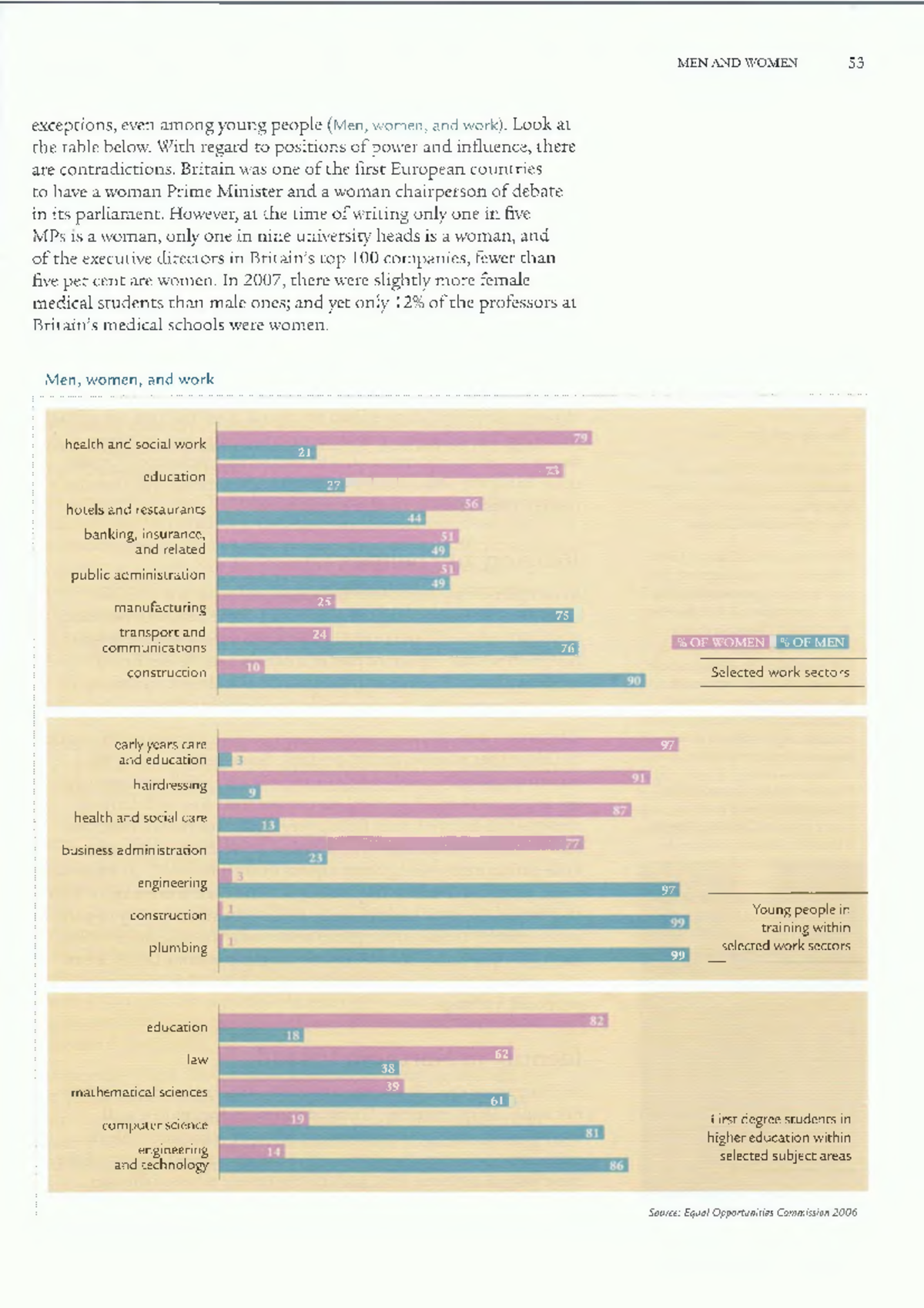
- Educational Institutions: Curricula, teacher expectations, and peer dynamics reinforce gender Norms. Historical patterns show subconscious bias in encouraging boys toward STEM fields (Science, Technology, Engineering, and Mathematics) and girls toward humanities and care-oriented disciplines.
- Media and Representation: Television, advertising, literature, and digital media project normative ideals of masculinity and femininity, shaping individual self-concept and interpersonal expectations.
Historical Evolution of Gender Expectations
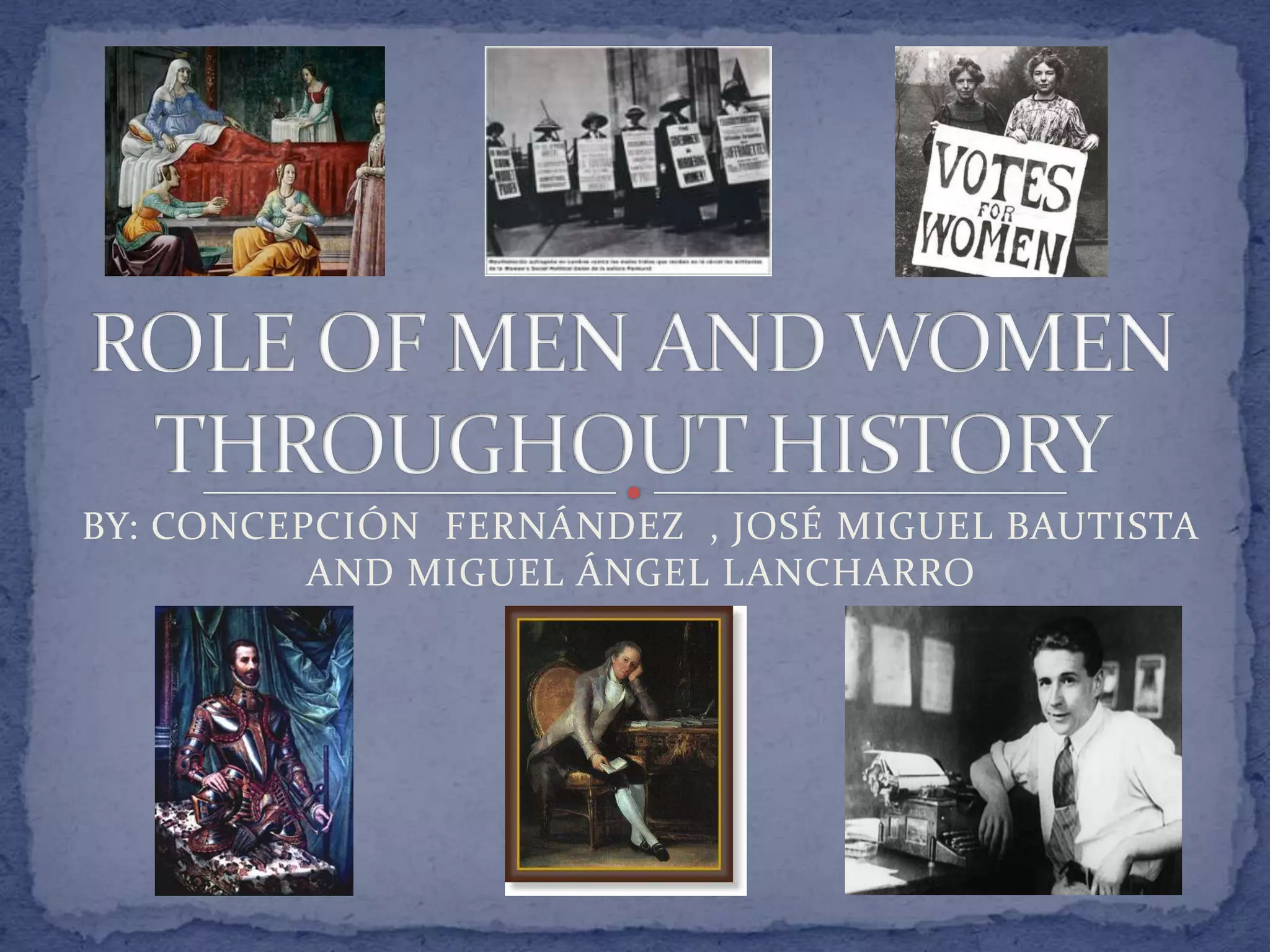
The societal roles attributed to men and women have undergone dramatic structural shifts over centuries, driven primarily by technological advancement and economic development.
- Agrarian Era
- Interdependent survival units; subsistence farming
- Division based on physical capacity and childbearing
- Industrial Revolution
- Separation of home and workplace
- Ideology of "Separate Spheres" (Public vs. Private)
- Post-Industrial & Contemporary Era (2026 Perspective)
- Knowledge-based economy prioritizing cognitive skills
- Dual-earner households and flexible caregiving models
Agrarian and Pre-Industrial Societies
In subsistence-based agrarian communities, the family operated as an interdependent economic production unit. While labor was often divided along gender lines—men handling heavy field cultivation and defense, women managing domestic processing, food preservation, and child rearing—both contributions were directly visible and vital for survival. Power structures leaned patriarchal, but the economic dependency between spouses was mutual.
The Industrial Revolution and "Separate Spheres"
The shift from agrarian economies to industrial capitalism in the 18th and 19th centuries fundamentally altered social structures. Production moved out of the household and into centralized factories and offices. This structural shift created the ideology of separate spheres:
- The Public Sphere: Associated with men, encompassing commerce, politics, formal labor, and competitive wage earning.
- The Private Sphere: Associated with women, designated as a domestic sanctuary centered on moral maintenance, caregiving, and home management.
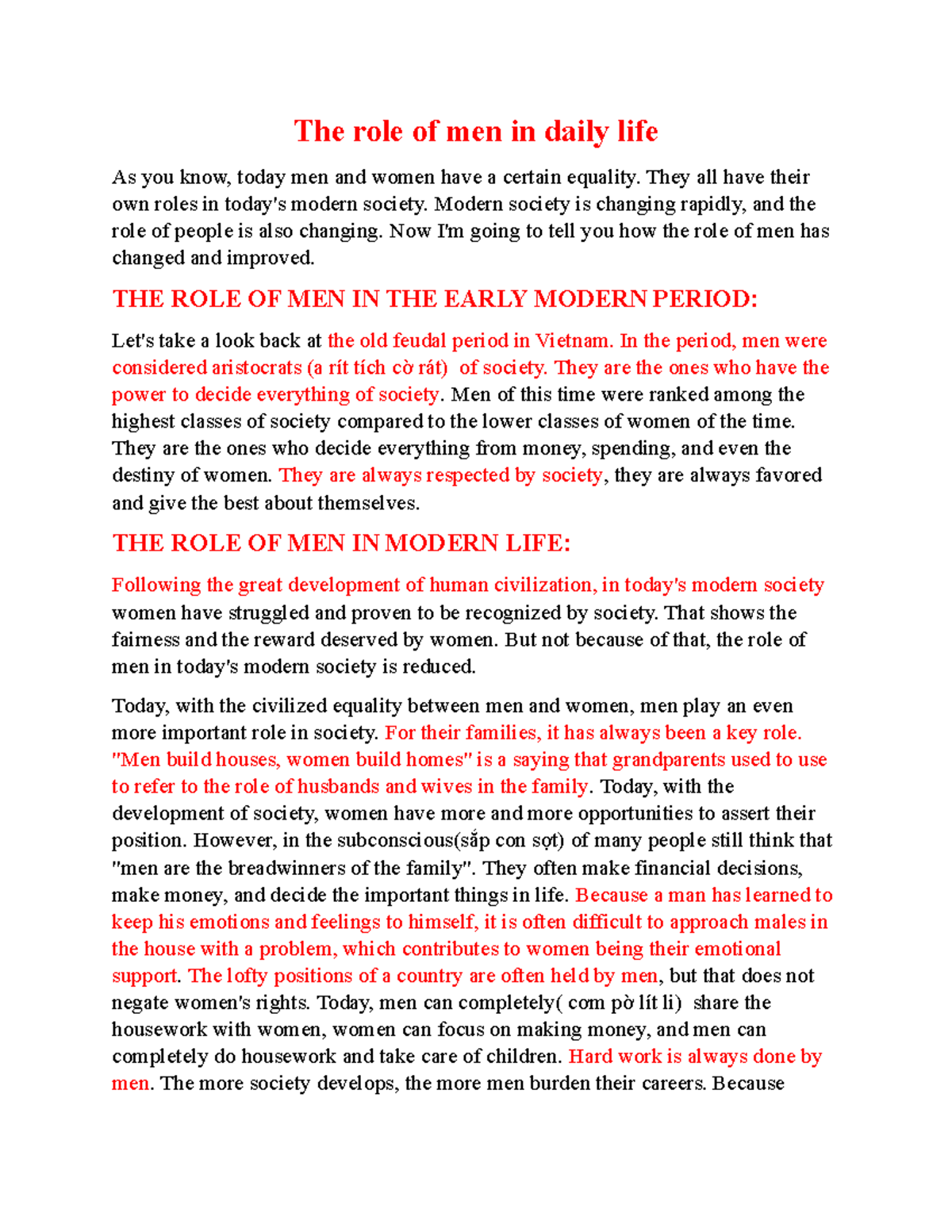
This era formalized the "male breadwinner" and "female homemaker" model as a middle-class ideal, marginalizing unpaid domestic labor and restricting women's economic autonomy.
Modern Post-Industrial Shifts
In the post-industrial era, economic demands changed significantly. Service, technology, and knowledge-based economies prioritize cognitive, technical, and interpersonal capabilities over raw physical strength.
Key milestones transforming gender roles include:
- Increased Female Labor Participation: The widespread entry of women into formal higher education and the labor force altered household economics and legal protections.
- Legislative and Rights Frameworks: Legal protections against sex-based discrimination in hiring, compensation, and education eroded formal barriers to entry.
- Shifting Family Structures: The rise of dual-income families rendered the single-breadwinner model economically impractical for most households, necessitating renegotiated domestic roles.
Key Dimensions of Modern Gender Roles
Examining contemporary gender expectations requires evaluating three distinct domains: economic participation, domestic labor, and interpersonal communication.
1. Economic and Professional Roles
While formal equality under the law exists across most modern economies, structural disparities remain:
- The Gender Wage Gap: Influenced by occupational segregation (women disproportionately entering care or service industries and men entering high-wage technical or executive fields), career interruptions for caregiving, and implicit workplace bias.
- Leadership Representation: Women continue to be underrepresented in executive governance and political leadership, though participation rates steady increase as organizational policies evolve.
- The Breadwinner Pressure: Men frequently face persistent psychological pressure to act as the primary financial provider, creating stress when economic volatility impacts employment stability.
2. Domestic and Caregiving Responsibilities
Despite women working comparable hours in the paid labor force, studies on household dynamics highlight the persistence of the second shift—a term coined by sociologist Arlie Hochschild to describe the unpaid domestic labor performed after returning home from paid work.
- Mental Load and Cognitive Labor: Beyond physical chores (cleaning, cooking), cognitive labor involves tracking household needs, managing schedules, coordinating healthcare, and maintaining family relationships. Research demonstrates that women disproportionately manage this mental load.
- Evolving Fatherhood: Modern expectations for men have expanded from passive provisioning to active, emotionally engaged parenting. Contemporary fathers spend significantly more time on direct childcare than previous generations, reflecting a cultural desire for balanced involvement.
3. Interpersonal and Emotional Dynamics
Emotional expectations are strongly gendered:
- Emotional Regulation in Men: Traditional norms often encourage men to restrict emotional expression, allowing anger while discouraging vulnerability, sadness, or fear. This emotional suppression is linked to elevated stress and reluctance to seek medical or psychological support.
- Relational Maintenance in Women: Women are often socialized to manage the emotional climate of relationships, prioritizing interpersonal harmony, conflict resolution, and empathy, sometimes at the expense of their personal boundaries.
Traditional vs. Contemporary Gender Role Frameworks
The following comparison illustrates how foundational societal domains differ between traditional models and contemporary egalitarian frameworks.
| Domain | Traditional Paradigm | Contemporary Egalitarian Model | Primary Societal Impact |
|---|---|---|---|
| Economic Role | Single male provider; female economic dependency. | Dual-earner households; shared financial responsibility. | Increased financial resilience; reduced single-provider stress. |
| Domestic Labor | Sole female responsibility for domestic work and caregiving. | Shared household management and co-parenting. | Equitable distribution of personal time; higher relationship satisfaction. |
| Decision-Making | Hierarchical; male head-of-household authority. | Collaborative; consensus-based decision-making. | Greater individual agency for both partners. |
| Emotional Expression | Restrictive for men (stoicism); expressive for women. | Open emotional expression encouraged regardless of gender. | Improved psychological well-being and healthier communication. |
| Career Aspirations | Primary focus for men; secondary or non-existent for women. | Equal priority given to individual career development. | Broader talent pool in workforce; demand for work-life integration. |
Psychological and Social Impacts of Rigid Stereotypes
When individuals are compelled to adhere strictly to traditional expectations without regard for personal capability or interest, psychological strain occurs.
Gender Role Strain Theory
Pioneered by psychologist Joseph Pleck, Gender Role Strain Theory suggests that social gender expectations are contradictory and psychologically stressful to fulfill. Strain occurs in three primary forms:
- Discrepancy Strain: Occurs when an individual fails to meet internalized gender standards (e.g., a man experiencing distress over unemployment because he cannot fulfill the provider role).
- Trauma Strain: Results from experiencing inherently traumatic socialization processes required to conform to gender norms (e.g., harsh suppression of emotional expression during childhood).
- Dysfunctional Strain: Occurs when fulfilled gender roles create problematic outcomes for the individual or their loved ones (e.g., prioritizing work hours over personal health or family relationships to prove dedication).
Impact on Men
Rigid definitions of masculinity (sometimes termed hyper-masculinity or traditional masculine norms) can lead to adverse outcomes:
- Lower rates of seeking mental health treatment due to stigma surrounding vulnerability.
- Higher rates of substance abuse and risky behaviors as coping mechanisms for unexpressed stress.
- Social isolation resulting from a lack of deep, non-competitive peer relationships.
Impact on Women
Strict adherence to traditional feminine expectations introduces unique stressors:
- The Perfectionism Trap: Pressure to excel simultaneously in professional endeavors, maternal caregiving, and aesthetic appearance.
- Economic Vulnerability: Sacrificing long-term financial security and retirement savings due to extended career pauses for family care.
- Internalized Modesty: Reluctance to advocate for raises, promotions, or direct authority in professional environments due to social conditioning against appearing assertive.
Navigating Gender Roles in Contemporary Relationships and Organizations
Moving beyond rigid gender scripts enables individuals, families, and organizations to build more adaptable, equitable systems.
Equitable Partnerships in the Home
Couples seeking to build balanced relationships can implement deliberate strategies to manage division of labor:
- Conducting a Domestic Audit: Track all household tasks over a two-week period, including physical chores and cognitive management (e.g., scheduling doctor appointments, planning meals).
- Assigning Complete Ownership: Instead of one partner "helping" the other, assign total responsibility for specific domains (e.g., one partner entirely owns meal planning, grocery shopping, and preparation) to distribute the mental load evenly.
- Aligning Tasks with Strengths and Capacity: Divide labor based on individual preference, schedule availability, and energy levels rather than gendered assumptions.
Inclusive Organizational Policies
Workplaces play a pivotal role in reshaping societal standards. Organizations foster equity by implementing structural changes:
- Gender-Neutral Parental Leave: Providing equal paid leave to all parents regardless of gender encourages men to take an active early caregiving role and reduces the career penalty often faced by women.
- Flexible Work Arrangements: Remote options and flexible hours allow employees of all genders to balance career goals with caregiving responsibilities.
- Pay Equity Audits: Regularly evaluating compensation structures ensures equal pay for equal work, eliminating subconscious gender biases in compensation decisions.
Frequently Asked Questions
What is the difference between biological sex and gender roles?
Biological sex refers to physical attributes such as chromosomes, anatomy, and physiological traits determined at birth. Gender roles are social constructs—cultural expectations, behaviors, rights, and duties assigned to individuals based on their perceived sex within a specific society.
How do traditional gender roles affect mental health?
Rigid gender roles can cause gender role strain. For men, expectations of emotional stoicism often prevent them from seeking mental health support, increasing risks of burnout and isolation. For women, the expectation to perform unpaid domestic labor alongside full-time work can lead to chronic stress, exhaustion, and financial insecurity.
What is Social Role Theory?
Social Role Theory, developed by Alice Eagly, proposes that gender stereotypes arise from the historical division of labor between men and women. As men and women historically occupied different roles within society, people developed expectations about the innate psychological traits required for those roles, reinforcing cultural stereotypes.
How have expectations around fatherhood changed in recent years?
Modern fatherhood expectations have expanded beyond financial support to include active emotional engagement, direct caregiving, and shared domestic responsibility. Research shows contemporary fathers spend significantly more time engaging with their children than previous generations, benefiting child development and relational stability.
What is meant by the terms "mental load" and "invisible labor"?
"Mental load" and "invisible labor" refer to the non-physical, cognitive management of a household. This includes planning, scheduling, anticipating family needs, managing emotional dynamics, and organizing logistical details. Unlike physical chores, this work is continuous and frequently falls disproportionately on women.
Strategic Recommendations for Personal and Professional Balance
Achieving a healthy, flexible approach to gender roles requires intentional reflection and proactive structural alignment.
Action Plan for Individuals and Families
- Audit Assumptions: Periodically discuss personal values with your partner to identify whether household arrangements stem from genuine preference or unexamined social conditioning.
- Model Healthy Behavior: Encourage children to explore interests, express emotions, and participate in domestic tasks regardless of gendered marketing or historical stereotypes.
- Prioritize Clear Communication: Explicitly define expectations regarding financial contributions, emotional support, and domestic management to prevent unspoken resentments.
Action Plan for Organizational Leaders
- Normalize Shared Caregiving: Encourage male executives and managers to take full parental leave and utilize flexible schedules, signaling that caregiving is a normal responsibility for all employees.
- Standardize Performance Evaluations: Implement objective, criteria-based evaluation metrics to minimize subjective biases that penalize women for assertiveness or men for prioritizing family obligations.
Image Gallery