The Valhalla Train Crash and Its Aftermath: Investigation, Liability, and Railroad Safety Reforms
On February 3, 2015, a Metro-North Railroad passenger train collided with a passenger vehicle at a grade crossing in Valhalla, New York, triggering the deadliest accident in the railroad’s history. The collision killed six people, inju...
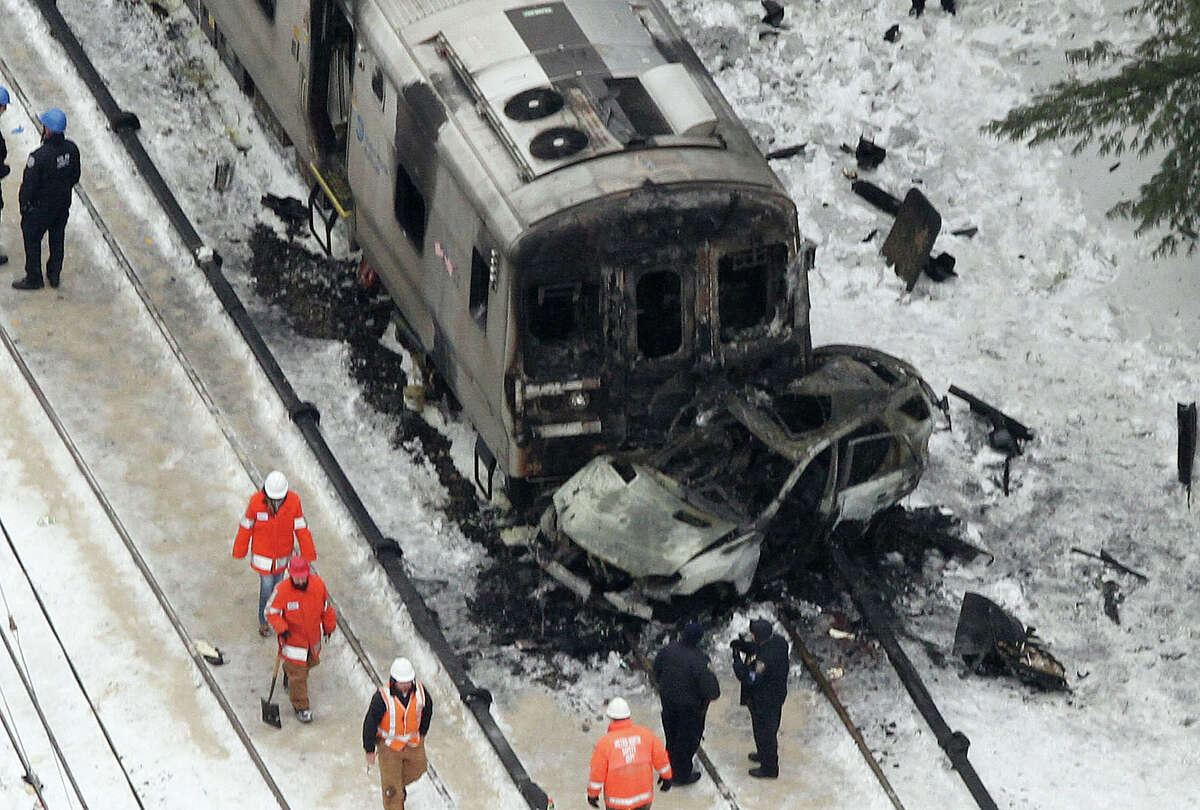
On February 3, 2015, a Metro-North Railroad passenger train collided with a passenger vehicle at a grade crossing in Valhalla, New York, triggering the deadliest accident in the railroad’s history. The collision killed six people, injured fifteen others, destroyed the lead railcar, and prompted extensive federal safety investigations, multi-year litigation, and systemic reforms in rail infrastructure design.
Contents
- Commerce Street Crossing
- SUV Trapped on Tracks
- Lowered crossing gate
- Congested corridor
- Metro-North Train #659
- Express speed (~58 mph)
- Emergency braking applied
- Impact & Reconstruction
- Third-Rail Dislodgement
- ~390 ft of steel rail detached
- Pierced SUV floor and M7 car #4333
- Post-Collision Fire
- Fuel spill ignition
- Rapid cabin smoke accumulation
- Third-Rail Dislodgement
- NTSB Findings & Legacy
- Driver error identified as primary cause
- Mandates for third-rail redesign & crossing safety
- SUV Trapped on Tracks
Chronology of the Disaster on the Metro-North Harlem Line
During the evening rush hour of February 3, 2015, Metro-North Harlem Line train No. 659 departed Grand Central Terminal in New York City at 5:44 p.m., bound northbound for Wassaic. Composed of eight M7 electric multiple-unit railcars, the express train carried approximately 650 passengers.
At approximately 6:26 p.m., train No. 659 approached the Commerce Street highway-rail grade crossing in Valhalla, an unincorporated hamlet in the Town of Mount Pleasant, Westchester County. At the same time, traffic on Commerce Street was heavily congested due to a detour resulting from a closure on the adjacent Taconic State Parkway.
The Grade Crossing Hazard at Commerce Street
The Commerce Street crossing presented a complex geometry near the intersection of Taconic State Parkway and Lakeview Avenue. As vehicular traffic backed up, a 2011 Mercedes-Benz ML350 SUV driven by 49-year-old Ellen Brody became stopped inside the grade crossing zone.
When the automated warning system activated—dropping the fiberglass gate arms, flashing red lights, and sounding warning bells—the gate arm descended onto the rear section of Brody’s vehicle.
Witnesses reported that Brody exited her vehicle to inspect the damage caused by the gate arm, returned to the driver's seat, and then drove forward onto the tracks directly into the path of the approaching train.
Collision, Third Rail Penetration, and Fire Dynamics
Train No. 659 was travelling at approximately 58 mph when the engineer observed the vehicle on the tracks. The engineer immediately initiated emergency braking and sounded the horn, but the stopping distance required for an eight-car train traveling at that speed exceeded the available distance. The train struck the SUV, pushing it down the track.
The collision caused a catastrophic structural sequence:
- Third Rail Dislodgement: The impact dislodged the third rail—the bottom-contact electrical conductor supplying 750 volts of direct current to the train—from its ground mountings.
- Structural Penetration: Rather than snapping or bending downward, approximately 390 feet of continuous heavy steel third rail broke into sections, pierced the underside of the SUV, and penetrated the floor of the lead railcar (M7 car #4333).
- Thermal Ignition: The steel third rail sliced through the interior of the passenger car, destroying seating structures. Simultaneously, ruptured fuel from the SUV ignited, generating a high-intensity fire sustained by electrical arcing and gasoline.
The combination of blunt-force trauma from the intruding third rail and the resulting intense fire caused six fatalities: the SUV driver and five passengers in the lead train car. Fifteen other passengers sustained injuries, seven of them severe.
Casualties, Emergency Response, and Immediate Chaos
Emergency response teams faced severe operational obstacles upon arriving at the scene. The crash occurred during sub-freezing winter conditions along a narrow corridor bordered by the Taconic State Parkway and the Cemetery of the Gate of Heaven.
| Parameter | Details |
|---|---|
| Fatalities | 6 (1 Driver, 5 Train Passengers) |
| Injuries | 15 (7 Severe, 8 Minor) |
| Rail Damage | ~390 ft of Third Rail Dislodged |
| Lead Car | M7 #4333 Destroyed by Fire/Penetration |
The fire inside car #4333 burned with extreme heat, generating dense toxic smoke that quickly filled the car interior. Surrounding passengers in the forward cars attempted to evacuate through the rear vestibules while thick smoke reduced visibility to zero. Fire Departments from Mount Pleasant, Valhalla, Thornwood, and surrounding Westchester municipalities deployed heavy rescue gear, establishing water supply lines across active road detours.
First responders cut through damaged metal to extract trapped passengers, while paramedics triaged casualties on scene before transporting them to Westchester Medical Center in Valhalla.
The NTSB Investigation and Technical Findings
The National Transportation Safety Board (NTSB) launched an exhaustive investigation, publishing its final report on July 25, 2017 (NTSB/RAR-17/01). The investigation evaluated driver behavior, grade crossing warning systems, third-rail design mechanics, signal integrity, and crashworthiness standards.
- NTSB Probable Cause Analysis
- Primary Cause: Driver entry into track zone during warning state
- Severity Factor: Third-rail penetration & subsequent cabin fire
Driver Behavior and Crossing Geometry
The NTSB concluded that the probable cause of the collision was the driver of the SUV moving from a safe position stopped behind the gate into the path of the train for unknown reasons.
Investigators analyzed potential factors including driver distraction, unfamiliarity with the vehicle, limited visibility due to darkness, and spatial confusion caused by traffic detours. The NTSB found no evidence of mechanical failure in the vehicle or medical impairment in the driver.
Third Rail Design Failure and Structural Mechanics
The most critical technical finding involved the behavior of the bottom-contact third-rail system used by Metro-North:
- Underside Contact Mechanism: Unlike top-contact third rails common on transit systems like the New York City Subway, Metro-North’s Harlem and Hudson lines utilize an under-running third rail protected by an insulated cover board.
- Buckling under Longitudinal Impact: Upon collision, the severe longitudinal forces forced the third rail out of its brackets. Instead of breaking away safely beneath the train, the rail buckled upward, acting like a giant spear that breached the floor pan of M7 railcar #4333.
- Fire Acceleration: The rail pushed gasoline from the ruptured fuel tank directly into the passenger cabin while continuing to carry live traction current until automatic circuit breakers tripped.
The NTSB noted that federal standards at the time contained no crashworthiness performance criteria for third-rail installations exposed to grade crossing collisions.
Signal Systems and Traffic Congestion
Investigators verified that the crossing warning devices—including flashers, bells, and gate mechanisms—operated correctly, providing 39 seconds of advance warning prior to the train reaching the crossing (exceeding the federal minimum of 20 seconds). Traffic signals at the nearby intersection were functioning as designed, though queueing from heavy traffic reduced the clearance buffer for vehicles turning near the tracks.
Legal Actions, Settlements, and Liability Determinations
The Valhalla crash led to extensive civil litigation in state and federal courts. Plaintiffs included surviving passengers, estates of the deceased passengers, and the estate of Ellen Brody. Named defendants included:
- Metropolitan Transportation Authority (MTA) & Metro-North Railroad: Alleged negligence regarding track maintenance, engineer reaction, third-rail safety design, and hazard mitigation at grade crossings.
- Town of Mount Pleasant & Westchester County: Alleged defective roadway design, inadequate traffic management during highway detours, and unaddressed crossing hazards.
- The Estate of Ellen Brody: Named by passenger victims claiming driver negligence caused the initial collision.
- Valhalla Litigation Matrix
- Claims vs. MTA / Metro-North
- Third-rail safety design
- Hazard mitigation failures
- Claims vs. Municipalities
- Roadway design defects
- Traffic detour management
- Claims vs. Driver Estate
- Driver negligence
- Entry into signal zone
- Legal Outcomes & Multi-Million Settlements
- Claims vs. MTA / Metro-North
Defense motions filed by the MTA argued that the sole proximate cause of the crash was driver error. However, plaintiffs presented expert testimony asserting that while driver entry triggered the impact, the third-rail penetration and fire caused the fatalities and severe burns.
Over several years of pretrial proceedings and mediations, major cases culminated in multi-million-dollar confidential and public settlements paid to injured survivors and families of victims, while courts reviewed municipal immunity standards regarding traffic engineering decisions near rail corridors.
Comparative Overview of Incident Parameters and Reforms
The following matrix outlines the core elements of the incident, investigative outcomes, and post-accident system modifications:
| Category | Pre-Accident Condition (Feb 2015) | Post-Investigation Findings | Regulatory & Infrastructure Reform |
|---|---|---|---|
| Primary Crash Cause | Undetermined on scene | Driver moved into train path after gate lowered | Enhanced driver education on crossing gates |
| Third-Rail Safety | Standard under-running bottom contact | Rail detached, pierced cabin, exacerbated fire | Technical evaluations of third-rail breakaway points |
| Grade Crossing Security | Standard gates, lights, bells | Signals operated correctly with >39s warning | Priority list for crossing eliminations across NY State |
| Track & Signal Inspection | Routine inspection schedule | Signal system functioned within FRA guidelines | Mandatory pre-clearance logic for complex intersections |
| Passenger Safety & Egress | Standard M7 interior emergency tools | Intrusive rail blocked path; fire created zero visibility | Revised interior emergency lighting and egress access |
Lasting Industry Reforms and Grade Crossing Safety Policy
The Valhalla train crash catalyzed significant regulatory actions by the Federal Railroad Administration (FRA) and the New York State Department of Transportation (NYSDOT).
- Valhalla Disaster (2015)
- NTSB Safety Recommendations
- FRA & NYSDOT Mandates
- Grade Crossing Grade Separation
- Elimination of high-risk crossings
- Dynamic envelope zone striping
- Third-Rail System Redesign
- Breakaway brackets & anchorage
- Hazard mitigation studies
- Grade Crossing Grade Separation
Modernization of Third Rail Infrastructure
Following NTSB Safety Recommendation R-17-06, Metro-North and other commuter rail authorities operating third-rail electrification conducted engineering studies to analyze the structural behavior of third rails under impact.
Railroads evaluated redesigned anchorages, breakaway brackets, and modified rail joints designed to yield or fracture downward during a high-energy longitudinal impact, preventing the rail from rising into passenger space.
Technology Integration and Federal Rail Safety Mandates
The disaster accelerated broader rail safety programs across North America:
- Positive Train Control (PTC): While PTC is designed primarily to prevent train-to-train collisions and overspeed derailments, the nationwide rollout mandated by Congress (fully implemented across major lines by late 2020) upgraded signal integration across all commuter routes.
- Grade Crossing Elimination Projects: NYSDOT prioritized capital funding to evaluate grade crossing eliminations—replacing ground-level crossings with overpasses or underpasses—along high-density corridors like the Harlem Line.
- Dynamic Envelope Markings: States expanded the painting of high-visibility "dynamic envelope" pavement markings at grade crossings to visually indicate to drivers the exact zone occupied by an oncoming train.
- Public Education on Crossing Gates: The incident highlighted a critical lack of driver awareness: modern crossing gate arms are designed with breakable fiberglass points. If a vehicle becomes trapped inside a gate, the driver can safely drive forward through the gate arm to escape the tracks.
Driver Emergency Procedures at Railroad Grade Crossings
For motorists operating vehicles near rail lines, understanding crossing mechanics is essential for preventing catastrophic accidents.
- Vehicle Stopped on Rail Tracks
- Gate Down / Train Coming
- Drive straight THROUGH gate (Arms break away easily)
- Vehicle Stalled / Stuck
- Evacuate immediately at 45° angle toward the oncoming train
- Locate Blue Emergency Notification System (ENS) sign & call 800-number
- Gate Down / Train Coming
Safe Evacuation Protocol
If a vehicle becomes trapped or stalls on railroad tracks, drivers should take immediate action:
- Drive Through the Gate Arm: If warning gates descend while your vehicle is on the tracks, do not exit the vehicle to inspect damage. Drive directly forward through the gate arm. Gate arms are constructed of thin wood or fiberglass designed to break away easily upon contact.
- Evacuate Immediately if Stalled: If your vehicle stalls or cannot be moved off the tracks, evacuate all occupants instantly. Move away from the tracks at a 45-degree angle toward the direction from which the train is approaching. This prevents injury from flying debris if the train strikes the vehicle.
- Locate the Blue ENS Sign: Once clear of the tracks, locate the blue Emergency Notification System (ENS) sign posted on the crossing signal mast or control box. Call the toll-free emergency number listed on the sign and provide the 6-digit crossing identification number (with one letter) to report the obstruction directly to railroad dispatchers.
Frequently Asked Questions
What caused the 2015 Valhalla train crash?
The NTSB determined the primary cause was the driver of an SUV entering the grade crossing area and stopping on the tracks in the path of the train for unknown reasons. Contributory factors to the fatalities included the third rail dislodging, penetrating the lead passenger car, and causing a high-intensity fire fed by gasoline and electrical arcing.
How many people died in the Metro-North Valhalla accident?
Six people died in the crash: the driver of the SUV and five passengers seated in the lead railcar (M7 car #4333). Fifteen other passengers were injured.
Why did the third rail cause so much damage in this crash?
The collision forced the bottom-contact third rail out of its mountings. Due to the angle and momentum of the train, approximately 390 feet of continuous heavy steel rail buckled upward instead of breaking away. The rail pierced the SUV, entered the floor of the lead car, swept through the passenger seating area, and ignited spilled gasoline.
What are the Emergency Notification System (ENS) signs at train crossings?
ENS signs are blue, rectangular signs mounted on grade crossing posts or control houses. They display a 24/7 toll-free telephone number operated by the railroad and a unique U.S. DOT crossing identification code. Calling this number allows members of the public to inform dispatchers immediately of stalled vehicles or broken signals.
Can you drive through a lowered railroad crossing gate in an emergency?
Yes. Railroad crossing gate arms are manufactured from lightweight, brittle fiberglass or aluminum with breakaway fasteners. They are designed to snap off easily when struck by a vehicle without causing significant structural damage or hindering driver escape.
What changes were made to Metro-North after the accident?
Following the accident, regulatory authorities and rail operators reviewed third-rail anchor systems to prevent longitudinal penetration, accelerated grade-crossing hazard studies, implemented dynamic pavement envelope markings, and expanded public awareness campaigns regarding crossing gate safety.
Image Gallery