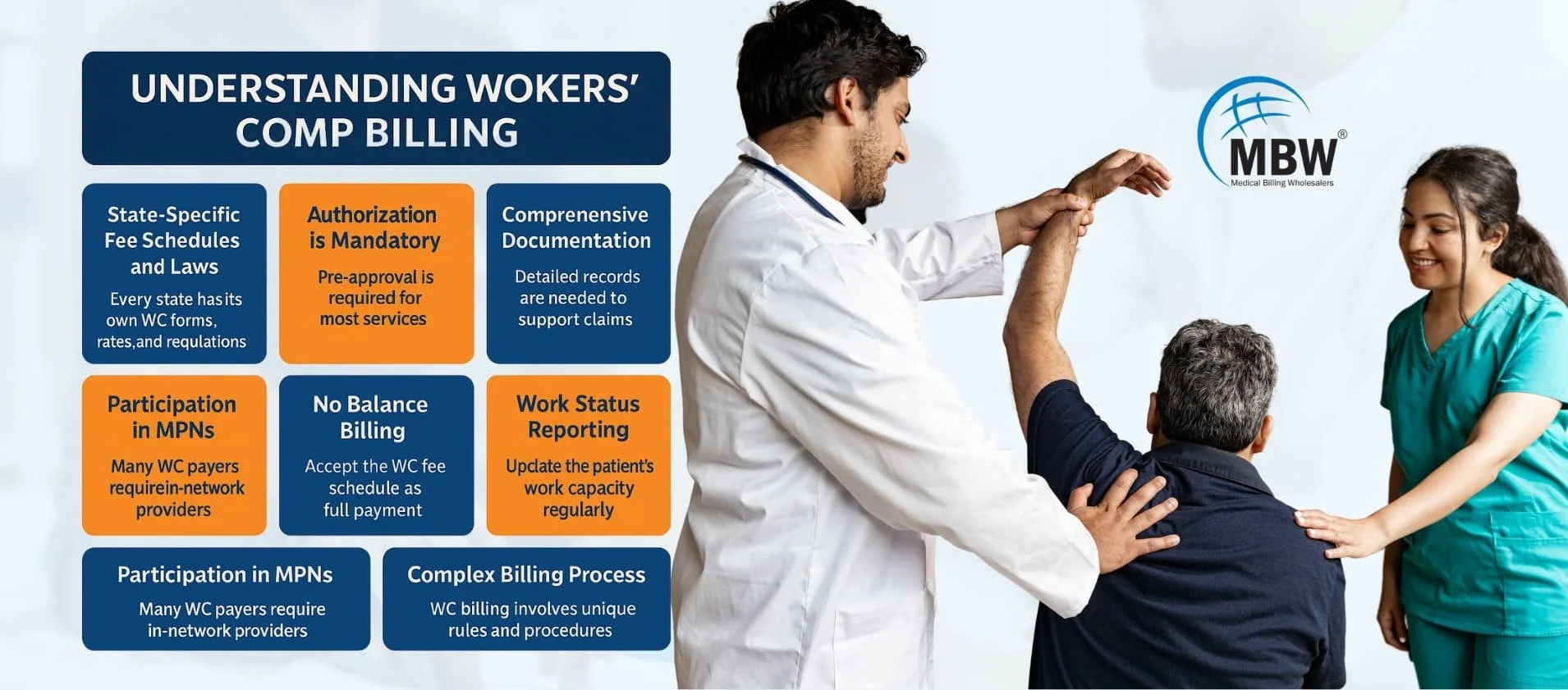
Navigating Seattle Orthopedics and Workers’ Compensation: A Complete Guide
In Seattle, obtaining specialized orthopedic care through a workers’ compensation claim requires navigating Washington State Department of Labor & Industries (L&I) regulations or self-insured employer networks under Title 51 RCW. Injur...
In Seattle, obtaining specialized orthopedic care through a workers’ compensation claim requires navigating Washington State Department of Labor & Industries (L&I) regulations or self-insured employer networks under Title 51 RCW. Injured workers have the right to select their treatment provider, provided the specialist belongs to the state Medical Provider Network, ensuring coverage for surgery, diagnostics, rehabilitation, and wage-replacement benefits.
Contents
Understanding Washington State Workers' Compensation for Orthopedic Injuries
Orthopedic injuries—ranging from acute fractures and ligament tears to chronic repetitive strain disorders—represent a significant portion of workplace injury claims in King County and the broader Puget Sound region. Whether an injury occurs on a commercial construction site in downtown Seattle, within a regional fulfillment warehouse, or inside a healthcare facility, medical coverage and disability compensation fall under Washington State's industrial insurance framework.
Washington operates primarily as a monopolistic state fund system managed by the Washington State Department of Labor & Industries (L&I). However, many major enterprise employers in Seattle are approved as Self-Insured Employers. Regardless of whether a claim is administered directly by L&I or managed by a private third-party administrator (TPA) on behalf of a self-insured company, the underlying statutory entitlements, medical treatment guidelines, and fee schedules remain governed by state law under Title 51 of the Revised Code of Washington (RCW).
When an employee sustains an orthopedic injury, the primary goal of the system is twofold: funding reasonable and necessary medical treatment to achieve Maximum Medical Improvement (MMI) and providing financial support (such as time-loss compensation) while the worker is temporarily unable to perform their job duties.
- Injury Occurs on the Job
- Initial Emergency / Urgent Care Visit (Any Licensed Provider)
- Complete Report of Industrial Injury (Form F242-027-000)
- Selection of Attending Physician (AP) / Orthopedic Specialist
- Must be enrolled in the L&I Medical Provider Network (MPN)
- Claim Type:
- STATE FUND CLAIM: Managed by Washington L&I
- SELF-INSURED CLAIM: Managed by Employer / Third-Party
- Diagnostic Authorization & Treatment
- X-Rays, MRI, Physical Therapy, Surgical Pre-Authorization Guidelines
- Maximum Medical Improvement (MMI)
- Return to Work OR Permanent Partial Disability (PPD) Impairment Rating
Mandatory Prerequisites: The L&I Medical Provider Network (MPN)
While an injured worker may seek immediate first-aid or emergency treatment from any licensed medical facility—such as an urgent care clinic or emergency room—ongoing orthopedic management requires an approved physician.
Under Washington administrative rules (WAC 296-20-015), any healthcare practitioner who acts as the Attending Physician (AP) or provides ongoing specialized orthopedic care must be formally enrolled in the L&I Medical Provider Network (MPN).
Key Rules Governing Provider Selection in Seattle
- Initial Choice of Doctor: Injured workers in Washington State have the legal right to choose their attending provider. An employer cannot mandate that a worker see a specific corporate doctor for ongoing care beyond initial triage.
- Network Requirement: The chosen orthopedic surgeon, sports medicine specialist, or spine specialist must maintain active enrollment in the state MPN. If an un-enrolled provider delivers non-emergent treatment, L&I or the self-insured employer will not cover those medical bills.
- Changing Providers: If a patient wishes to transfer their orthopedic care from a general practitioner to an orthopedic specialist, or switch between surgical practices, a formal transfer request (or a Transfer of Attending Physician form) must be filed with the claim manager.
Major health systems and private specialty groups across Seattle—including university-affiliated centers, specialized orthopedic institutes, and regional surgical practices—frequently maintain providers enrolled within the L&I MPN to handle complex industrial injuries.
Authorization Pathways for Orthopedic Diagnostics and Treatments
Orthopedic care often involves costly imaging and invasive surgical interventions. Washington L&I utilizes explicit Utilization Review (UR) parameters and evidence-based clinical coverage policies to evaluate treatment requests.
- Orthopedic Provider Submits Prior Authorization Request to L&I
- Does Request Meet Standard Coverage Guidelines & Modality?
- YES:
- Claim Manager Issues Formal Written Approval
- Service Delivered (PT, MRI, Elective Surgery)
- NO:
- Request Forwarded to Clinical Peer Review / Medical Director
- Approved w/ Conditions OR Formal Adverse Determination
- Right to Appeal via Board of Industrial Insurance Appeals
- YES:
1. Advanced Diagnostic Imaging (MRI, CT, Electromyography)
Plain X-rays performed during initial evaluation generally do not require complex prior authorization. However, advanced imaging modalities such as Magnetic Resonance Imaging (MRI), Computed Tomography (CT) scans, or Nerve Conduction Velocity (NCV/EMG) studies require formal pre-authorization unless performed under urgent clinical circumstances.
To obtain authorization for an MRI of the shoulder, knee, or lumbar spine, the attending orthopedic provider must document specific clinical indicators, such as:
- Objective neurological deficits or clear physical examination findings (e.g., loss of reflexes, positive straight-leg raise test, joint instability).
- Failure to respond to a conservative treatment trial (typically 4 to 6 weeks of physical therapy and medication), unless red flag symptoms warrant immediate imaging.
2. Conservative Therapies (Physical Therapy and Occupational Therapy)
Physical therapy (PT) and occupational/hand therapy (OT) are central components of orthopedic rehabilitation. Under L&I guidelines:
- Initial blocks of physical therapy (typically 6 to 12 visits) are routinely approved upon submission of a formal plan of care.
- Extended therapy beyond initial allotments requires objective evidence of functional improvement, such as measurable gains in range of motion, strength, or specific work-simulation activities.
3. Surgical Pre-Authorization
Elective orthopedic surgeries—such as rotator cuff repairs, knee arthroscopy, total joint replacements, and spinal fusions—are subject to rigorous prior authorization. The attending surgeon must submit detailed clinical notes, diagnostic imaging reports, and documentation showing that conservative, non-surgical treatment options were either attempted without success or are clinically contraindicated.
If a pre-authorization request is denied by the claim manager, the injured worker and their medical provider receive a formal written order detailing the adverse decision, which triggers statutory appeal windows.
System Comparison: Standard L&I Claims vs. Self-Insured Orthopedic Claims
While the statutory benefits provided to workers are identical under Washington law, the administrative execution varies depending on whether the claim is processed directly through the state fund (L&I) or via a self-insured program.
| Feature / Metric | L&I State Fund Claim | Self-Insured Employer Claim |
|---|---|---|
| Claim Administration | Managed directly by L&I State Claim Officers. | Managed by Third-Party Administrators (TPAs) or internal claim departments. |
| Provider Selection | Any L&I MPN-enrolled physician in Washington State. | Any L&I MPN-enrolled physician; employer cannot force selection. |
| Medical Fee Schedule | Paid strictly per the L&I Medical Fee Schedule. | Paid strictly per the L&I Medical Fee Schedule. |
| Treatment Authorization | Evaluated via L&I Utilization Review vendors. | Evaluated via TPA utilization review teams bound by L&I medical policies. |
| Dispute Resolution | Adjudicated by L&I; appeals go to Board of Industrial Insurance Appeals (BIIA). | Dispute notices sent to L&I Self-Insurance Section; ultimate appeal to BIIA. |
| Time-Loss Benefit Rates | Calculated using state statutory formulas based on gross wages and dependents. | Calculated using identical state statutory formulas; paid by employer/TPA. |
Core Financial and Disability Benefits for Orthopedic Patients
An orthopedic injury often limits a worker’s physical capacities, resulting in temporary or permanent work restrictions. Title 51 RCW outlines specific financial compensations available to qualified workers.
Time-Loss Compensation (Temporary Total Disability)
If an orthopedic provider certifies that an injured employee cannot return to their regular job duties—and the employer cannot offer light-duty or modified work consistent with physical restrictions—the worker is entitled to Time-Loss Compensation.
- Wage Calculation: Benefits range from 60% to 75% of the worker’s pre-injury gross monthly wage, depending on marital status and the number of dependent children, subject to state maximum cap limits set annually.
- Waiting Period: There is a 3-day statutory waiting period following the date of injury. If disability continues for 14 consecutive days, time-loss benefits for the initial 3 days are retroactively paid.
Loss of Earning Power (LEP)
When an injured worker returns to light-duty orthopedic accommodations or modified part-time hours, but experiences a earning loss greater than 5% of their pre-injury baseline, they may qualify for Loss of Earning Power (LEP) benefits to make up a portion of the financial deficit.
Permanent Partial Disability (PPD)
Once an orthopedic specialist determines that an injured worker has reached Maximum Medical Improvement (MMI)—meaning the condition has stabilized and further curative medical treatment is not expected to yield improvement—the worker is evaluated for permanent physical impairment.
- An accredited medical examiner or attending provider performs a physical evaluation using standardized measurement frameworks (such as the AMA Guides to the Evaluation of Permanent Impairment and Washington Administrative Code rules).
- The resulting rating generates a monetary PPD award paid according to statutory schedules based on the degree of lost anatomical or functional capacity (e.g., permanent loss of shoulder function or spinal impairment).
Managing Independent Medical Examinations (IMEs)
During an active orthopedic workers’ compensation claim in Seattle, the claim manager or self-insured administrator may schedule an Independent Medical Examination (IME). An IME is a formal medical evaluation conducted by a third-party physician or a panel of doctors contracted by the insurer.
Purpose of an IME
IMEs are requested to provide an expert second opinion on critical claim questions, including:
- Direct causation (whether the physical orthopedic pathology is directly linked to the workplace incident).
- The necessity or appropriateness of proposed surgical procedures.
- Assessment of MMI status and permanent impairment rating.
- Determination of physical work capacities and light-duty restrictions.
Worker Rights and Guidelines for IMEs
Under legislation codified in Washington State (including updates under RCW 51.36.070), injured workers have established protections regarding IMEs:
- Audio Recording: Workers have the statutory right to record the audio of the examination, provided proper advance notice is given to the exam company.
- Observer Presence: An injured worker may have an adult observer present during the examination, provided the observer does not interfere with the physical assessment.
- Challenging Unreasonable Exams: An employer or L&I cannot schedule arbitrary, excessive, or geographically burdensome IMEs. Examinations must occur at a facility reasonably convenient to the worker's residence.
If an IME report contradicts the treating orthopedic surgeon's recommendations—such as concluding that surgery is unnecessary or that the injury has fully resolved—the claim manager may issue a formal administrative order denying care or closing the claim. Injured workers have strict statutory deadlines (typically 60 days from receipt of an official order) to file a written protest or appeal.
Step-by-Step Action Plan After a Work-Related Orthopedic Injury
To ensure full compliance with Washington State laws and minimize coverage delays for orthopedic treatment in Seattle, injured workers should take systematic steps immediately following an incident.
STEP 1: REPORT THE INJURY
- Inform your supervisor or HR department immediately. Request a written incident report copy.
STEP 2: SEEK IMMEDIATE MEDICAL EVALUATION
- Visit an urgent care center, emergency room, or L&I MPN orthopedic provider. Complete Form F242-027-000 (Report of Industrial Injury).
STEP 3: ESTABLISH CARE WITH AN ENROLLED SPECIALIST
- Select an orthopedic doctor within the L&I MPN. Confirm they accept state fund or self-insured claims.
STEP 4: OBTAIN DETAILED WORK RESTRICTION DOCUMENTATION
- Ensure your attending physician completes an Activity Record (APF) detailing precise physical limitations (e.g., lifting limits, pushing/pulling restrictions).
STEP 5: MONITOR PRIOR AUTHORIZATION & CLAIM ORDERS
- Track pre-authorization requests for MRIs, physical therapy, or surgery. Maintain copies of all written orders from L&I or the Self-Insured Administrator.
Promptly Report the Incident: Notify your employer in writing as soon as the injury occurs or as soon as repetitive strain symptoms (such as carpal tunnel syndrome or tendinitis) become apparent.
File Form F242-027-000: When receiving medical attention, state clearly that the injury is work-related. Complete your section of the Report of Industrial Injury or Occupational Disease. The medical facility will complete their portion and submit it to L&I.
Verify Provider Enrollment: Ensure your primary treating physician and any consulting orthopedic surgeons are active members of the Washington L&I Medical Provider Network.
Maintain Work Restriction Notes: Obey all physical restrictions prescribed by your doctor. Provide your employer's HR or safety manager with updated Attending Physician’s Report (APF) documentation following every appointment.
Comply with Prescribed Rehabilitation: Attend all authorized physical therapy sessions and diagnostic imaging appointments. Document any changes in physical limitations or pain levels carefully.
Track Statutory Deadlines: Keep a dedicated file of all written correspondence from L&I or the third-party administrator. Official orders carry a mandatory 60-day deadline for filing a formal protest or appeal. Missing this window causes the order to become final and legally binding.
Frequently Asked Questions
Can I choose any orthopedic surgeon in Seattle for my work injury claim?
You have the legal right to choose your attending orthopedic physician, but the doctor must be enrolled in the Washington L&I Medical Provider Network (MPN). If you select a surgeon who is not enrolled in the MPN, L&I or your self-insured employer will not pay for the medical services or authorize surgeries performed by that provider.
What should I do if L&I denies my orthopedic surgeon's request for an MRI or surgery?
If a treatment pre-authorization is denied, L&I or the self-insured administrator will issue an official written order. You and your orthopedic surgeon have the right to submit additional clinical evidence, request a peer-to-peer administrative review, or file a formal written protest within 60 days of receiving the order.
How are light-duty work restrictions handled following orthopedic surgery?
Your attending orthopedic doctor will issue an Activity Prescription Form (APF) outlining specific physical limitations, such as lifting caps, standing limits, or restricted use of an injured limb. If your Seattle employer offers light-duty work that strictly fits within these certified restrictions, you are expected to perform the modified job. If no suitable light-duty work is available, you remain eligible for time-loss wage-replacement benefits.
What happens if my orthopedic condition causes permanent physical limitations?
Once your treatment is complete and your attending specialist confirms you have reached Maximum Medical Improvement (MMI), a permanent impairment evaluation will be conducted. If you have lasting functional loss, you will receive a Permanent Partial Disability (PPD) monetary award based on state statutory impairment ratings. If the impairment prevents you from returning to your prior job entirely, you may also qualify for vocational rehabilitation benefits.
Are repetitive strain injuries, like carpal tunnel syndrome, covered under Seattle workers' comp?
Yes. Washington State workers' compensation covers both acute industrial injuries (such as sudden falls or equipment accidents) and occupational diseases (such as repetitive motion strain, tendonitis, or carpal tunnel syndrome caused by cumulative workplace duties). Occupational disease claims must be supported by medical opinions showing that your specific job conditions were a proximate cause of the orthopedic pathology.
Practical Recommendation for Injured Workers
Navigating orthopedic care under Washington State workers' compensation requires a balance of medical compliance and administrative diligence. Prioritize establishing care with an experienced, MPN-enrolled orthopedic specialist who understands the L&I authorization landscape. Keep clear records of all physical restriction forms, written claim determinations, and communication with claim managers. If complex surgical disputes, IME demands, or benefit denials arise, consulting with a qualified legal advocate or a worker support representative can help protect your statutory rights under Title 51 RCW.
Disclaimer: This guide is provided for educational and informational purposes only and does not constitute formal legal or medical advice. For specific legal guidance regarding a Washington L&I or self-insured claim, consult a licensed attorney or legal professional.
Image Gallery