What Is the Meaning of Intellectual Property Rights? A Complete Legal Guide
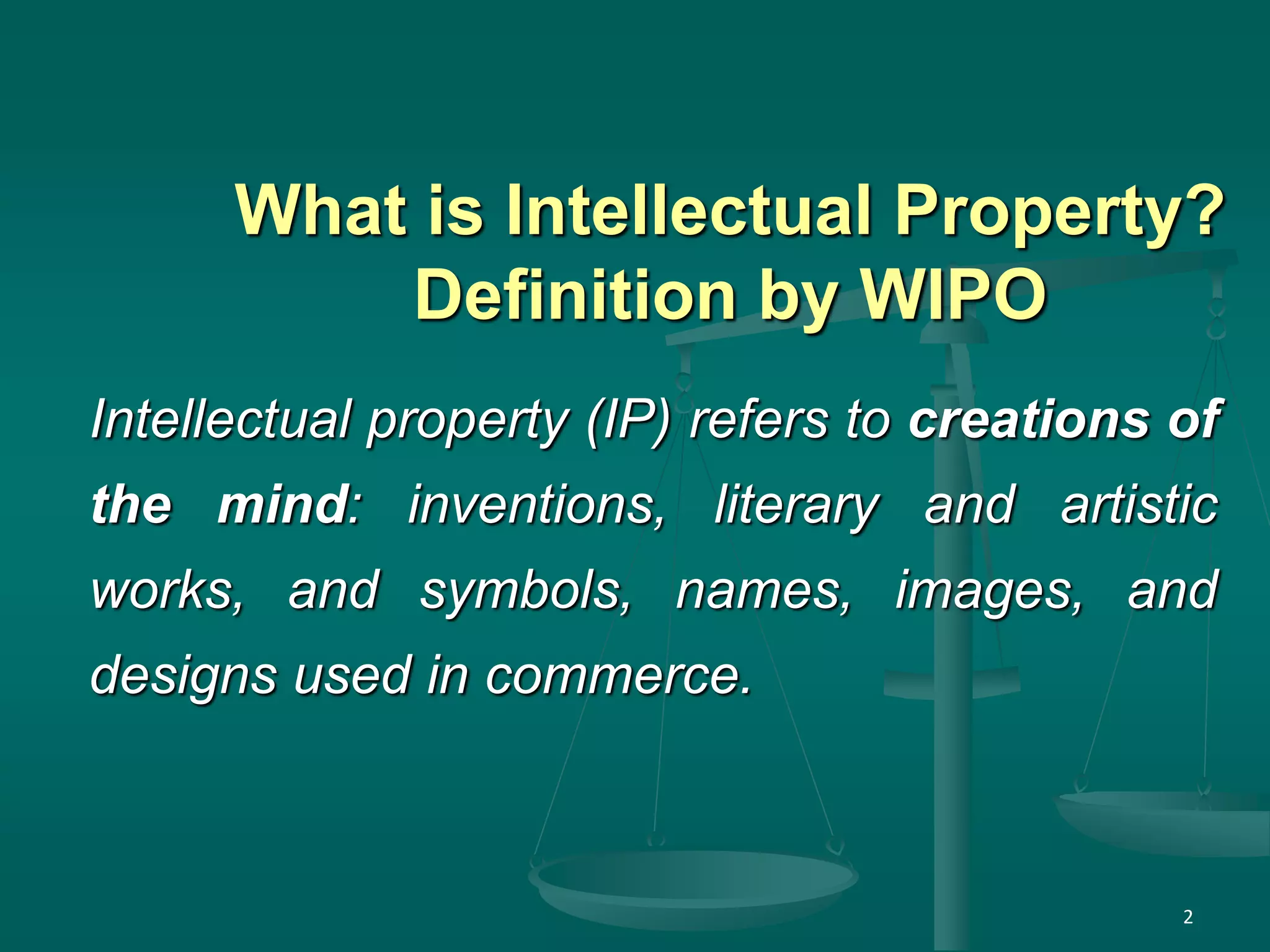
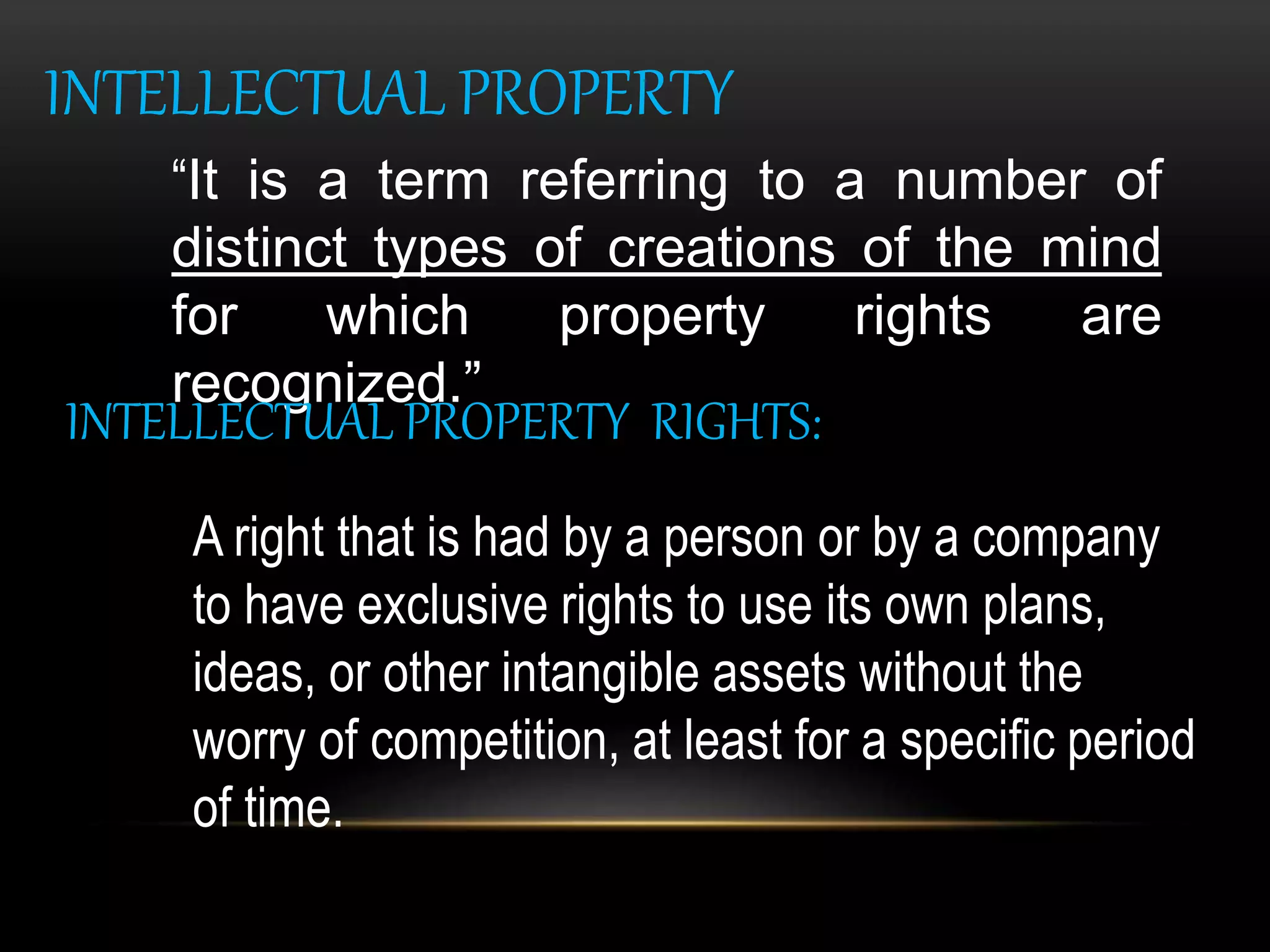
Intellectual property rights (IPR) are legal protections granted to individuals or businesses over intangible creations of the human intellect. These rights allow creators to control, commercialize, and exclude others from using their...
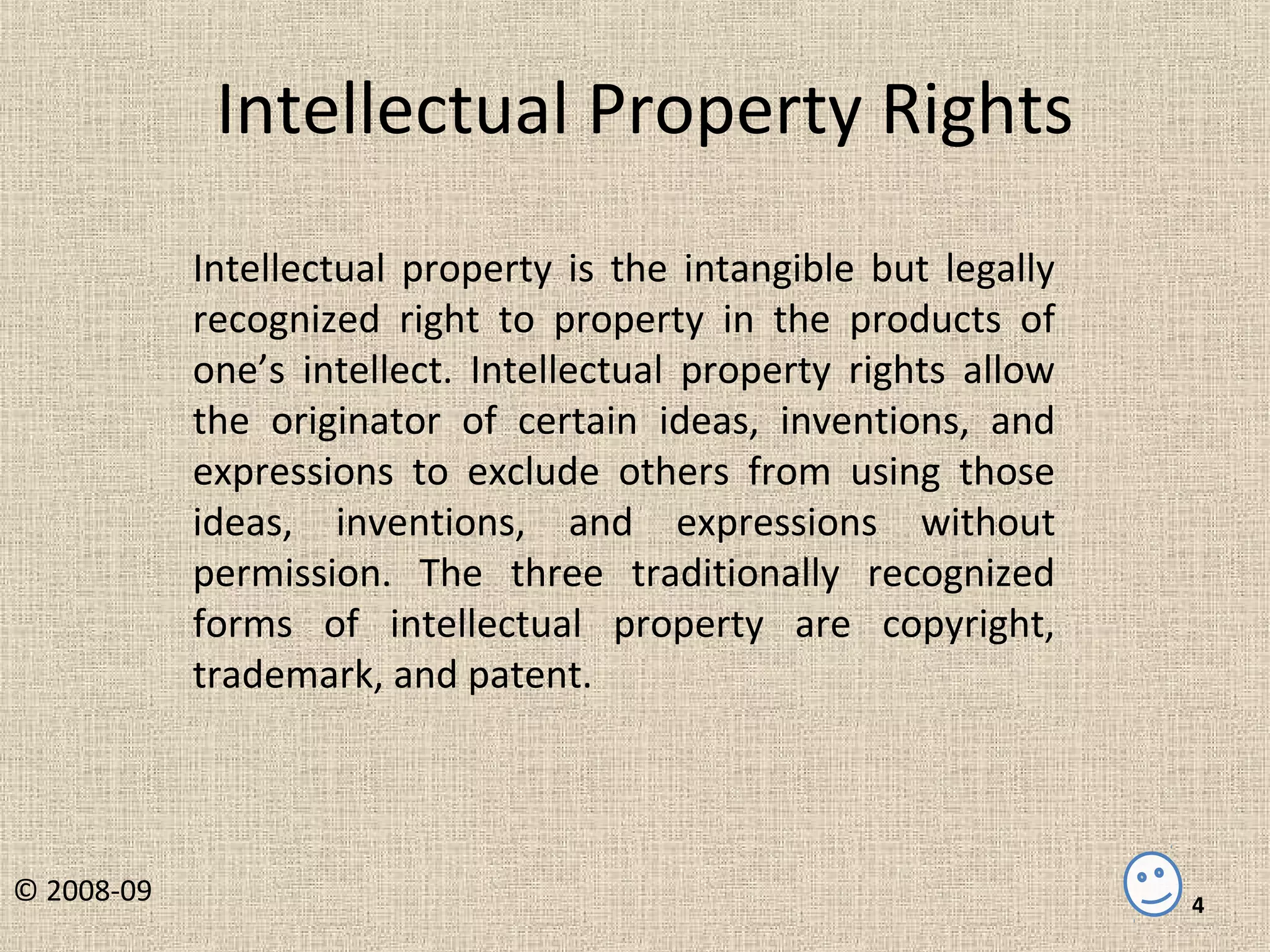
Intellectual property rights (IPR) are legal protections granted to individuals or businesses over intangible creations of the human intellect. These rights allow creators to control, commercialize, and exclude others from using their inventions, literary works, logos, designs, and proprietary data without permission for a specified duration under applicable law.
Contents
Defining Intellectual Property Rights: Core Purpose and Legal Framework
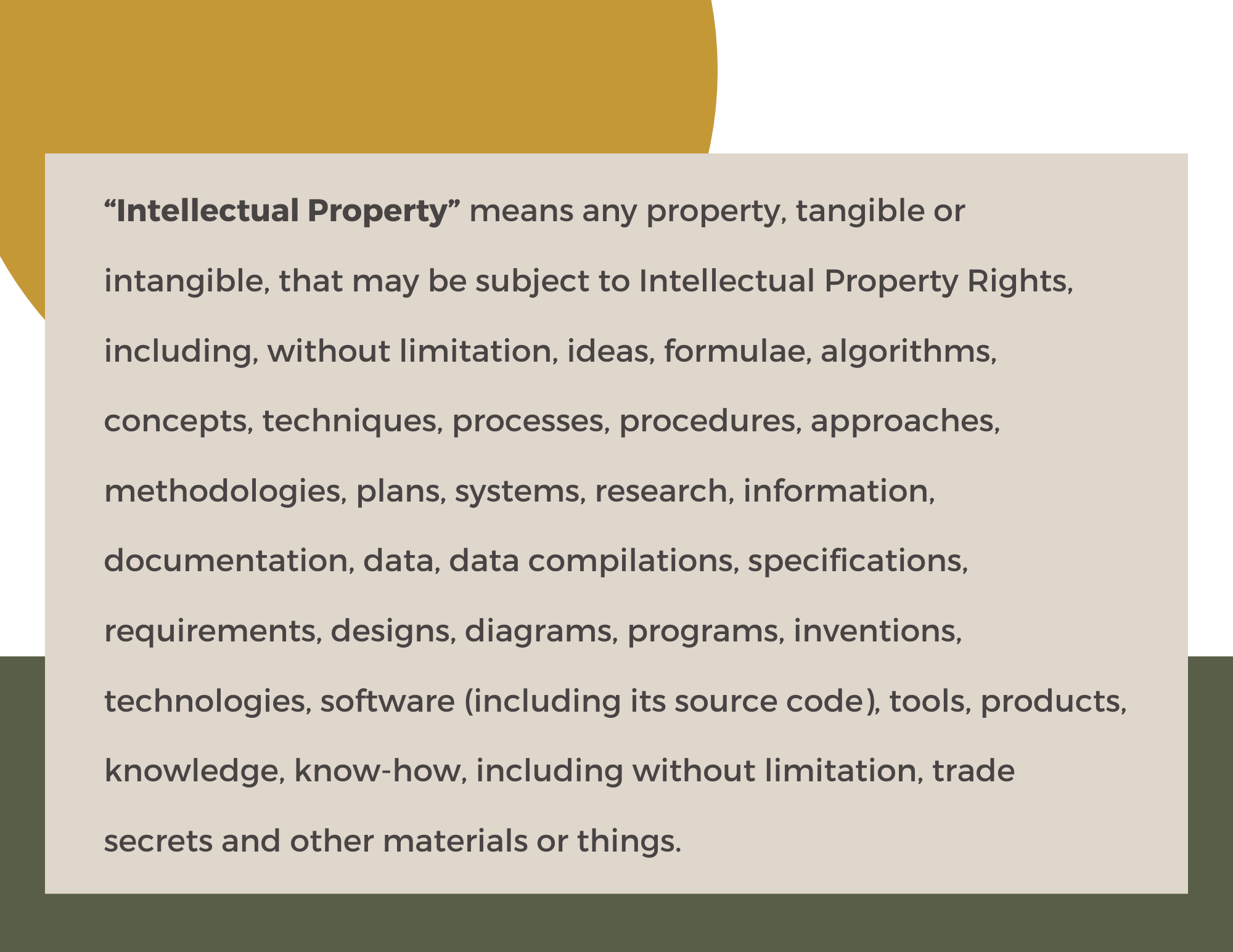
Intellectual property rights treat intangible mental assets—such as software algorithms, technical designs, brand names, novel pharmaceutical formulas, and creative compositions—as distinct legal property. Unlike physical assets like real estate or tangible equipment, intellectual property (IP) is inherently non-rivalrous, meaning multiple parties can use or duplicate an unmonitored idea simultaneously without physically depleting it.
To resolve this challenge, legal systems grant creators specific statutory privileges. Primarily, intellectual property rights act as legal tools of exclusion. Rather than giving an owner an absolute guarantee to practice an invention (which might be restricted by other laws or existing patents), an IP right empowers the owner to legally stop third parties from unauthorized manufacturing, copying, distributing, importing, or selling the protected subject matter.
The core economic rationale behind IP protection balances private incentive against public benefit. Granting exclusive commercial rights rewards creators, businesses, and researchers for investing capital, time, and resources into innovation. In exchange for this temporary legal monopoly, creators must publicly disclose the details of their work (in the case of patents) or publish their creations (in the case of copyrights), enriching the public domain once the protection term expires.
International intellectual property standards are harmonized through global bodies and multilateral treaties, ensuring that protections granted in one jurisdiction can be recognized internationally. Key foundational frameworks include:
- The World Intellectual Property Organization (WIPO): A specialized agency of the United Nations overseeing global IP cooperation, administrative treaties, and international filing systems such as the Patent Cooperation Treaty (PCT) and the Madrid System for trademarks. Learn more directly at the official WIPO Overview Page.
- The WTO TRIPS Agreement: The Agreement on Trade-Related Aspects of Intellectual Property Rights, administered by the World Trade Organization, sets minimum standards of protection across member nations for patents, copyrights, trademarks, and trade secrets. Detailed documentation is accessible via the WTO TRIPS Portal.
- The Berne Convention: Establishes international standards for automatic copyright protection without mandatory formal registration among signatory states.
- The Paris Convention: Governs industrial property rights, protecting patents, utility models, industrial designs, and trademarks across borders through priority filing mechanisms.
The Four Major Categories of Intellectual Property Rights
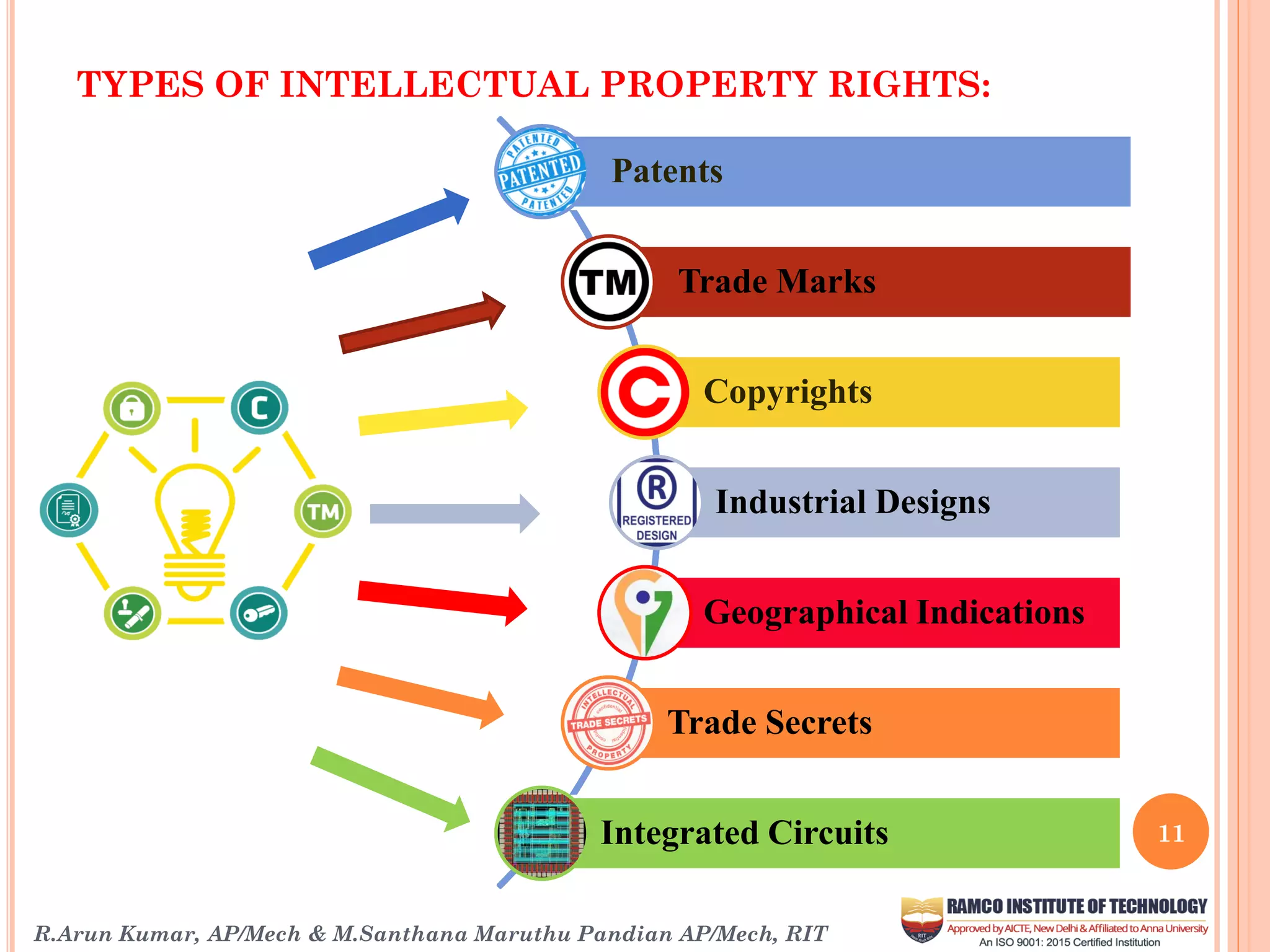
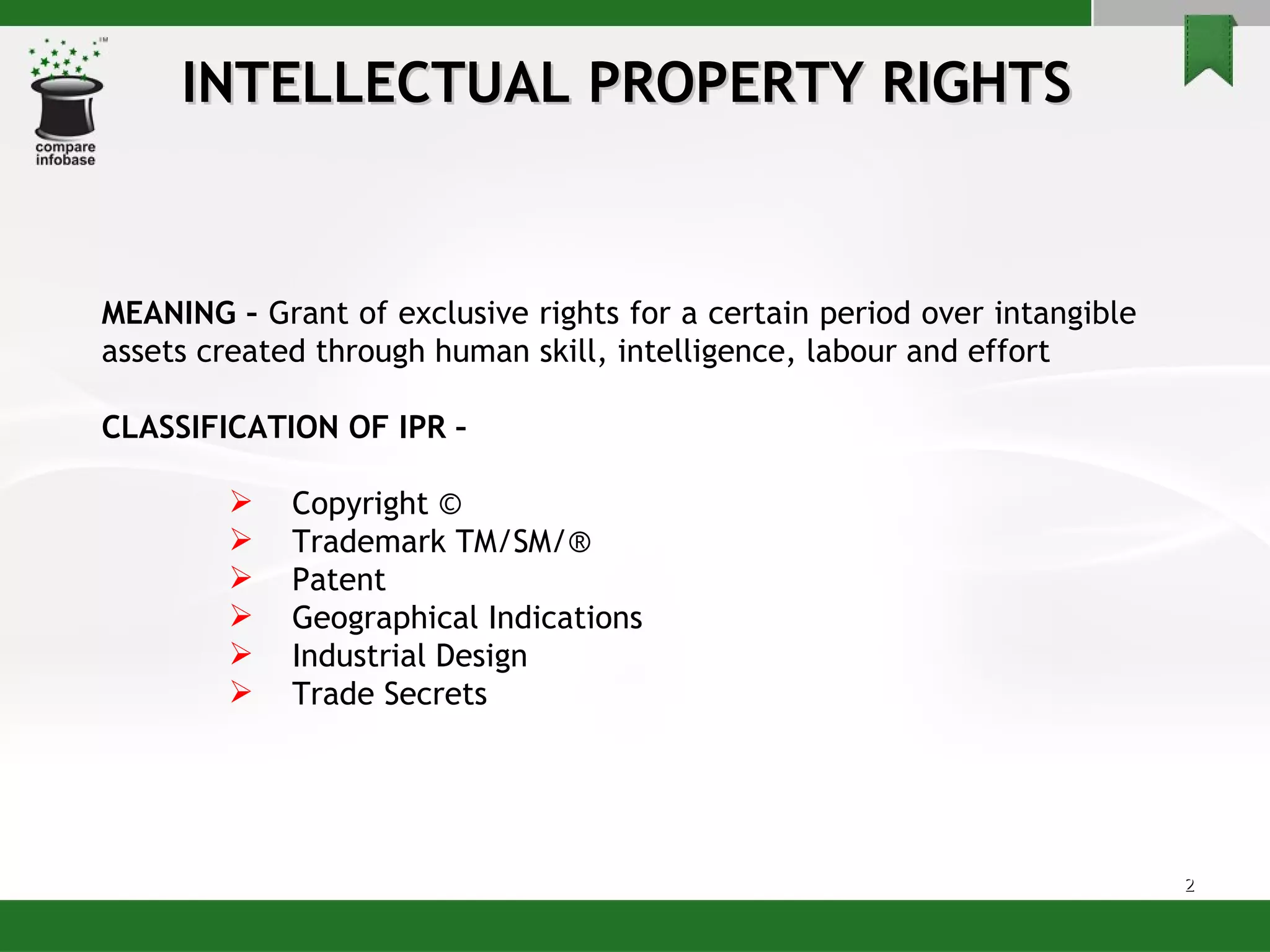
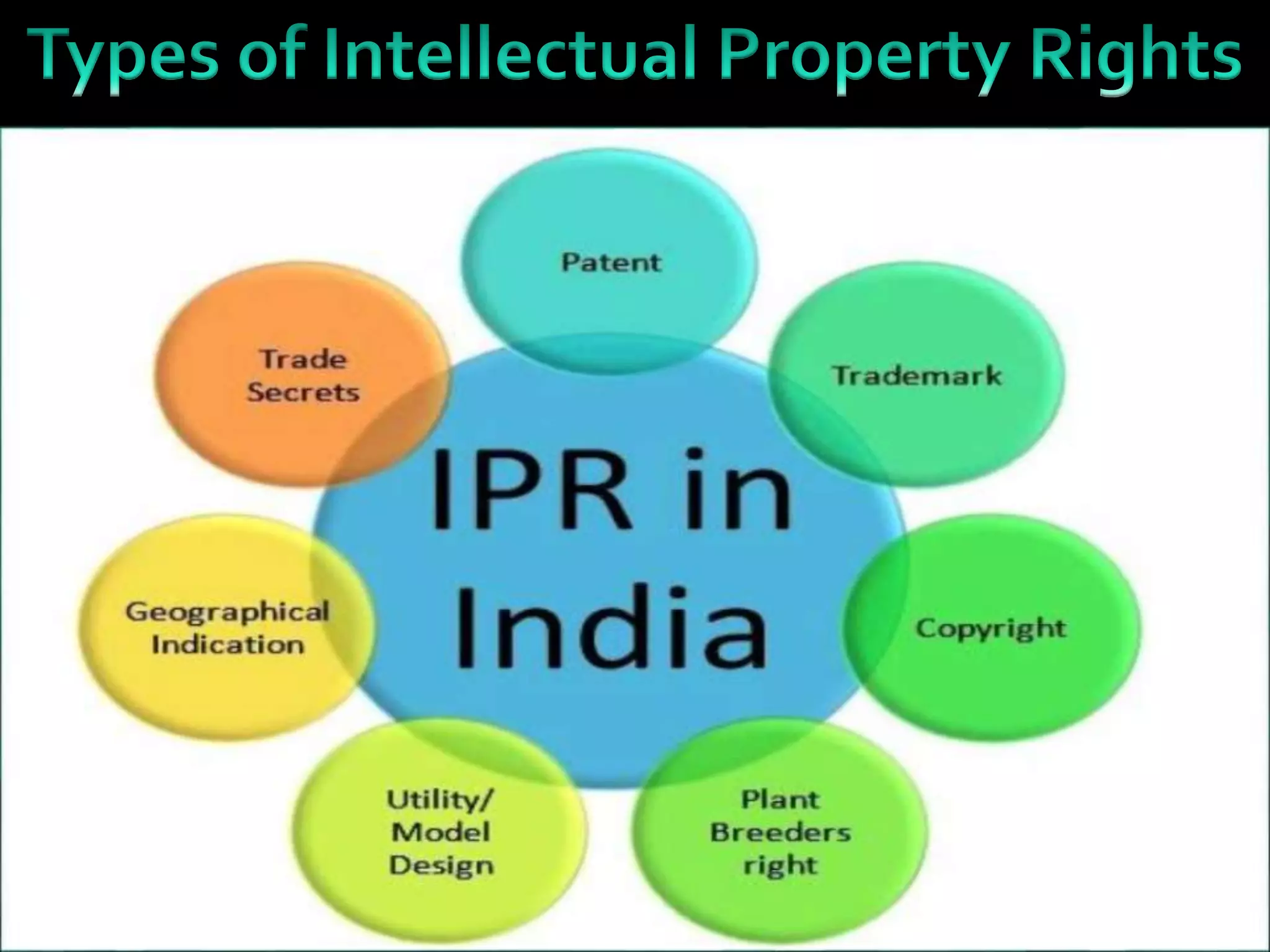
Intellectual property law is structured into distinct regimes depending on the nature of the creation, the scope of protection needed, and the mechanisms of enforcement. The four primary pillars are patents, copyrights, trademarks, and trade secrets.
- Intellectual Property Rights
- Patents
- Inventions
- Utility/Design
- 20-Year Term
- Copyrights
- Expressed Works
- Books, Software, Music
- Life + 70 Years
- Trademarks
- Brand Identifiers
- Logos, Names
- Renewable Indef.
- Trade Secrets
- Secret Data
- Formulas, Code
- Indefinite Term
- Patents
1. Patents
Patents protect technical inventions, novel machinery, manufacturing processes, chemical structures, and functional methodologies. To qualify for patent protection, an invention must meet three core statutory requirements established by patent authorities like the United States Patent and Trademark Office (USPTO):
- Novelty: The invention must be entirely new and must not exist anywhere in the global public domain ("prior art") prior to the filing date.
- Non-Obviousness (Inventive Step): The technical advancement must not be obvious to a person having ordinary skill in the relevant technical field.
- Industrial Applicability (Utility): The invention must perform a useful function and operate reliably in practice.
In most jurisdictions, utility patents provide protection for up to 20 years from the initial application filing date, contingent upon the payment of periodic maintenance fees. In exchange for this exclusivity, the applicant must provide a complete, clear public disclosure of the invention enabling others skilled in the art to replicate it after the patent expires.
2. Copyrights
Copyright protects original artistic, literary, dramatic, musical, and software code expressions once they are fixed in a tangible medium of expression (e.g., written on paper, recorded to video, or saved to a storage drive). Copyright does not protect underlying ideas, concepts, facts, or raw data—only the specific creative expression used to convey them.
Key rights conferred under copyright include the exclusive authority to reproduce, distribute, perform, display, or create derivative works from the original material. Official guidance on protection scopes can be verified directly at the U.S. Copyright Office.
- Duration: For individual creators, copyright generally lasts for the author's lifetime plus 70 years. For corporate entities (works made for hire), coverage generally lasts 95 years from publication or 120 years from creation, whichever is shorter.
- Automatic Protection: Copyright attaches automatically the moment the work is fixed in a tangible medium, though formal registration is often mandatory prior to filing enforcement litigation in federal courts.
3. Trademarks
Trademarks protect brand identity markers used in commercial trade to distinguish one enterprise's goods or services from those of another. A trademark can consist of brand names, logos, slogans, emblems, packaging formats, domain names, or distinct product color schemes (trade dress).
Unlike patents and copyrights, which expire after a fixed statutory timeframe, trademark rights can last indefinitely, provided the owner continues active commercial use of the mark and timely submits required maintenance renewals. Trademarks are evaluated on a legal scale of distinctiveness:
- Fanciful / Arbitrary Marks: Highest protection (e.g., invented words like Kodak or common words used out of context like Apple for computers).
- Suggestive Marks: High protection; require imagination to connect the mark to the product (e.g., Netflix for streaming services).
- Descriptive Marks: Protectable only after proving "secondary meaning" or commercial association in the market (e.g., Best Buy).
- Generic Terms: Never eligible for protection (e.g., Computer Store).
In Europe, trademark registration processes and regional systems are managed by the European Union Intellectual Property Office (EUIPO).
4. Trade Secrets
Trade secrets protect proprietary, non-public business information that derives economic value specifically from remaining confidential. Unlike patents, trade secrets require no public disclosure or official regulatory application.
Examples of trade secrets include internal algorithms, proprietary customer lists, supply chain optimization data, manufacturing processes, and secret recipes (such as the Coca-Cola formula). To qualify legally for trade secret protection under acts like the US Defend Trade Secrets Act (DTSA) or national legal codes, an organization must:
- Demonstrate that the information provides a genuine commercial or competitive advantage.
- Prove that reasonable legal, physical, and digital steps were taken to maintain confidentiality (such as deploying non-disclosure agreements, strict access controls, encryption, and segmented internal systems).
Trade secret protection lasts indefinitely, provided confidentiality is maintained. However, trade secret law does not prevent competitors from independently discovering or reverse-engineering the technology through lawful means.
Specialized Forms of Intellectual Property Rights
Beyond the four primary categories, legal frameworks acknowledge specific regimes tailored for distinct industrial and geographical applications:
- Industrial Designs: Protect the visual, non-functional aesthetic appearance of an object, including shape, ornamentation, contours, or surface patterns.
- Geographical Indications (GIs): Signs used on products that have a specific geographical origin and possess qualities, reputations, or characteristics attributable to that origin (e.g., Champagne, Parmigiano Reggiano, or Roquefort).
- Plant Variety Rights (Plant Breeders' Rights): Intellectual property rights granted to breeders who create novel, uniform, stable, and distinct plant varieties.
- Layout-Designs (Topographies) of Integrated Circuits: Specialized legal rights protecting three-dimensional configurations of electronic microchips and semiconductor components against unauthorized copying.
Intellectual Property Rights Comparison Framework
The following table synthesizes the functional differences across the major categories of intellectual property rights:
| Property Type | Protected Subject Matter | Primary Protection Requirement | Duration of Protection | Disclosure Requirement | Main Legal Purpose |
|---|---|---|---|---|---|
| Patent | Technical inventions, processes, novel devices | Novelty, non-obviousness, utility | Typically 20 years from filing date | Full public specification disclosure | Incentive to innovate & public disclosure |
| Copyright | Creative, literary, software, and artistic expressions | Originality fixed in tangible medium | Author's life + 70 years (or 95 yrs corporate) | No disclosure required (optional registry) | Protect creative works & economic yield |
| Trademark | Brand names, logos, taglines, packaging dress | Distinctiveness, commercial usage | Indefinite (renewable every 10 years) | Public registry required for registered marks | Prevent consumer marketplace confusion |
| Trade Secret | Proprietary formulas, algorithms, business data | Commercial value through secret status | Indefinite (until secrecy is compromised) | Complete secrecy strictly required | Retain private competitive advantage |
| Industrial Design | Visual aesthetics and structural shapes | Novelty and non-functional visual appeal | 10 to 25 years (varies by jurisdiction) | Public design registry disclosure | Protect commercial product aesthetics |
How Intellectual Property Rights Work in Practice
Understanding the legal scope of intellectual property requires distinguishing between ownership mechanisms, commercial licensing, registration procedures, and litigation enforcement.
Registration vs. Automatic Rights
Different IP types attach via varying legal mechanisms:
- Automatic Rights: Copyright and trade secrets do not require formal registration to exist. Copyright arises upon creation and fixation; trade secret rights arise as soon as confidential measures protect valuable commercial information.
- Registration-Based Rights: Patents and registered trademarks require comprehensive examination by official governmental IP agencies. An applicant submits formal documentation, pays statutory fees, responds to examiner rejections (office actions), and awaits formal grant or issuance.
Transfer, Assignment, and Licensing
IP rights are transferable economic assets. Owners can monetize their IP portfolio in three ways:
- Assignment: The complete ownership transfer of an IP asset from one entity to another (equivalent to selling physical property).
- Exclusive Licensing: Granting a licensee sole rights to use, build, or commercialize the asset, excluding all others—including the IP owner—within a specified market, region, or timeframe.
- Non-Exclusive Licensing: Granting authorization to multiple third parties to utilize the asset simultaneously under defined contract terms, royalty rates, and operational limits.
Infringement, Remedies, and Legal Enforcement
When a party uses protected IP without authorization, they commit IP infringement. Because IP enforcement relies primarily on civil law, rights holders are responsible for monitoring the market and enforcing their own rights. Common judicial remedies include:
- Injunctions: Court orders commanding the infringing party to immediately stop unauthorized manufacturing, sale, or distribution of protected goods.
- Monetary Damages: Financial awards representing actual damages lost by the owner, statutory damages, or disgorgement of the infringer's illicit profits.
- Seizure and Destruction: Orders instructing customs officials or law enforcement to seize, impound, and destroy counterfeit goods or illegal pirated media.
Common Mistakes in Intellectual Property Management
Failing to properly manage intellectual property can lead to complete loss of rights, expensive litigation, or forfeiture of market exclusivity. Businesses frequently encounter these common operational pitfalls:
1. Premature Public Disclosure
In many patent jurisdictions (including Europe and Asia), disclosing an invention publicly through academic papers, sales pitches, trade shows, or online posts before filing a patent application destroys the requirement of absolute novelty. While countries like the United States permit a narrow 12-month grace period for disclosures made directly by the inventor, disclosing early forfeits patent rights across most international markets.
2. Failure to Perform Clearance Searches
Launching a new product, brand name, or logo without performing thorough clearance searches (trademark or patent freedom-to-operate analysis) risks accidentally infringing pre-existing third-party rights. This often results in rebrand costs, product recalls, and financial damages.
3. Misunderstanding "Work Made for Hire" Rules
Companies frequently assume that paying an independent contractor or agency to build software, design logos, or write content automatically transfers copyright ownership to the business. Under law, unless an explicit, written contract clearly assigns copyright rights from the independent creator to the business, the external contractor retains ownership of the underlying IP.
4. Inadequate Safeguards for Trade Secrets
Trade secrets lose all legal protections if reasonable security steps are omitted. Failing to enforce non-disclosure agreements (NDAs) with vendors, leaving sensitive source code unprotected on unsecured repositories, or allowing unmonitored employee access will void trade secret claims in court.
Frequently Asked Questions About Intellectual Property Rights
What is the primary difference between a patent and a copyright?
A patent protects functional technical inventions, utility processes, and functional hardware designs, while a copyright protects creative, artistic, literary, and original expressions fixed in a tangible medium. Patents grant exclusive rights to exclude others from making, using, or selling an invention regardless of independent creation, whereas copyrights prevent unauthorized copying, reproduction, or distribution of artistic expressions.
Can an business register an idea without a working prototype?
Ideas themselves cannot be patented or copyrighted. Copyright protects express fixed works, while patent law requires a detailed technical description capable of enabling a person skilled in the field to make and use the invention. While you do not always need a physical physical prototype to file a patent, you must submit detailed technical specifications, operational schematics, and functional descriptions that fulfill legal disclosure requirements.
How long do intellectual property rights last?
Duration depends entirely on the type of protection:
- Utility Patents: Last 20 years from the initial application filing date.
- Copyrights: Typically last for the author's life plus 70 years, or up to 120 years for corporate works.
- Trademarks: Last indefinitely, provided the mark remains in commercial use and renewals are filed every 10 years.
- Trade Secrets: Last indefinitely, provided absolute commercial confidentiality is maintained.
Are intellectual property rights automatically recognized worldwide?
No single global patent or international trademark exists that automatically grants worldwide protection. Intellectual property rights remain territorial, meaning protection must be secured separately in each country or region where enforcement is sought. However, international filing systems like WIPO’s Patent Cooperation Treaty (PCT) and Madrid System streamline applying for protection across multiple member jurisdictions simultaneously.
What constitutes fair use in copyright law?
Fair use is a legal defense in certain jurisdictions (such as the US) that permits limited use of copyrighted material without permission from the rights owner. Courts evaluate fair use based on four statutory factors: the purpose and character of the use (e.g., transformative, educational, commentary, or commercial), the nature of the copyrighted work, the amount of the portion used relative to the whole, and the effect of the use on the potential market value of the original work.
Strategic Recommendations: How to Protect Your Intellectual Property
To effectively secure and extract commercial value from intellectual property assets, consider the following practical audit steps:
- Conduct an Internal IP Audit: Catalog all valuable intangible assets within your organization, including source code, customer databases, product designs, technical schematics, brand names, and internal process workflows.
- Establish Immediate Confidentiality Protocols: Deploy robust non-disclosure agreements (NDAs) prior to discussing unreleased inventions or sensitive operational data with investors, employees, software contractors, or external vendors.
- File Priority Registration Early: Prioritize trademark registration for key brand identifiers and file provisional or non-provisional patent applications before making public announcements, demonstrating products at trade shows, or offering items for sale.
- Execute Written Work-for-Hire and Assignment Agreements: Ensure all employment agreements and independent contractor service contracts explicitly include written IP assignment clauses transferring rights to the enterprise.
- Monitor the Marketplace and Enforce Promptly: Maintain active vigilance online and within relevant industry channels to identify unauthorized uses of your trademarks, designs, or copyrighted material early. Take swift action through cease-and-desist notices or legal proceedings to preserve your exclusive position.
Legal Disclaimer: Intellectual property laws, procedures, and statutory terms vary significantly by legal jurisdiction and change periodically. This guide is for informational purposes only and does not constitute formal legal advice. Organizations should consult a qualified intellectual property attorney or registered patent agent for specific legal counsel.
Image Gallery