Understanding the Estrel Auto Insurance Landscape: Policies, Coverage Options, and Market Dynamics
Understanding the Estrel (commonly referenced in connection with Estrella Insurance brokerage networks) auto insurance landscape requires navigating an independent agency model that connects standard and high-risk drivers with third-pa...
Understanding the Estrel (commonly referenced in connection with Estrella Insurance brokerage networks) auto insurance landscape requires navigating an independent agency model that connects standard and high-risk drivers with third-party underwriting carriers. This comprehensive overview examines carrier networks, minimum state requirements, high-risk SR-22 compliance, policy pricing structures, and step-by-step guidance for securing optimal coverage.
Contents
Defining the Estrel Auto Insurance Ecosystem
Navigating auto coverage often leads consumers to independent agency networks and specialized auto insurance brokers. In market searches, terms like "Estrel auto insurance" frequently refer to Estrella Insurance, a prominent independent insurance franchise system operating extensively across key states including Florida, Texas, California, Nevada, Arizona, and Colorado. Rather than operating as a single risk-bearing insurance carrier, this ecosystem functions as a retail brokerage model.
In a traditional direct-writer framework (such as State Farm or GEICO), the company that sells the policy is also the institution that underwrites the risk, collects premiums, and settles claims. By contrast, the independent agency ecosystem operates by partnering with multiple third-party insurance companies—ranging from national carriers like Progressive and Kemper to specialized non-standard regional insurers like Ocean Harbor, Bristol West, and Dairyland.
- Policyholder / Driver
- Independent Agency / Franchise Broker Network
- Customer Service & Policy Comparative Shopping
- Third-Party Underwriter (e.g., Kemper, Progressive)
- Risk Assessment, Claims Settlement & Loss Funds
This structural distinction is critical for policyholders. When a driver purchases a policy through a brokerage network, the local franchise agent assists with quote comparisons, policy binding, and ongoing administrative questions. However, the contractual financial liability and claims management reside entirely with the specific underwriting carrier issuing the policy declaration page.
Core Coverage Components in the Brokerage Landscape
Evaluating auto insurance options requires a clear understanding of the standard coverage building blocks mandated by state regulatory bodies and financial institutions.
State Mandatory Liability Coverages
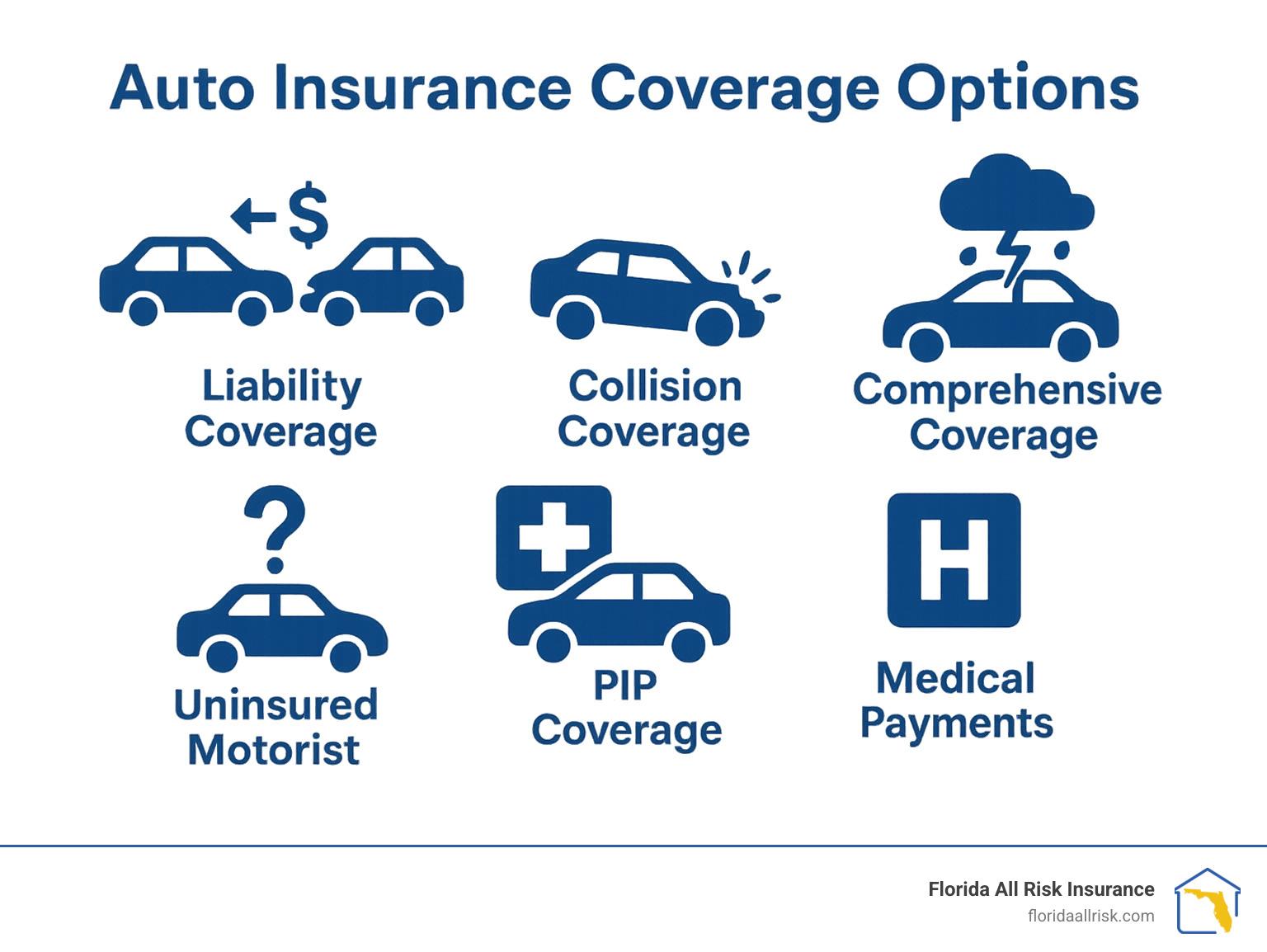
- Bodily Injury Liability (BI): Pays for third-party medical expenses, loss of income, and legal defense costs when the insured driver is legally at fault in an accident. Coverage is typically expressed as split limits (e.g., $25,000 per person / $50,000 per accident).
- Property Damage Liability (PD): Covers repair or replacement costs for another party's vehicle, structures, or personal property damaged in a covered collision.
- Personal Injury Protection (PIP): Mandatory in no-fault states (such as Florida). PIP covers medical bills, disability benefits, and death benefits for the policyholder and passengers regardless of who caused the accident, usually up to a statutory limit (e.g., $10,000).
Physical Damage Coverages
- Collision Coverage: Pays for damage to the insured vehicle caused by impact with another vehicle or physical object, or vehicle rollover, subject to a designated deductible.
- Comprehensive Coverage (Other-Than-Collision): Protects against non-collision physical loss, including theft, vandalism, fire, weather events (hail, flood), falling objects, or glass breakage.
Optional First-Party Endorsements
- Uninsured/Underinsured Motorist (UM/UIM): Provides bodily injury compensation if the insured is struck by a driver who carries no liability insurance or insufficient coverage limits to pay for total damages.
- Medical Payments (MedPay): Pays for direct medical or funeral expenses for the driver and passengers, complementing PIP or providing primary medical reimbursement in fault-based states.
- Rental Reimbursement & Roadside Assistance: Rider coverages that compensate for temporary rental car costs during active collision repairs or cover towing and labor expenses for breakdown events.
Non-Standard and High-Risk Auto Coverage Solutions
A major strength of independent retail networks within the auto insurance landscape is their focus on the non-standard auto market. While traditional direct carriers prefer drivers with pristine driving records and continuous coverage histories, independent brokerages specialize in placing high-risk drivers with specialized underwriters.
High-Risk Driver Classifications
Carriers segment drivers into standard, preferred, and non-standard risk pools. Drivers are routed into the non-standard market due to several distinct risk factors:
- Driving History Violations: Accumulation of multiple moving violations, at-fault accidents, or major convictions such as Driving Under the Influence (DUI) or reckless driving.
- Coverage Lapses: Gaps in prior auto insurance coverage—even as short as 10 to 30 days—trigger automatic high-risk classification by primary underwriting algorithms.
- Inexperienced or Foreign Drivers: Drivers holding international licenses, recent immigrants, or newly licensed teenagers lacking an established U.S. credit and driving history.
- Prior Policy Cancellations: Non-payment cancellations or history of high claim frequency within a 36-month window.
Financial Responsibility Filings: SR-22 and FR-44
State regulatory agencies often require high-risk drivers to provide official proof of financial responsibility before reinstating suspended driver's licenses. Independent agency networks manage these legal filings directly with state departments of motor vehicles (DMVs):
- SR-22 Certificate: A endorsement attached to an auto insurance policy confirming the policyholder maintains state-mandated minimum liability limits. If the policy lapses or cancels, the insurer is legally required to notify the DMV immediately, leading to automatic license suspension.
- FR-44 Certificate: Unique to specific jurisdictions like Florida and Virginia, this filing is mandated following severe offenses like DUI. It requires significantly higher liability limits (often $100,000/$300,000/$50,000 in Florida) than standard minimum requirements.
Structural Comparison: Brokerage Agency vs. Direct Underwriter Models
Understanding how retail agency platforms compare to direct insurance providers and digital aggregators helps consumers select the right channel for their insurance needs.
| Feature / Dimension | Brokerage Agency Network (e.g., Estrel / Estrella) | Direct-to-Consumer Carrier (e.g., GEICO, Progressive Direct) | Digital Quote Aggregator |
|---|---|---|---|
| Business Structure | Independent Franchise / Multi-Carrier Agency | Captive / Direct Underwriter | Lead Generator / Comparison Engine |
| Carrier Options | Multiple local, regional, and non-standard insurers | Single proprietary product suite | Varies; redirects to third-party sites |
| High-Risk/SR-22 Placement | Specialized placement for non-standard profiles | Selective; may reject high-risk applicants | Broad, but binding requires external redirection |
| Fee Structure | Carrier premium + potential agency broker fee | Pure carrier underwriting premium | Free to consumer (monetized via lead sales) |
| Claims Administration | Handled by partner underwriting carriers | Handled directly by the selling carrier | N/A (no claims support provided) |
| In-Person Support | Storefront franchise locations available | Remote (phone, mobile app, web only) | None |
Factors Influencing Auto Insurance Rates and Pricing Mechanics
Auto insurance premiums are determined using complex actuarial algorithms that assess individual risk profiles. Understanding these core factors allows drivers to manage their ongoing policy expenses more effectively.
- TOTAL POLICY PREMIUM
- DRIVER RISK PROFILE
- Driving Record & MVR
- Credit-Based Insurance Score
- Prior Insurance Continuity
- Age, Marital Status & State
- VEHICLE & LOCATION PARAMETERS
- Zip Code & Theft/Accident Density
- Vehicle Make, Model & Safety Tech
- Annual Mileage & Commute Usage
- Selected Deductibles & Limits
- DRIVER RISK PROFILE
Key Underwriting Metrics
- Motor Vehicle Record (MVR): Accidents, speeding tickets, and moving violations within the past 3 to 5 years directly impact baseline rates. Major violations like DUIs remain on insurance rating schedules for up to 7 years in many jurisdictions.
- Credit-Based Insurance Score: In states where legally permitted, insurers use credit metrics to predict claim frequency. Lower credit scores correlate with higher insurance premiums.
- Geographic Zip Code Risk: Rates reflect localized metrics, including traffic congestion, population density, uninsured motorist statistics, litigation environments, and local vehicle theft rates.
- Vehicle Repair and Safety Ratings: The year, make, and model dictate physical damage premiums based on structural repair costs, original equipment manufacturer (OEM) part expenses, and safety features like automatic emergency braking.
- Policy Structure: Choosing lower deductibles (e.g., $250 vs. $1,000) raises collision and comprehensive premiums, while selecting higher liability limits increases overall premium costs.
How to Navigate Policy Selection and Claims Processing
Securing and managing coverage through an independent agency network follows a structured process.
Step 1: Document Preparation and Risk Self-Assessment
Before requesting quotes, gather essential documentation to ensure accurate underwriting and avoid binding delays:
- Valid driver's license numbers for all household residents.
- Vehicle Identification Numbers (VIN) for all covered vehicles.
- Current odometer readings and estimated daily commute distances.
- Declarations pages from recent auto insurance policies showing continuous coverage history.
- Any DMV court notifications regarding required SR-22 or FR-44 legal filings.
Step 2: Comparative Quote Evaluation
Work with the agency representative to evaluate rates across multiple non-standard and standard insurers. Compare policies using identical limits and deductibles:
- Verify whether quotes include required agency processing fees or down payments.
- Check whether optional coverages, such as roadside assistance or rental reimbursement, are bundled into the base quote.
Step 3: Policy Binding and Verification
Once a carrier is chosen:
- Review the policy application carefully to ensure all household drivers and vehicle usage types (personal vs. commercial) are fully declared.
- Pay the initial down payment to issue the temporary binder and official digital or physical ID cards.
- Verify that any required state compliance forms (SR-22/FR-44) are electronically submitted to the state DMV by the underwriting company.
Step 4: Claims Processing Protocols
If an accident occurs, policyholders must follow correct reporting channels:
- Scene Documentation: Report the incident to local law enforcement, exchange insurance details with involved parties, and take clear photos of vehicle damage and the surrounding scene.
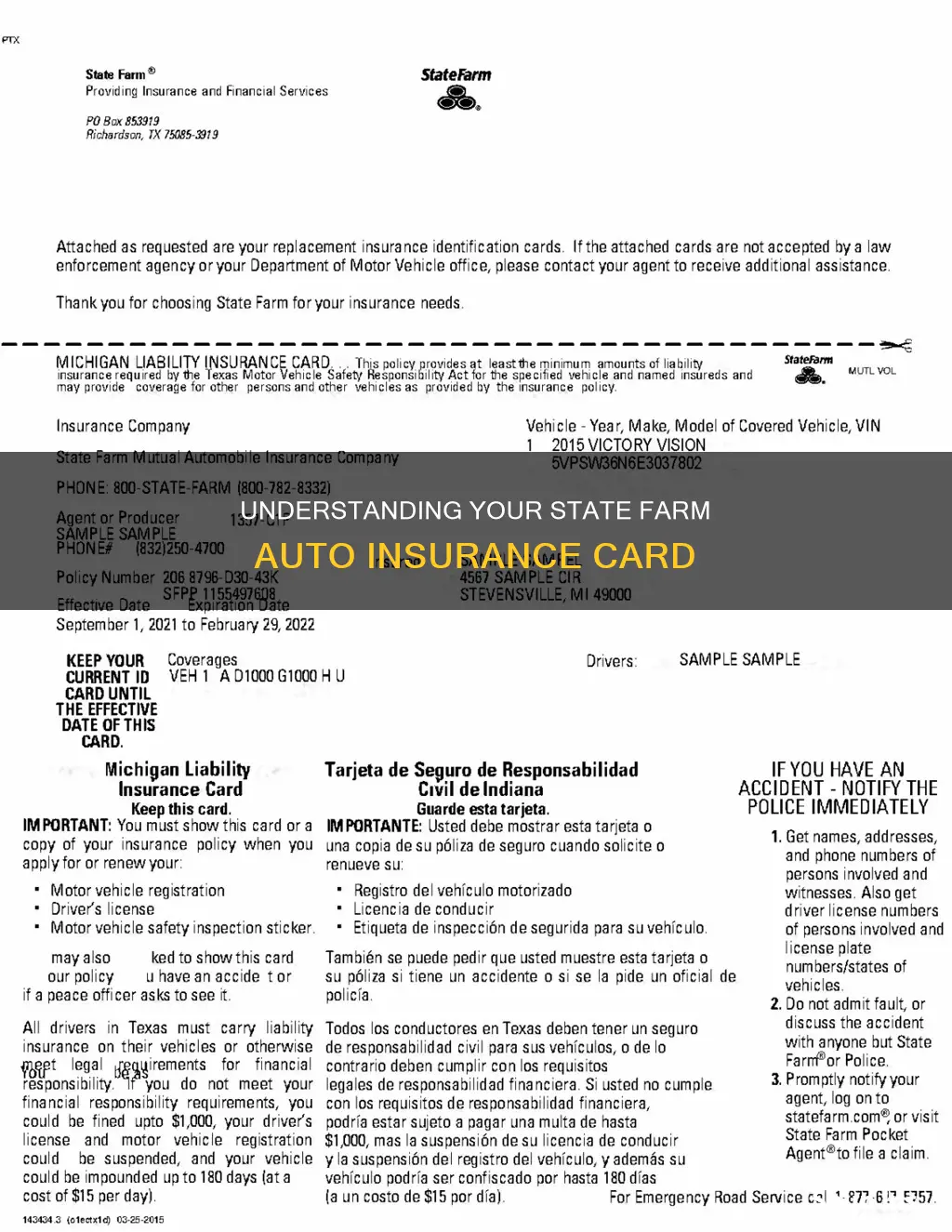
- Contact the Underwriter Directly: While the retail agency store can assist with general questions, claims must be filed directly through the issuing insurance carrier's dedicated claims hotline or portal listed on the insurance ID card.
- Appraisal and Adjusting: An insurance adjuster assigned by the underwriting carrier will review damage appraisals, evaluate liability, and disburse repair funds directly to body shops or policyholders.
Common Pitfalls and Optimization Strategies
Navigating independent agency networks requires awareness of common errors that can lead to unexpected expenses or claim denials.
1. Misrepresenting Household Drivers or Vehicle Usage
Failing to declare family members living in the household or omitting commercial usage (such as using a personal vehicle for rideshare or food delivery apps) can lead to denial of coverage during a claim. Ensure policy declarations accurately reflect all regular operators and vehicle usage.
2. Allowing Unintentional Coverage Lapses
Failing to pay premiums on time can lead to policy cancellation without a grace period, especially for high-risk accounts. Coverage lapses result in high-risk re-underwriting penalties, immediate reporting of SR-22 non-compliance to the state DMV, and potential license suspension.
3. Conflating Agency Services with Insurance Coverage
Consumers sometimes confuse agency service fees with insurance premium payments. Ensure all payments are explicitly applied to your active underwriting policy to maintain continuous coverage.
Frequently Asked Questions
Is Estrel (Estrella) Auto Insurance a direct insurance underwriting company?
No. Independent agency networks operate as retail insurance agencies and brokerages. They represent multiple third-party insurance carriers, matching drivers with appropriate insurers based on risk profiles, budget constraints, and specialized filing requirements.
How do SR-22 filings work when purchased through an agency?
When you request an SR-22, the retail agency selects an underwriting carrier willing to accept high-risk profiles. The issuing carrier then generates the legal certificate and submits it electronically to the state DMV, verifying that mandatory liability limits are active.
What should I do if I need to file an auto claim?
To file a claim, contact the claims department of the specific insurance carrier listed on your insurance card and declarations page. While your local agency representative can offer guidance, the underwriting carrier directly manages claim adjusters and settlement payouts.
Why do quotes from different carriers vary so widely at the same agency?
Carriers use proprietary actuarial models to price risk. One insurer may penalize prior coverage lapses heavily while offering lower rates for drivers with past moving violations. An independent agency leverages these differing criteria to find the most competitive carrier for your specific profile.
How can high-risk drivers lower their auto premiums over time?
High-risk drivers can reduce their premiums by maintaining continuous insurance coverage without lapses for at least 12 consecutive months, completing state-approved defensive driving courses, raising physical damage deductibles, and keeping their driving record free of new moving violations.
Next Actions and Recommendations
To secure appropriate and cost-effective auto insurance through an independent retail network:
- Audit Your Current Coverage: Review your current declarations page to identify your existing liability limits, deductibles, and annual premiums.
- Request Multi-Carrier Quotes: Contact an independent retail agency to run your driver profile through multiple non-standard and standard insurance carriers simultaneously.
- Confirm Legal Filings: If your driving record requires an SR-22 or FR-44, confirm that the selected carrier submits the filing electronically to your state DMV before driving.
- Review Premium Payment Schedules: Set up automated monthly payments directly with the underwriting carrier to avoid coverage gaps, late fees, or cancellation notices.
EDITORIAL CATEGORY METADATA:
Image Gallery