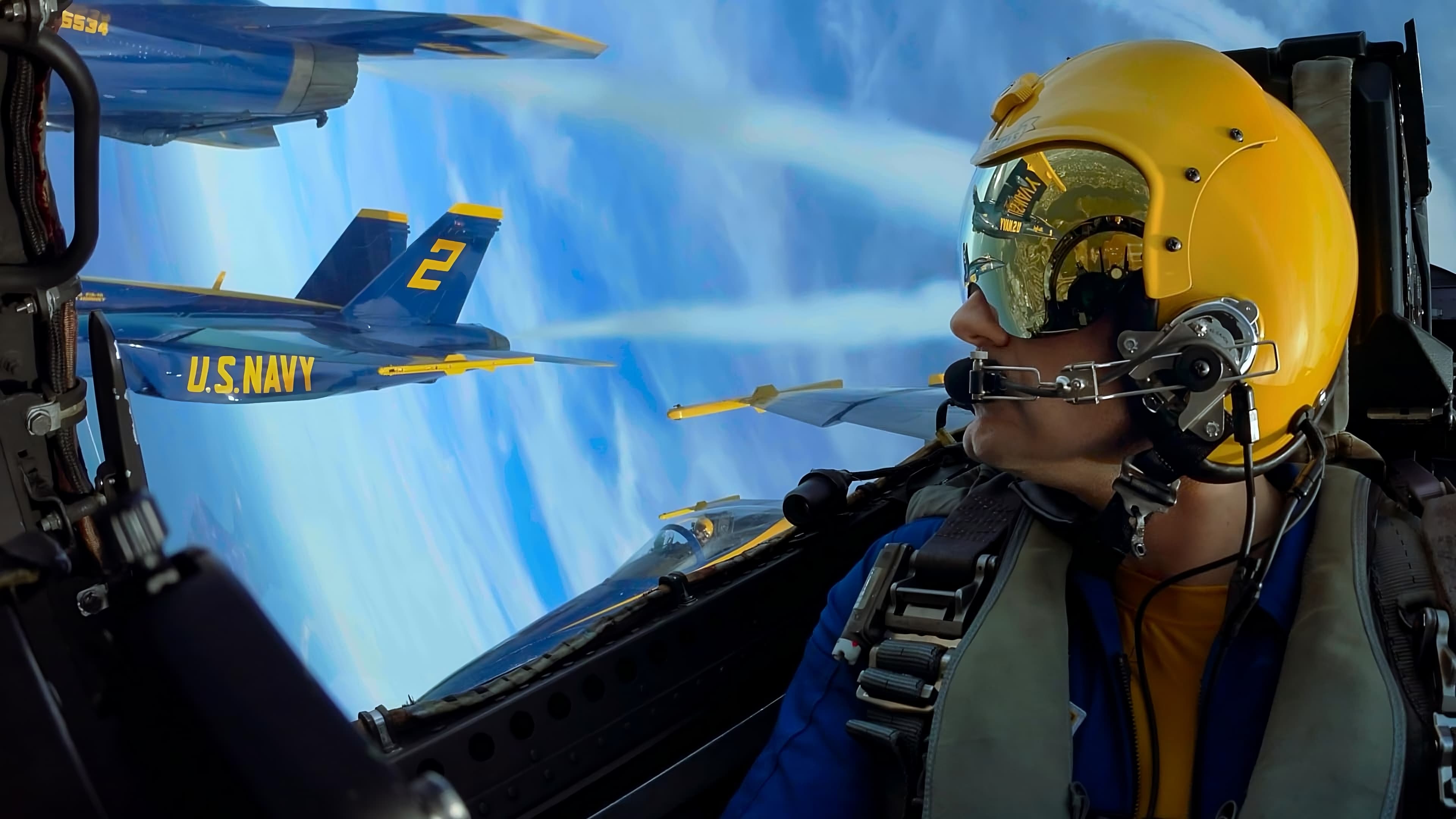
The Blue Angels Documentary (2024): Production, Pilot Profiles, and Streaming Guide
The Blue Angels, released in May 2024, is a feature-length documentary detailing the intense training, precision mechanics, and high-stakes operations of the U.S. Navy Flight Demonstration Squadron. Directed by Paul Crowder and produce...
The Blue Angels, released in May 2024, is a feature-length documentary detailing the intense training, precision mechanics, and high-stakes operations of the U.S. Navy Flight Demonstration Squadron. Directed by Paul Crowder and produced by Glen Powell and J.J. Abrams, the film captures the 2022–2023 season, featuring bespoke IMAX cockpit cameras and unprecedented aerial access.
Contents
Overview and Narrative Arc of the 2024 Film
The Blue Angels documentary moves beyond standard airshow highlights to offer a detailed, operational chronicle of the U.S. Navy Flight Demonstration Squadron during a complete season cycle. The film opens during the winter preparation phase at Naval Air Facility (NAF) El Centro in California, where new team members are integrated, and concludes at the annual homecoming airshow at Naval Air Station (NAS) Pensacola in Florida.
Rather than focusing solely on spectacle, the narrative establishes the physical demands, psychological tension, and strict organizational protocols required to execute maneuvers with aircraft flying mere inches apart. The documentary traces how six demonstration pilots and a supporting crew of over 100 officers and enlisted personnel transform individual skills into an integrated flight unit.
| Timeframe | Activity |
|---|---|
| [Nov - Dec] | Team Selection & Initial Ground Briefings |
| [Jan - Mar] | Winter Training at NAF El Centro (120+ Sorties) |
| [Mar - Nov] | Air Show Season (30+ Locations Across the US) |
| [November] | Final Homecoming Show at NAS Pensacola |
Throughout the 94-minute runtime, the film balances cockpit action with ground-level logistics. Viewers observe the daily debriefings where every maneuver is dissected frame by frame. In these meetings, pilots call out their own micro-errors in alignment, timing, or altitude, adhering to a culture of unyielding accountability. The documentary emphasizes that the squadron's performance depends as heavily on the maintenance crews servicing the Boeing F/A-18E/F Super Hornets as it does on the aviators inside the cockpits.
Filming Techniques: Bringing IMAX Cameras to the Cockpit
Capturing supersonic aviation in a way that conveys true speed and proximity presented significant engineering and logistical challenges. Director Paul Crowder partnered with specialized aerial cinematographers to develop custom camera mounts and select high-resolution digital cinema cameras capable of surviving extreme mechanical stress.
- Cockpit Setup:
- Cockpit Sensors
- Custom Cockpit Housing (Miniaturized RED 8K)
- G-Force Rated (Up to 7.5 Gs)
- Exterior Setup:
- Exterior Jet
- Phenom 300 Chase Plane (Optical Glass Ports)
- Shotover F1 Pod (Stabilized)
High-G Custom Rigging and Camera Placement
To place the audience directly inside the cockpit alongside the pilots, the production team utilized miniaturized RED 8K digital cinema cameras fitted with wide-angle prime lenses. These cameras had to be securely mounted inside the tight confines of the F/A-18 Super Hornet canopy without obstructing the pilot’s field of view, interfering with control stick movement, or compromising safety equipment like ejection seats.
The camera housings were engineered to withstand forces up to 7.5 Gs and rapid thermal changes. Ground crews calibrated these rigs to ensure weight distribution did not alter control sensitivity during tight formation flying.
Aerial Pursuit and Stabilization Systems
Extensive exterior footage was captured using an Embraer Phenom 300 jet modified with a nose-mounted Shotover F1 camera stabilization system. This setup allowed the filming jet to fly in formation with the demonstration team, capturing steady, close-up tracking shots of the F/A-18s while flying at speeds exceeding 300 knots.
Cinematographers used long focal-length lenses stabilized across six axes to maintain focus on pilot helmets, canopy reflections, and wingtips separated by less than two feet of airspace. The result is an immersive visual record that captures the physical strain, control inputs, and micro-adjustments pilots execute during maneuvers such as the Diamond 360 and the Delta Roll.
Featured Aviators and Historic Milestones
The documentary highlights key personnel driving the squadron's success during the filmed period, offering a humanizing look at the professionals managing these high-risk operations.
| Personnel | Role / Details |
|---|---|
| Capt. Brian Kesselring | Flight Leader / Boss (2022 Season) |
| Lt. Cmdr. Amanda Lee | First Female F/A-18 Demo Pilot (2023) |
| Lt. Cmdr. Griffin Stangel | Slot Pilot / Training Lead |
| Support Crew Chiefs | Avionics, Powerplants, & Airframe Specs |
Captain Brian Kesselring ("Boss")
Serving as the Flight Leader (Blue Angel #1) during the 2022 season, Captain Brian Kesselring represents the operational authority and experience required to command the unit. The documentary examines his responsibility in setting flight safety margins, evaluating candidate pilots, and maintaining morale under intense public scrutiny. His debriefing sessions demonstrate the precise leadership style necessary to maintain safety standards across decades of show operations.
Lieutenant Commander Amanda Lee
A central storyline in the latter half of the film is the selection of Lieutenant Commander Amanda Lee as the first female demonstration pilot to fly the F/A-18 Super Hornet for the Blue Angels. The camera follows Lee through the application process, high-G centrifuge qualifications, and peer evaluations. Her selection marks a major milestone in naval aviation history, captured on film as she transitions into the Blue Angel #3 Left Wing position for the 2023 show season.
Ground Crew and Support Specialists
Beyond the aviators, the documentary highlights the dedicated maintenance personnel, avionics technicians, and logistics officers who keep the aircraft flight-ready. The film documents how team members work long shifts to inspect airframes, perform engine swaps, and ensure flight control systems operate within tight tolerances. This focus underlines that safety in the air begins with meticulous maintenance on the hangar deck.
Technical Specifications and Release Platforms
The Blue Angels received a dual-distribution strategy designed to optimize both theatrical exposure and global home streaming access.
| Technical / Distribution Feature | IMAX Theatrical Release | Amazon Prime Video Streaming |
|---|---|---|
| Release Date | May 17, 2024 (1-Week Limited) | May 23, 2024 (Global Premiere) |
| Aspect Ratio | 1.90:1 (Expanded IMAX Aspect Ratio) | 16:9 (1.78:1 Widescreen) |
| Maximum Resolution | Custom IMAX Digital / 4K Laser Projection | 4K Ultra HD (2160p) |
| Dynamic Range | IMAX Custom Color Profile | HDR10 / HDR10+ / Dolby Vision |
| Audio Format | 12-Channel IMAX Immersive Sound | Dolby Atmos / 5.1 Surround Sound |
| Target Screen Size | Commercial IMAX Screens (50+ feet wide) | Home Theaters / Displays / Mobile Devices |
| Primary Focus | Maximum visual scale & physical audio impact | High accessibility & home audio control |
Theatrical IMAX Engagement
Beginning May 17, 2024, the film ran exclusively in select IMAX theaters across North America for one week. The IMAX release utilized an expanded 1.90:1 aspect ratio, giving audiences up to 26% more picture area compared to standard theatrical aspect ratios. The 12-channel spatial audio mix amplified the sound of the F/A-18's twin General Electric F414 engines, giving viewers an auditory experience that mirrored standing on an active flightline.
Global Streaming Distribution
On May 23, 2024, the film premiered globally on Amazon Prime Video, expanding its reach to international audiences. The digital release preserves high visual fidelity by delivering 4K Ultra HD streams paired with Dolby Vision dynamic range metadata and a spatial Dolby Atmos soundtrack. This presentation allows home viewers with standard surround sound setups or high-end soundbars to hear distinct directional cues as jets pass from frame to frame.
Critical Reception and Industry Impact
Upon its release, The Blue Angels earned positive reviews from film critics, military aviation experts, and general audiences alike. Critics praised the documentary for avoiding excessive dramatization, choosing instead to focus on the technical skill, physical discipline, and mechanical detail involved in formation flying.
| Category | Details |
|---|---|
| Rotten Tomatoes | 85%+ Tomatometer / High Audience Score |
| Technical Merit | Praised for Cockpit Audio & IMAX Stabilization |
| Narrative Focus | Noted for Ground Crew & Safety Protocol Detail |
Cinematography reviewers frequently compared the film’s aerial sequences to blockbuster action films like Top Gun: Maverick, noting that The Blue Angels achieves similar visual scale using actual maneuvers rather than digital visual effects. Aviation historians praised the documentary's transparent look at safety debriefings, showing how the U.S. Navy maintains its flight standards by emphasizing continuous self-critique over ego.
Viewing Requirements and Setup Optimization
To fully experience The Blue Angels documentary on home equipment, optimization of both display and audio hardware is recommended due to the film's wide dynamic range and complex audio mix.
| Setting | Recommendation |
|---|---|
| DISPLAY | 4K UHD TV with HDR10/Dolby Vision & Motion Clarity Active |
| AUDIO | 5.1 Channel minimum or Dolby Atmos setup (Subwoofer ON) |
| BANDWIDTH | Minimum 25 Mbps stable internet connection for 4K streaming |
Video Display Settings
- Resolution & Dynamic Range: Ensure your streaming media player or smart TV software is set to output native 4K resolution (2160p) with dynamic range auto-matching (HDR10 or Dolby Vision enabled).
- Motion Interpolation: Turn off aggressive motion smoothing features (often labeled as "TruMotion," "MotionFlow," or "Auto Motion Plus"). These frame-creation settings can introduce visual artifacts during fast-moving aerial shots against clear sky backgrounds.
- Picture Mode: Select a film-calibrated mode, such as Filmmaker Mode, Cinema, or Custom, to preserve the natural color grading applied to skin tones and aerial landforms.
Audio Configuration
- Immersive Audio: Select the Dolby Atmos track within the Prime Video audio options menu if connected to a compatible receiver or soundbar.
- Subwoofer Crossover: Set your audio receiver’s subwoofer crossover frequency between 80 Hz and 100 Hz. The low-frequency engine rumbles in the film push significant energy to the LFE (Low-Frequency Effects) channel during takeoff and high-power passes.
- Dialogue Enhancement: If engine audio masks pilot communication during flight sequences, enable your soundbar's "Voice Enhance" or "Center Channel Level Up" setting to make radio chatter clearer without lowering bass impacts.
Frequently Asked Questions
Who directed and produced The Blue Angels (2024)?
The documentary was directed by Paul Crowder, known for his work on sports and historical documentaries. It was produced by high-profile film figures including actor Glen Powell (Top Gun: Maverick) and filmmaker J.J. Abrams through his Bad Robot production banner, alongside producers Sean Stuart, Glen Zipper, and Mark Monroe.
What aircraft are featured in the film?
The primary aircraft featured throughout the film is the Boeing F/A-18E/F Super Hornet, which the Blue Angels officially adopted for their demonstration flights in 2020. The film also features "Fat Albert," the team’s Lockheed Martin C-130J Super Hercules support aircraft, which carries equipment, logistics personnel, and maintenance crews to show sites.
Does the documentary cover real accidents or safety concerns?
Yes. The film discusses the inherent risks of precision formation flying and addresses historical accidents within the squadron's history. It emphasizes how modern safety protocols, real-time weather assessments, and rigorous debriefings are used to minimize operational risks.
Is The Blue Angels suitable for younger viewers?
The documentary is rated PG for some language and brief intense military training sequences. It contains no graphic violence or explicit content, making it suitable for families, students, and aviation enthusiasts of all ages.
Where was the documentary filmed?
Filming took place across multiple U.S. locations, primarily focusing on NAF El Centro in California during winter training, NAS Pensacola in Florida (the home base of the squadron), and various public airshow venues across North America throughout the 2022 and 2023 flight seasons.
Can I still watch the movie in IMAX theaters?
The official IMAX theatrical run took place in May 2024 as an exclusive one-week engagement. While regular public theatrical runs have concluded, special educational screenings or local museum venue events (such as those at aviation museums or science centers with IMAX domes) may occasionally re-list the film on their schedules.
Actionable Recommendation: How to Experience the Documentary
To watch The Blue Angels today:
- Access the Streaming Service: Open the Prime Video application on your Smart TV, streaming media box (Apple TV 4K, Roku Ultra, Fire TV Cube), or personal device.
- Verify Account Entitlements: Ensure you have an active Amazon Prime membership or a standalone Prime Video subscription.
- Search the Catalog: Type
"The Blue Angels"into the search bar and select the 2024 feature-length documentary (runtime: 1 hour 34 minutes). - Optimize Output: Confirm your streaming device selects the native 4K HDR/Dolby Atmos output before playing to ensure maximum picture clarity and audio depth.
Image Gallery