Is Life Insurance Benefits to My Children Taxable? What the Rules Say
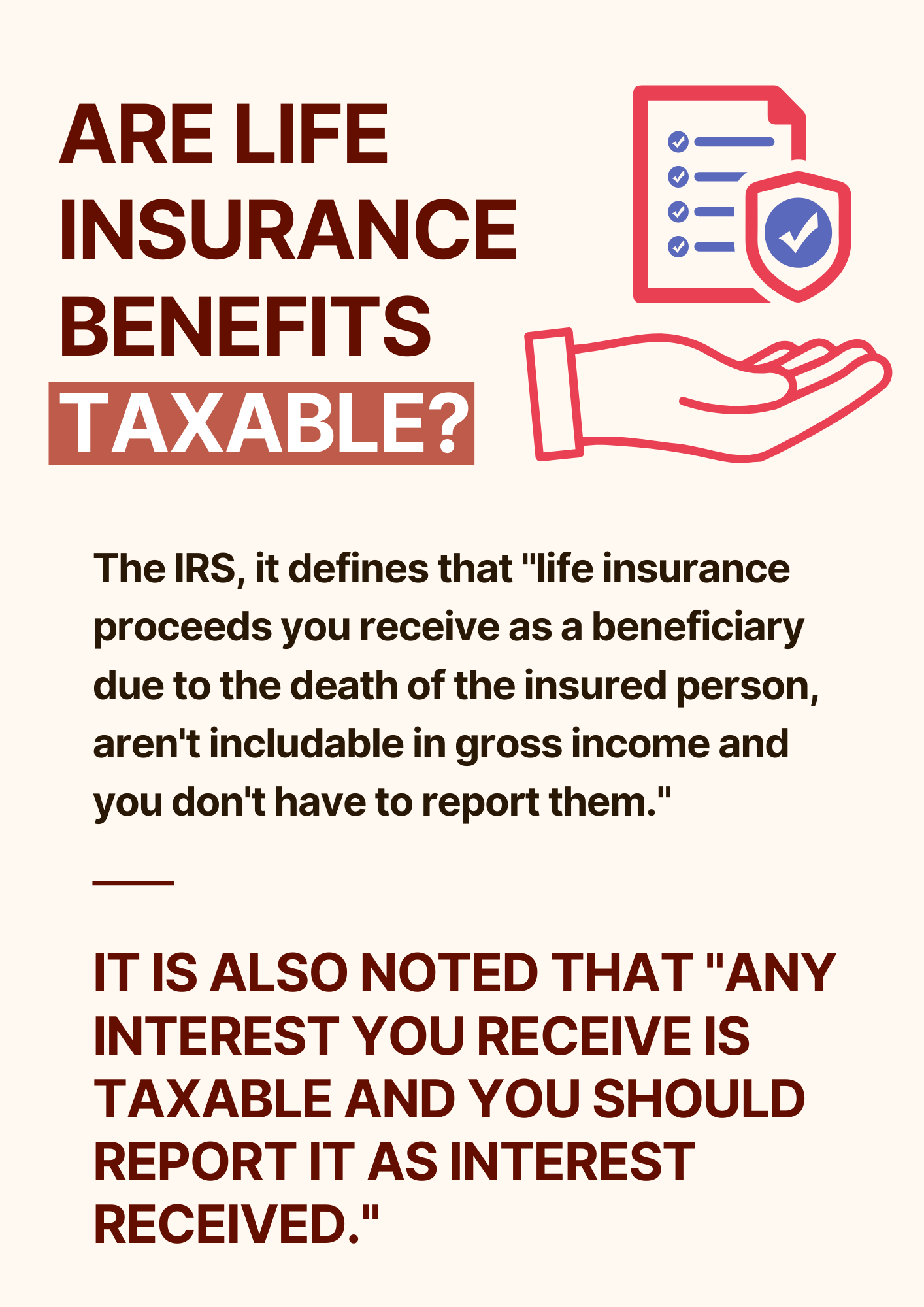
In most cases, life insurance benefits paid to your children are not considered taxable income by the IRS. Whether paid as a lump sum or through a trust, the core death benefit is generally exempt from federal income tax. However, taxe...
In most cases, life insurance benefits paid to your children are not considered taxable income by the IRS. Whether paid as a lump sum or through a trust, the core death benefit is generally exempt from federal income tax. However, taxes may apply to any interest earned on the payout or if the total value of your estate exceeds federal or state estate tax thresholds.
Contents
Protecting the financial future of your children is often the primary motivation for purchasing life insurance. As a parent in 2026, understanding the nuances of tax law is essential to ensuring that the legacy you leave behind isn't unnecessarily diminished by the Internal Revenue Service (IRS) or state taxing authorities. While the "general rule" is favorable, several specific scenarios and structural choices can trigger tax liabilities that every policyholder should anticipate.
The General Rule: Federal Income Tax Exemption
Under Section 101(a)(1) of the Internal Revenue Code, the proceeds of a life insurance contract paid by reason of the death of the insured are generally excluded from the beneficiary's gross income. This means that if you have a $500,000 policy and your children are the named beneficiaries, they will typically receive the full $500,000 without having to report it as income on their tax returns.
The logic behind this exemption is that life insurance is viewed as a replacement for the financial support the insured would have provided had they lived. Since the premiums were likely paid with after-tax dollars (in the case of individual policies), taxing the payout would represent a form of double taxation. This rule applies to most types of life insurance, including term life, whole life, and universal life policies, provided the policy meets the legal definition of life insurance.
However, this exemption applies strictly to the death benefit itself. As we move into 2026, the mechanics of how that money is held and distributed can change the tax landscape significantly.
When Life Insurance Benefits Become Taxable
While the principal amount is tax-free, there are three primary scenarios where your children might owe taxes on the proceeds they receive.
1. Interest Earned on the Death Benefit
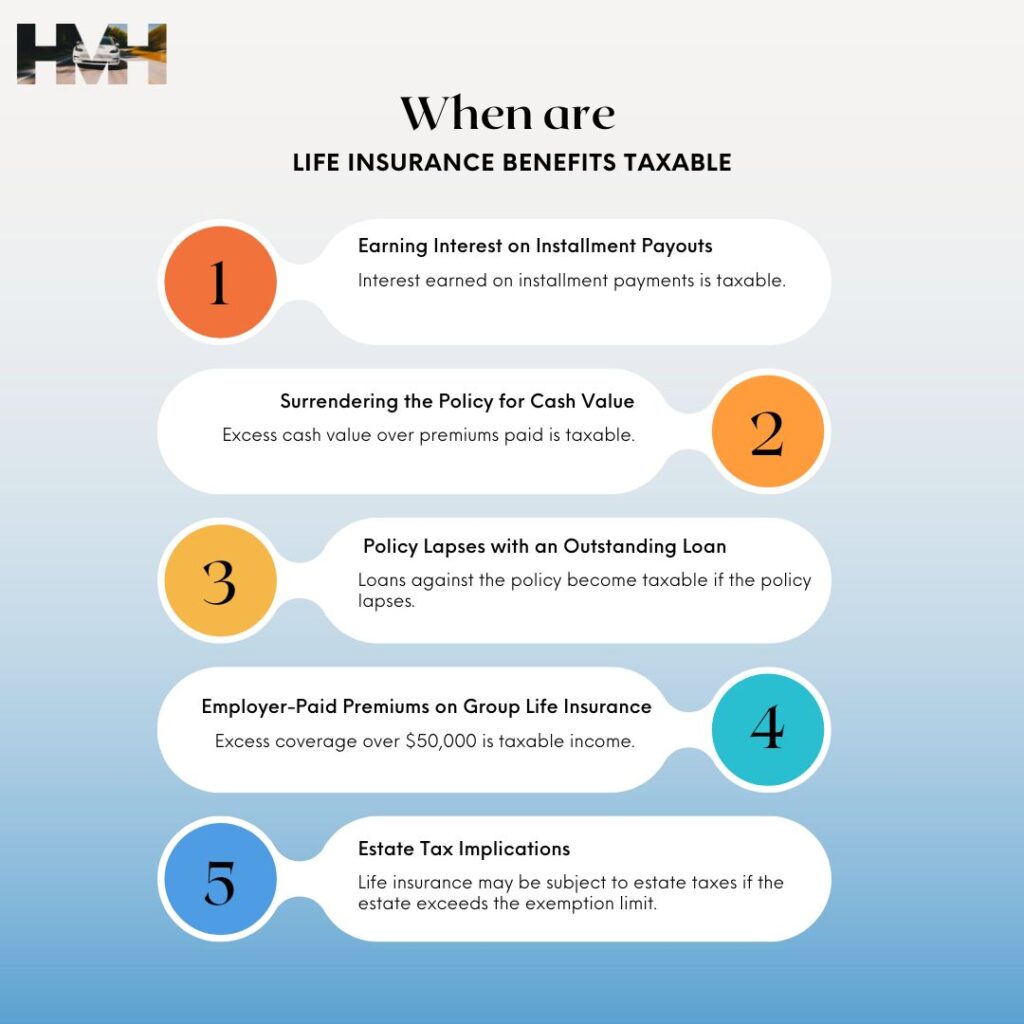
If the life insurance company delays the payout or if the beneficiaries choose to leave the proceeds with the insurer to earn interest, that interest is fully taxable as ordinary income. For example, if a $1,000,000 benefit is held by the insurer for six months and earns $15,000 in interest before being paid out, your children would receive $1,015,000. They would owe no taxes on the $1,000,000, but the $15,000 in interest must be reported as taxable income for the year it was received.
2. Installment Payouts (Annuities)
Some parents structure their life insurance to pay out in installments rather than a single lump sum. This is often done to ensure children do not spend the entire inheritance at once. In these "settlement options," each payment consists of two parts: a portion of the tax-free principal and a portion of interest earned on the remaining balance held by the company. Only the interest portion of each installment is taxable. The insurance company is required to provide a Form 1099-INT or similar documentation detailing the taxable portion of the payments.
3. The "Transfer-for-Value" Rule
If a life insurance policy is sold or transferred to another party for "valuable consideration" (money or something of value), the tax-exempt status of the death benefit may be lost. Under the transfer-for-value rule, the portion of the death benefit that exceeds the price paid for the policy plus subsequent premiums paid by the new owner becomes taxable. While this rarely applies to traditional policies where a parent names a child as a beneficiary, it can become an issue in complex business successions or if a policy was "sold" to a child or a third party during the parent's lifetime.
The 2026 Estate Tax Landscape
One of the most significant considerations for parents in 2026 is the Federal Estate Tax. While your children may not pay income tax on the benefit, the value of the life insurance policy is often included in your "gross estate" for tax purposes.
As of 2026, the landscape has shifted due to the sunsetting of certain provisions from the Tax Cuts and Jobs Act of 2017. The high estate tax exemptions seen in the early 2020s (which exceeded $13 million per individual) have reverted to lower, inflation-adjusted levels—roughly $7 million per individual.
If the total value of your assets (including your home, investments, and the full face value of your life insurance policies) exceeds this threshold, your estate may be subject to a federal estate tax of up to 40%. In this scenario, the "tax" isn't paid by the children directly as income tax, but it is deducted from the estate before the children receive their inheritance, effectively reducing their benefit.
Ownership and "Incidents of Ownership"
The IRS includes life insurance in your estate if you hold any "incidents of ownership" at the time of your death. This includes the right to change beneficiaries, borrow against the policy's cash value, or cancel the policy. To avoid this, some parents utilize an Irrevocable Life Insurance Trust (ILIT). By having the trust own the policy, the death benefit is removed from the parent's taxable estate, allowing the children to receive the full amount without estate tax erosion.
Tax Implications for Minor Children
Naming minor children as direct beneficiaries is a common practice, but it presents legal and administrative challenges that can have indirect tax costs. Most insurance companies will not pay a death benefit directly to a minor. Instead, a court-appointed guardian must manage the funds until the child reaches the age of majority (usually 18 or 21).
The Role of UTMA/UGMA Accounts
If you name a minor as a beneficiary, the funds may be placed in an account governed by the Uniform Transfers to Minors Act (UTMA). While the initial death benefit remains tax-free, any subsequent earnings (interest, dividends, or capital gains) generated by investing that money are subject to the "Kiddie Tax" rules. Under these rules, unearned income over a certain threshold ($2,600 in 2026, subject to inflation adjustments) may be taxed at the parent’s marginal tax rate rather than the child’s lower rate.
Comparison of Payout Methods and Taxability
| Payout Method | Income Tax Status | Estate Tax Status | Primary Advantage |
|---|---|---|---|
| Lump Sum | Generally 100% Tax-Free | Included in Estate if owned by Insured | Immediate liquidity for beneficiaries. |
| Installments | Interest portion is taxable | Included in Estate if owned by Insured | Prevents rapid depletion of funds. |
| Through an ILIT | Generally 100% Tax-Free | Excluded from Estate | Maximizes wealth transfer; avoids estate tax. |
| Interest-Only | 100% of interest is taxable | Included in Estate if owned by Insured | Preserves the principal for a later date. |
Cash Value and Living Benefits
If you have a "permanent" policy (Whole Life or Universal Life), it accumulates cash value over time. While your children are generally concerned with the death benefit, parents sometimes access this money while still alive to pay for college or other expenses.
- Withdrawals: You can generally withdraw up to the amount you have paid in premiums (your "basis") tax-free. Any amount withdrawn above your basis is taxed as ordinary income.
- Loans: Loans taken against the cash value are generally not taxable, even if they exceed your basis, provided the policy remains in force. However, if the policy lapses or is surrendered while a loan is outstanding, the loan balance (minus basis) becomes immediately taxable to you, the parent.
If you die with an outstanding loan, the insurance company simply subtracts the loan amount from the death benefit paid to your children. The remaining death benefit they receive remains income tax-free.
State-Specific Tax Rules
While federal rules are uniform, state laws in 2026 vary. Most states follow the federal lead and do not tax life insurance proceeds as income. However, several states impose their own Inheritance Tax or Estate Tax with much lower thresholds than the federal government.
For example, states like Pennsylvania or New Jersey have historically had specific rules regarding how life insurance is treated for inheritance tax. In some jurisdictions, if the benefit is paid to the "estate" rather than a named beneficiary, it may become subject to state-level inheritance taxes. Always verify the rules in your specific state of residence to ensure your children are protected from local tax surprises.
Common Pitfalls to Avoid
To ensure your children receive the maximum benefit possible, avoid these common mistakes:
- Naming the Estate as Beneficiary: If you name "my estate" as the beneficiary instead of your children directly, the proceeds will likely go through probate. This makes the funds available to your creditors and potentially subjects the benefit to state inheritance taxes that could have been avoided.
- The "Unholy Trinity" of Life Insurance: This occurs when three different people occupy the roles of the insured, the policy owner, and the beneficiary. For example, if a wife owns a policy on her husband’s life with the children as beneficiaries, the IRS may view the death benefit as a taxable gift from the wife to the children. To avoid this, the owner and the insured should generally be the same person, or the owner and the beneficiary should be the same.
- Forgetting to Update Beneficiaries: Outdated beneficiary designations can lead to the money going to an ex-spouse or a deceased relative’s estate, triggering complex tax and legal battles for your children.
Frequently Asked Questions
Do my children need to report the life insurance payout on their tax return?
Generally, no. If they receive a lump-sum death benefit, it is not considered "gross income" and does not need to be reported to the IRS. However, if the payout includes interest (which the insurer will report on Form 1099-INT), only that interest amount must be reported on their tax return.
What if the life insurance policy was provided by my employer?
The tax-free nature of the death benefit remains the same regardless of whether the policy was an individual plan or a group plan through an employer. The only difference is that if the employer paid for more than $50,000 of coverage, you might have paid "imputed income" taxes on the premiums while you were alive, but the payout to your children remains tax-free.
Can the IRS take life insurance money to pay my back taxes?
If you owe federal taxes at the time of your death, the IRS generally cannot take the life insurance proceeds if you have named a specific beneficiary (like your children). The death benefit belongs to the beneficiaries, not the estate. However, if the proceeds are paid to your estate, the IRS and other creditors can claim them to satisfy your debts.
Is there a limit on how much my children can receive tax-free?
For federal income tax purposes, there is no limit. Whether the policy is for $10,000 or $10,000,000, the death benefit is income tax-free. The limits only apply to estate taxes, which look at the total value of your assets.
How does a "Term Life" policy differ from "Whole Life" regarding taxes for children?
For the beneficiary (your children), there is no difference. Both provide an income tax-free death benefit. The differences between the two types of policies relate primarily to how premiums are paid and how cash value builds up during the policyholder's lifetime.
Final Recommendation
To guarantee that your children receive their life insurance benefits with the least amount of tax friction, you should review your policy ownership and beneficiary designations every two to three years. If your total estate value is approaching the $7 million mark as we move through 2026, consult with an estate planning attorney about an Irrevocable Life Insurance Trust (ILIT). This remains the gold standard for removing life insurance from your taxable estate while maintaining control over how and when your children receive the funds.
Image Gallery