How Much Does Workmen's Auto Insurance Cost?
On average, non-standard auto insurance policies traditionally offered under the Workmen's Auto Insurance brand—and currently serviced through its parent company, National General (an Allstate company)—cost between $67 and $150 per mon...
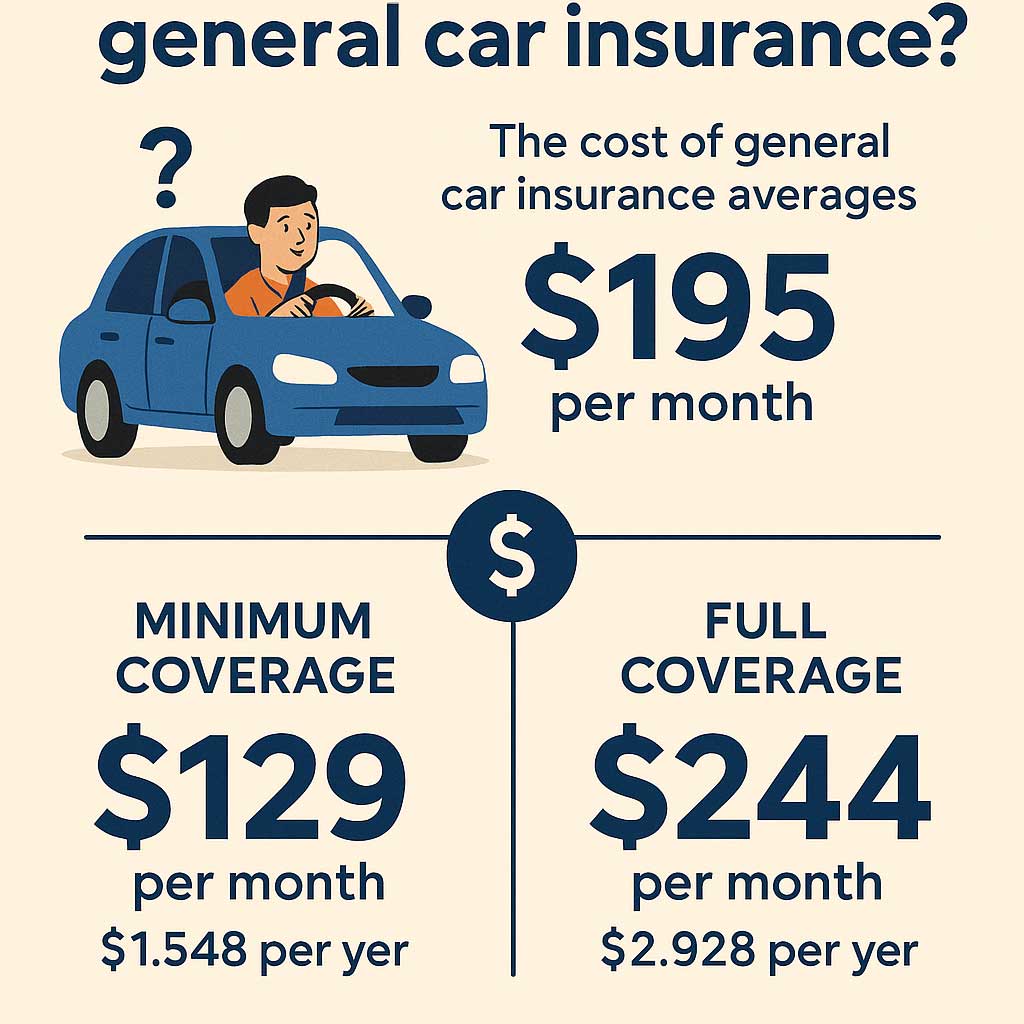
On average, non-standard auto insurance policies traditionally offered under the Workmen's Auto Insurance brand—and currently serviced through its parent company, National General (an Allstate company)—cost between $67 and $150 per month ($800 to $1,800 annually) for minimum state liability coverage. For full coverage policies, rates generally range from $150 to $300+ per month ($1,800 to $3,600+ per year), depending on the driver's risk profile, location, and violation history.
Contents
Disclaimer: Auto insurance premiums vary significantly based on individual risk factors, geography, coverage selection, and regulatory frameworks. The rates provided in this guide reflect estimated national averages and historical underwriting data. Consult a licensed insurance producer or financial professional for individualized rate quotes and coverage recommendations.
Understanding Workmen's Auto Insurance: Brand History and Coverage Scope
To understand the cost of a policy from Workmen's Auto Insurance, it is helpful to clarify what the entity is and how its policies are administered today.
Workmen's Auto Insurance Company (WAIC) established a long-standing reputation as a specialized, non-standard auto insurer operating primarily in western states such as California. "Non-standard" auto insurance is designed for drivers who have difficulty securing coverage in the standard market due to factors such as:
- Prior driving infractions, speeding tickets, or at-fault accidents.
- Driving Under the Influence (DUI) or Driving While Intoxicated (DWI) convictions.
- Lapses in prior auto insurance coverage.
- A requirement for state SR-22 or FR-44 financial responsibility filings.
- Limited driving history or poor credit-based insurance scores.
In 2015, National General Insurance acquired Workmen's Auto Insurance Company. Subsequently, Allstate acquired National General. Today, original Workmen's Auto policies and new non-standard auto coverage requests are underwritten and serviced through National General's specialized non-standard auto insurance division.
Additionally, consumers occasionally confuse "Workmen's Auto Insurance" with commercial auto insurance for employees (related to workers' compensation or business fleets). While this guide focuses primarily on non-standard personal auto policies under the Workmen's Auto brand legacy, it also outlines key cost distinctions for small business owners insuring employee vehicles.
Average Cost Breakdown: State Minimum vs. Full Coverage
The price of a non-standard auto policy depends heavily on the level of protection selected. State-minimum liability policies only cover bodily injury and property damage inflicted on third parties, whereas full coverage includes collision and comprehensive protection for your own vehicle.
Below is an overview of standard baseline rates for drivers requiring non-standard auto coverage across different risk categories.
Estimated Costs for Non-Standard Auto Policies
| Coverage Level | Driver Risk Profile | Estimated Monthly Cost | Estimated Annual Cost |
|---|---|---|---|
| State Minimum Liability | Moderate Risk (1 ticket / minor lapse) | $67 – $105 | $800 – $1,260 |
| State Minimum Liability | High Risk (Major violation / DUI / SR-22) | $110 – $180 | $1,320 – $2,160 |
| Standard Coverage (50/100/50) | Moderate Risk | $125 – $190 | $1,500 – $2,280 |
| Full Coverage (100/300/50 + $500 Ded) | Moderate Risk | $150 – $240 | $1,800 – $2,880 |
| Full Coverage (100/300/50 + $500 Ded) | High Risk (Multiple accidents/DUI) | $250 – $420+ | $3,000 – $5,040+ |
Note: Baseline premiums assume a mid-priced sedan driven for personal use. Actual rates will vary based on specific zip codes and state minimum liability mandates.
Key Drivers of Policy Costs
Underwriters for non-standard insurers evaluate several core variables when calculating monthly policy premiums. Understanding these criteria helps policyholders manage their insurance expenses effectively.
| DRIVER RECORD & VIOLATIONS | VEHICLE MAKE, MODEL & AGE |
|---|---|
| - Speeding tickets & moving violations- At-fault accidents- DUIs or reckless driving | - Vehicle repair costs & parts- Safety features & anti-theft- Actual cash value (ACV) |
| GEOGRAPHIC LOCATION | COVERAGE & DEDUCTIBLE SELECTION |
| - State minimum requirements- Local population density- High-risk zip codes / theft rates | - Liability limits (e.g., 25/50/25)- Comprehensive/Collision choice- Deductible amount ($250-$1,000) |
1. Driving Record and Incident Severity
The single most influential cost factor is your recent driving record (typically covering the past 3 to 5 years). Minor moving violations cause modest rate increases, whereas major infractions lead to substantial surges in premium pricing:
- Single Speeding Ticket: Expect a 15% to 25% increase over baseline rates.
- At-Fault Accident: Can increase rates by 30% to 50%.
- DUI/DWI Conviction: Often doubles or triples standard rates, requiring high-risk non-standard placement and SR-22 filing fees.
2. Geographic Location and State Regulations
Insurance rates are regulated at the state level and calculated based on localized risk data. Drivers living in urban environments with high traffic density, elevated theft rates, or high frequencies of uninsured motorists pay significantly more than those in rural areas.
Furthermore, states dictate minimum liability coverage limits. For example, California requires minimum bodily injury limits of $15,000 per person / $30,000 per accident, while other states enforce higher minimum threshold limits, directly influencing baseline premium costs.
3. SR-22 and FR-44 Filings
Drivers who have had their licenses suspended or revoked often require an SR-22 form (or FR-44 in states like Florida and Virginia) submitted to their state department of motor vehicles.
- Filing Fee: Insurers typically charge a small one-time administrative fee of $15 to $25 to file the form.
- Premium Impact: While the form itself is inexpensive, the underlying infraction that triggered the SR-22 requirement elevates the policy into high-risk pricing brackets.
4. Vehicle Selection and Market Value
If you carry comprehensive and collision coverage, the age, vehicle class, and repair costs of your automobile directly affect your policy premium. Luxury vehicles, sports cars, and heavy-duty trucks incur higher collision repair costs, elevating monthly insurance payments compared to economy sedans.
Non-Standard Personal Auto vs. Commercial Auto Coverage for Employees
Consumers searching for "workmens auto insurance" sometimes mean commercial liability coverage for employees driving company-owned or personal vehicles on behalf of a business. It is essential to distinguish between these two insurance categories, as their costs and structure differ drastically.
- Policy Type Comparison
- Personal Non-Standard Auto
- Named individual drivers
- Personal commute & daily use
- Typical limit: $15k - $100k
- Cost: $800 - $3,600 / year
- Commercial Auto Coverage
- Business entity policyholder
- Employee business usage
- Typical limit: $500k - $1M
- Cost: $1,200 - $3,000+ / vehicle / year
- Personal Non-Standard Auto
Personal Non-Standard Auto (Workmen's Auto / National General)
- Purpose: Insures individual drivers for personal transportation, commuting, and everyday errands.
- Coverage Limits: Typically set around state minimums up to standard personal limits (e.g., $100,000/$300,000).
- Average Annual Cost: $800 to $3,600 depending on risk.
Commercial Auto Insurance for Businesses
- Purpose: Insures commercial fleets, work trucks, or employee vehicles used for business operations, deliveries, or service calls.
- Coverage Limits: Usually structured with higher combined single limits (CSL), such as $500,000 or $1,000,000, to safeguard business assets.
- Average Annual Cost: $1,200 to $3,000+ per vehicle, depending on industry hazard levels, cargo type, and employee driving records.
If you operate a business where employees drive for work purposes, personal non-standard auto policies will not cover accidents that occur during business activities. A dedicated commercial auto policy is required.
Practical Strategies to Lower Non-Standard Auto Premiums
While non-standard auto insurance carries higher base rates due to elevated underwriting risk, drivers can take concrete steps to reduce their annual payments over time.
Opt for Higher Deductibles on Physical Damage CoverageIncreasing your collision and comprehensive deductible from $250 or $500 to $1,000 can reduce your physical damage policy premium by 10% to 25%. Ensure you retain sufficient liquid savings to cover the deductible out-of-pocket if an accident occurs.
Maintain Continuous Policy CoverageLapses in auto insurance coverage signal risk to underwriters, leading to surcharges when re-establishing a policy. Maintaining continuous coverage—even at state minimum limits—for 6 to 12 consecutive months helps qualify you for standard insurance tiers with lower rates.
Complete an Approved Defensive Driving CourseMany state insurance departments allow drivers to complete accredited defensive driving or traffic safety courses to remove points from their driving records or qualify for a mandatory policy discount (typically 5% to 10%).
Utilize Automatic Payments and Electronic DocumentsInsurers frequently offer modest discounts ($2 to $5 per month or a percentage off total premium) for setting up automatic recurring monthly payments (ACH/EFT) and opting into paperless billing.
Re-evaluate Your Policy PeriodicallyHigh-risk points and driving infractions generally drop off insurance rating records after 3 years (or up to 5 to 7 years for major offenses like DUIs, depending on state law). Once your record clears, request a policy re-underwriting review or shop for standard auto insurance quotes.
Frequently Asked Questions
Is Workmen's Auto Insurance Company still operating independently?
No. Workmen's Auto Insurance Company was acquired by National General Insurance in 2015, which subsequently became part of Allstate. Legacy Workmen's Auto policies and non-standard driver accounts are now managed under National General's non-standard auto insurance framework.
How long do points stay on my record to affect non-standard auto rates?
In most states, insurance companies evaluate driving records over a 3-year to 5-year lookback period. Minor moving violations typically impact rates for 3 years, while severe offenses like DUIs or reckless driving can influence insurance pricing and underwriting placement for 5 to 10 years.
What is the minimum auto coverage required for high-risk drivers?
High-risk drivers must meet their state's minimum legal liability limits, which specify coverage minimums for bodily injury per person, bodily injury per accident, and property damage (e.g., 25/50/25). If your driver's license was suspended, your state may also mandate an SR-22 filing certifying that you carry these required limits.
Can I get non-standard auto insurance if I don't own a car?
Yes. If you need to satisfy state license reinstatement requirements or maintain continuous coverage without owning a vehicle, you can purchase a non-owner auto insurance policy. Non-owner policies provide bodily injury and property damage liability coverage when driving borrowed vehicles and are generally less expensive than traditional vehicle-assigned policies.
Does business use cover my vehicle under a personal non-standard auto policy?
No. Standard and non-standard personal auto policies explicitly exclude claims that occur while using a vehicle for commercial purposes, commercial freight transport, or passenger rideshare services (such as Uber or Lyft) unless an explicit commercial endorsement or dedicated commercial policy is attached.
Actionable Next Steps
If you require non-standard coverage through National General (formerly Workmen's Auto Insurance) or a similar specialized provider, take the following steps to secure accurate pricing and valid protection:
- Gather Essential Documentation: Collect your driver's license number, Vehicle Identification Number (VIN), prior insurance declarations pages, and any state-issued SR-22 requirement letters.
- Request Multiple Comparative Quotes: Contact independent insurance agents who specialize in non-standard auto insurance. Comparing quotes across multiple high-risk underwriters ensures you secure competitive rates for your specific driver profile.
- Confirm Filing Verification: If your policy requires an SR-22 or FR-44 filing, confirm with the agent that the form has been transmitted electronically to your state's Department of Motor Vehicles (DMV) before operating your vehicle.
- Set Reminders for Policy Re-evaluation: Mark your calendar for 6 to 12 months after starting your policy to review your driving record. As infractions age out, actively shop your policy to transition back into lower-cost standard auto insurance coverage.
Image Gallery