Vincent Price on Art Enjoyment: Timeless Insights and Philosophical Quotes
Vincent Price believed that art enjoyment is a fundamental human right, not a privilege reserved for the elite. His philosophy focused on "visual literacy," encouraging individuals to trust their personal reactions to art while activel...
Vincent Price believed that art enjoyment is a fundamental human right, not a privilege reserved for the elite. His philosophy focused on "visual literacy," encouraging individuals to trust their personal reactions to art while actively seeking the knowledge required to deepen those experiences through observation, history, and daily exposure.
Contents
For many, the name Vincent Price evokes images of Gothic horror and a chilling, rhythmic voice. However, in the realm of cultural history, Price remains one of the most significant advocates for the democratization of fine art in the 20th century. A Yale-educated art historian, Price dedicated a massive portion of his life to stripping away the pretension surrounding galleries and museums. Even now, in 2026, his insights into how we should consume and live with art remain remarkably relevant as we navigate a world saturated with digital imagery and AI-generated content.
The Scholar Behind the Screen: Price’s Academic Foundation
To understand Vincent Price’s insights on art, one must first recognize that he was not merely a celebrity hobbyist. His passion was rooted in rigorous academic study. Price graduated from Yale University with a degree in Art History and English, followed by further studies at the Courtauld Institute of Art in London. Before his acting career took center stage, he intended to be an art teacher or a museum curator.
This academic background provided the "knowledge" in his famous book title, I Like What I Know (1959). Price sought to flip the common phrase, "I don’t know art, but I know what I like." He argued that the more you know about the context, the creator, and the technique, the more profound your enjoyment becomes. For Price, art enjoyment was an active pursuit, not a passive one. He believed that the eye, like a muscle, must be trained through constant looking.
The Sears-Roebuck Collection: Bringing Masterpieces to the Masses
Perhaps Price’s most tangible contribution to art enjoyment was his partnership with Sears, Roebuck & Co. launched in 1962. "The Vincent Price Collection of Fine Art" was a revolutionary project designed to sell original works—not just reproductions—to the average American consumer.
Price personally traveled the world to procure etchings, drawings, and paintings by masters such as Rembrandt, Goya, Whistler, and even contemporary icons like Salvador Dalí. The goal was to make these pieces accessible on a budget, often through installment plans. By the time the program ended in 1971, it had sold over 50,000 pieces of fine art.
Price’s insight here was simple: art belongs in the home. He believed that seeing a masterpiece in a museum is a fleeting experience, but living with a piece of art allows for a deepening relationship. This intimacy, he argued, was the peak of art enjoyment. It transformed a "work" into a "companion."
Core Philosophical Insights on Art Enjoyment
Vincent Price’s writings and lectures frequently returned to several core themes that defined his approach to the visual arts. These insights serve as a roadmap for anyone feeling intimidated by the "art world."
1. The Necessity of Personal Response
Price often emphasized that your first reaction to a piece of art is valid. Whether it is a feeling of revulsion, joy, or confusion, that emotional spark is the beginning of the journey. However, he cautioned against stopping there. He believed that the "enjoyment" comes from investigating why you had that reaction.
2. Art as a Human Requirement
He famously stated that art is not a luxury but a "human necessity." To Price, the act of creation and the act of appreciation are what separate humanity from the rest of the biological world. He viewed art as a tool for communication that transcends language barriers and time periods, allowing a person in 1966 or 2026 to converse with a painter from 1660.
3. The Rejection of Elitism
Price was a vocal critic of "art snobs" who used jargon to gatekeep the experience. He believed that if a piece of art required a 500-page manual to be "enjoyed," it was failing its primary purpose. His insights suggest that while education is vital, the ultimate authority on whether a piece of art is "good" for you is you.
| Aspect of Art Enjoyment | The Elitist View (Traditional) | Vincent Price’s View (Democratized) |
|---|---|---|
| Accessibility | Reserved for museums and wealthy private galleries. | Should be available in department stores and every home. |
| Validation | Art is validated by critics and high auction prices. | Art is validated by the personal connection it makes with the viewer. |
| Education | Required before you are allowed to have an opinion. | A lifelong tool used to deepen an already existing passion. |
| Purpose | Investment, status, and historical preservation. | Spiritual enrichment, personal growth, and daily joy. |
| Medium | Focus on oil paintings and classical sculpture. | Inclusive of etchings, lithographs, and indigenous crafts. |
Iconic Quotes from Vincent Price on Art
Price’s eloquence was as sharp as his eye for talent. Below are several of his most impactful quotes regarding the nature of art and how we should perceive it.
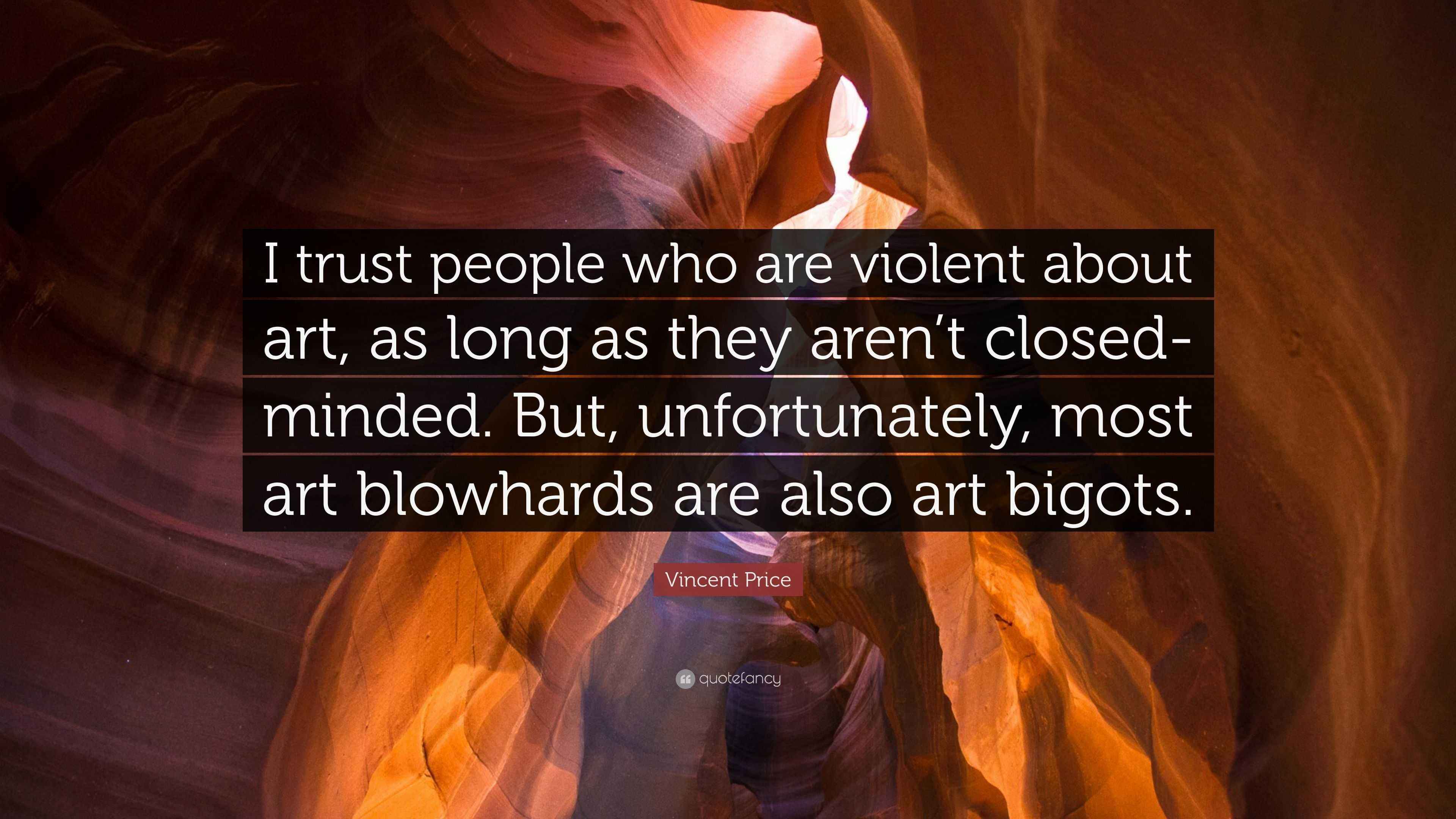
"I don't know much about art, but I know what I like" is a tired cliché. I prefer "I like what I know." Because the more you know, the more you will find to like.
This quote summarizes his entire pedagogical approach. It suggests that curiosity is the engine of enjoyment. If you find yourself bored in a museum, Price would argue that you simply haven't learned enough about the stories behind the frames yet.
"Art is for everyone. It is a basic human need, like food and water. It feeds the soul."
By equating art with biological survival, Price elevated the importance of the aesthetic experience. He believed that a society without art would eventually wither, losing its ability to empathize and innovate.
"A painting is like a person. You have to live with it for a while to really know it."
This insight speaks to the value of ownership and repeated exposure. Price encouraged people to buy art—even cheap prints or local crafts—because the process of waking up every day and seeing a piece in different lights and moods is how true appreciation is built.
"The most important thing in the world is to be able to see."
Here, Price wasn't talking about physical sight, but rather "visual literacy." He believed most people walk through the world "blind" to the beauty in architecture, nature, and design. Art enjoyment, for him, was the practice of learning to see the world with more clarity.
Practical Steps for Art Enjoyment Based on Price's Philosophy
If Vincent Price were advising a new art enthusiast today in 2026, his guidance would likely follow these actionable steps:
- Visit Small Galleries First: Large museums can be overwhelming. Start with local galleries where you can see the work of living artists. Price was a massive supporter of contemporary creators.
- Look for the "Minor" Works: Don't feel you need a massive oil painting. Price championed etchings, woodcuts, and lithographs as affordable ways to own original art. These mediums often show the artist's "hand" more clearly than a polished painting.
- Read the Biography: When you find a piece you like, research the artist’s life. Understanding their struggles, their era, and their intent will almost always increase your enjoyment of the work.
- Trust Your "Gut," Then Use Your Head: Don't let a critic talk you into liking something you hate, but don't let your initial dislike prevent you from trying to understand the artist's perspective.
- Democratize Your Own Space: Fill your living environment with things that are visually stimulating. It doesn't have to be "high art." It could be a beautifully designed tool, a textile, or a photograph.
The Legacy of the East Los Angeles College (ELAC) Museum
One cannot discuss Price’s insights without mentioning the Vincent Price Art Museum (VPAM) at East Los Angeles College. In 1957, Price and his wife Mary Grant donated 90 pieces to the college, which has since grown into a collection of thousands.
Price chose a community college rather than a major university like Yale because he wanted the art to be where the "real people" were. He believed that students who might not feel welcome in the hallowed halls of a major metropolitan museum would feel ownership over a collection housed on their own campus. This act remains the ultimate testament to his belief that art enjoyment should have no barriers to entry.
Frequently Asked Questions
Did Vincent Price only collect "dark" or "horror" art?
No. Despite his film persona, Price’s personal taste was incredibly eclectic. He was a major collector of Pre-Columbian art, American Indian art, and 17th-century European masters. He appreciated any work that demonstrated a strong mastery of form and a clear emotional message.
What did Vincent Price think about the price of art?
Price was often critical of the "investment" side of the art world. He lamented that art was becoming a commodity for the rich to hide money. His partnership with Sears was a direct attempt to combat the idea that art has to be expensive to be valuable.
How can I apply Vincent Price's "I Like What I Know" philosophy today?
In the current era, this means doing a "deep dive" into artists you discover on social media or in local fairs. Instead of just "liking" a photo, research the history of the medium they are using. The context will turn a fleeting digital image into a lasting intellectual interest.
Did Price believe anyone could be an artist?
He believed that everyone has an innate creative capacity, but he held a high standard for professional art. He respected craftsmanship and the "work" involved in art. For him, the "enjoyment" for the non-artist came from being an educated and passionate witness to the talent of others.
What is the best book to read to understand his art insights?
I Like What I Know: A Visual Autobiography is the definitive source. It combines his life story with his evolving theories on why art matters and how the average person can build a collection.
Moving Forward: Your Path to Art Appreciation
To follow in the footsteps of Vincent Price, the next logical step is to stop being a passive observer of images. Start by visiting a local art fair or a small gallery this weekend. Look for a piece that provokes a reaction—even if it's a confusing one—and take the time to learn about the artist's process.
Remember that art enjoyment is a skill that improves with time. By bringing art into your home and treating it as a daily necessity rather than an occasional luxury, you fulfill Price’s vision of a culturally enriched life. You don't need a million dollars or a PhD; you only need the curiosity to look and the willingness to know.
Image Gallery