Understanding What Is an Interception in Everyday Terms
An interception occurs when someone or something is blocked from reaching its intended destination, or when information, objects, or signals are caught by an unauthorized third party while in transit. In everyday life, this concept spa...
An interception occurs when someone or something is blocked from reaching its intended destination, or when information, objects, or signals are caught by an unauthorized third party while in transit. In everyday life, this concept spans physical barriers, digital communication security, and even common sports maneuvers, all sharing the fundamental principle of redirection or capture.
Contents
The Core Mechanics of Interception
At its simplest level, an interception requires three entities: a sender, a receiver, and a path of travel. The act of interception happens when an external force—the interceptor—places itself within that path to stop, divert, or observe the movement.
Whether you are discussing a package being rerouted, a conversation being overheard, or a football player catching an opponent’s pass, the underlying logic remains constant. The interceptor must identify the trajectory of the item or message, arrive at a point along that trajectory before the item does, and successfully assume control or influence over the situation.
Interception in Digital Communication
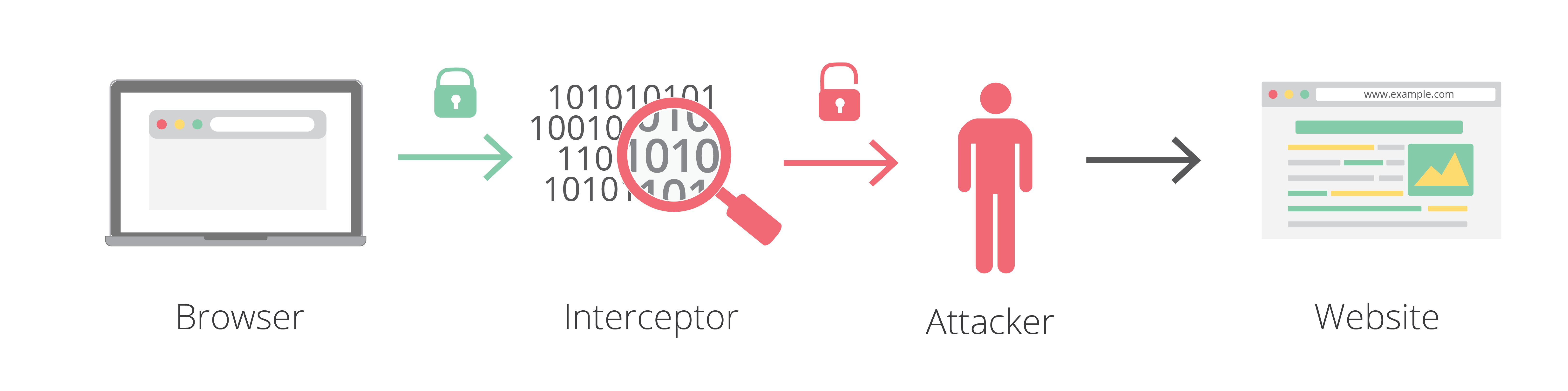
In the digital age, the term is most frequently associated with network security. When we talk about data interception, we are describing a process where information—such as an email, a login password, or financial data—is captured while it moves from your device to a server.
Technically, this is often referred to as a "man-in-the-middle" (MITM) attack. For example, if you are using public Wi-Fi at a coffee shop in 2026, your device communicates with a router. If an unauthorized individual places their own hardware between your device and the router, they can potentially "intercept" your traffic. Because they control the middle point, they can read the data you are sending or alter it before it reaches its intended destination.
To mitigate these risks, modern browsers and applications use encryption (like TLS/SSL). Encryption acts as a digital seal: even if an interceptor manages to capture the packet of data, they see only scrambled, unreadable characters, effectively rendering the interception useless.
Physical and Logistical Interception
Beyond the digital realm, interception frequently occurs in supply chain management and personal logistics. A package interception service, offered by major logistics providers, is a standard procedure where a sender or recipient requests that a shipment be stopped or redirected after it has already been dispatched.
This type of interception is governed by strict operational protocols:
- Verification of Authority: Only the account holder or the authorized recipient can typically request a change in delivery.
- Timing Constraints: The request must be processed before the package is loaded onto the final delivery vehicle or arrives at a local sorting hub.
- Logistical Hurdles: Once a package enters a high-speed automated sorting flow, physically "grabbing" it from the belt is rarely feasible. Instead, the tracking label is flagged in the digital system to ensure the package is pulled during the next manual intervention point.
Comparative Overview of Interception Types
To clarify how the term applies across different domains, consider the following breakdown of intent and outcome.
| Context | What is Intercepted? | Primary Objective | Typical Outcome |
|---|---|---|---|
| Cybersecurity | Data packets | Espionage or theft | Data breach or alteration |
| Logistics | Physical goods | Rerouting delivery | Redirected shipment |
| Sports | A ball or pass | Turnovers | Shift in possession |
| Intelligence | Radio signals | Information gathering | Strategic advantage |
The Role of Interception in Strategic Sports
In competitive sports, such as American football, an interception is a defined event where a defensive player catches a pass intended for an offensive player. This is a classic example of "proactive positioning." The defender does not merely wait for the ball; they read the offensive play, calculate the path of the ball, and accelerate toward the catch point.
In this context, the interception is not a failure of the sender, but a superior tactical execution by the receiver. It highlights the importance of anticipation. When the defensive player successfully intercepts the pass, the possession of the ball transitions immediately from one team to the other, often changing the momentum of the entire game.
Common Misconceptions About Interception
One frequent point of confusion is the difference between "interception" and "interference." While they sound similar, their impacts differ:
- Interference implies the alteration of a process or outcome without necessarily taking control. In telecommunications, signal interference is "noise" that prevents a message from being received clearly.
- Interception implies a directed effort to capture or redirect the message or object. You do not just make it harder to receive; you take the message or object for yourself.
Another misconception is that interception is always malicious. In governmental or law enforcement contexts, lawful interception is the practice of monitoring communication networks, authorized by a warrant or statute, to prevent criminal activity. This serves as a vital tool for public safety, provided it is conducted within the boundaries of legal privacy frameworks.
Prerequisites for Preventing Unauthorized Interception
Whether you are securing a home network or managing business assets, preventing unwanted interception requires proactive measures.
- For Digital Assets: Always ensure that your connection is encrypted. Look for the padlock icon in your browser address bar and avoid transmitting sensitive data over unencrypted, open public networks. Use Virtual Private Networks (VPNs) when necessary to add an extra layer of "tunneling" that makes interception mathematically difficult.
- For Physical Shipments: Always retain your tracking number. If you suspect you need to intercept a package, contact the carrier immediately via their official customer service portal. Do not use third-party links found in text messages, as these are often scams designed to harvest your personal data.
- For Information Privacy: Minimize the transmission of sensitive information through unsecured channels. If you are discussing confidential financial or legal matters, use dedicated, encrypted platforms rather than standard email or text messaging.
Frequently Asked Questions
Can I intercept an email after I have hit "send"? Generally, no. Once an email is sent, it travels across the internet at high speeds and is stored on the recipient’s server. While some email services allow for a brief "undo send" window, this is effectively a timed delay in sending, not an interception of an email already in transit.
Is it illegal to intercept communication? Yes, in most jurisdictions, the unauthorized interception of private communication is a serious crime. Laws such as the Electronic Communications Privacy Act in the United States strictly regulate who can access electronic data and under what circumstances, such as with a court-ordered warrant.
How do I know if my data has been intercepted? Often, you will not know immediately. Successful interceptions are designed to be "silent" so the sender and receiver continue their activity unaware. Signs of a compromise include unexplained account activity, unauthorized changes to your security settings, or receiving notification from a service provider about a data breach.
What is the difference between a wiretap and an interception? A wiretap is a specific, historical form of interception where a physical device is attached to a telephone line to monitor conversations. While the technology has moved from analog wires to digital packets, the fundamental goal—listening to a conversation without the participants' knowledge—remains the same.
Next Steps for Security
If you believe you have been the victim of unauthorized interception regarding your digital data, change your primary passwords immediately and enable multi-factor authentication (MFA) on all sensitive accounts. If a physical shipment has been intercepted or stolen, contact the carrier's fraud department and, if necessary, report the incident to local law enforcement. Understanding the mechanics of interception is the first step toward building the defenses necessary to protect your information and physical property in a complex, interconnected world.
Image Gallery