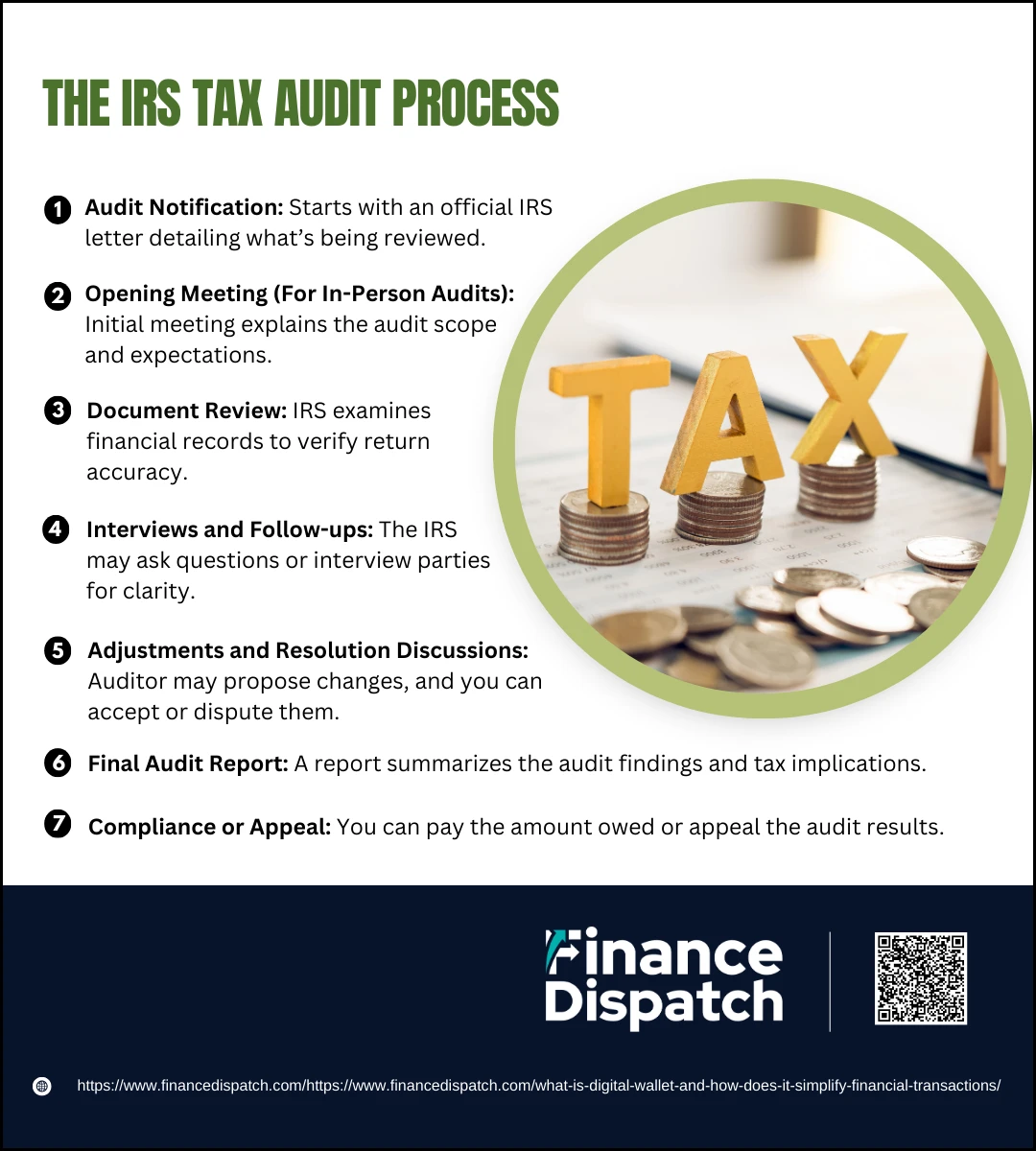
Why a Tax Audit Matters for Investors: Risks, Financial Impacts, and Mitigation Strategies
A tax audit directly impacts an investor's net returns, liquidity, and legal standing by scrutinizing capital gains, loss deductions, complex entity structures, and foreign financial assets. Beyond immediate back taxes and compounding...
A tax audit directly impacts an investor's net returns, liquidity, and legal standing by scrutinizing capital gains, loss deductions, complex entity structures, and foreign financial assets. Beyond immediate back taxes and compounding statutory interest, an audit can trigger cascading examinations across investment partnerships, invalidate tax-advantaged strategies, and disrupt ongoing capital deployment.
Contents
Understanding the Scope of Investor Tax Audits
For traditional wage earners, tax compliance primarily revolves around Form W-2 reporting and standard deductions. For investors, tax compliance is fundamentally complex, involving multi-tiered pass-through entities, variable capital gain holding periods, foreign reporting requirements, and intricate tax preference claims.
When revenue agencies such as the Internal Revenue Service (IRS) or state revenue departments audit an investor, they evaluate whether the economic reality of a financial transaction matches the tax positions reported on returns like Form 1040, Schedule D, and Schedule K-1. Tax authorities increasingly rely on data matching systems and machine learning models to detect discrepancies between institutional reporting (such as Form 1099-B, 1099-MISC, and 1065 K-1s) and individual investor filings.
An investor audit rarely focuses on a single math error. Instead, it systematically examines the substance-over-form doctrine, economic substance rules, passive loss limitations, basis calculations, and valuation methodologies applied to illiquid assets. Understanding the mechanics of a tax audit is essential for protecting capital, preserving portfolio liquidity, and maintaining investor reputation.
Key Audit Triggers for Individual and Institutional Investors
Tax authorities select investor returns for audit through risk-scoring algorithms, high-income audit initiatives, and informational cross-referencing. Recognizing the primary operational and structural triggers helps investors establish robust compliance frameworks prior to filing.
- Tax Return Filed
- Data Matching & AI Risk Scoring
- Triggers Evaluated:
- Discrepancy Found (K-1 mismatch, FBAR, 1099-B wash sale)
- High-Risk Strategy Identified (1031 Exchange, Cost Segregation, QSBS Section 1202, Carried Interest)
- Formal Audit Initiated
1. Partnership and Pass-Through Discrepancies
Investors participating in private equity, venture capital, real estate syndications, or hedge funds receive annual Schedule K-1 forms detailing their share of income, losses, credits, and distributions. Audits regularly arise when:
- An investor’s reported income does not match the partnership’s Form 1065 filing.
- Capital account balances are improperly tracked, leading to unauthorized loss deductions in excess of tax basis, at-risk limits (IRC Section 465), or passive activity loss rules (IRC Section 469).
- General partners (GPs) and limited partners (LPs) misclassify income as capital gains rather than ordinary income subject to self-employment tax.
2. Qualified Small Business Stock (QSBS) Section 1202 Exclusions
Under Internal Revenue Code (IRC) Section 1202, eligible investors can exclude up to 100% of capital gains on qualified small business stock held for more than five years, subject to statutory caps. Because this incentive provides immense tax savings, auditors rigorously verify:
- Whether the issuing entity satisfied the $50 million aggregate gross assets test before and immediately after stock issuance.
- Whether the corporation met the 80% active business requirement throughout the investor's holding period.
- Precise documentation of stock acquisition dates, original issuance status, and consideration paid.
3. Complex Real Estate Tax Positions
Real estate investors frequently utilize specialized tax provisions to defer liabilities or offset active income. Key audit audit flags include:
- Real Estate Professional Status (REPS): Claiming non-passive loss treatment against active income without maintaining contemporaneous logs proving the required 750 hours of personal services in real property trades or businesses.
- Cost Segregation Studies: Accelerating depreciation schedules through personal property reclassification without engineering-based valuation documentation.
- Section 1031 Like-Kind Exchanges: Failing to strictly satisfy the 45-day replacement property identification rule or the 180-day exchange completion deadline, or improperly handling boot (cash or debt relief).
4. Digital Assets and Cross-Border Holdings
With enhanced broker reporting regulations and global compliance frameworks such as the Common Reporting Standard (CRS) and the Foreign Account Tax Compliance Act (FATCA), international asset exposure presents heightened audit exposure:
- Digital Asset Classification: Omitting taxable crypto-to-crypto swaps, staking rewards, yield farming payouts, or hard fork distributions.
- Foreign Bank and Financial Accounts (FBAR): Failing to file FinCEN Form 114 for foreign financial accounts exceeding $10,000 in aggregate value at any point during the calendar year.
- Form 8938 Disclosures: Misreporting specified foreign financial assets held directly or through foreign holding structures.
5. Wash Sale Violations across Brokerage Accounts
Under IRC Section 1091, investors cannot claim a loss on the sale of stock or securities if they acquire "substantially identical" stock or securities within 30 days before or after the sale. While individual brokerages flag wash sales within a single account, automated tax reporting cannot automatically detect wash sales executed across different institutions, taxable accounts, or IRA accounts. Audits frequently target unallowed losses across multi-broker portfolios.
The Financial, Strategic, and Operational Impacts of an Audit
A tax audit carries consequences that extend far beyond the immediate dollar value of unpaid taxes. For active investors and fund managers, an audit introduces operational friction, capital impairment, and structural exposure.
- Audit Determination
- Financial
- Back Taxes
- Interest
- Penalties
- Strategic
- Frozen Cash
- Impaired IRR
- Delayed Exit
- Legal / Operational
- Fund Diligence Red Flags
- GP/LP Partnership Disputes
- Extended Lookback Periods
- Financial
Direct Financial Liabilities: Penalties and Statutory Interest
When an audit results in a tax deficiency adjustment, the investor is assessed the underlying tax balance alongside severe statutory additions:
- Accuracy-Related Penalties (IRC Section 6662): A mandatory 20% penalty applied to tax underpayments resulting from negligence, disregard of rules, or substantial understatement of income tax.
- Civil Fraud Penalties (IRC Section 6663): A 75% penalty applied to the portion of any underpayment attributable to intentional fraud or willful evasion.
- Compounding Statutory Interest: Tax authorities charge statutory interest on both the unpaid tax liability and the assessed penalties, accruing retroactively from the original due date of the tax return until full payment is rendered.
Portfolio Liquidity Constraints and IRR Impairment
Tax audits are lengthy proceedings, often spanning 12 to 36 months. During an ongoing examination, an investor may need to establish cash reserves or escrow funds to cover potential liabilities, freezing capital that would otherwise be deployed into new investment opportunities.
Furthermore, unexpected tax assessments, interest payments, and non-deductible legal fees directly erode an investor's net Internal Rate of Return (IRR) and net cash-on-cash yield, turning a historically profitable investment into a net loss on a post-tax basis.
Impact on Partnership Entities under the BBA Framework
For investors in partnerships governed by the Centralized Partnership Audit Regime under the Bipartisan Budget Act (BBA), audits occur at the partnership level rather than the partner level. If the IRS makes an adjustment:
- The default rule requires the partnership to pay the imputed underpayment at the highest individual or corporate tax rate in the adjustment year.
- Current partners may bear the economic burden of historical tax underpayments caused by former partners, unless the General Partner executes a valid "push-out" election under IRC Section 6226 to shift the liability back to historical partners.
M&A, Exit, and Transactional Disruptions
For private equity sponsors and angel investors seeking an exit or recapitalization, an active or unresolved tax audit presents substantial due diligence friction:
- Target buyer groups may demand extensive indemnity escrows or purchase price reductions to cover open tax positions.
- Acquisition timelines can be delayed while acquiring entities evaluate historical filing positions, cost segregation studies, or foreign reporting disclosures.
- Tax representations and warranties insurance policies may exclude coverage for tax issues currently under audit or subject to audit inquiries.
Risk Profile and Exposure Across Major Asset Classes
| Asset Class / Investment Type | Primary Audit Trigger Points | Typical Regulatory Scrutiny | Essential Verification & Records Required |
|---|---|---|---|
| Private Equity & VC | Carried interest qualification, K-1 loss basis, QSBS Section 1202 claims | IRC Sec. 1061 holding periods, active trade/business tests, gross asset caps | Stock purchase agreements, board minutes, active business logs, Section 83(b) elections |
| Commercial Real Estate | Cost segregation accelerated depreciation, REPS status, Sec. 1031 exchanges | Non-passive loss deductions, 45/180-day exchange deadlines, boot recognition | Time tracking logs, independent engineering segregation reports, qualified intermediary escrows |
| Public Equities & Options | Multi-broker wash sales, straddle rules, constructive sales | Cross-account trade matching under IRC Sec. 1091, capital vs. ordinary loss limits | Consolidated trade confirmations, software-based multi-account gain/loss reports |
| Digital Assets & Crypto | Unreported cross-border transfers, staking income, DeFi yield rewards | High-income automated matching, FATCA/FBAR foreign exchange compliance | Comprehensive wallet ledgers, API exchange export logs, cost-basis inventory tracking |
| Foreign Investments | Passive Foreign Investment Companies (PFICs), controlled foreign corps | Form 8621 election status, FBAR FinCEN 114 reporting, Form 8938 disclosures | Qualified Electing Fund (QEF) annual statements, international bank statements |
Proactive Audit Prevention and Defense Strategies
Investors can mitigate audit exposure by establishing rigorous documentation protocols and leveraging structured legal and tax protections.
1. Maintain Contemporaneous Recordkeeping Standards
Tax authorities consistently disallow tax positions due to lack of timely documentation. Investors must maintain contemporaneous records created at or near the time of the transaction, including:
- Detailed time logs for real estate professional qualification (documented weekly, not reconstructed years later).
- Written investment committee memos and corporate records demonstrating compliance with QSBS rules at stock issuance.
- Proof of timely filed Section 83(b) elections, complete with certified mail receipts and IRS acknowledgment letters.
2. Utilize Tax Opinion Letters for High-Stakes Positions
For substantial or aggressive tax positions—such as complex partnership restructurings, conservation easements, or novel digital asset strategies—investors should secure a formal Tax Opinion Letter from a qualified tax attorney or CPA firm.
- A "Should" or "More Likely Than Not" tax opinion letter demonstrates that the investor acted with reasonable cause and in good faith.
- Obtaining a qualified tax opinion serves as a primary defense against accuracy-related negligence penalties under IRC Section 6664, even if the underlying position is ultimately disallowed by tax authorities.
3. Establish Structured Entity Accounting and Basis Tracking
Investors must track their outside tax basis, at-risk basis, and cumulative passive loss carryforwards for every pass-through entity investment on an annual basis. Relying solely on K-1 capital account statements provided by fund managers can be risky, as partnership accounting methods (such as GAAP or 704(b) book basis) often diverge from an individual investor’s actual tax basis.
- Initial Investment (Cash/Property)
- Share of Partnership Income/Gains
- Distributions Received
- Share of Partnership Losses (up to basis limit)
- = Ending Outside Tax Basis (Determines Loss Deductibility)
4. Implement Pre-Filing Audit Defense Protocols
Prior to submitting tax returns featuring high-risk transactions:
- Conduct third-party legal and tax reviews of large capital transactions, cost segregation studies, and 1031 exchange closing documents.
- Consider attached disclosure statements (such as IRS Form 8275 or 8275-R) to explicitly disclose positions that differ from established Treasury Regulations or Revenue Rulings. Adequate disclosure can eliminate accuracy-related penalties if the position has a reasonable basis.
Frequently Asked Questions
How far back can tax authorities go when auditing an investor's tax return?
The general statute of limitations for an IRS tax audit is three years from the date the return was filed or the due date, whichever is later. However, this period expands to six years if the investor omits more than 25% of gross income or fails to report foreign financial assets exceeding $5,000. If an investor fails to file a return or submits a fraudulent return, the statute of limitations remains open indefinitely.
How does a partnership-level audit affect individual limited partners?
Under the Centralized Partnership Audit Regime (BBA), the IRS conducts audits at the partnership entity level. If an adjustment is made, the partnership generally pays the tax deficiency directly at the highest individual rate, reducing overall partnership equity. Alternatively, the partnership can elect a "push-out" under IRC Section 6226, transferring the tax liability and adjusted statements to the individual LPs who were partners during the audited year.
Can a tax audit retroactively invalidate a 1031 tax-deferred exchange?
Yes. If an auditor determines that the investor failed to meet statutory deadlines (45-day identification or 180-day acquisition), received constructive cash boot, or exchanged non-qualifying property, the IRS can retroactively invalidate the 1031 exchange. This reclassifies the entire deferred gain as a taxable event in the year of the initial sale, triggering back capital gains taxes, net investment income tax (NIIT), state taxes, and interest.
What penalties apply if an investor fails to report foreign financial accounts?
Failure to file an FBAR (FinCEN Form 114) for foreign financial accounts exceeding $10,000 can result in severe financial penalties. Non-willful violations carry statutory penalties adjusted annually for inflation (exceeding $15,000 per violation). Willful violations—where an investor intentionally ignores reporting requirements—can result in penalties up to $100,000 or 50% of the account balance at the time of the violation, whichever is greater, alongside potential criminal prosecution.
Does filing a tax extension increase an investor's likelihood of being audited?
No empirical evidence suggests that filing an extension (Form 4868) increases audit risk. In fact, tax professionals frequently recommend filing extensions for high-net-worth investors to allow sufficient time for receiving corrected Schedule K-1s, double-checking complex cost basis calculations, and ensuring full compliance documentation, which helps prevent error-driven audit triggers.
Actionable Next Steps for High-Net-Worth Investors
To mitigate audit exposure and protect long-term post-tax returns, investors should implement the following steps:
- Perform a Portfolio Audit Vulnerability Review: Audit your past three years of tax returns for common risk flags, including unverified REPS hours, unverified QSBS stock qualifications, unlinked wash sale losses, and unbacked K-1 loss deductions.
- Centralize Basis and Basis-Limit Schedules: Work with a CPA or tax professional to maintain running annual schedules for outside tax basis, at-risk basis limits, and passive loss carryforwards for all private market allocations.
- Formalize Foreign Asset Compliance: Verify that all global accounts, foreign entities, and cross-border transactions satisfy FBAR (FinCEN Form 114), FATCA (Form 8938), and PFIC (Form 8621) reporting mandates.
- Engage Professional Tax Representation: In the event of an IRS or state audit notice, immediately retain specialized legal counsel or an EA/CPA experienced in institutional audit defense rather than managing communications directly.
Limitation of Professional Advice: This article is intended solely for educational and informational purposes and does not constitute formal legal, accounting, financial, or tax advice. Tax laws, regulations, and enforcement priorities change frequently and vary by jurisdiction. Investors should consult qualified tax attorneys or Certified Public Accountants (CPAs) to evaluate specific financial situations and structural tax strategies.
Image Gallery