How to Choose a Safe Lash Growth Serum: A Comprehensive Guide
To choose a safe lash growth serum, you must evaluate the active ingredient profile, distinguish FDA-approved prescription treatments from cosmetic formulations, and avoid synthetic prostaglandin analogs linked to ocular side effects....
To choose a safe lash growth serum, you must evaluate the active ingredient profile, distinguish FDA-approved prescription treatments from cosmetic formulations, and avoid synthetic prostaglandin analogs linked to ocular side effects. Prioritize formulas tested by ophthalmologists, exclude severe irritants like benzalkonium chloride, and perform a mandatory patch test before applying any product near your eyes.
Contents
Disclaimer: This guide is for educational and informational purposes only and does not constitute medical advice. Consult a board-certified dermatologist or ophthalmologist before beginning any ocular cosmetic regimen, especially if you have pre-existing dry eye disease, glaucoma, or sensitive eyes.
Understanding Lash Serum Categories: Prescription vs. Cosmetic Formulations
Evaluating lash growth serums requires understanding the distinction between medical treatments designed to treat hypotrichosis (inadequate eyelash quantity) and over-the-counter cosmetic conditioning treatments. Although marketed similarly, these product classes rely on fundamentally different chemical mechanisms, regulatory standards, and safety profiles.
- Lash Serum Types
- Prescription Drugs (Prostaglandin Analogs)
- FDA-Approved (Bimatoprost)
- OTC Synthetic PGA Serums
- Cosmetic Serums (Peptides/Botanicals)
- Peptide-Based Conditioners
- Botanical/Vitamin-Rich
- Prescription Drugs (Prostaglandin Analogs)
Prescription Prostaglandin Analogs
The only drug active ingredient approved by the U.S. Food and Drug Administration (FDA) for eyelash growth is bimatoprost (0.03%), available via prescription. Bimatoprost was originally developed as an ophthalmic solution to lower intraocular pressure in patients with open-angle glaucoma or ocular hypertension. During clinical trials, researchers observed that patients experienced notable eyelash hypertrichosis—meaning lashes grew longer, thicker, and darker.
Bimatoprost works by extending the anagen phase (the active growth phase) of the eyelash hair follicle cycle and increasing the number of hairs produced during this phase. Because it alters cellular behavior, it is classified as a pharmaceutical drug subject to strict clinical evaluation, mandatory risk disclosures, and physician oversight.
Cosmetic Prostaglandin Analogs (PGAs)
Many over-the-counter (OTC) serums contain synthetic derivatives of prostaglandin structural analogs. Manufacturers include these compounds to achieve dramatic growth results without requiring a prescription. On product labels, these chemical compounds are frequently identified under names such as:
- Isopropyl cloprostenate
- Dechloro dihydroxy difluoro ethylcloprostenolamide
- Trifluoromethyl dechloro ethylprostenolamide
- Norbimatoprost
While these synthetic ingredients operate on the same biological pathways as prescription bimatoprost to extend the follicle growth cycle, OTC cosmetics carrying these analogs do not undergo the mandatory pharmaceutical approval process. Regulators, including the FDA, have issued warning letters to brands marketing OTC serums containing synthetic prostaglandins, noting that these compounds render the products unapproved new drugs due to their physiological action and potential side effects.
Non-Prostaglandin Cosmetic Serums
Non-prostaglandin cosmetic formulas do not alter the biological growth cycle of hair follicles. Instead, they function as intensive lash conditioners that nourish, strengthen, and protect the hair shaft from premature breakage. Common active ingredients include:
- Peptides: Synthetic chains of amino acids such as Myristoyl Pentapeptide-17, Biotinoyl Tripeptide-1, and Acetyl Tetrapeptide-3. These stimulate keratin production and fortify the structural integrity of the lash root.
- Vitamins and Nutrients: Panthenol (Pro-Vitamin B5), Biotin (Vitamin B7), and Tocopherol (Vitamin E), which moisture-seal the hair cuticle to enhance elasticity.
- Botanical Extracts: Extracts such as pumpkin seed extract, green tea extract, and ginseng, which supply antioxidants to minimize environmental oxidative stress on follicle tissue.
By preserving existing lashes and preventing brittleness, non-prostaglandin serums create the visual appearance of fuller, longer lashes with a significantly lower risk of adverse ocular events.
Key Health and Safety Risks Associated with Lash Serums
While longer eyelashes are aesthetically desirable, using unverified or aggressive formulas around the thin skin of the eye carries documented medical risks. Understanding these potential side effects allows consumers to weigh aesthetic goals against long-term ocular health.
- Potential Ocular Side Effects
- Periorbital Fat Loss
- Irreversible Iris Color Darkening
- Periocular Hyperpigmentation
- Meibomian Gland Dysfunction
Prostaglandin-Associated Periorbitopathy (PAP)
One of the most structural side effects linked to prostaglandin analogs is Prostaglandin-Associated Periorbitopathy (PAP). Prostaglandins stimulate adipo-inhibition—meaning they suppress adipogenesis and cause the atrophy of orbital fat pads surrounding the eye socket.
Clinical signs of PAP include:
- Deepening of the upper eyelid sulcus (a sunken eye appearance).
- Eyelid ptosis (drooping of the upper lid).
- Enophthalmos (the physical recession of the eyeball into the orbit).
- Tightening of the periocular skin, which can visually age the upper face.
While some fat pad atrophy may partially resolve after discontinuing the serum, long-term changes to orbital tissue structure can be permanent.
Irreversible Iris Hyperpigmentation
Prostaglandin analogs can stimulate melanin synthesis within the melanocytes of the iris. This effect is particularly pronounced in individuals with mixed-color irises (such as green-brown, hazel, or blue-gray eyes). Increased pigmentation leads to a permanent darkening of the iris, turning lighter or hazel eyes brown. Unlike eyelid skin irritation, iris hyperpigmentation is medically considered irreversible, persisting long after product usage stops.
Periocular Hyperpigmentation
Frequent contact between prostaglandin-containing serums and the surrounding skin can cause localized hyperpigmentation of the eyelid margin. This presents as a dark red, purple, or hyper-pigmented ring along the application line. Eyelid hyperpigmentation occurs due to increased dermal melanin deposition and vascular dilation. It typically fades gradually after discontinuing the product, though resolution can take several months.
Meibomian Gland Dysfunction (MGD) and Dry Eye Syndrome
The edges of your eyelids contain meibomian glands, which secrete essential lipids (meibum) that form the outer protective layer of the tear film. This lipid layer prevents rapid evaporation of tears. Prostaglandin analogs and harsh cosmetic preservatives can induce inflammation within these microscopic glands, leading to Meibomian Gland Dysfunction (MGD).
When meibomian glands become clogged, atrophy, or drop out:
- Tear film stability decreases significantly.
- Users experience chronic severe dry eye syndrome, ocular burning, foreign body sensation, and persistent redness.
- Advanced MGD can lead to permanent loss of gland structure, requiring ongoing clinical dry-eye management.
Step-by-Step Selection Framework: How to Evaluate a Serum
Navigating cosmetic labels requires a methodical screening process. Use this step-by-step checklist to evaluate any eyelash serum before purchase.
Step 1: Scan the Ingredient List for Prostaglandin Compounds
Read the full International Nomenclature Cosmetic Ingredient (INCI) list. Look specifically for terms containing:
prost(e.g., Isopropyl cloprostenate, Ethyl tafluprostamide)prostalcloprostenol
If you suffer from pre-existing dry eyes, have light-colored eyes, or wish to avoid structural orbital fat loss, eliminate products containing these compounds.
Step 2: Confirm Ophthalmic and Dermatological Testing Claims
Ensure the manufacturer explicitly states that the finished product has undergone ophthalmologist testing and dermatologist testing.
- Ophthalmologist-tested: Verified by an eye care specialist to ensure the formulation does not cause acute inflammation of the conjunctiva or cornea.
- Contact lens compatible: Indicates the serum does not contain heavy lipid solvents or micro-particulates that degrade contact lens material or trap irritants against the cornea.
Look for third-party clinical safety documentation rather than general marketing statements like "salon-approved" or "clean."
Step 3: Screen for Preservatives and Known Irritants
The ocular surface is vulnerable to chemical toxicity. Examine the formulation for high concentrations of volatile compounds:
- Benzalkonium Chloride (BAK): A common quaternary ammonium preservative shown in ophthalmic literature to cause corneal epithelial cell damage, conjunctival inflammation, and meibomian gland toxicity upon repeated exposure.
- Formaldehyde Donors: Ingredients such as DMDM hydantoin, imidazolidinyl urea, or quaternium-15, which release trace amounts of formaldehyde that irritate delicate eye tissue.
- Synthetic Fragrances and Alcohol: High concentrations of denatured alcohol (alcohol denat.) or artificial parfum can strip the lipid barrier of the eyelid skin, causing localized contact dermatitis.
Step 4: Verify Regulatory Compliance and Transparent Labeling
Reputable brands maintain high packaging transparency:
- The label clearly lists all ingredients in descending order of concentration.
- The manufacturer provides clear contact details, batch numbers, and expiration dates (including the Period After Opening symbol, represented by an open jar icon with a timeline such as "6M").
- The product makes realistic cosmetic claims (e.g., "conditions and supports natural lash appearance") rather than drug claims (e.g., "permanently alters biological growth rate and multiplies hair follicles").
Step 5: Perform a Cutaneous Patch Test
Before applying any product directly to the lash line:
- Apply a small droplet of serum to the inner forearm or behind the ear.
- Wait 24 to 48 hours to monitor for signs of contact dermatitis (redness, itching, burning, or swelling).
- If no reaction occurs, apply a tiny amount near the outer corner of one eye (avoiding direct ocular contact) for two consecutive nights to test ocular sensitivity.
Ingredient Comparison: Lash Growth Actives & Safety Profiles
The following table summarizes common lash serum ingredient categories, their biological mechanisms, potential ocular side effects, and suitability recommendations.
| Ingredient Category | Common INCI Examples | Primary Mechanism | Potential Risks & Side Effects | Suitability Profile |
|---|---|---|---|---|
| Prescription Prostaglandins | Bimatoprost (0.03%) | Extends anagen phase; increases follicle proliferation. | Iris hyperpigmentation, orbital fat loss (PAP), MGD, hypertrichosis, red eyes. | Requires physician oversight; best for clinical hypotrichosis. |
| Synthetic OTC Prostaglandins | Isopropyl Cloprostenate, Dechloro Dihydroxy Difluoro Ethylcloprostenolamide | Mimics endogenous prostaglandins to extend growth cycle. | Eyelid darkening, orbital fat loss, severe dry eye, conjunctival hyperemia. | Caution advised for sensitive eyes, light irises, or MGD sufferers. |
| Bio-Active Peptides | Myristoyl Pentapeptide-17, Biotinoyl Tripeptide-1, Acetyl Tetrapeptide-3 | Stimulates keratin production; fortifies hair anchor structure. | Low risk; mild localized skin allergy or irritation if allergic to peptides. | Recommended for general lash strengthening and volume enhancement. |
| Nutritional Conditioners | Panthenol (Pro-Vitamin B5), Biotin, Sodium Hyaluronate | Hydrates hair shaft, improves flexibility, reduces brittle breakage. | Extremely low; minimal irritation potential. | Safe for daily long-term cosmetic conditioning. |
| Botanical Oils & Extracts | Pumpkin Seed Extract, Castor Oil (Ricinus Communis), Green Tea | Forms protective occlusive barrier; provides antioxidant defense. | Can clog meibomian glands if oil is heavy; potential contact allergy. | Suitable for natural wellness routines; apply sparingly to avoid MGD. |
Safe Application Practices for Eyelash Serums
Even a safe formulation can lead to irritation or infection if applied incorrectly. Adhere to strict application hygiene to protect ocular health.
- CLEANSE: Thoroughly remove makeup and clean the eye area.
- DRY: Ensure eyelids are fully dry before application.
- APPLY: Apply a thin line to upper lash root ONLY.
- DO NOT SHARE: Never share applicators to prevent bacterial spread.
Prep the Eyelid Surface
Thoroughly clean your face, removing all makeup, oil, and micellar water residues. Ensure your eyelids are completely dry before application, as wet skin can increase chemical absorption and spread the product into the eye.
Apply Exclusively to the Upper Lash Root
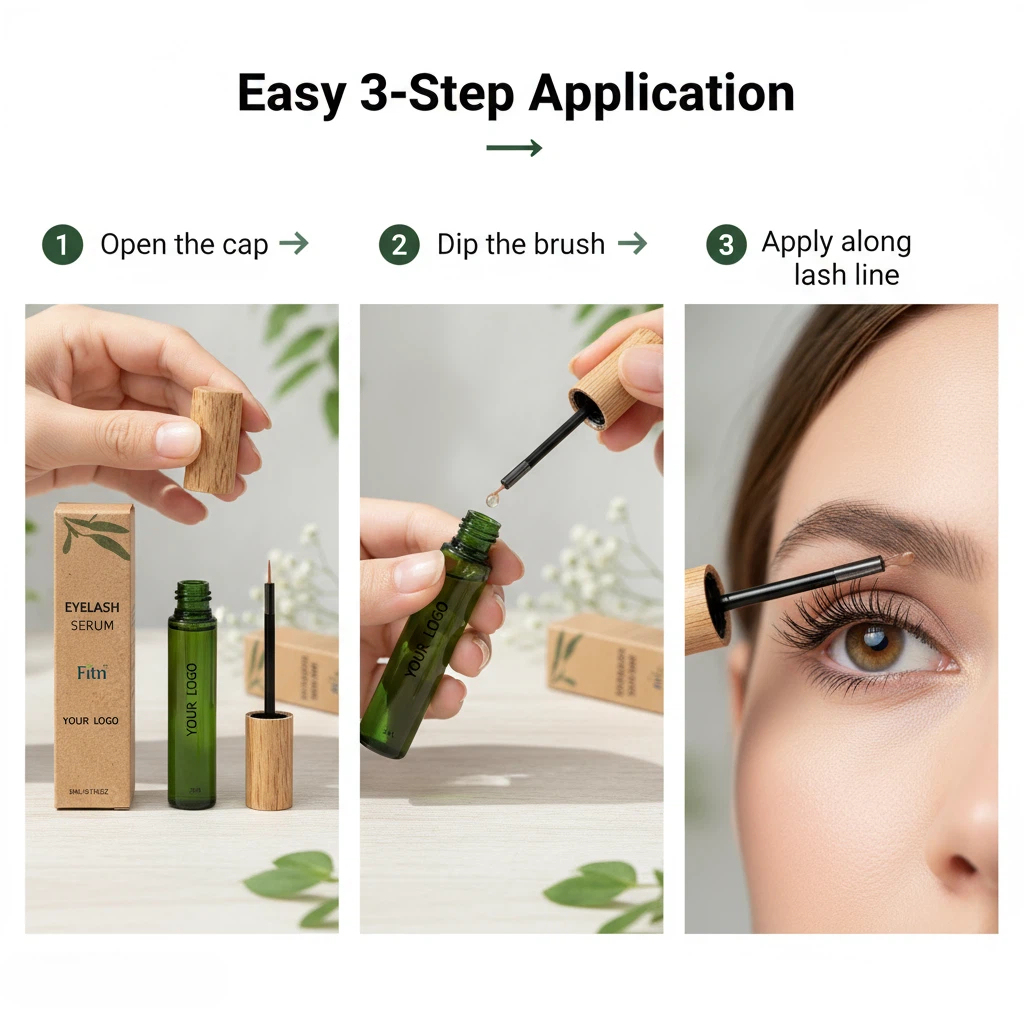
- Dip the micro-applicator wand into the bottle once; a tiny amount is sufficient for both eyes.
- Swipe the brush thinly along the skin at the base of the upper eyelashes, moving from the inner corner outward—similar to applying fine liquid eyeliner.
- Never apply serum to the lower lash line. Blinking naturally transfers sufficient product to the lower lashes. Direct application to the lower lid drastically increases the risk of product migrating into the conjunctival sac, clogging meibomian glands, and causing periorbital fat loss.
Prevent Contamination and Expiration Issues
- Wash your hands before touching the brush wand.
- Never share lash serums with others; sharing ocular cosmetics transfers bacterial flora like Staphylococcus aureus, increasing the risk of bacterial keratitis or conjunctivitis.
- Replace open cosmetic serums every 3 to 6 months. Micro-organism proliferation inside an open liquid cosmetics bottle can compromise ocular safety even if the formulation contains safe preservatives.
Manage Adverse Reactions Promptly
If you experience persistent stinging, ocular redness, blurry vision, eyelid inflammation, or severe dry eyes:
- Immediately stop using the product.
- Flush the eye area thoroughly with sterile saline or water.
- If symptoms persist beyond 48 hours, seek an evaluation from an optometrist or ophthalmologist.
Frequently Asked Questions
Are over-the-counter lash serums completely safe?
Over-the-counter lash serums are not universally safe. While many peptide- and vitamin-based formulas pose minimal risk, OTC serums containing synthetic prostaglandin analogs (such as isopropyl cloprostenate) can cause serious ocular side effects, including orbital fat loss, dry eyes, and eyelid darkening. Always examine the full ingredient list before purchasing.
Can lash growth serums permanently change your eye color?
Yes, lash serums containing prescription or synthetic prostaglandin analogs can permanently darken eye color. These active ingredients stimulate melanin production in iris melanocytes. This risk is highest for individuals with light-colored or mixed-tone eyes (such as hazel, green, or blue-gray). Peptide- and botanical-based serums do not affect melanin production and will not alter iris color.
How long does it take to see results from a safe cosmetic lash serum?
Non-prostaglandin cosmetic serums typically require 6 to 12 weeks of consistent daily application to show visible results. Because these formulas work by conditioning the hair shaft and minimizing breakage rather than accelerating biological growth rates, results become noticeable as your natural lash cycle replaces old lashes with stronger, healthier hairs.
What should I do if a lash serum causes dry eyes or stinging?
If you experience dry eyes, burning, or stinging, discontinue use immediately. These symptoms often signal irritation of the conjunctiva or disruption of the meibomian glands, which produce the eye's protective oil layer. If dryness or discomfort persists after stopping the product, consult an eye care provider for a meibomian gland and tear film evaluation.
Is it safe to use lash serums while wearing eyelash extensions or contact lenses?
Most water- or peptide-based serums are safe for use with contact lenses and eyelash extensions, provided they are oil-free and explicitly labeled "contact lens safe." Apply the serum at night after removing contact lenses to prevent ingredients from trapping under the lens surface. Avoid oil-rich formulas (such as castor oil), as lipids dissolve the cyanoacrylate adhesives used in eyelash extensions.
Final Recommendation: Prioritizing Long-Term Ocular Health
When selecting a safe lash growth serum, prioritize long-term eye health over rapid cosmetic results. To minimize the risk of periorbital fat loss, meibomian gland dysfunction, and tissue hyperpigmentation, select peptide-fortified, prostaglandin-free formulations that have been independently tested by ophthalmologists.
Before introducing any new serum into your daily routine:
- Carefully audit the ingredient label for synthetic prostaglandins (
-prostcompounds) and harsh preservatives like benzalkonium chloride (BAK). - Perform a cutaneous patch test to ensure skin compatibility.
- Apply the serum sparingly exclusively to the upper lash line.
If you have underlying dry eye conditions, glaucoma, or elevated ocular sensitivity, consult a board-certified ophthalmologist before applying functional cosmetics to your eye area.
Image Gallery