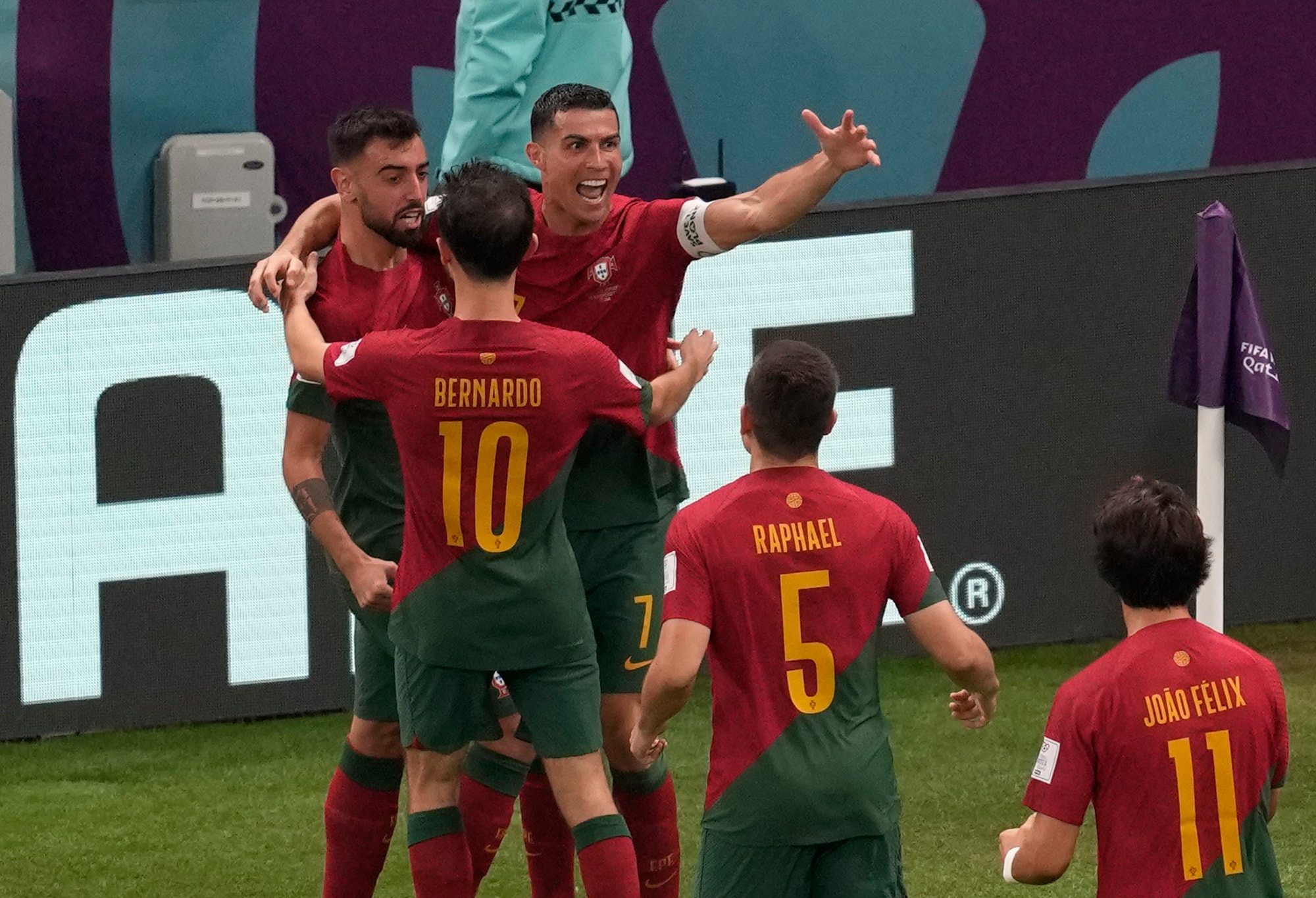
2022 Portugal World Cup Squad Overview: Roster Breakdown, Tactics, and Performance
Portugal entered the 2022 FIFA World Cup in Qatar boasting one of the most talent-dense 26-man squads in national team history. Head coach Fernando Santos blended veteran icons with dynamic young talent, navigating high expectations ac...
Portugal entered the 2022 FIFA World Cup in Qatar boasting one of the most talent-dense 26-man squads in national team history. Head coach Fernando Santos blended veteran icons with dynamic young talent, navigating high expectations across Group H before eventually being eliminated in the quarter-finals by Morocco.
Contents
The Complete 26-Man Squad Roster
The FIFA World Cup in Qatar was the first tournament where national teams were permitted to bring expanded 26-player squads to manage player workload and potential disruption. Portugal’s selection featured world-class talent from top European leagues, including Premier League powerhouses, Primeira Liga Champions League regulars, and Paris Saint-Germain stars.
| Player | Position | Club (in Nov 2022) | Key Role / Profile |
|---|---|---|---|
| Diogo Costa | Goalkeeper | FC Porto | Starting Goalkeeper; distribution specialist |
| Rui Patrício | Goalkeeper | AS Roma | Veteran shot-stopper; backup |
| José Sá | Goalkeeper | Wolverhampton Wanderers | Third-choice Goalkeeper |
| Rúben Dias | Defender | Manchester City | Central Defender; defensive leader |
| Pepe | Defender | FC Porto | Central Defender; veteran organizer |
| Danilo Pereira | Defender / Midfielder | Paris Saint-Germain | Versatile CB/DM hybrid |
| António Silva | Defender | SL Benfica | Teenage prodigy; depth at CB |
| João Cancelo | Defender | Manchester City | Dynamic Full-Back (Right/Left) |
| Diogo Dalot | Defender | Manchester United | Attacking Right-Back |
| Nuno Mendes | Defender | Paris Saint-Germain | Explosive Left-Back |
| Raphaël Guerreiro | Defender | Borussia Dortmund | Technically gifted Left-Back |
| Rúben Neves | Midfielder | Wolverhampton Wanderers | Deep-lying Playmaker |
| João Palhinha | Midfielder | Fulham | Defensive Midfield anchor |
| William Carvalho | Midfielder | Real Betis | Possessional Midfielder |
| Vitinha | Midfielder | Paris Saint-Germain | Central progressor |
| Matheus Nunes | Midfielder | Wolverhampton Wanderers | Box-to-box runner |
| Bruno Fernandes | Midfielder | Manchester United | Primary Creator / Attacking Midfielder |
| Bernardo Silva | Midfielder / Forward | Manchester City | Pressing Playmaker / Right Winger |
| João Mário | Midfielder | SL Benfica | Wide playmaker / Midfield controller |
| Otávio | Midfielder / Forward | FC Porto | High-intensity Presser |
| Cristiano Ronaldo | Forward | Free Agent / Man Utd | Team Captain / Central Striker |
| João Félix | Forward | Atlético Madrid | Second Striker / Creative Forward |
| Rafael Leão | Forward | AC Milan | Explosive Left Winger / Super-sub |
| Gonçalo Ramos | Forward | SL Benfica | Central Striker / Pressing Forward |
| Ricardo Horta | Forward | SC Braga | Versatile Attacker |
| André Silva | Forward | RB Leipzig | Target Forward |
Defensive Architecture and Goalkeeping Hierarchy
A major narrative entering the tournament was Fernando Santos’ choice in goal. Veteran Rui Patrício, who was pivotal during Portugal’s UEFA Euro 2016 triumph, was replaced in the starting lineup by 23-year-old FC Porto goalkeeper Diogo Costa. Costa offered superior sweeping ability and modern distribution from the back, aligning with Santos' attempt to implement a higher defensive line.
In defense, Portugal mixed elite experience with youthful agility. At 39 years old, Pepe delivered several commanding performances despite arriving at the tournament following a knee injury. Alongside Manchester City's Rúben Dias, Pepe formed a formidable central defensive pairing. The defensive depth was further supported by Danilo Pereira—who filled in at center-back before suffering a rib fracture during the group stage—and 19-year-old SL Benfica starlet António Silva, who played the final group match against South Korea.
Full-back selection featured strong competition on both flanks:
- Right-Back: João Cancelo started the initial group fixtures but surrendered his spot to Manchester United's Diogo Dalot, who brought directness and defensive balance during the knockout stage.
- Left-Back: Paris Saint-Germain's Nuno Mendes suffered a tournament-ending thigh injury in the second match against Uruguay, forcing Borussia Dortmund’s Raphaël Guerreiro into the primary starting role. Guerreiro responded with tactical intelligence, providing an assist and a goal in the knockout rounds.
Midfield Dynamics and Central Tactical Engine
Portugal’s central unit was among the most versatile in the 2022 tournament. Fernando Santos typically relied on a three-man midfield structure that dynamically adapted between a standard 4-3-3 and a fluid 4-2-3-1.
The primary creative burden rested on Manchester United's Bruno Fernandes, who delivered a standout tournament. Operating between the lines, Fernandes recorded two goals and three assists, establishing himself as the primary playmaker in Qatar. Beside him, Bernardo Silva played a vital tactical role, frequently dropping deep to control tempo or drifting out wide right to create overloads.
Diogo Costa Diogo Dalot Pepe Rúben Dias R. Guerreiro William Carvalho Bernardo Silva Bruno Fernandes Otávio Gonçalo Ramos João Félix
To provide physical presence and defensive balance, Santos rotated between different central midfield profiles:
- Holding Anchor: Rúben Neves began the tournament as the preferred deep-lying operator, but Fulham's João Palhinha provided greater defensive stability when protecting leads.
- Possession & Tempo: Real Betis midfielder William Carvalho offered calm circulation in mid-block structures, helping slow down games against aggressive transition teams.
- Engine & Work Rate: FC Porto's Otávio proved essential on the right channel of midfield, balancing defensive duties with high-volume pressing.
Forward Line Evolution: Ronaldo, Leão, and the Ramos Breakthrough
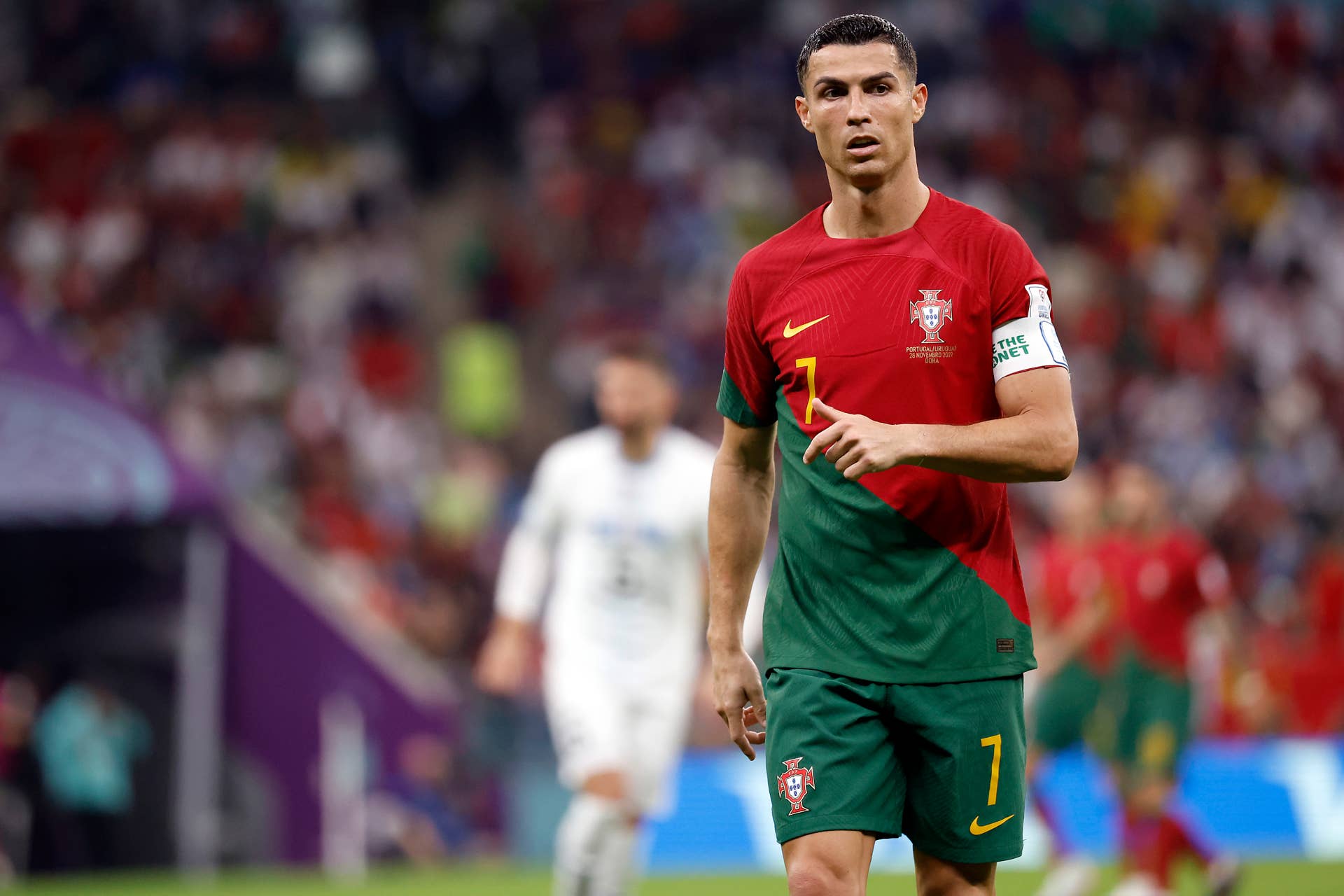
The attacking department dominated global headlines throughout November and December 2022. Captain Cristiano Ronaldo arrived in Qatar shortly after his contract with Manchester United was terminated by mutual consent. Ronaldo scored a penalty in the opening 3-2 victory against Ghana, making him the first male player to score in five separate World Cup tournaments. However, as his influence dropped during subsequent matches, Santos made a historic tactical adjustment.
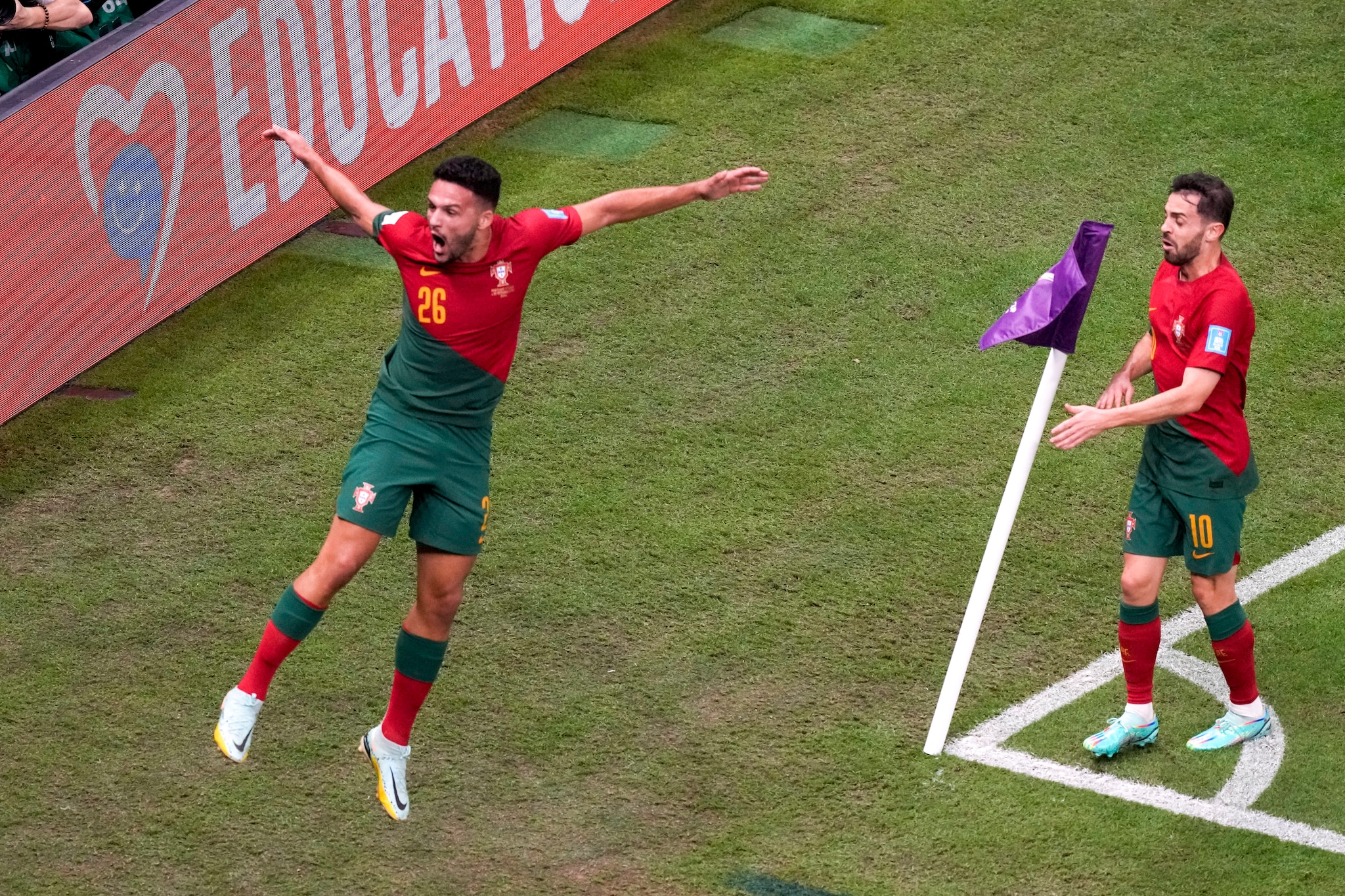
For the Round of 16 tie against Switzerland, Santos benched Ronaldo in favor of 21-year-old SL Benfica striker Gonçalo Ramos. Ramos produced one of the tournament's most memorable performances, scoring a hat-trick and delivering an assist in a 6-1 victory. Ramos brought continuous high-volume pressing and sharp movement into the penalty box, opening space for João Félix to operate in his preferred secondary striker role.
Tournament Attacking Statistics (Portugal Leaders): -------------------------------------------------- Bruno Fernandes: 2 Goals | 3 Assists | 5 Direct Contributions Gonçalo Ramos: 3 Goals | 1 Assist | 4 Direct Contributions Rafael Leão: 2 Goals | 0 Assists | 2 Direct Contributions João Félix: 1 Goal | 2 Assists | 3 Direct Contributions Cristiano Ronaldo:1 Goal | 0 Assists | 1 Direct Contribution
Despite the individual quality of Serie A Most Valuable Player Rafael Leão, the AC Milan winger was primarily used as an impact substitute. Leão scored two spectacular goals off the bench—one against Ghana and a curling strike against Switzerland—demonstrating Portugal's exceptional depth in attack.
Tournament Campaign: Group H to the Quarter-Final Exit
Portugal walked through a turbulent campaign that tested their tactical execution under pressure. Placed in Group H alongside Ghana, Uruguay, and South Korea, Portugal achieved early qualification before encountering structural resistance in the knockout stages.
Group H Matches
- Portugal 3–2 Ghana: Portugal secured three points in a dramatic second half. Goals from Ronaldo, João Félix, and Rafael Leão held off a late Ghanaian comeback effort.
- Portugal 2–0 Uruguay: A masterful performance by Bruno Fernandes, who scored twice, avenged Portugal's 2018 World Cup elimination by the South American side and secured early passage to the Round of 16.
- South Korea 2–1 Portugal: With several starters rested, Portugal took an early lead through Ricardo Horta but lost focus, allowing South Korea to score a 91st-minute winner to progress alongside Portugal.
Knockout Stage
- Round of 16: Portugal 6–1 Switzerland: Santos' refreshed lineup executed a devastating attacking display. Ramos' hat-trick, combined with goals from Pepe, Guerreiro, and Leão, marked Portugal's best performance of the tournament.
- Quarter-Final: Morocco 1–0 Portugal: Morocco's organized low-block restricted Portugal's central passing lanes. A first-half header from Youssef En-Nesyri capitalized on an misjudged aerial challenge involving Diogo Costa. Portugal dominated 73% of possession and introduced Ronaldo and Leão in the second half, but could not beat goalkeeper Yassine Bounou.
Match Timeline: [Group H] POR 3-2 GHA --> [Group H] POR 2-0 URU --> [Group H] KOR 2-1 POR | [Quarter-Final] MOR 1-0 POR <-- [Round of 16] POR 6-1 SUI <------
Tactical Strengths, Weaknesses, and Legacy
Portugal’s 2022 World Cup performance highlighted a squad rich in technical quality that fell short due to defensive lapse handling and inefficiency against low-block defenses.
Key Strengths
- Dynamic Midfield Progression: The pairing of Bruno Fernandes and Bernardo Silva created elite chance generation against teams playing open block systems.
- Roster Depth: Santos had high-level options across every position, allowing tactical adjustments mid-match without losing structural quality.
- Aerial & Set-Piece Danger: With Pepe and Rúben Dias advancing for corners, Portugal remained a constant threat from set pieces.
Structural Vulnerabilities
- Defensive Transition Susceptibility: Pushing both full-backs high left isolated spaces behind Rúben Dias and Pepe, which opponents exploited on fast counter-attacks.
- Difficulty Unlocking Low Blocks: Against compact defenses like Morocco, Portugal struggled to move the ball quickly through the central channels, forcing repetitive wide crosses that were easily cleared.
- Goalkeeping Errors under Pressure: Diogo Costa's misplaced judgment on high crosses cost Portugal during key moments against South Korea and Morocco.
Following Portugal's exit, Fernando Santos ended his eight-year tenure as national team head coach. His departure cleared the path for Belgian manager Roberto Martínez to take charge in early 2023, building upon the young core established during this 2022 campaign.
Frequently Asked Questions
Who was the manager of Portugal at the 2022 World Cup?
Fernando Santos managed Portugal during the 2022 FIFA World Cup. He took over the national team in 2014 and led them to victory at UEFA Euro 2016 and the 2019 UEFA Nations League before stepping down after Portugal's quarter-final loss to Morocco in Qatar.
How many goals did Cristiano Ronaldo score in the 2022 World Cup?
Cristiano Ronaldo scored one goal at the 2022 World Cup, converting a penalty kick in Portugal's opening Group H match against Ghana. This goal made him the first male player in history to score at five different FIFA World Cup tournaments (2006, 2010, 2014, 2018, and 2022).
Why did Gonçalo Ramos start over Cristiano Ronaldo against Switzerland?
Head coach Fernando Santos chose to start Gonçalo Ramos over Cristiano Ronaldo in the Round of 16 to improve off-the-ball movement and high pressing against Switzerland's defense. The tactical decision paid off, as Ramos scored a hat-trick and provided an assist in Portugal's 6-1 victory.
Which club contributed the most players to Portugal's 2022 squad?
Wolverhampton Wanderers, Paris Saint-Germain, Manchester City, and SL Benfica each had multiple key players represented in Portugal's 26-man squad. Manchester City (Rúben Dias, João Cancelo, Bernardo Silva) and Paris Saint-Germain (Danilo Pereira, Nuno Mendes, Vitinha) provided core starters across defense and midfield.
How far did Portugal progress in the 2022 FIFA World Cup?
Portugal reached the quarter-finals of the 2022 World Cup. After topping Group H with six points and defeating Switzerland 6-1 in the Round of 16, they were eliminated 1-0 by Morocco on December 10, 2022.
Tactical Takeaway and Modern Impact
Analyzing Portugal's 2022 World Cup squad demonstrates the transitional nature of modern international football. The tournament marked a shift from relying primarily on iconic figures like Cristiano Ronaldo to integrating dynamic technical talents like Bruno Fernandes, João Félix, and Gonçalo Ramos. For analysts examining squad construction, Portugal's 2022 roster serves as a landmark example of balancing veteran experience with modern pressing requirements in elite international competition.
Image Gallery