Ryan Routh Courtroom Incident: Fact-Check, Legal Context, and Security Response
During a federal court proceeding in Florida, Ryan Wesley Routh—the suspect accused in the September 2024 attempted assassination of Donald Trump—attempted to harm himself at the defense table by striking himself in the neck with a wri...
During a federal court proceeding in Florida, Ryan Wesley Routh—the suspect accused in the September 2024 attempted assassination of Donald Trump—attempted to harm himself at the defense table by striking himself in the neck with a writing implement. U.S. Marshals immediately intervened, disarmed him, and placed him under enhanced suicide watch and medical observation.
Contents
The Courtroom Incident: What Happened During the Hearing
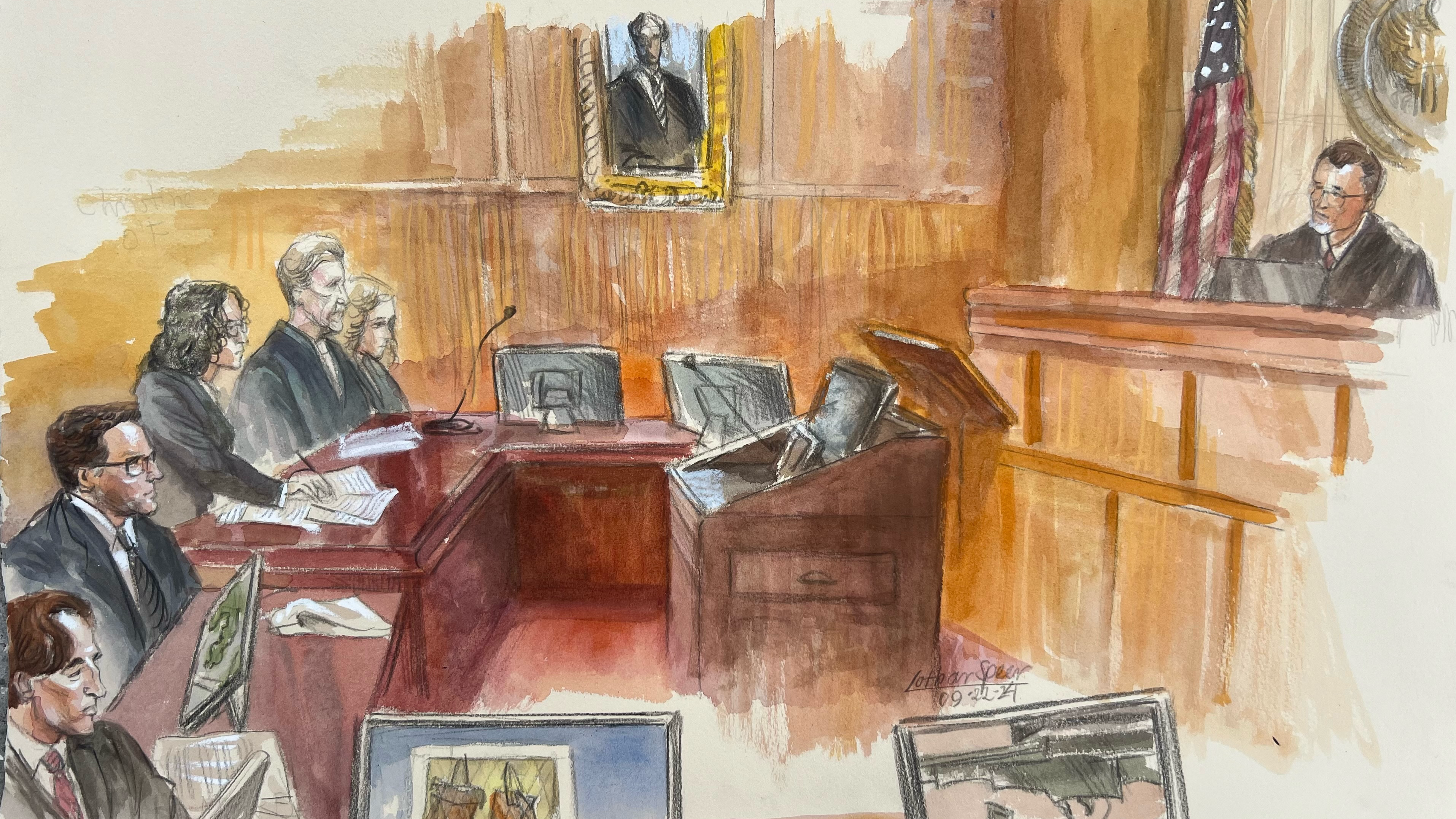
The incident occurred during pre-trial proceedings in the U.S. District Court for the Southern District of Florida, where Ryan Wesley Routh was appearing alongside his court-appointed public defenders. As attorneys and court officers were addressing procedural motions, Routh abruptly grabbed a pen or pencil provided at the defense table for note-taking and attempted to stab himself in the neck.
U.S. Marshals stationed inside the courtroom reacted within seconds. Multiple deputy marshals tackled and physically subdued Routh, stripping the writing instrument from his hand before severe physical injury could occur. The hearing was briefly suspended while Routh was escorted out of the courtroom by federal authorities for immediate triage, medical assessment, and psychiatric evaluation.
Following the outburst, court security officers conducted a thorough inspection of the defense area to secure all potential hazards. While the physical injuries sustained by Routh were reported as minor due to the rapid reaction of the security detail, the incident prompted immediate adjustments to how high-risk defendants interact with defense tools and writing utensils inside federal hearing rooms.
Background of the Federal Prosecution of Ryan Wesley Routh
Ryan Wesley Routh was arrested on September 15, 2024, after a U.S. Secret Service agent spotted a rifle barrel protruding through a chain-link fence along the perimeter of the Trump International Golf Club in West Palm Beach, Florida, where former President Donald Trump was playing.
Federal law enforcement officers reported that Routh had set up a sniper position equipped with an SKS-style rifle, digital camera, body armor, and ceramic plates mounted on the fence line. A Secret Service agent fired toward Routh, causing him to drop his weapon and flee in a vehicle. He was subsequently detained by local law enforcement along Interstate 95 in neighboring Martin County.
Following his arrest, a federal grand jury in the Southern District of Florida returned an indictment charging Routh with major federal offenses:
- Attempted Assassination of a Major Presidential Candidate: Charged under 18 U.S.C. § 351, which carries a maximum potential sentence of life imprisonment.
- Possession of a Firearm in Furtherance of a Crime of Violence: Charged under 18 U.S.C. § 924(c).
- Assaulting a Federal Officer: Charged in connection with the confrontation involving Secret Service personnel.
- Felon in Possession of a Firearm and Ammunition: Charged under 18 U.S.C. § 922(g) based on prior state-level felony convictions in North Carolina.
- Possession of a Firearm with an Obliterated Serial Number: Charged under federal weapons trafficking and control statutes.
The case was assigned to U.S. District Judge Aileen Cannon. From the outset, the proceedings involved complex security measures, substantial digital evidence, and extensive pre-trial litigation regarding detention, discovery, and competency evaluations.
Courtroom Security Protocols and Inmate Self-Harm Prevention
The self-harm attempt by Routh highlighted the ongoing challenge of balancing a criminal defendant's constitutional rights with courthouse security imperative. Under federal court rules, criminal defendants have a right to assist in their own defense, which includes reviewing documents, taking notes, and communicating silently with counsel using pens, pencils, and legal paper during hearings.
Role of the U.S. Marshals Service
The U.S. Marshals Service (USMS) holds primary responsibility for providing security inside federal courthouses, maintaining custody of federal detainees, and protecting judicial officers, attorneys, and members of the public. When handling high-profile or high-risk defendants, the USMS enforces standardized security protocols:
Physical Restraints: Depending on security threat assessments, defendants may be subjected to leg irons, waist chains, or hand restraints. In jury proceedings or public hearings, courts often order visible restraints removed or concealed to preserve the presumption of innocence, increasing reliance on close physical guarding by deputy marshals.
Prohibited Items and Tool Control: Standard metal pens, wooden pencils with exposed graphite, or heavy office supplies are restricted. Following self-harm incidents, defense teams are often required to provide flexible, safety-compliant rubber pens that bend under pressure and cannot be used as effective stabbing weapons.
Proximity and Guard Ratio: For high-risk defendants, multiple marshals are positioned within arm's reach of the defense table, allowing immediate physical intervention if a defendant moves unexpectedly.
Threat Assessment (Evaluating risk)
Restraint Level (Visible/Hidden)
Proximity Guarding (Standing Marshals)
Tool Audit (Safety Pens)
Following the incident involving Routh, judicial officers frequently mandate the strict use of flexible suicide-resistant writing instruments for all in-custody defendants facing severe charges or exhibiting psychological distress.
Psychological Evaluations and Federal Legal Competency Standards
A primary concern arising from courtroom self-harm is the legal determination of the defendant's mental competency to stand trial. Under U.S. federal law, prosecuting an incompetent defendant violates the Due Process Clause of the Fifth Amendment.
Federal Competency Standards (18 U.S.C. § 4241)
Under 18 U.S.C. § 4241, either the defense, the prosecution, or the court sua sponte (on its own initiative) may motion for a hearing to determine the mental competency of the defendant. A defendant is deemed incompetent to stand trial if the court finds by a preponderance of the evidence that the defendant is currently suffering from a mental disease or defect rendering them unable to:
- Understand the nature and consequences of the proceedings against them; or
- Assist properly in their own defense.
It is critical to distinguish competency to stand trial from an insanity defense:
- Competency to Stand Trial: Focuses on the defendant's present mental state during court proceedings. It assesses whether the defendant can comprehend the court process and work constructively with defense counsel.
- Insanity at the Time of the Offense (18 U.S.C. § 17): Focuses on the defendant's mental state at the exact moment the alleged crime occurred, evaluating whether severe mental disease prevented them from appreciating the nature or wrongfulness of their acts.
Post-Incident Protocols and Suicide Watch
When an in-custody defendant engages in self-harm within a federal facility or court room, specific administrative and medical procedures are immediately triggered:
- Immediate Psychiatric Assessment: The detainee is examined by licensed mental health professionals at the detention facility (such as the Federal Detention Center, Miami).
- Suicide Watch Status: The detainee is placed in a specialized cell free of ligature points, issued tear-resistant safety garments (suicide smocks), and subjected to continuous visual observation (either direct 1-on-1 monitoring or 15-minute interval checks).
- Competency Motion Filings: Defense attorneys are ethically obligated to evaluate whether self-harm reflects a deeper inability to understand proceedings, often prompting formal court-ordered psychiatric evaluations by Bureau of Prisons (BOP) psychologists.
Key Case Summary and Procedural Overview
The table below outlines the critical milestones, charges, security measures, and procedural elements associated with the prosecution of Ryan Wesley Routh.
| Category | Key Information / Detail | Legal & Security Context |
|---|---|---|
| Defendant Identity | Ryan Wesley Routh (Born 1966) | Resident of Hawaii/North Carolina; history of prior law encounters. |
| Primary Incident Date | September 15, 2024 | Trump International Golf Club, West Palm Beach, FL. |
| Lead Prosecuting Body | U.S. Department of Justice (Southern District of Florida) | Federal jurisdiction over attempted presidential assassination. |
| Primary Charges | 18 U.S.C. § 351 (Attempted Assassination), 18 U.S.C. § 924(c) | Potential sentence includes life imprisonment upon conviction. |
| Presiding Judge | U.S. District Judge Aileen M. Cannon | Oversees pre-trial motions, scheduling, and evidentiary hearings. |
| Courtroom Self-Harm Event | Pre-trial defense table stabbing attempt | Defendant used note-taking utensil targeting neck area. |
| Security Response | Immediate restraint by U.S. Marshals Service | Disarmed within seconds; defendant removed for triage. |
| Post-Incident Safeguards | Transition to safety writing tools, enhanced suicide watch | Routine precaution under BOP custody guidelines. |
| Mental State Review | Evaluation under 18 U.S.C. § 4241 | Focuses on present competency to assist defense counsel. |
Impact on Defense Strategy and Trial Schedule
A courtroom self-harm attempt introduces significant tactical and procedural considerations for both defense attorneys and federal prosecutors.
Defense Counsel Obligations
When a client displays destructive behavior inside a courtroom, defense attorneys must evaluate whether the act stems from severe emotional distress, severe psychiatric collapse, or a calculated effort to delay proceedings. Counsel must decide whether to request formal competency evaluations under federal statute. If a formal competency evaluation is ordered:
- The court stays trial proceedings.
- The defendant is committed to a suitable federal medical facility (such as FMC Devens or FMC Butner) for a psychiatric evaluation period lasting up to 30 to 45 days.
- Forensic psychologists submit a formal report assessing cognitive functioning, rationality, and understanding of courtroom procedures.
Impact on Judicial Timeline
Competency evaluations inevitably introduce delays into the pre-trial schedule. Under the Speedy Trial Act (18 U.S.C. § 3161), periods of delay resulting from mental competency examinations and hearings are automatically excluded from the computation of time within which a trial must commence. Consequently, self-harm events and subsequent psychiatric reviews push back trial dates and hearing schedules by several months.
Public and Media Considerations
High-profile criminal trials involving national security issues or political figures attract intensive media scrutiny. Courtroom outbursts highlight security vulnerabilities and often lead judges to issue orders restricting courtroom tools, modifying media access, or implementing stricter security cordons inside the courthouse gallery.
Frequently Asked Questions
What instrument did Ryan Routh use during the courtroom incident?
Ryan Routh used a writing utensil (a standard pen or pencil) provided to him at the defense table for taking notes during the hearing. He attempted to jab the instrument into his neck before being tackled by U.S. Marshals.
Did Ryan Routh sustain severe injuries during the self-harm attempt?
No. Thanks to the rapid physical intervention of U.S. Marshals stationed directly behind the defense table, Routh was disarmed within seconds. His physical injuries were minor, and he received immediate medical evaluation.
How does court security prevent self-harm during federal trials?
Federal courts rely on the U.S. Marshals Service to evaluate risk levels for every defendant. Strategies include using specialized rubberized or bendable writing utensils, maintaining physical proximity guards near high-risk inmates, using concealed body restraints, and conducting thorough security audits of legal materials brought into the courtroom.
Does an attempt at self-harm automatically mean a defendant is legally incompetent?
No. Under federal law, self-harm or suicidal ideation does not automatically equate to legal incompetence. Competency under 18 U.S.C. § 4241 requires evidence that a mental disease or defect renders the defendant unable to understand the court proceedings or assist their defense counsel. A forensic psychological evaluation is required to make that legal determination.
What charges does Ryan Routh face in federal court?
Routh faces multiple federal counts, including attempted assassination of a major presidential candidate (18 U.S.C. § 351), possessing a firearm in furtherance of a crime of violence, assaulting a federal officer, and various federal firearms violations regarding felon status and obliterated serial numbers.
Summary and Key Takeaway
The courtroom incident involving Ryan Wesley Routh illustrates the intense security challenges surrounding high-stakes federal prosecutions. While the rapid response of U.S. Marshals prevented serious physical harm, the event highlights the procedural mechanisms federal courts use—such as safety writing tools, suicide watch protocols, and formal competency evaluations under 18 U.S.C. § 4241—to maintain judicial integrity, safety, and due process during major criminal trials.
Disclaimer: This article provides factual analysis and legal context regarding federal court procedures and publicly reported legal events. It does not constitute legal counsel, psychiatric diagnosis, or official court documentation.
Image Gallery