The Key Bridge Disaster: Understanding the Tragedy in Baltimore, Its Legal Impact, and Infrastructure Recovery
On March 26, 2024, the container ship Dali suffered a catastrophic power failure and struck a critical support pier of the Francis Scott Key Bridge in Baltimore, Maryland. The collision caused the immediate collapse of the 1.6-mile con...
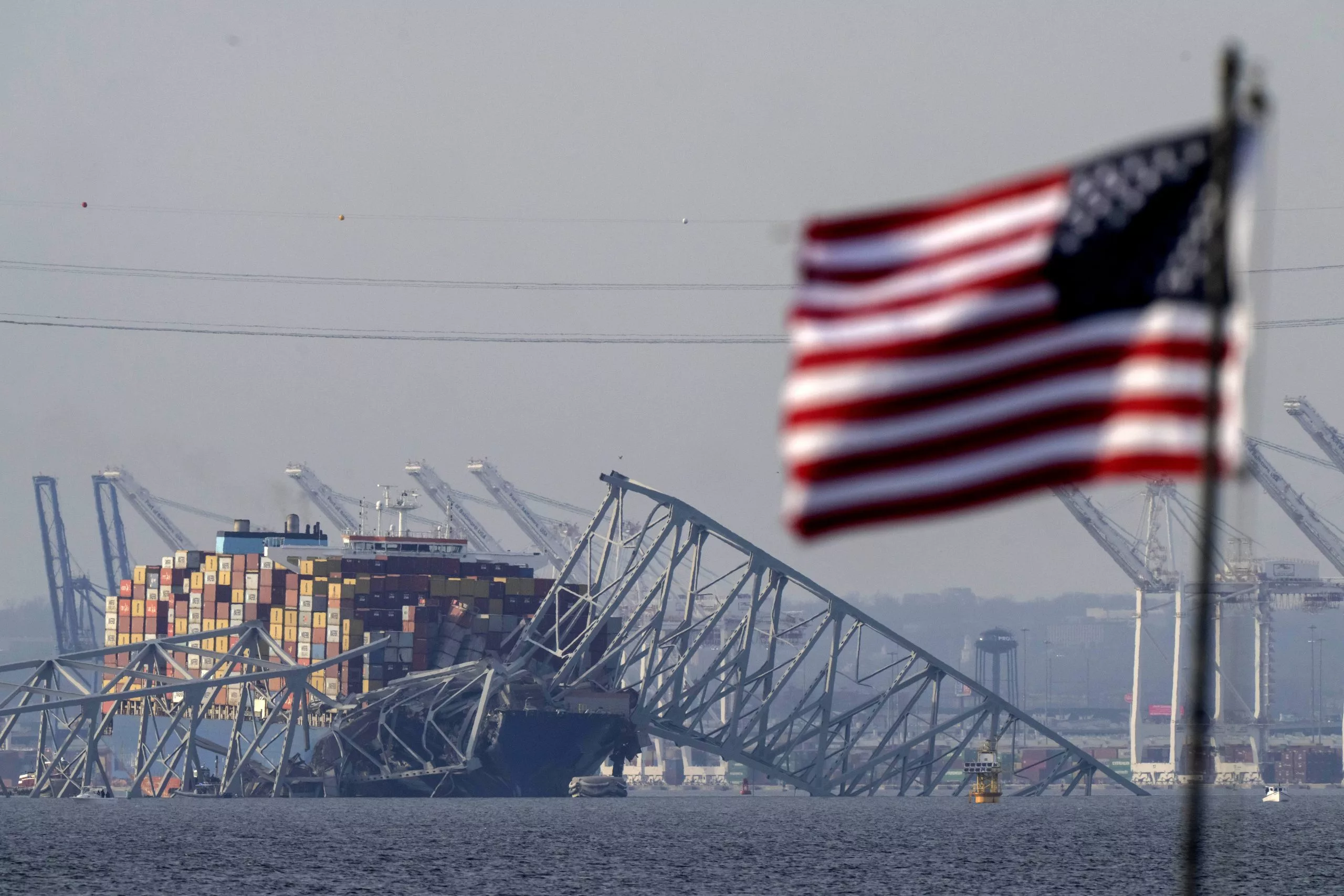
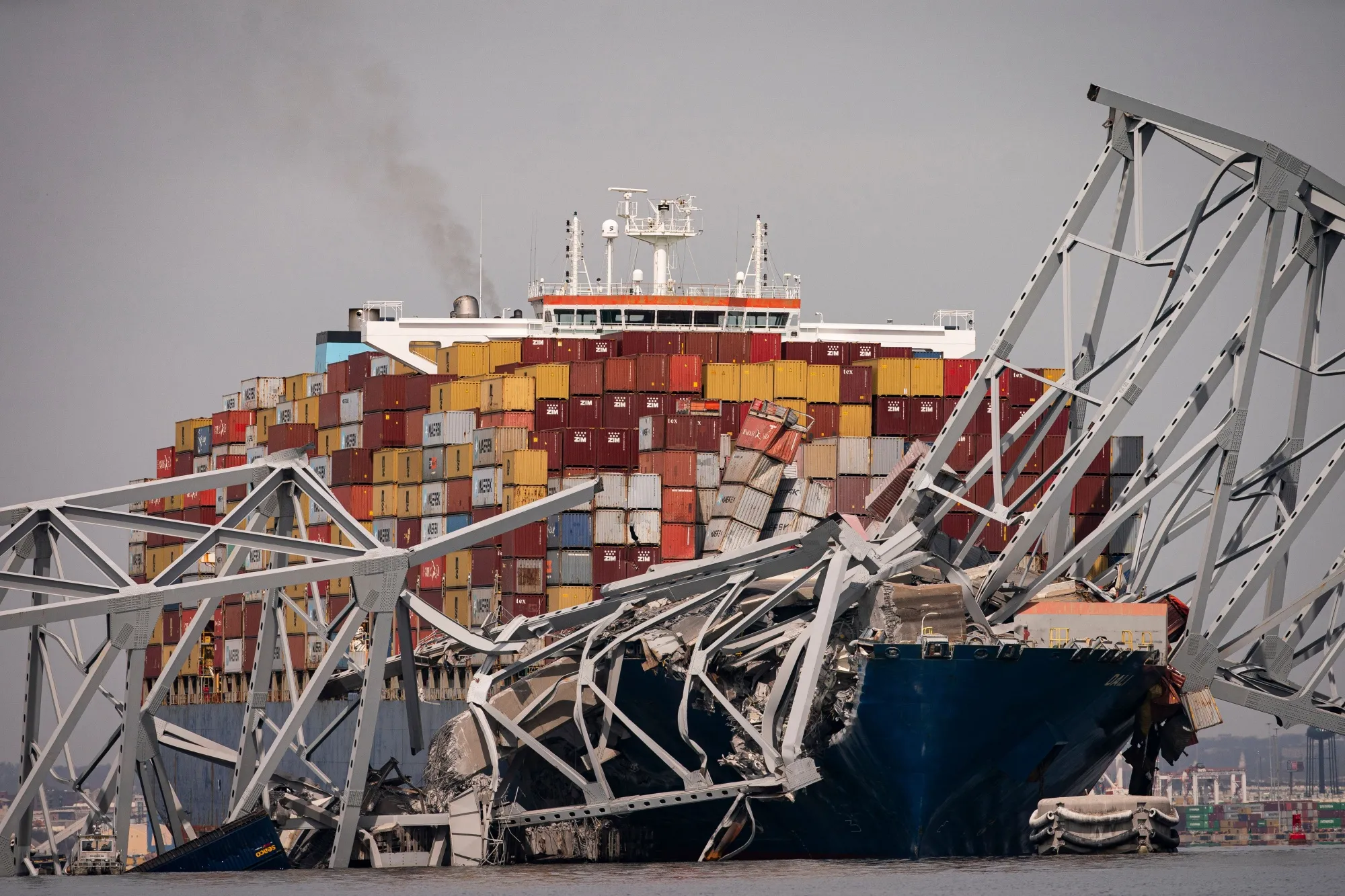
On March 26, 2024, the container ship Dali suffered a catastrophic power failure and struck a critical support pier of the Francis Scott Key Bridge in Baltimore, Maryland. The collision caused the immediate collapse of the 1.6-mile continuous truss bridge into the Patapsco River, resulting in the tragic deaths of six construction workers, severe economic disruption to the Port of Baltimore, and complex multi-billion-dollar legal disputes involving international maritime law, infrastructure resilience, and supply chain management.
Contents
Chronology of the Disaster: What Happened on March 26, 2024
In the early morning hours of March 26, 2024, the Singapore-flagged container vessel Dali, measuring 984 feet in length and carrying over 4,700 cargo containers, departed the Port of Baltimore bound for Sri Lanka. As the ship navigated the Patapsco River channel under the control of local harbor pilots, it experienced a total loss of electrical power roughly 0.8 miles from the Francis Scott Key Bridge.
The power failure caused the vessel's primary propulsion, steering systems, and bridge navigation instruments to shut down. Although emergency generators briefly restored secondary electrical power, the ship was unable to regain propulsion or directional control. The vessel began drifting off course toward one of the main support piers supporting the bridge's central span.
- Port of Baltimore Departure
- Total Electrical Blackout (~0.8 mi from bridge)
- Mayday Signal Issued by Vessel Crew
- Bridge Traffic Blocked by Transportation Authority Police
- Impact with Support Pier & Structural Collapse (1:28 AM)
Recognizing the imminent danger, the vessel's crew issued an urgent "Mayday" distress signal via marine VHF radio. This advance warning allowed officers from the Maryland Transportation Authority Police and local dispatchers to swiftly halt vehicular traffic at both ends of the bridge. This decisive action prevented dozens of commuter vehicles from entering the collapse zone.
However, an eight-person road maintenance crew working on the bridge deck to repair asphalt potholes was unable to evacuate in time. At approximately 1:28 AM EDT, the Dali struck the bridge's southern main support pier at a speed of roughly 6.5 knots. Within seconds, the continuous truss structure suffered catastrophic progressive collapse, plunging thousands of tons of steel and concrete into the Patapsco River along with the construction crew. Two workers were rescued from the water during initial search-and-rescue operations, while six workers tragically lost their lives.
Technical Root Causes: NTSB Findings and Electrical Blackouts
The National Transportation Safety Board (NTSB) launched a comprehensive safety investigation immediately following the collapse, focusing on the mechanical, electrical, and operational factors that led to the ship's power failure.
Electrical Distribution and Breaker Trips
Preliminary and ongoing findings by the NTSB revealed that the Dali experienced repeated electrical blackouts while still maneuvering within the harbor channel. The ship suffered an initial blackout when high-voltage circuit breakers unexpectedly tripped, cutting off power to the main engine pumps and steering systems.
- Low-Voltage Transformer / Breaker Trip
- Loss of Engine Fuel Pumps
- Main Propulsion Shutdown
- Emergency Generator Engages (Secondary Systems Only)
- Rudder Locked / Vessel Drifts into Support Pier
The NTSB highlighted the following critical technical factors:
- Fuel System and Engine Controls: Investigators examined whether contaminated heavy fuel oil or mechanical fuel pump failures contributed to engine stall events prior to the breaker trips.
- Switchboard Configuration: The electrical configuration prior to departure utilized a specific breaker arrangement that left the ship vulnerable to single-point electrical failures without immediate auto-transfer capability.
- Emergency Power Limitations: While the emergency generator activated as designed, emergency power on container vessels of this class does not supply power to main propulsion or heavy steering motors, leaving the vessel unable to reverse engines or execute hard-over rudder maneuvers once main power is lost.
Structural Vulnerability of Non-Redundant Bridges
The structural collapse highlighted severe vulnerabilities inherent in 1970s-era bridge architecture. The Francis Scott Key Bridge was a continuous steel truss bridge designed without modern structural redundancy or heavy physical pier protections.
When the Dali collided with the main pier, the support column suffered total structural destruction. Because the continuous truss relied on uninterrupted tension and compression across its entire span, the loss of a single main pier triggered an immediate failure of the entire central structure. The bridge lacked substantial fender systems or independent concrete dolphin structures capable of absorbing or deflecting an impact from a modern mega-container ship.
Economic and Environmental Impact on Baltimore and Global Shipping
The collapse of the Key Bridge created immediate logistical bottlenecks across regional, national, and international supply chains, while triggering a massive maritime salvage operation.
- Collapse of Key Bridge (March 2024)
- Patapsco Channel Block
- Port of Baltimore Closed
- Roll-on/roll-off halted
- 140,000 jobs impacted
- Port of Baltimore Closed
- I-695 Highway Severed
- 30,000+ Vehicles Rerouted
- Hazmat detours via I-95
- Regional freight delay
- 30,000+ Vehicles Rerouted
- Patapsco Channel Block
Port of Baltimore Disruption
The Port of Baltimore is a vital commercial hub, ranking as the top U.S. port for the import and export of automobiles, light trucks, farm machinery, and heavy construction equipment. The collapse completely blocked the 50-foot-deep Fort McHenry Federal Channel, trapping several commercial vessels behind the debris field and preventing ocean-bound ships from entering.
- Automotive and Ro-Ro Freight: Major automakers were forced to reroute vehicle shipments to alternative East Coast ports, including Norfolk, Virginia, and Brunswick, Georgia, increasing inland transportation costs.
- Labor and Employment: Thousands of longshoremen, truck drivers, port workers, and supporting logistics staff faced temporary unemployment or reduced working hours while the channel remained obstructed.
- Hazardous Cargo Detours: The Key Bridge was a primary designated route for hazardous material transport around Baltimore, as hazmat shipments are prohibited in the Baltimore Harbor Tunnel and Fort McHenry Tunnel. The bridge loss forced heavy trucks onto extended detours along the outer loops of Interstate 695 and Interstate 95.
Salvage Operations and Channel Restoration
The Unified Command—comprising the U.S. Coast Guard, U.S. Army Corps of Engineers, Maryland State Police, and private salvage contractors—executed one of the largest marine clearance operations in U.S. history.
Salvage teams utilized specialized floating crane barges, including the 1,000-ton capacity Chesapeake 1000, to cut and remove over 50,000 tons of shattered steel and concrete. Controlled explosive detonations were utilized in May 2024 to dismantle massive steel truss sections resting atop the bow of the Dali, allowing the ship to be refloated and towed to a local terminal.
By June 10, 2024, the Army Corps of Engineers fully restored the main Fort McHenry Channel to its original dimensions of 50 feet deep and 700 feet wide, enabling full commercial maritime operations to resume.
Legal Liabilities, Maritime Law, and Federal Settlements
The collapse triggered broad civil and criminal legal actions involving federal agencies, state authorities, corporate shipowners, and grieving families.
The Limitation of Liability Act of 1851
Shortly after the incident, the ship’s owner, Grace Ocean Private Ltd., and its manager, Synergy Marine Group, filed a petition in federal district court to limit their financial liability to approximately $43.7 million under the Limitation of Liability Act of 1851. This historic maritime law allows vessel owners to limit liability claims to the post-casualty value of the vessel and its pending freight, provided the owner can prove the unseaworthiness or negligence occurred without their direct knowledge or privity.
Department of Justice Settlement and Civil Claims
The U.S. Department of Justice (DOJ) filed a major lawsuit against the vessel’s owner and manager, alleging that the ship’s electrical and mechanical systems were improperly maintained, leading to predictable blackouts. The DOJ argued that the owner knowingly sent an unseaworthy vessel into a major navigable waterway.
In October 2024, Grace Ocean Private Ltd. and Synergy Marine Group agreed to pay $102 million to settle the civil lawsuit brought by the U.S. government. The settlement specifically covered the extensive costs incurred by federal agencies during the emergency response, salvage operations, and channel clearing efforts.
Separately, the State of Maryland, local business owners, port workers, and the families of the deceased workers filed claims seeking billions of dollars in damages for structural destruction, economic losses, and wrongful death. These cases examine whether corporate negligence, inadequate maintenance, or crew error invalidated the shipowner's right to limit liability under maritime law.
Technical & Operational Incident Summary
The following table summarizes the structural, operational, and legal metrics associated with the Baltimore Key Bridge collapse:
| Category | Technical / Operational Metric | Description & Context |
|---|---|---|
| Vessel Specifications | Dali (IMO 9697428) | 984-ft length, 148-ft beam, 9,962 TEU container capacity, flagged in Singapore. |
| Bridge Structure | Francis Scott Key Bridge | 1.6-mile continuous steel arch-shaped truss bridge; opened in 1977; carried I-695 traffic. |
| Human Impact | 6 Fatalities, 2 Rescued | Road maintenance crew members on bridge deck at time of impact. |
| Impact Velocity | Approx. 6.5 knots | Vessel drifted off-center under emergency generator power without propulsion. |
| Debris Quantity | ~50,000 Tons of Steel & Concrete | Structural debris submerged in the Patapsco River blocking the navigation channel. |
| Federal Channel Clear | June 10, 2024 | Full restoration of 50-ft deep by 700-ft wide Fort McHenry Federal Channel. |
| DOJ Civil Settlement | $102 Million (Oct 2024) | Paid by shipowner/manager to reimburse U.S. federal response and clearance costs. |
| Reconstruction Target | Estimated 2028–2030 | Managed by Maryland Transportation Authority (MDTA) with federal financial backing. |
Key Bridge Rebuilding Plan: Architecture, Timeline, and Funding
Planning and preliminary engineering for the replacement of the Francis Scott Key Bridge began immediately following the site clearance. The Maryland Transportation Authority (MDTA) leads the reconstruction project, setting strict guidelines for safety, capacity, and navigational clearance.
Design Standards and Engineering Modifications
The replacement bridge will incorporate modern structural engineering standards specifically designed to prevent similar catastrophic events:
Cable-Stayed Bridge Architecture: The new design transitions away from a continuous steel truss to a modern cable-stayed bridge, eliminating single points of structural failure across main spans.
Increased Navigational Vertical Clearance: The new structure increases vertical clearance over the channel to accommodate modern ultra-large container vessels (ULCVs).
Advanced Pier Protection Systems: Massive structural protection measures—including concrete collision dolphins, submerged sand islands, and heavy fender systems—will be built around primary bridge piers. These structures are engineered to stop or deflect high-tonnage cargo ships long before reaching load-bearing columns.
Modern Cable-Stayed Bridge Deck
- Main Pylons
- Concrete Island (Pier Protection Dolphins)
- Main Pylons
Procurement, Financing, and Expected Delivery
The state of Maryland selected a design-build contracting model to accelerate construction timeline estimates:
- Project Financing: Initial funding commitments originated from Federal Highway Administration (FHWA) Emergency Relief funds, supplemented by federal infrastructure grants, insurance payouts from the original bridge policy, and legal recovery proceeds from responsible parties.
- Target Completion Window: Engineering schedules target project completion between 2028 and 2030, reflecting the extensive geotechnical analysis, design approval, and marine foundation construction required for deep-water bridge pylons.
Global Maritime and Infrastructure Policy Changes
The Baltimore tragedy prompted nationwide and international policy reviews across maritime safety boards, harbor pilot associations, and transportation departments.
Pier Protection Mandates for U.S. Bridges
The Federal Highway Administration (FHWA) and National Academy of Sciences initiated nationwide structural reviews of major water-crossing bridges. Prior to the Key Bridge collapse, bridge inspections focused primarily on structural wear, corrosion, and concrete fatigue rather than marine collision risk. Modernized guidelines require transportation departments to conduct vessel collision risk assessments for all bridges crossing commercial maritime shipping lanes, taking into account the massive growth in cargo ship displacement over the past three decades.
Shipboard Power Redundancy and Port Towage Protocols
The International Maritime Organization (IMO) and the U.S. Coast Guard initiated reviews into safety management systems for commercial shipping lines. Key regulatory policy evaluations include:
- Tugboat Escort Requirements: Port authorities across the United States evaluated expanding mandatory tugboat escorts for large container ships until vessels fully clear outer harbor channels and major bridge structures.
- Critical Power Backup Rules: Maritime safety panels recommended stricter requirements for redundant dual-fuel supply lines and immediate auto-engaging auxiliary steering power systems to maintain directional control during primary generator trips.
Frequently Asked Questions
What caused the ship to collide with the Key Bridge?
The container ship Dali suffered a complete electrical blackout while navigating out of the Port of Baltimore. The loss of electrical power caused the main engine to shut down and disabled steering controls, preventing the crew from altering course. The ship drifted out of the designated channel and struck a main support pier of the Francis Scott Key Bridge.
Why did the entire bridge collapse so quickly?
The Francis Scott Key Bridge was a continuous steel truss bridge designed in the 1970s. In continuous truss structures, load distribution is shared across the entire length of the span. When the Dali destroyed one of the main load-bearing piers, the bridge lost its structural support, triggering an immediate and progressive total collapse of the main spans.
How many people died in the Baltimore bridge collapse?
Six road construction workers lost their lives in the tragedy. An eight-person maintenance crew was working on the bridge deck repairing potholes when the collision occurred. Two workers were rescued from the Patapsco River shortly after the collapse, while the remaining six workers perished.
Who paid for the salvage and cleanup operations?
The U.S. federal government initially funded emergency response and channel clearance operations through federal agencies. In October 2024, the ship's owner (Grace Ocean Private Ltd.) and manager (Synergy Marine Group) agreed to a $102 million civil settlement with the U.S. Department of Justice to reimburse the federal government for costs incurred clearing the channel and restoring port operations.
When will the new Key Bridge be completed?
The Maryland Transportation Authority (MDTA) is managing the design and reconstruction of a new modern cable-stayed bridge. Current engineering schedules target completion between 2028 and 2030, supported by federal infrastructure emergency funding, state resources, and legal recovery funds.
Strategic Takeaways for Maritime Safety and Supply Chain Resilience
The Baltimore bridge tragedy served as a profound reminder of the systemic risks created by growing global trade volume, evolving ship dimensions, and aging public infrastructure. To mitigate future risks, marine operators, logistics planners, and government agencies should prioritize the following actions:
- Conduct Dynamic Vessel Collision Assessments: State transportation agencies must audit all major bridge crossings situated near commercial waterways to evaluate pier resistance against current container ship tonnages.
- Implement Mandatory Harbor Escorts: Port authorities should evaluate requiring continuous tugboat escorts for heavy vessel transits past critical infrastructure, ensuring physical steering assistance is immediately available if power fails.
- Enhance Supply Chain Diversification: Logistics managers should maintain contingency routing strategies across secondary regional ports to mitigate business interruption risks caused by sudden port closures or waterway blockages.
- Update Maritime Maintenance Protocols: Commercial ship operators must enforce strict preventive maintenance routines on switchboards, fuel filtration systems, and emergency power transfer switches to prevent single-point electrical failures in confined channels.
Image Gallery