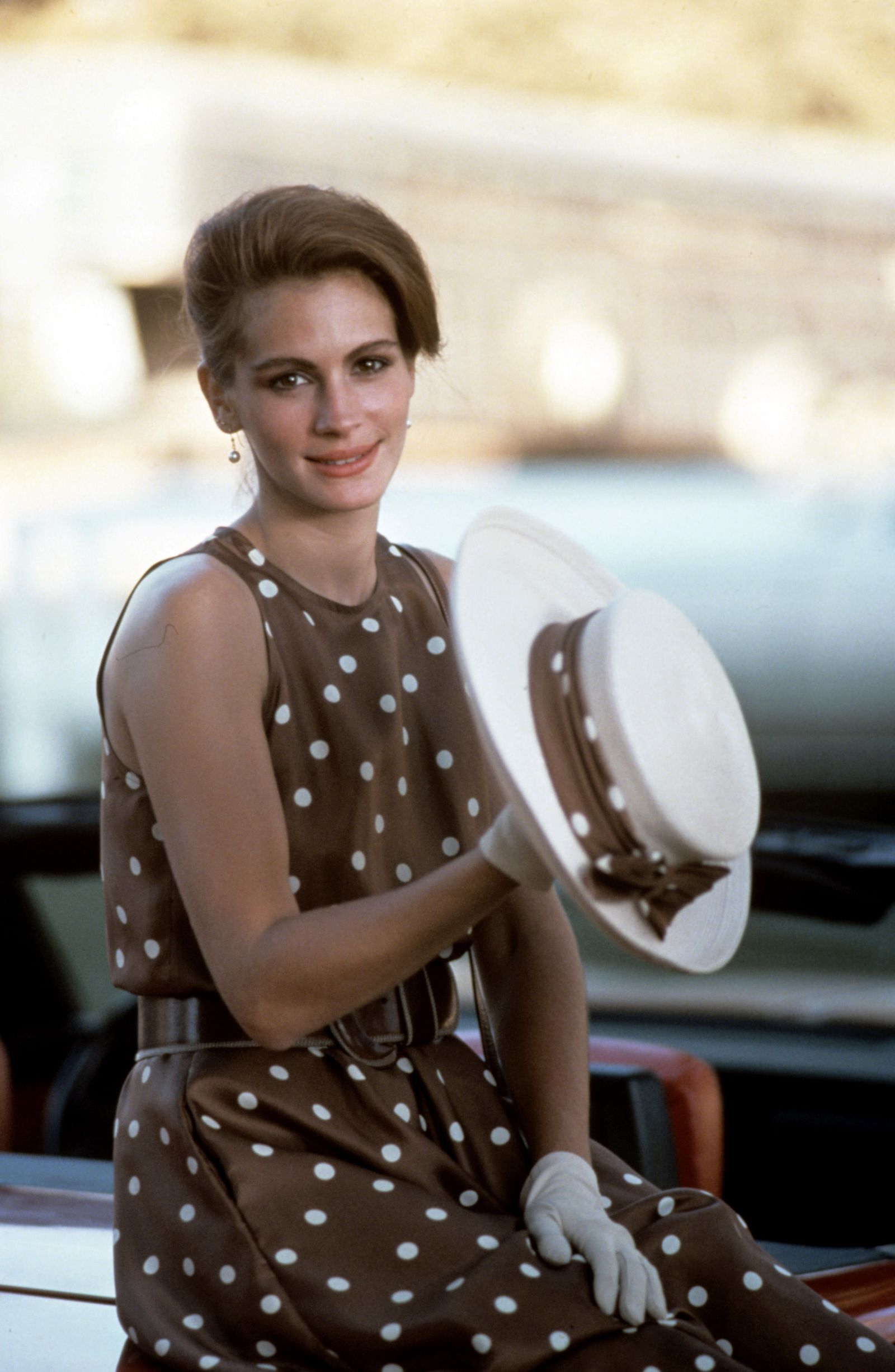
What Happens at the End of Pretty Woman? The Ending Explained
At the end of Pretty Woman, corporate raider Edward Lewis (Richard Gere) overcomes his severe acrophobia to climb the rusty fire escape outside the Hollywood apartment of Vivian Ward (Julia Roberts). Carrying a bouquet of white roses,...
At the end of Pretty Woman, corporate raider Edward Lewis (Richard Gere) overcomes his severe acrophobia to climb the rusty fire escape outside the Hollywood apartment of Vivian Ward (Julia Roberts). Carrying a bouquet of white roses, Edward proposes a real romantic relationship, which Vivian accepts with the iconic exchange: "She rescues him right back."
Contents
Scene-by-Scene Breakdown of the Ending Sequence
The climax of Garry Marshall’s 1990 romantic comedy Pretty Woman resolves both the emotional tension between the lead characters and their individual struggles with self-worth, class barriers, and personal integrity.
- Financial Contract Ends
- Vivian Rejects "Kept Woman" Arrangement
- Edward Prepares to Leave Beverly Hills
- Hotel Manager Barney Intervenes subtly
- Edward's Limo Reroutes to Hollywood
- Fire Escape Rescue & Mutual Salvation
The Rejection and Decision to Leave
The sequence begins after the end of the business week for which Edward hired Vivian to act as his high-society companion for $3,000. Edward offers to buy Vivian an apartment, pay her expenses, and continue seeing her on a regular basis whenever he visits Los Angeles. Having evolved from a desperate street worker into a woman aware of her intrinsic value, Vivian rejects the offer. She explains that she wants "the fairytale"—a committed, equal partnership—rather than serving as a paid, kept mistress.
Vivian packs her bags and prepares to leave Los Angeles for San Francisco, where she intends to finish her high school equivalency diploma and build a respectable life.
The Departure from the Regent Beverly Wilshire
At the Regent Beverly Wilshire Hotel, Edward prepares to return to New York. Before leaving, hotel manager Barney Thompson (Hector Elizondo) presents Edward with the return receipt for the ruby-and-diamond necklace Edward had borrowed for Vivian to wear to the opera. Barney subtly mentions that Vivian had returned it personally, noting how much she had affected everyone at the hotel. Barney’s understated support serves as a catalyst, prompting Edward to rethink his emotional detachment.
The Limousine Ride to Hollywood
Edward gets into his chauffeur-driven white stretch limousine to go to Los Angeles International Airport (LAX). As chauffeur Darryl plays Giuseppe Verdi's La Traviata—the opera Edward took Vivian to see in San Francisco—Edward reflects on his feelings. Realizing he cannot let Vivian go, he instructs Darryl to divert the limousine away from the airport and head toward Vivian’s apartment building on Boulevard Boulevard in Hollywood.
The Fire Escape "Rescue"
When the limousine arrives at Vivian's dilapidated apartment building, Edward steps out dressed in a suit, holding a bouquet of white roses. To catch Vivian's attention, he stands on the street while Darryl turns up the opera music from the car speakers.
Vivian leans out of her window. Edward, despite his extreme fear of heights (acrophobia), slowly climbs up the rusty, exterior metal fire escape. He reaches the upper landing where Vivian meets him.
- Vivian's Window
- Fire Escape Landing
- Edward Climbs Ladder (Overcoming Acrophobia)
- White Limousine with Opera Music
The Final Dialogue and Iconic Exchange
On the fire escape landing, Edward hands Vivian the roses and asks what happens after the knight climbs the tower to rescue the princess. Vivian responds with the film's most famous line:
Edward: "So what happens after he climbs up the tower and rescues her?"Vivian: "She rescues him right back."
They embrace and kiss passionately, signaling the start of a genuine, unconditional relationship built on mutual love and respect.
The Closing Monologue
As the camera pulls back across Hollywood, an itinerant street performer (played by Abdul Kent) walks along the pavement, shouting the film’s framing message:
"Welcome to Hollywood! What's your dream? Everybody comes here got a dream... Some dreams come true, some don’t, but keep on dreamin’—this is Hollywood!"
Character Arcs and Personal Resolutions
The ending of Pretty Woman delivers more than a romantic reconciliation; it marks the emotional culmination of two characters who fundamentally alter each other's life trajectories.
| Character | Initial State | Evolved State |
|---|---|---|
| Edward Lewis | Ruthless Raider | Emotional Vulnerability & Moral Integrity |
| Vivian Ward | Desperate Survival | Self-Worth, Dignity & Ambition |
Edward Lewis: From Raider to Partner
At the beginning of the story, Edward is an emotionally detached billionaire who makes his living through hostile corporate takeovers—buying financially distressed companies, stripping their assets, and selling off the pieces for profit. He avoids deep emotional connections, treating human interactions as transactional.
Through his time with Vivian, Edward learns empathy, vulnerability, and respect. His professional resolution directly reflects his inner transformation:
- Business Strategy Shift: Instead of destroying Morse Industries and its founder, James Morse (Ralph Bellamy), Edward decides to forge a joint partnership to build ships together, preserving jobs and creating long-term value.
- Overcoming Fear: Climbing the fire escape serves as a physical metaphor for his emotional courage. By overcoming his fear of heights, Edward demonstrates his willingness to take risks for love rather than hiding behind his wealth.
Vivian Ward: Reclaiming Dignity and Ambition
Vivian begins the film trapped in sex work due to immediate financial pressure, a lack of institutional support, and low self-esteem. Her week with Edward exposes her to respect and comfort, but her ultimate victory lies in her refusal to compromise her self-worth.
- Rejection of Financial Security: By declining Edward's offer of an apartment and allowance, Vivian chooses uncertainty over objectification. She insists on being valued as an equal partner rather than a financial asset.
- Pursuit of Education: Vivian decides to pursue her education in San Francisco, taking concrete steps toward independent career goals regardless of whether Edward remains in her life.
Supporting Characters: Barney Thompson and Kit De Luca
- Barney Thompson: The hotel manager acts as a benevolent mentor. He teaches Vivian high-society etiquette without judgment and nudges Edward toward personal maturity at crucial decision points.
- Kit De Luca: Vivian’s roommate and friend (Laura San Giacomo) receives a portion of Vivian’s earnings to pay off debts and pursue her ambition of attending beauty school to become a professional cosmetologist.
Comparing the Film Ending to the Original Script (3000)
Pretty Woman was originally conceived not as a fairytale romantic comedy, but as a gritty, dark drama titled 3000 (referring to the $3,000 fee agreed upon for the week). Written by J.F. Lawton, the original script presented a realistic exploration of economic disparity, addiction, and prostitution in Los Angeles.
| Narrative Element | Released Movie (Pretty Woman) | Original Script (3000) |
|---|---|---|
| Primary Genre | Romantic Comedy / Fairytale | Gritty Social Drama |
| Edward's Final Action | Climbs fire escape with roses to propose commitment | Hands Vivian cash and drives away to the airport |
| Vivian's Final Location | Hollywood fire escape, embracing Edward | On a bus heading to Disneyland with her friend Kit |
| Edward's Business Deal | Partners with Morse Industries to build ships | Destroys Morse Industries through hostile takeover |
| Vivian's Emotional Outcome | Finds love, respect, and mutual agency | Left isolated, disillusioned, and clutching $3,000 |
| Tone of Ending | Uplifting, optimistic, romantic | Dark, somber, critical of social mobility |
When Touchstone Pictures (a division of The Walt Disney Company) acquired the script, director Garry Marshall and producer Laura Ziskin overhauled the tone. They recast the story into a modern Cinderella story, preserving the dynamic chemistry between Julia Roberts and Richard Gere while shifting the narrative toward romance and self-actualization.
Thematic Meaning: Opera, Fairytales, and Mutual Salvation
The closing sequence of Pretty Woman synthesizes several central motifs embedded throughout the film:
The La Traviata Parallel
Earlier in the movie, Edward takes Vivian on his private jet to attend Giuseppe Verdi’s opera La Traviata at the San Francisco Opera House. La Traviata tells the story of Violetta, a Parisian courtesan who falls in love with a wealthy young nobleman named Alfredo.
In Verdi's opera, societal pressures force the lovers apart, culminating in Violetta's tragic death from illness. Pretty Woman explicitly mirrors La Traviata but intentionally inverts its tragic trajectory:
- The Shared Experience: Vivian is deeply moved to tears by the opera, proving her capacity for deep emotional resonance despite her lack of formal cultural exposure.
- Subverting the Tragedy: Instead of succumbing to class discrimination or social ruin, Edward and Vivian break through social barriers. The opera music playing from the limousine during the climax highlights that their story ends in joy rather than opera-style tragedy.
- Verdi's "La Traviata"
- Operatic Tragedy
- Courtesan dies
- Separation
- Social ruin
- Hollywood Reinterpretation
- Courtesan finds love
- Mutual equality
- Emotional growth
- Operatic Tragedy
"She Rescues Him Right Back"
The line spoken by Vivian at the climax reframes traditional gender roles within fairytale storytelling. In classic narratives, the male knight is an active savior while the female figure remains a passive recipient of aid.
By stating that she rescues Edward right back, Vivian establishes that their salvation is mutual:
- Edward's Rescue of Vivian: Edward provides financial relief, exposure to new opportunities, and validation that helps Vivian recognize her dignity and potential.
- Vivian's Rescue of Edward: Vivian breaks through Edward's cold, cynical isolation, teaching him how to feel empathy, value human relationships over money, and connect genuinely with others.
Frequently Asked Questions
Why did Edward climb the fire escape at the end of Pretty Woman?
Edward climbs the fire escape to prove his love and commitment to Vivian on her own terms. Throughout the film, Edward reveals his severe fear of heights (acrophobia). By climbing the high, unstable ladder of her Hollywood apartment building carrying roses, he physically demonstrates his willingness to confront his deep fears and step out of his comfort zone to win her back.
What is the final line spoken in Pretty Woman?
The final line of dialogue in the film is spoken by a Hollywood street performer walking down the pavement:"Welcome to Hollywood! What's your dream? Everybody comes here got a dream... Some dreams come true, some don't, but keep on dreamin'—this is Hollywood!"
What happened to the ruby necklace at the end of the movie?
The $250,000 ruby-and-diamond necklace was on loan from a high-end jeweler. At the end of the week, Vivian returns it to hotel manager Barney Thompson. Barney sends it back to the jeweler via security, but he uses the transaction receipt to remind Edward of Vivian's impact on his life, nudging Edward to pursue her before leaving town.
What happened to Edward’s business deal at the end?
Instead of dismantling Morse Industries for profit, Edward changes his corporate strategy. Touched by Vivian's moral perspective and his conversations with company owner James Morse, Edward decides to form a partnership with Morse to build ships together. This decision saves the company, preserves thousands of manufacturing jobs, and marks Edward's transition away from predatory financial practices.
Did Vivian take the $3,000 payment from Edward?
In the finished film, Edward places the agreed $3,000 payment on the bed before Vivian leaves his hotel room. Although Vivian initially rejects his offer to become a kept mistress, she keeps her original earnings, which she uses to pay off her living expenses and support her move to San Francisco to pursue her education.
Retrospective Impact and Final Takeaway
The ending of Pretty Woman remains one of the most memorable climaxes in modern romantic comedy history. By balancing the fantasy of a knight in armor with the grounded reality of mutual emotional growth, the film transforms a transaction into a story about agency and personal transformation.
For viewers revisiting the film, the climax stands out because it requires both characters to change before they can be together: Edward must abandon his detached commercial mindset, and Vivian must demand the respect and equality she deserves.
Image Gallery