The Critical Role of CASB in Your Cloud Information Security Strategy
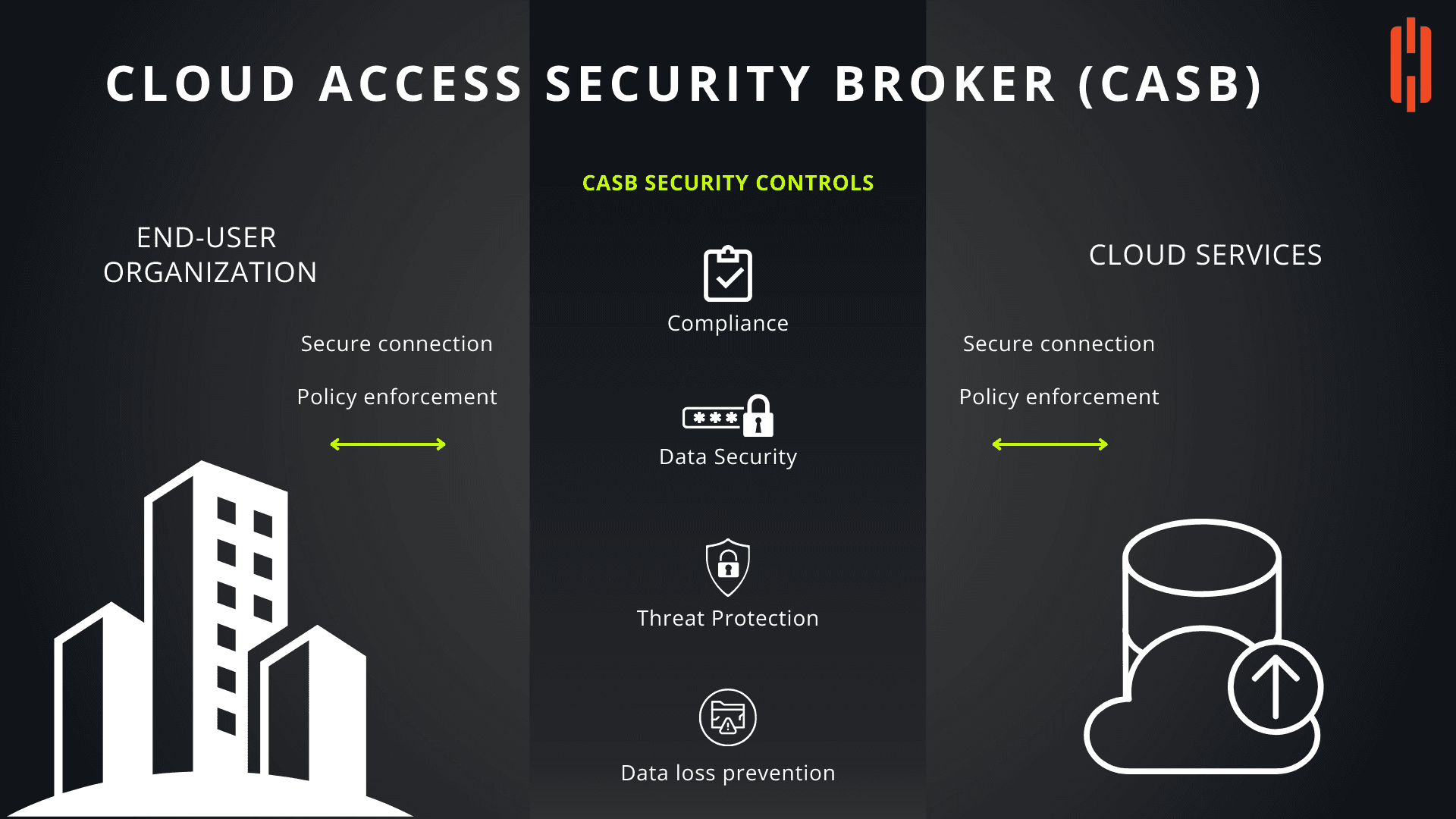
A Cloud Access Security Broker (CASB) serves as an essential policy enforcement point positioned between enterprise users and cloud service providers. By centralizing visibility, data loss prevention, threat protection, and compliance...
A Cloud Access Security Broker (CASB) serves as an essential policy enforcement point positioned between enterprise users and cloud service providers. By centralizing visibility, data loss prevention, threat protection, and compliance monitoring across Software, Platform, and Infrastructure as a Service (SaaS, PaaS, and IaaS), a CASB extends corporate security governance directly into multi-cloud environments.
Contents
What Is a Cloud Access Security Broker and Why Is It Necessary?
As enterprises shift core workloads to cloud environments, traditional perimeter security controls—such as legacy on-premises firewalls and secure web gateways—no longer provide sufficient visibility or control. Cloud traffic often routes directly from remote endpoints to third-party cloud applications, bypassing legacy corporate data centers entirely. This structural shift creates blind spots regarding data movement, user identity, and unapproved application usage.
A Cloud Access Security Broker addresses this governance gap. Functioning as a security checkpoint, a CASB intercepts, inspects, and moderates traffic between corporate endpoints and cloud services. It applies corporate security policies across managed endpoints, unmanaged devices (such as personal smartphones), authorized applications (such as Microsoft 365 or Salesforce), and unauthorized third-party services.
- Corporate User / Endpoint
- CASB Inline / API Platform
- Security Policy Engine (DLP, Threat, UEBA)
- Cloud Service (SaaS / PaaS / IaaS)
Without a CASB, security teams face several critical operational risks:
- Unsanctioned Software Usage (Shadow IT): Employees adopt consumer-grade SaaS applications to store or process enterprise data without administrative oversight.
- Data Exfiltration: Sensitive files are shared publicly or with external accounts via cloud storage services.
- Credential Compromise: Threat actors hijack valid cloud credentials and access corporate repositories directly without triggering traditional network alerts.
- Regulatory Non-Compliance: Uncontrolled cloud storage violates regulatory mandates such as the Health Insurance Portability and Accountability Act (HIPAA) or the General Data Protection Regulation (GDPR).
The Four Core Pillars of CASB Capabilities
The functional value of a CASB is organized around four core security capabilities established by cybersecurity standards bodies and framework guidelines.
1. Visibility and Shadow IT Discovery
Organizations often discover hundreds of unsanctioned applications running within their networks once automated monitoring is enabled. A CASB analyzes web gateway logs, firewall events, and endpoint traffic to map every cloud application accessed by users.
Beyond discovery, a CASB categorizes applications based on risk profiles, assigning safety ratings evaluated against risk factors such as data encryption standards, business durability, regulatory certifications, and administrative access controls. This allows IT leaders to sanction secure applications while blocking high-risk alternatives.
2. Data Security and Data Loss Prevention (DLP)
Data protection in the cloud requires inspection of both data in transit and data at rest. A CASB integrates enterprise Data Loss Prevention (DLP) engines to scan files for sensitive patterns, including personally identifiable information (PII), intellectual property, payment card numbers, and health records.
Key data security actions enforced by a CASB include:
- Context-Aware DLP: Blocking uploads of confidential files to personal cloud accounts while permitting uploads to corporate repositories.
- Automated Remediation: Changing file access permissions from "Public" to "Private" automatically when sensitive data is detected.
- Encryption and Tokenization: Encrypting sensitive data fields before they are uploaded to third-party cloud infrastructure, ensuring the enterprise retains sole custody of decryption keys.
3. Threat Protection and Behavioral Analytics
Cloud environments face threats such as malware hosting, account takeover (ATO), and insider threat execution. CASB platforms incorporate User and Entity Behavior Analytics (UEBA) to baseline normal user behaviors—such as standard login times, typical download volumes, and geographic locations—and detect anomalies.
For example, if a user account logs in from New York and performs a bulk download of source code from Tokyo 30 minutes later (an impossible travel scenario), the CASB can force step-up authentication, terminate the active session, or quarantine the compromised identity within the enterprise Identity Provider (IdP).
4. Compliance and Governance Enforcement
Operating in the cloud does not exempt organizations from regulatory compliance obligations. A CASB monitors cloud configurations to verify compliance with standards such as the Payment Card Industry Data Security Standard (PCI DSS) and frameworks published by the National Institute of Standards and Technology (NIST).
It continuously scans cloud storage buckets and SaaS configurations to detect misconfigurations, such as publicly exposed Amazon Web Services (AWS) S3 buckets or unencrypted databases, alerting administrators before data exposure occurs.
CASB Deployment Architectures: API vs. Proxy Modes
Choosing the correct deployment architecture is critical to balancing security control, system performance, and deployment complexity. CASBs operate using two fundamental models: Out-of-Band (API-based) and Inline (Proxy-based). Modern enterprise deployments frequently adopt a hybrid approach combining both.
- CASB Deployment Architectures
- Out-of-Band (API)
- Connects to SaaS
- Scans Data at Rest
- Zero Endpoint Friction
- Inline (Proxy)
- Sits in traffic path
- Real-time Inspection
- Forward & Reverse
- Out-of-Band (API)
Out-of-Band (API-Based Mode)
In an API-based deployment, the CASB connects directly to cloud service providers using official administrative APIs (such as Microsoft Graph API or Salesforce APIs).
- Pros: Easy deployment without changing network routing or installing software agents; comprehensive visibility into data at rest, historical sharing settings, and user permissions; no risk of causing latency or network outages.
- Cons: Cannot block active threats in real time before data reaches the cloud (remediation operates near real-time, typically within seconds to minutes after the event occurs); dependent on cloud vendor API availability and rate limits.
Inline (Proxy-Based Mode)
Inline CASBs inspect network traffic in real time as it flows between endpoints and cloud applications. Proxies operate in two configurations:
- Forward Proxy: Network traffic from managed endpoints is routed through the CASB agent or gateway. This inspects traffic heading to any destination (sanctioned or unsanctioned applications).
- Reverse Proxy: Incoming traffic bound for sanctioned enterprise applications is proxied through the CASB. This model requires no agent on the endpoint, making it ideal for securing unmanaged or personal devices (Bring Your Own Device / BYOD).
- Pros: Real-time inspection and active blocking of unauthorized uploads, malware, or unapproved authentication attempts.
- Cons: Requires complex routing setup or agent installation; can introduce latency if not globally distributed; may break if cloud vendors alter domain structures or web protocols without notice.
Architectural Comparison
| Feature | API Mode (Out-of-Band) | Forward Proxy (Inline) | Reverse Proxy (Inline) |
|---|---|---|---|
| Real-time Blocking | No (Near Real-time Remediation) | Yes | Yes |
| Data-at-Rest Inspection | Yes | No | No |
| Target Scope | Sanctioned Cloud Apps | All Cloud Apps (Managed Endpoints) | Sanctioned Apps (Unmanaged Endpoints) |
| Endpoint Agent Needed | No | Yes (typically required) | No |
| User Latency Impact | None | Minimal to Moderate | Minimal to Moderate |
| Deployment Complexity | Low | High | Medium |
Integrating CASB into Modern Architectures: SSE, SASE, and Zero Trust
The cybersecurity landscape has evolved away from isolated, single-function point products. CASB solutions are now integrated as primary components within broader cloud security models.
Security Service Edge (SSE) and SASE
The Cybersecurity and Infrastructure Security Agency (CISA) emphasizes unified security architectures for enterprise systems. The convergence of cloud security controls led to the establishment of Security Service Edge (SSE). SSE consolidates three key capabilities into a unified cloud-delivered platform:
- Cloud Access Security Broker (CASB) for securing cloud application access and SaaS data.
- Secure Web Gateway (SWG) for filtering and protecting against malicious web content.
- Zero Trust Network Access (ZTNA) for replacing legacy Virtual Private Networks (VPNs) with granular application-level access controls.
When SSE is combined with modern Software-Defined Wide Area Network (SD-WAN) networking technologies, it forms a Secure Access Service Edge (SASE) architecture. In a SASE deployment, the CASB does not exist as an isolated silo; its policies share context with web traffic security protocols and internal application access rules.
- Secure Access Service Edge (SASE)
- Network Fabric (SD-WAN)
- Traffic Routing
- Optimization
- Security Service Edge (SSE)
- CASB
- SWG
- ZTNA
- Network Fabric (SD-WAN)
Supporting Zero Trust Architecture (ZTA)
Zero Trust principles dictate that organizations must "never trust, always verify." A CASB provides the granular policy engine required to enforce Zero Trust access to cloud resources.
Instead of granting unconditional access once a user authenticates, a CASB continuously verifies dynamic variables throughout an active session:
- Identity Context: Who is the user, and has their behavior altered?
- Device Health: Is the endpoint managed, patched, and running endpoint protection?
- Location Context: Is the request originating from a recognized network or high-risk IP block?
- Data Sensitivity: Is the user attempting to view plain text or download sensitive intellectual property?
If a user accesses a cloud application from an unmanaged personal device, the CASB can limit access to read-only mode, blocking file downloads or copy-paste operations to secure corporate data without restricting authorized work.
Implementation Roadmap for Security Leaders
Implementing a CASB requires cross-functional coordination between enterprise security, IT operations, network teams, and compliance divisions.
Step 1: Baseline Discovery and Risk Assessment
Before deploying blocking policies, deploy the CASB in passive monitoring mode. Connect the solution to enterprise firewalls and Web Gateways to record current traffic patterns. Identify:
- The volume and diversity of active SaaS applications.
- Top cloud application categories (file sharing, generative AI tools, collaboration applications).
- High-risk cloud application usage across departments.
Step 2: Establish Governance Policies
Translate existing corporate compliance mandates into concrete CASB rules:
- Define which cloud applications are approved (sanctioned), prohibited (unsanctioned), or permitted under specific restrictions.
- Build DLP classifiers for PII, financial data, and proprietary technical assets.
- Establish access rules for managed versus unmanaged devices.
Step 3: Implement API Integration for Sanctioned Apps
Integrate the CASB via API with primary enterprise cloud applications (e.g., Microsoft 365, Google Workspace, Salesforce, Box). Perform comprehensive scans of stored data to:
- Identify sensitive files shared publicly or domain-wide.
- Revoke unauthorized external access permissions.
- Scan files at rest for active malware or unauthorized scripts.
Step 4: Deploy Inline Proxies and Endpoint Controls
Deploy inline security capabilities to intercept web traffic and protect unmanaged access vectors:
- Route corporate endpoint traffic through the forward proxy mechanism via the SSE agent.
- Configure reverse proxy settings inside identity federation platforms (e.g., Okta, Entra ID) to steer unmanaged device logins through the CASB inspection path.
- Enforce real-time DLP rules blocking unauthorized file uploads to consumer cloud accounts.
Step 5: Integrate with Security Operations (SIEM/SOAR)
Ensure CASB telemetry feeds into the enterprise Security Information and Event Management (SIEM) and Security Orchestration, Automation, and Response (SOAR) infrastructure. Automate response workflows, such as locking compromised accounts or creating ticketing workflows when high-severity policy violations occur.
Common Implementation Challenges and Mitigation Strategies
Deploying cloud access controls introduces operational complexities that require proactive planning.
Performance Bottlenecks and Latency
- Challenge: Directing global user traffic through centralized inline proxies can introduce packet latency, impacting user experience during video conferencing or large file transfers.
- Mitigation: Choose cloud-native CASB and SSE vendors with globally distributed edge points of presence (PoPs) featuring peering relationships with major SaaS providers. Utilize direct-to-cloud routing rather than backhauling traffic to physical corporate data centers.
Certificate Management and SSL/TLS Inspection
- Challenge: Inline proxies must decrypt SSL/TLS encrypted traffic to inspect payloads, which requires placing a trusted Root Certificate Authority (CA) certificate on client devices. Unmanaged endpoints will generate certificate warnings.
- Mitigation: Use API-based out-of-band monitoring or reverse-proxy architectures for unmanaged endpoints to avoid agent installation requirements. Reserve full inline SSL/TLS inspection for enterprise-managed endpoints where certificate deployment can be automated via Unified Endpoint Management (UEM) tools.
User Privacy Concerns
- Challenge: Employees may express concern over privacy violations if personal traffic (e.g., personal banking or healthcare visits) is inspected by corporate CASB proxies.
- Mitigation: Configure strict bypass rules within the CASB policy engine. Categorize personal privacy domains (finance, healthcare, personal email) to bypass SSL decryption and content inspection entirely, maintaining user trust while securing enterprise assets.
Frequently Asked Questions
What is the main difference between a CASB and a Next-Generation Firewall (NGFW)?
A Next-Generation Firewall inspects network and transport layer traffic (Layers 3–7) entering and leaving an enterprise physical network. A CASB focuses specifically on cloud applications and API-level activities. Unlike an NGFW, a CASB understands granular cloud operations (such as distinguishing between a "view" and a "download" action within a SaaS app) and enforces security policies regardless of whether the user is inside or outside the corporate physical perimeter.
Can a CASB replace an existing endpoint DLP solution?
No, a CASB complements but does not fully replace endpoint Data Loss Prevention (DLP). Endpoint DLP protects local device operations, such as copying data to USB drives, printing local files, or taking screenshots. A CASB focuses on cloud-specific data risks, monitoring data transfers to cloud applications, cloud storage repositories, and SaaS platforms.
How does an API-based CASB differ from a proxy-based CASB?
An API-based CASB connects directly to cloud applications using vendor APIs to scan data at rest and review historical access logs out-of-band. A proxy-based CASB sits inline in the network pathway, intercepting live traffic to enforce real-time blocking of unauthorized data uploads, downloads, or connection attempts.
Is a standalone CASB sufficient, or should it be deployed as part of an SSE solution?
While standalone CASB point solutions historically existed, modern enterprise environments benefit from deploying CASB as a integrated component of a broader Security Service Edge (SSE) platform. Integrated platforms combine CASB with Secure Web Gateway (SWG) and Zero Trust Network Access (ZTNA) controls, preventing operational silos and ensuring consistent policy enforcement across web, cloud, and private resources.
How does a CASB enforce security on unmanaged (BYOD) devices?
A CASB enforces control on unmanaged devices primarily using a reverse-proxy deployment model integrated with an Identity Provider (IdP). When an unmanaged device attempts to log in to a corporate SaaS application, the IdP redirects the session through the CASB reverse proxy. The CASB can then enforce adaptive controls, such as allowing access to web applications while disabling file downloads or clipboard operations.
Actionable Steps for Enterprise Security Teams
To maximize the value of your cloud access security broker within your broader cybersecurity strategy, take these immediate actions:
- Conduct a Shadow IT Audit: Use existing network gateway logs to perform an immediate cloud discovery audit, establishing a baseline of active cloud applications.
- Audit Cloud Storage Access: Connect an API-based CASB to your primary SaaS suites (such as Microsoft 365 or Google Workspace) to detect publicly shared sensitive documents.
- Consolidate Vendor Operations: Evaluate options for consolidating point security tools into an integrated Security Service Edge (SSE) architecture to reduce operational overhead and improve policy consistency.
Image Gallery