Pau Gasol on Kobe Bryant: Inside the Brotherhood, Championships, and NBA Legacy
Pau Gasol has consistently described Kobe Bryant not merely as an elite teammate, but as an older brother, mentor, and transformative figure who redefined his career. Their partnership with the Los Angeles Lakers yielded back-to-back N...
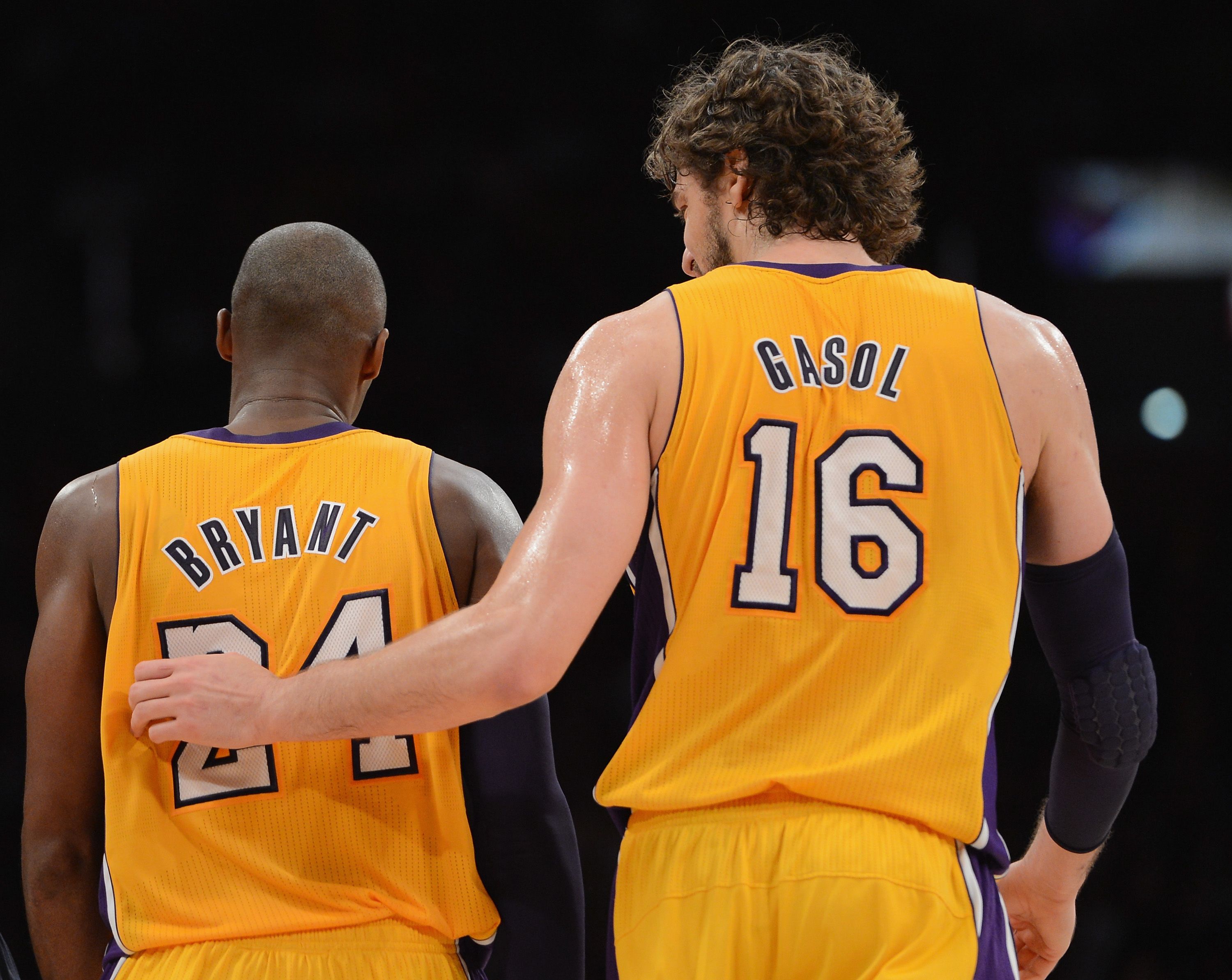
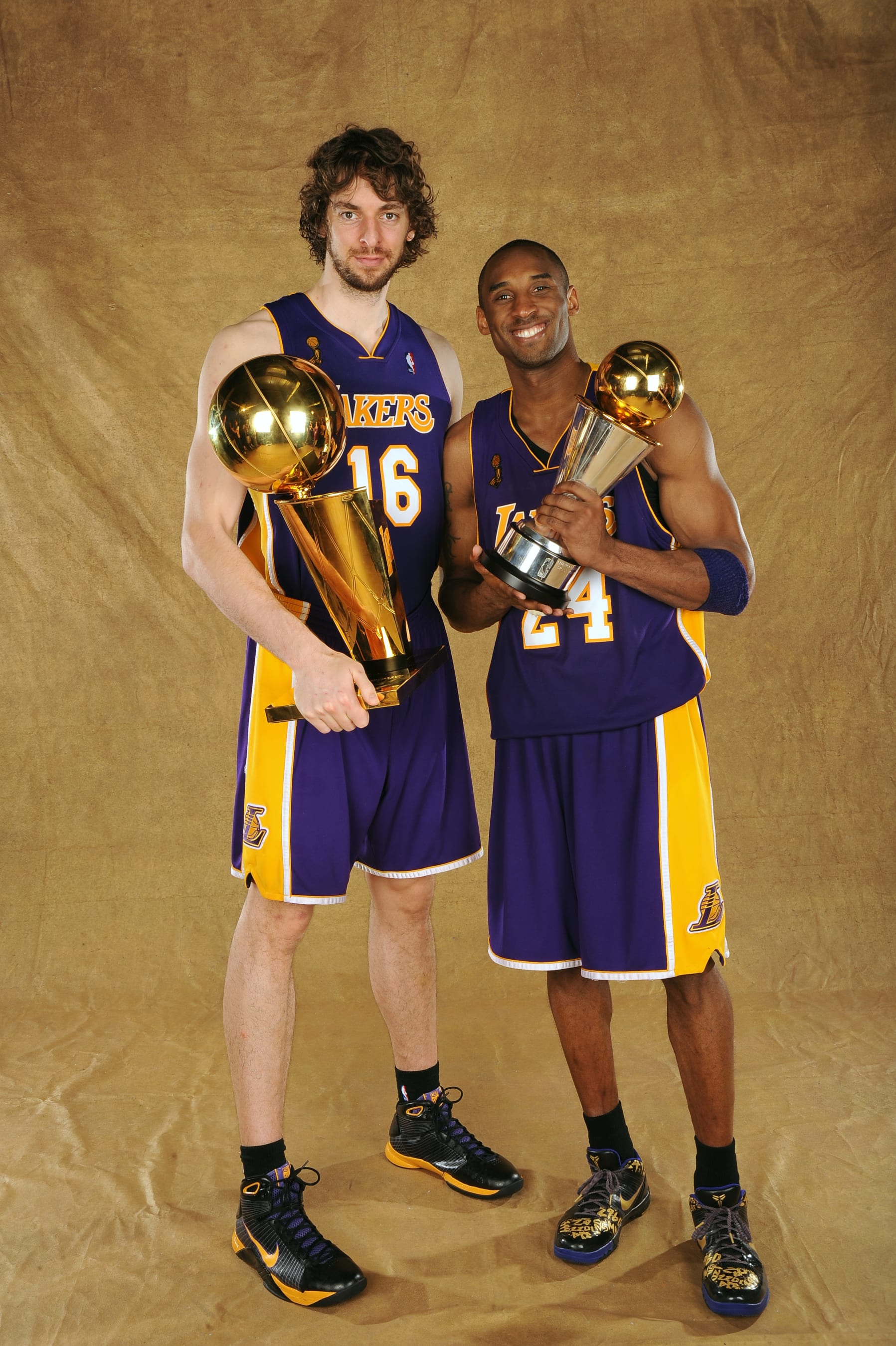
Pau Gasol has consistently described Kobe Bryant not merely as an elite teammate, but as an older brother, mentor, and transformative figure who redefined his career. Their partnership with the Los Angeles Lakers yielded back-to-back NBA championships in 2009 and 2010, transforming a talented frontcourt star into a Basketball Hall of Famer through a blend of high-IQ playmaking, mutual accountability, and profound personal respect.
Contents
The D.C. Midnight Meeting: How the Partnership Began
The trajectory of the NBA changed dramatically on February 1, 2008, when the Memphis Grizzlies traded Pau Gasol to the Los Angeles Lakers. At the time, Bryant was publicly frustrated with the Lakers' inability to build a championship contender following the departure of Shaquille O'Neal. Gasol, a skilled 7-foot Spaniard with elite passing vision and soft touch, represented the versatile big man Bryant desperately needed.
Gasol often recounts his initial encounter with Bryant, which took place in Washington, D.C., hours after the trade was finalized. Gasol checked into the team hotel past 1:00 AM, intending to sleep before his physical exam. Instead, Bryant came directly to Gasol’s room to welcome him.
According to Gasol, Bryant did not waste time with standard pleasantries. Bryant looked him in the eye and delivered a clear message:
"I’m very happy you’re here, but now let’s go win a championship."
That late-night meeting set the baseline for their entire relationship. Bryant made it evident that good performances were insufficient; the sole standard was winning titles. For Gasol, who had spent years in Memphis carrying a heavy offensive load without serious playoff support, Bryant’s directness was a welcome shift. It signaled that he was joining an environment where maximum effort was non-negotiable.
Challenging the Narrative: Kobe’s Tough-Love Leadership Style
The transition was not without friction. After reaching the 2008 NBA Finals just months after the trade, the Lakers were defeated in six games by their historic rivals, the Boston Celtics. The series ended with a humiliating 139-89 loss in Game 6, and critics labeled the Lakers—and Gasol in particular—as "soft" physical interior defenders who crumpled under Boston’s aggressive play style.
Gasol has spoken openly about how Bryant handled that heartbreak. Rather than insulating Gasol from the criticism, Bryant used it to sharpen him. Throughout the summer of 2008, Bryant ensured Gasol understood that physical toughness was the missing element in their championship puzzle.
When training camp opened for the 2008–09 season, Bryant famously targeted Gasol during practices, pushing him physically, calling him out during film sessions, and deliberately testing his mental resilience. Gasol recognized that Bryant’s intense methods were not driven by personal malice, but by a strategic desire to prepare him for the brutality of playoff basketball. Gasol accepted the challenge, adapting his training to build core strength and embracing a more aggressive post presence.
Gasol frequently points out that Bryant treated people differently based on what they required to excel. While Bryant’s default approach was intense, he recognized Gasol’s deep intellect and emotional maturity. Their dynamic evolved into a classic "good cop, bad cop" leadership pairing in the locker room, where Bryant provided relentless pressure and Gasol offered steady reassurance and tactical poise to their teammates.
Tactical Harmony: Unlocking the Triangle Offense Together
On the court, the synergy between Bryant and Gasol was immediate because their skill sets complemented each other seamlessly within head coach Phil Jackson and assistant Tex Winter’s Triangle Offense.
- Phil Jackson's Triangle Offense
- Kobe Bryant (Perimeter)
- Isolation Scoring
- Gravity & Mid-Range
- Pau Gasol (High/Low Post)
- Post Playmaking & Passing
- High-Pivoting & Rim Finishes
- Sustained Championship Execution
- Kobe Bryant (Perimeter)
The Triangle relies heavily on floor spacing, read-and-react decision-making, and high-post passing. Before Gasol’s arrival, opponents could double-team Bryant with impunity, knowing the Lakers lacked a secondary playmaker in the frontcourt who could punish aggressive help defense. Gasol changed the mathematical calculus for opposing defenses:
- High-Post Playmaking: Gasol possessed elite vision for a 7-footer. When Bryant was double-teamed on the perimeter, he could pass to Gasol at the elbow, allowing Gasol to instantly slice open defenses with high-low passes to Andrew Bynum or back-door cuts to Lamar Odom.
- Post-Up Complementarity: Gasol was comfortable operating in both the low block and the mid-post. This spatial flexibility allowed Bryant room to operate in his preferred mid-range areas without clogging the lane.
- Pick-and-Roll Synergy: Though the Triangle was their primary system, Bryant and Gasol executed a lethal late-clock pick-and-roll. Gasol’s soft hands, quick decision-making on the roll, and mid-range jumper made it impossible for defenses to hedge effectively against Bryant.
Gasol has noted in interviews that playing with Bryant required total mental engagement on every possession. If a teammate lagged behind in reading the defense, Bryant would bypass them entirely. Gasol’s basketball IQ allowed him to speak the same tactical language as Bryant from day one.
Statistical and Championship Legacy of the Duo
The on-court production of the Bryant-Gasol pairing over their six full seasons together (2008–2014) ranks among the most efficient frontcourt-backcourt partnerships in modern NBA history.
| Metric / Milestone | 2007–08 Season | 2008–09 Season | 2009–10 Season | Duo Total (2008–2014) |
|---|---|---|---|---|
| Regular Season Record | 57–25 | 65–17 | 57–25 | 327–169 (.659) |
| Playoff Record | 14–7 | 16–7 | 16–7 | 57–26 (.687) |
| NBA Finals Appearance | Reached (Lost 2–4) | Won (4–1) | Won (4–3) | 3 Consecutive Finals |
| Kobe Bryant Playoff PPG | 30.1 | 30.2 | 29.2 | 29.8 avg (Finals runs) |
| Pau Gasol Playoff PPG / RPG | 16.9 / 9.3 | 18.3 / 10.8 | 19.6 / 11.1 | 18.3 / 10.4 avg |
| Key Synergy Stat | Net Rating +10.2 | Net Rating +11.4 | Net Rating +9.8 | Combined +10.5 Avg |
Data context reflects official NBA Advanced Stats records across the 2008–2010 playoff runs.
From Defeat to Redemption: The 2008–2010 Finals Era
The ultimate validation of Gasol’s comments on Kobe’s impact lies in their three-year run to the NBA Finals.
2008: The Catalytic Loss
The 2008 Finals defeat against the Boston Celtics served as the crucible for their partnership. While the loss was painful, Gasol credits Bryant with ensuring the defeat became a tool for growth rather than a lingering psychological scar. Kobe’s constant reminder of the physical disparity during that series reshaped how Gasol approached his offseason training.
2009: Dominance Against Orlando
By the 2009 NBA Finals against the Orlando Magic, the Lakers executed with clinical precision. Gasol effectively neutralized Magic center Dwight Howard defensively while averaging 18.6 points and 9.2 rebounds on 60% shooting. Bryant earned Finals MVP honors, averaging 32.4 points and 7.4 assists, repeatedly praising Gasol in press conferences for providing the inside balance that made the offense unstoppable.
- 2008 NBA Finals (Lost to BOS 2-4): Physical & Defensive Weaknesses Exposed
- Summer 2008: Physical Reconditioning & Mental Toughening
- 2009 NBA Finals (Won vs ORL 4-1): Balanced Inside-Out Execution & First Ring
- 2010 NBA Finals (Won vs BOS 4-3): Game 7 Physical Redemption & Back-to-Back Titles
2010: Game 7 Physical Redemption
The peak of their dynamic occurred in the 2010 NBA Finals rematch against the Boston Celtics. In a defensive, grind-it-out Series Game 7 where Bryant suffered a tough shooting night (6-for-24 from the field), Gasol stepped forward to dominate the glass and the interior.
Gasol pulled down 18 rebounds (including 9 offensive rebounds) and scored 19 points against Boston’s physical front line of Kevin Garnett and Kendrick Perkins. Bryant openly acknowledged after the game that without Gasol’s heroic effort in the paint, the Lakers would not have won Game 7.
"He Elevated Me": Gasol’s Reflections at the Hall of Fame and Jersey Retirement
Following Bryant’s tragic passing in January 2020, Gasol has kept Bryant’s memory at the center of his major career milestones. During these landmark events, Gasol has articulated precisely what Kobe meant to his life both on and off the basketball court.
The Jersey Retirement (March 7, 2023)
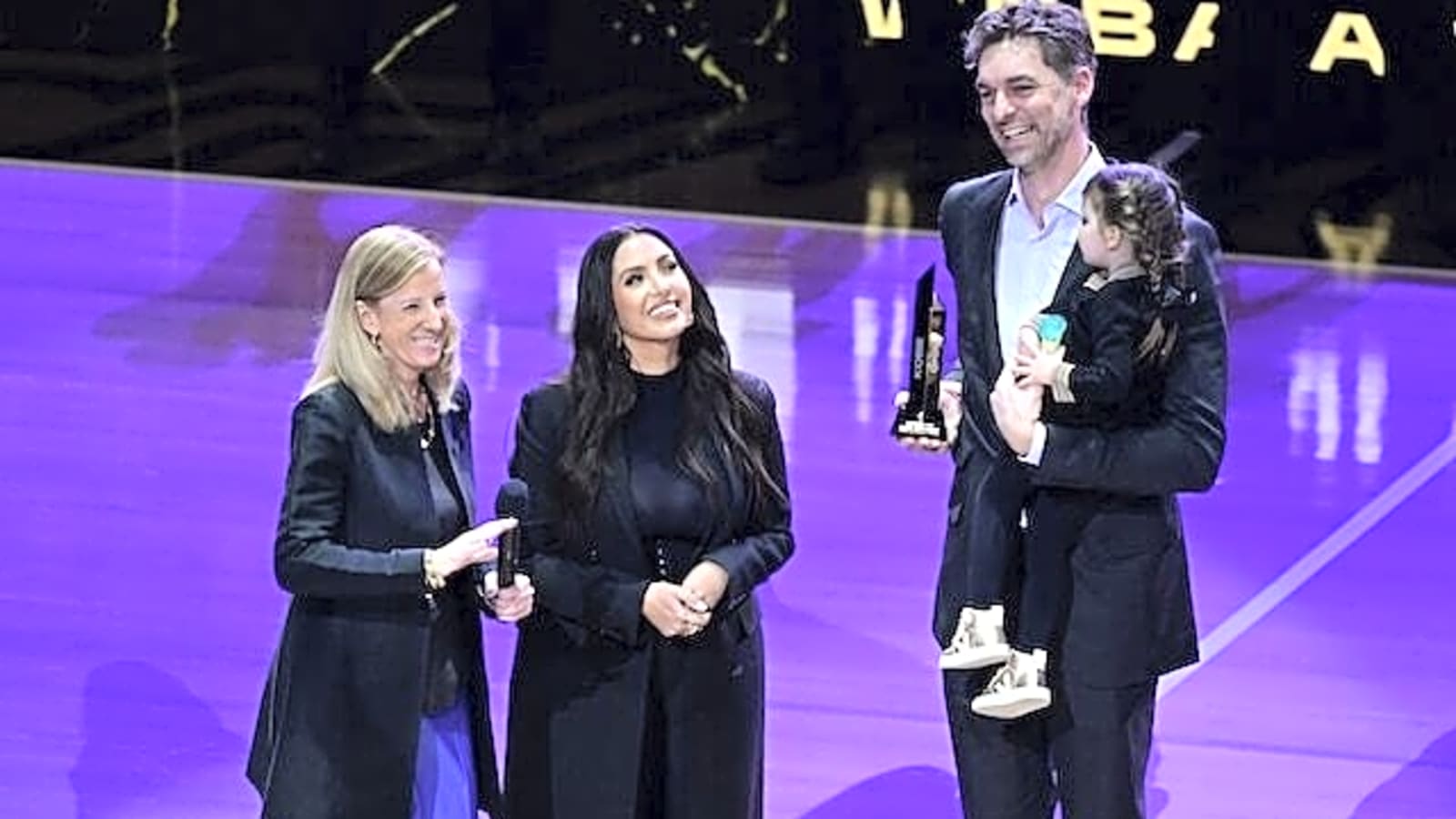
When the Los Angeles Lakers retired Pau Gasol’s No. 16 jersey on March 7, 2023, the franchise intentionally placed his banner directly alongside Kobe Bryant’s retired No. 24.
Addressing the crowd at Crypto.com Arena, Gasol broke down in tears, speaking directly to Bryant’s absent presence:
"I can't go on without talking about the brother that brought me here... The brother that elevated me, challenged me, inspired me to be a better player and a better man overall. I miss him so much, like so many of us do. I love him, and I wish he was here with Gigi."
Gasol emphasized that his jersey hanging in the rafters was a direct byproduct of Bryant pushing him past his self-imposed limits.
Naismith Hall of Fame Induction (August 2023)
During his induction into the Naismith Memorial Basketball Hall of Fame in August 2023, Gasol devoted a substantial portion of his speech to Bryant. He described how Kobe taught him the detail-oriented preparation required for true greatness—what the sports world recognizes as the "Mamba Mentality."
Gasol recalled how Bryant’s commitment went far beyond physical talent; it was an unrelenting obsession with film study, recovery, footwork, and psychological readiness. Gasol noted that learning to match that intensity transformed him from a talented All-Star into a dominant Hall of Fame player.
Off-Court Brotherhood: "Uncle Pau"
Beyond basketball, Gasol’s reflections on Bryant extend into family life. Gasol has maintained an active presence in the lives of Bryant’s surviving family, including Vanessa Bryant and Kobe’s daughters, Natalia, Bianka, and Capri. Gasol’s daughter, born in 2020, was named Elisabet Gianna Gasol, honoring Kobe’s late daughter Gianna.
Gasol has often stated that the ultimate lesson he learned from Kobe was not about basketball tactics, but about devotion to family and legacy. He views his ongoing presence in the Bryant family's life as a duty to his fallen friend.
Frequently Asked Questions
What did Pau Gasol say about Kobe Bryant during his Hall of Fame speech?
During his August 2023 Naismith Hall of Fame induction speech, Pau Gasol stated that he would not be in the Hall of Fame without Kobe Bryant. He praised Kobe for teaching him what it took to win at the highest level, challenging him to be a tougher competitor, and acting as an older brother who elevated every aspect of his basketball game and personal life.
How many championships did Pau Gasol and Kobe Bryant win together?
Pau Gasol and Kobe Bryant won two NBA Championships together with the Los Angeles Lakers, capturing back-to-back titles in 2009 (against the Orlando Magic) and 2010 (against the Boston Celtics). They also reached the NBA Finals in 2008, making three consecutive Finals appearances.
Why did Kobe Bryant call Pau Gasol his "brother"?
Kobe Bryant called Pau Gasol his brother because of their deep personal trust, mutual respect, and shared intellectual approach to basketball. Unlike many of Bryant's previous teammates, Gasol matched Bryant’s high basketball IQ, accepted his intense accountability, and complemented his game without letting ego interfere with team success.
How did Pau Gasol react to Kobe Bryant’s passing in 2020?
Pau Gasol was devastated by Kobe Bryant's passing in January 2020. He posted emotional tributes describing Kobe as his older brother and dedicated himself to supporting Vanessa Bryant and Kobe’s surviving daughters. Gasol has named his daughter Elisabet Gianna Gasol in honor of Kobe's late daughter, Gianna.
What made Kobe Bryant and Pau Gasol such a successful duo on the court?
Their success stemmed from ideal tactical alignment within Phil Jackson’s Triangle Offense. Gasol possessed elite passing skills and interior scoring from the high and low posts, which prevented teams from double-teaming Bryant without consequence. Gasol's court vision and unselfish play allowed Bryant to function as a lethal perimeter scoring threat while keeping the entire offense balanced.
Practical Takeaways for Modern Leaders and Athletes
Pau Gasol’s reflections on his partnership with Kobe Bryant offer clear principles for high-performance teams in athletics and business alike:
- Embrace Constructive Friction: High-performing partners do not avoid challenging conversations. Gasol recognized that Bryant's intense feedback was designed to elevate the collective ceiling of the team, not to tear him down personally.
- Match Tactical Intellectual Curiosity: On-court chemistry relies on shared intellectual commitment. Gasol’s willingness to master the subtleties of spatial awareness and film study matched Bryant's work ethic, making them virtually impossible to scheme against.
- Define Roles Without Ego: Gasol accepted his role as the versatile primary facilitator and secondary scoring option, understanding that individual sacrifice was necessary to secure back-to-back NBA titles.
To study the official box scores, play-by-play breakdowns, and championship statistics of the Bryant-Gasol era, review the detailed historical game logs archived on the Official NBA History Portal.
Image Gallery