A New Giant Sets Sail with Royal Caribbean: Complete Guide to the Icon Class Mega-Ships
When a new giant sets sail with Royal Caribbean, it redefines the scale and possibilities of ocean travel. Modern mega-ships, led by the groundbreaking Icon Class vessels, combine cutting-edge maritime engineering, liquefied natural ga...
When a new giant sets sail with Royal Caribbean, it redefines the scale and possibilities of ocean travel. Modern mega-ships, led by the groundbreaking Icon Class vessels, combine cutting-edge maritime engineering, liquefied natural gas propulsion, eight specialized onboard neighborhoods, and unprecedented family entertainment to deliver the world's most expansive resort experiences at sea.
Contents
Understanding Royal Caribbean’s Icon Class Fleet
Royal Caribbean International has long pushed the physical boundaries of passenger naval architecture. Following the commercial and technological success of the Oasis Class, the cruise line introduced the Icon Class, representing a substantial leap in gross tonnage, passenger capacity, and structural design.
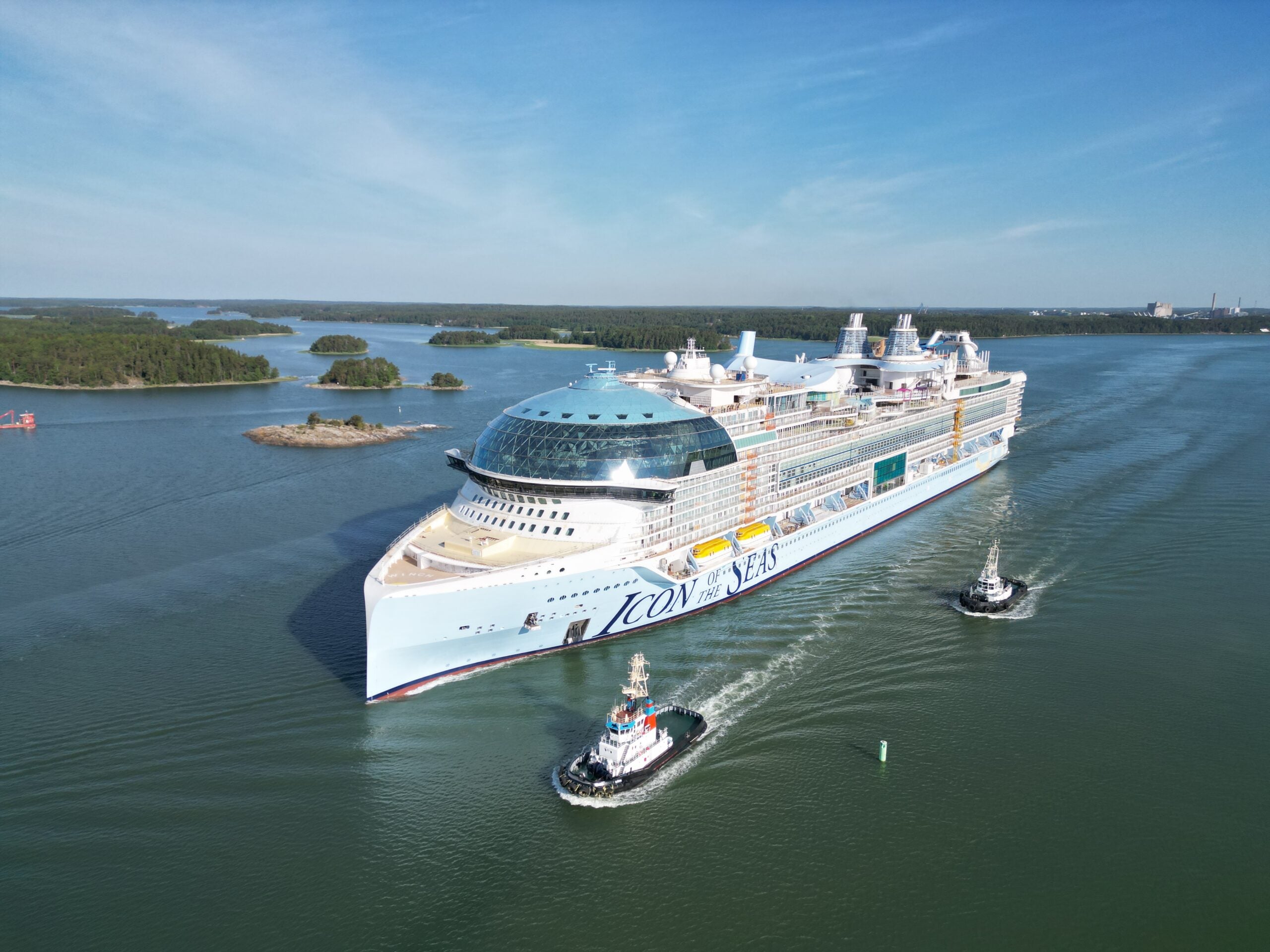
The first vessel in this class, Icon of the Seas, made its maiden voyage from PortMiami in January 2024, taking the title of the world's largest cruise ship at approximately 248,663 gross registered tons. Its sister ship, Star of the Seas, debuted in 2025 out of Port Canaveral, Florida, further expanding the fleet's footprint in the Caribbean market. A third Icon Class vessel is scheduled for delivery in late 2026, continuing Royal Caribbean's strategy of deploying mega-ships in high-demand North American cruise corridors.
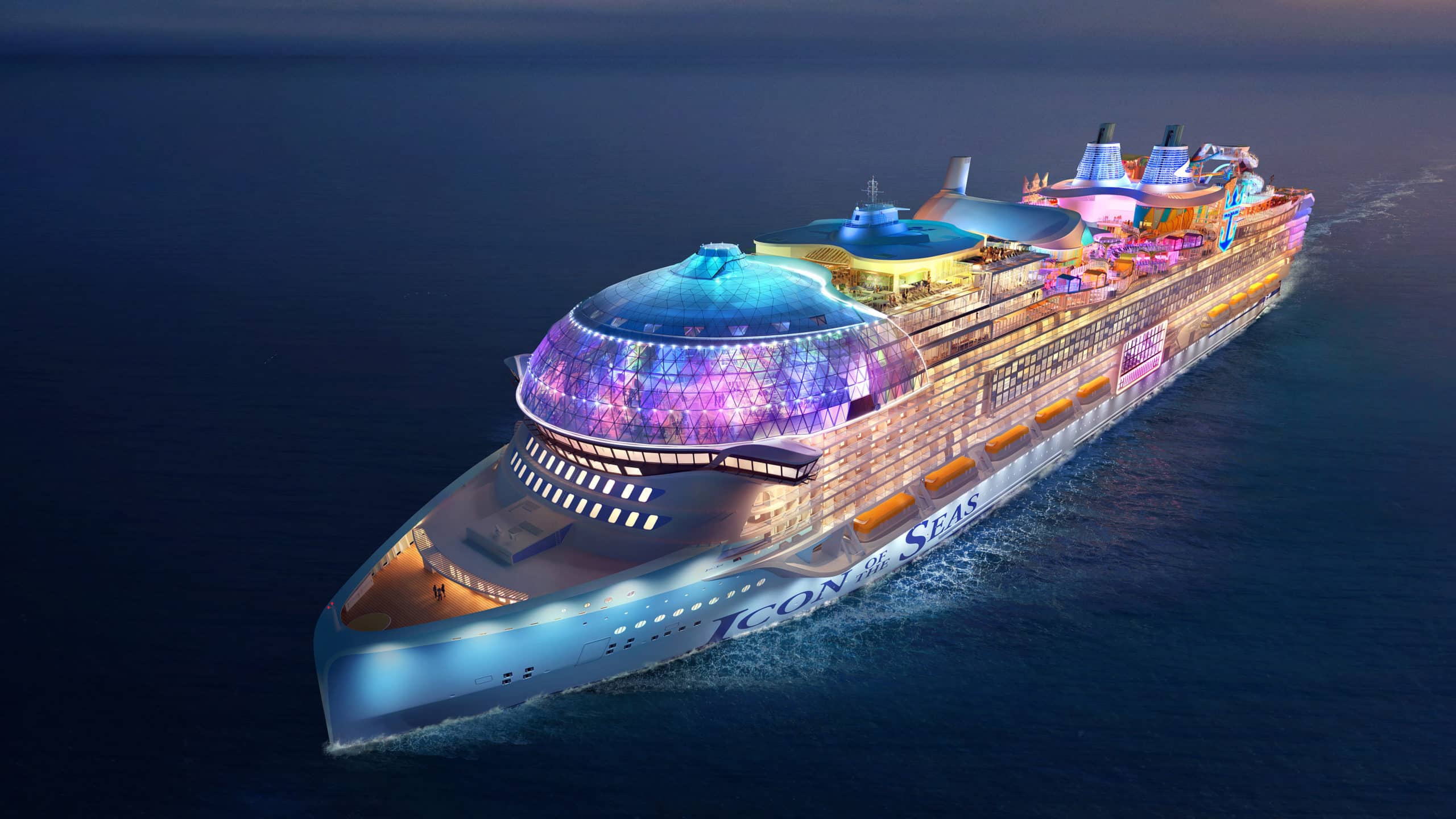
These vessels differ from legacy cruise ships not only in volume but in spatial architecture. Rather than relying on a traditional vertical deck layout, Icon Class ships use a modular neighborhood structure anchored by the AquaDome—a massive glass and steel dome structure positioned at the front top of the vessel—and an open-air central superstructure that maximizes natural light and internal views.
| Vessel Name | Maiden Voyage | Gross Tonnage | Passenger Capacity (Double / Max) | Primary Homeport | Signature Innovation |
|---|---|---|---|---|---|
| Icon of the Seas | January 2024 | ~248,663 GT | 5,610 / 7,600 | PortMiami, FL | Category 6 Waterpark & AquaDome |
| Star of the Seas | August 2025 | ~248,663 GT | 5,610 / 7,600 | Port Canaveral, FL | Enhanced Thrill Island & Custom Shows |
| Utopia of the Seas (Oasis Class) | July 2024 | ~236,860 GT | 5,668 / 6,559 | Port Canaveral, FL | Short-Cruise Focus & Immersive Dining |
| Icon Class Vessel 3 | Late 2026 | ~248,663 GT | 5,610 / 7,600 | To Be Announced | Next-Gen Efficiency & Expanded Suites |
Onboard Architecture: The Eight Distinct Neighborhoods
To manage guest flow and create distinct micro-atmospheres across a vessel housing up to 10,000 guests and crew, Royal Caribbean organized the Icon Class into eight specialized zones called neighborhoods.
- AquaDome (Forward High Decks: Water Shows/Rest)
- Thrill Island (Category 6/ Crown's Edge)
- Chill Island (Pool Decks/ Swim & Tonic)
- Suite Neighborhood (Private Sun Deck/ Coastal Kitchen)
- Surfside (Young Families/ Splashaway Bay)
- Central Park (Live Plantings/ Upscale Dining)
- Hideaway (Adults-Only/ Suspended Pool)
- Royal Promenade (Central Hub: Retail, Ice Arena, Bars)
1. Thrill Island
Positioned on the upper aft decks, Thrill Island serves as the ship's primary action hub. It houses Category 6, the largest waterpark at sea, featuring six record-breaking slides, including open-freefall slides, mat racers, and family raft rides. The area also features Crown’s Edge, an aerial adventure course that combines a skywalk, ropes course, and thrill ride cantilevered 154 feet above the ocean.
2. Chill Island
Spanning three decks, Chill Island contains four of the ship’s seven pools, including Swim & Tonic, the cruise line's first swim-up bar at sea. This zone focuses on resort-style relaxation, featuring multi-tiered oceanfront views, daybeds, and dedicated sun-deck zones designed to spread out passenger crowds.
3. Surfside
Designed specifically for young families with children under eight, Surfside replaces the traditional Boardwalk found on Oasis Class ships. It consolidates child-friendly pools (Splashaway Bay and Baby Bay), dedicated family dining venues, a carousel, an arcade, and proximity to the Adventure Ocean youth spaces into a single, enclosed aft neighborhood.
4. AquaDome
Located at the top forward section of the ship, the AquaDome is an engineering feat—a enclosed glass structure offering 220-degree panoramic ocean views by day. At night, it transforms into a high-tech venue featuring a 55-foot waterfall, robotic arms, projection mapping, and aquatic acrobatic performances inside the dynamic AquaTheater pool.
5. Central Park
A signature element carried over and enhanced from the Oasis Class, Central Park is an open-air sanctuary featuring thousands of real living plants, trees, and living green walls. It houses high-end specialty restaurants, walk-up wine bars, live acoustic music venues, and peaceful walking paths removed from the main pool decks.
6. The Hideaway
Tucked away 135 feet above the ocean at the stern of the vessel, The Hideaway is an adults-only beach club concept. Its centerpiece is the first suspended infinity pool at sea, surrounded by a multi-level sun deck, a dedicated bar, cabanas, and live DJ entertainment.
7. Royal Promenade
Serving as the interior spine of the ship, the two-deck Royal Promenade connects the forward and aft sections. It features The Pearl, a three-story structural dynamic artwork that provides structural support while displaying interactive kinetic lighting. The Promenade houses retail shops, quick-service cafes, bars, and direct access to Absolute Zero, the fleet's largest ice-skating arena.
8. Suite Neighborhood
Spanning four decks, this exclusive enclave offers dedicated space for guests staying in Sky Class and Star Class suites. It features a private sun deck, a dedicated pool and hot tub, the fine-dining restaurant Coastal Kitchen, and the Mediterranean-inspired lounge dining space The Grove.
Accommodations and Onboard Living Options
The introduction of these mega-ships expanded both the capacity and diversity of stateroom configurations. Over 80% of cabins on Icon Class ships are designed to accommodate three or more guests, reflecting the line's focus on multi-generational family travel.
| Category | Best Suited For | Distinctive Feature |
|---|---|---|
| Interior / Ocean View | Budget-conscious travelers spending minimal time in the room | High space efficiency, virtual or panoramic window views |
| Infinite Ocean View Balcony | Couples and flexible space seekers | Convertible floor-to-ceiling glass window |
| Surfside Family Suite | Families with young children | Split bathroom, alcove kids' sleeping area |
| Ultimate Family Townhouse | Large families / VIPs seeking luxury | Three-story layout, in-suite slide, private yard |
Innovative Cabin Types
- Infinite Ocean View Balconies: Unlike traditional balconies with an exterior door and balcony ledge, Infinite Balconies drop a top glass window at the press of a button, transforming the entire room into an open-air space while adding living room square footage when closed.
- Surfside Family Suites: Located inside the Surfside neighborhood, these suites feature a split-bathroom design and a separate cozy sleeping alcove for kids, allowing parents privacy without requiring a two-bedroom suite.
- The Ultimate Family Townhouse: A three-level luxury suite spanning 1,774 square feet. It includes an in-suite slide, an interactive karaoke station, a private balcony with a whirlpool, a dedicated cinema area, and direct private access to the Surfside neighborhood.
Maritime Engineering and Environmental Sustainability
Building a 248,000-ton vessel requires significant advancements in propulsion, energy conservation, and waste management. Royal Caribbean designed the Icon Class to meet increasingly stringent international maritime standards established by the International Maritime Organization (IMO).
- LNG Fuel Storage (Clean-Burning Energy)
- Dual-Fuel Engines & Fuel Cell Ready
- Air Lubrication (Reduces Hull Friction)
- Waste-to-Energy (Pyrolysis System for Solid Waste)
- Shore Power Plug-In (Zero Emission in Equipped Ports)
Liquefied Natural Gas (LNG)
Icon of the Seas and Star of the Seas are the first Royal Caribbean vessels powered primarily by Liquefied Natural Gas (LNG). LNG burns cleaner than traditional marine heavy fuel oil, substantially reducing sulfur oxides ($SO_x$) by nearly 99% and particulate matter emissions by up to 85%, while cutting nitrogen oxide ($NO_x$) emissions by up to 85%.
Waste-to-Energy Systems (Microwave-Assisted Pyrolysis)
The ships integrate advanced Microwave-Assisted Pyrolysis (MAP) technology. This system converts onboard solid waste into synthesis gas (syngas), which the ship can harness to generate supplemental electrical power, minimizing reliance on primary fuel reserves.
Hull Efficiency and Air Lubrication
To decrease fuel consumption while transiting between ports, the hull incorporates an air lubrication system. Millions of microscopic air bubbles are continuously emitted beneath the ship's hull, creating a cushion that reduces hydrodynamic friction as the vessel moves through the water.
Shore Power Connectivity
Icon Class vessels are equipped to connect to municipal electrical grids ("cold ironing") while docked in port. When connected to shore power facilities at ports like PortMiami or Port Canaveral, the ship shuts down its main engines completely, achieving zero local emissions while docked.
Itineraries, Operational Ports, and Logistics
Navigating a mega-ship requires specialized deep-water port infrastructure. Consequently, these new giants sail carefully planned itineraries designed around high-capacity ports capable of handling thousands of embarking and disembarking passengers simultaneously.
- PortMiami / Port Canaveral
- Eastern Caribbean
- St. Thomas (Charlotte Amalie)
- St. Maarten (Philipsburg)
- San Juan, Puerto Rico
- Perfect Day at CocoCay
- Western Caribbean
- Cozumel, Mexico
- Roatán, Honduras
- Costa Maya, Mexico
- Perfect Day at CocoCay
- Eastern Caribbean
Primary Itinerary Tracks
- 7-Night Eastern Caribbean: Typically departs from Miami or Port Canaveral, visiting destinations such as St. Maarten, St. Thomas, San Juan (Puerto Rico), and Royal Caribbean's private island, Perfect Day at CocoCay in the Bahamas.
- 7-Night Western Caribbean: Covers ports along the Mexican Riviera and Central America, including Cozumel, Costa Maya, and Roatán, combined with a scheduled stop at CocoCay.
- Short Caribbean Getaways: While Icon Class ships focus on week-long itineraries, Royal Caribbean deployed the Oasis-Class Utopia of the Seas specifically for 3-night weekend and 4-night weekday short getaways to CocoCay and Nassau, catering to time-constrained travelers.
Port Requirements
Due to their draft (depth below the waterline of approximately 30 feet) and height above the waterline, these mega-ships require deep-water piers and modernized cruise terminals equipped with automated baggage handling and facial-recognition embarkation systems.
Planning and Booking Considerations
Sailing on a mega-ship requires tactical planning to ensure access to preferred dining, show times, and stateroom locations. High demand for the Icon Class often results in higher baseline prices compared to older fleet classes.
| Window | Strategic Action / Priority |
|---|---|
| 12–18 Months Out | Reserve hard-to-book suites (Townhouse, Surfside) and lock in standard base fares. |
| 45–90 Days Out | Book AquaDome shows, ice shows, and specialty dining through the Royal Caribbean app. |
| 1–7 Days Out | Complete online check-in, select early arrival time window, and register safety briefing (eMuster). |
Cost Factors and Pricing Trends
- Base Fares: Standard interior rooms on Icon Class vessels frequently command a 20% to 40% price premium over older Voyager or Freedom Class ships sailing similar Caribbean routes.
- Gratuities and Taxes: Daily port taxes, government fees, and automatic daily crew gratuities add roughly $18 to $25 per person per day depending on the stateroom category.
- Add-On Costs: While main dining rooms, the Windjammer buffet, Surfside Eatery, and basic entertainment are included in the base fare, specialty dining (such as Chops Grille, Empire Supper Club, or Izumi), beverage packages, Wi-Fi (Voom), and Category 6 Crown's Edge thrill passes carry additional per-person fees.
Step-by-Step Pre-Cruise Checklist
- Select Stateroom Location Carefully: Guests sensitive to motion should choose mid-ship cabins on lower decks. Families wanting easy access to kids' zones should target decks 7 and 8 near Surfside.
- Pre-Book Entertainment via the App: Royal Caribbean releases reservations for main stage theater, AquaDome, and ice-skating shows approximately 30 to 60 days before sailing. Securing these slots early avoids long standby lines onboard.
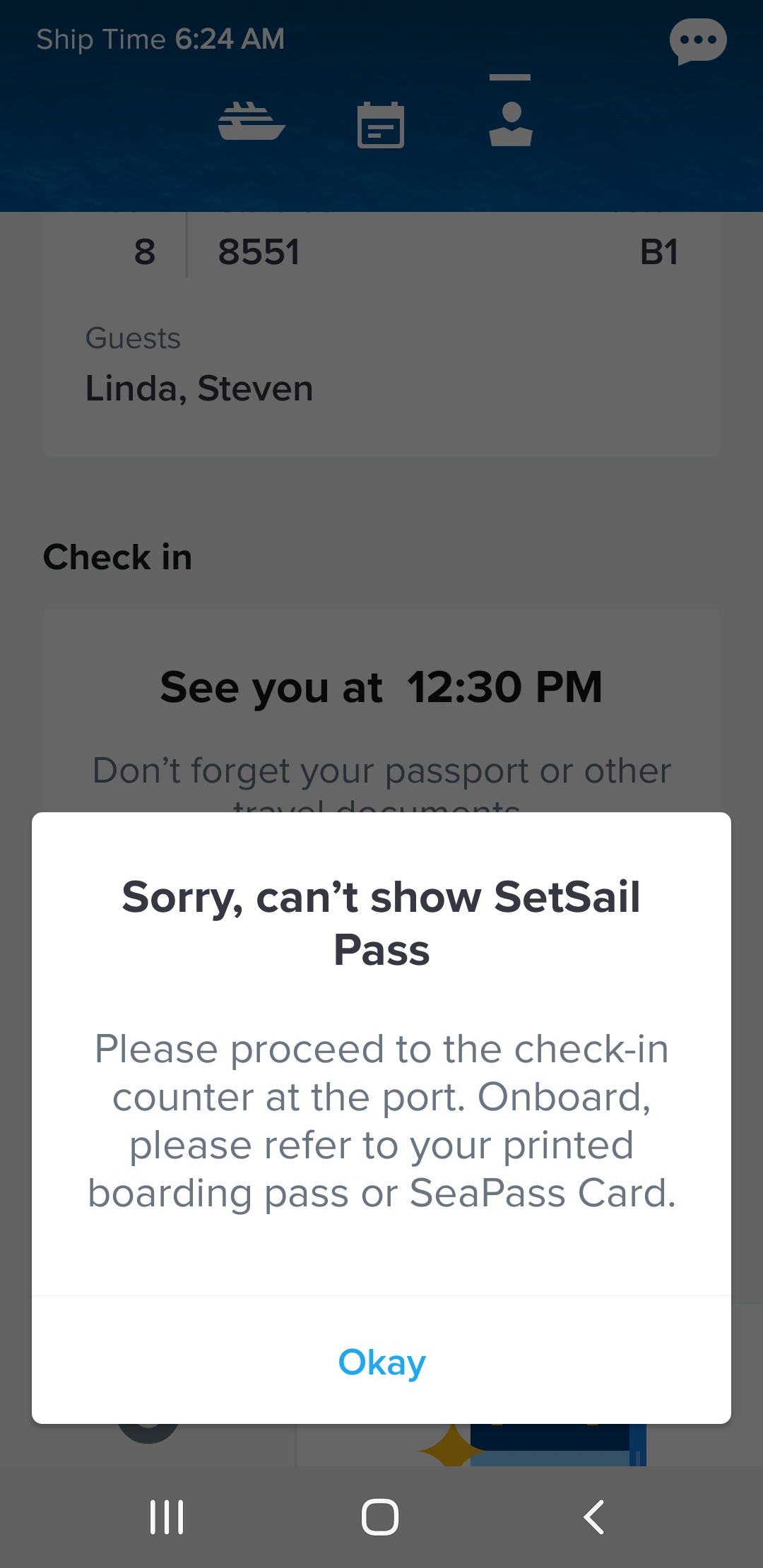
- Complete the Mobile Check-In: Use the official app to complete identity verification, upload security photos, and select the earliest available pier arrival slot to maximize day-one onboard time.
- Review Dress Codes and Themed Nights: Pack appropriately for formal nights, casual dining, and theme events (such as White Night or 70s Flashback parties) typical on 7-night sailings.
Icon Class vs. Oasis Class: Key Differences
For seasoned cruisers familiar with Royal Caribbean's Oasis Class ships (such as Symphony of the Seas or Wonder of the Seas), understanding how the Icon Class compares helps set expectations.
Mega-Ship Evolution
- Oasis Class
- ~225,000-236,000 GT
- Outdoor AquaTheater
- Boardwalk Neighborhood
- Heavy Fuel Oil / Dual
- Traditional Balconies
- Icon Class
- ~248,663 GT
- Enclosed AquaDome
- Surfside Neighborhood
- Primary LNG Power
- Infinite Balconies
- Oasis Class
Size and Volume: Icon Class ships add roughly 12,000 to 20,000 gross tons over Oasis Class ships, translating to wider public decks and larger pool footprints.
Weatherproofing Entertainment: The Oasis Class features an outdoor AquaTheater at the stern, which is vulnerable to rain or high winds. The Icon Class moves this facility inside the climate-controlled forward AquaDome, eliminating weather cancellations for high-diving shows.
Family Space Integration: While Oasis Class split family areas between the Boardwalk (deck 6) and Adventure Ocean (deck 14), Icon Class consolidates young family living, dining, and play areas into the unified Surfside zone on deck 7.
Frequently Asked Questions
What makes Royal Caribbean’s Icon Class ships different from older cruise ships?
Icon Class ships are the largest cruise vessels ever built, utilizing liquefied natural gas (LNG) power and advanced energy-recovery systems. They feature eight distinct onboard neighborhoods, including an enclosed forward AquaDome, the Category 6 waterpark, dedicated young-family zones like Surfside, and an adults-only suspended infinity pool area at The Hideaway.
How many passengers can ride on an Icon Class ship?
At standard double occupancy (two guests per cabin), an Icon Class ship carries approximately 5,610 passengers. When every third and fourth berth is filled—common during peak holiday and summer family travel periods—maximum capacity reaches around 7,600 passengers, supported by roughly 2,350 crew members.
Are food and drinks included on these mega-ships?
Base fares cover dining in the main dining rooms, the Windjammer Marketplace buffet, Surfside Eatery, El Loco Fresh, and several grab-and-go cafes. However, specialty dining venues (such as the Empire Supper Club, Chops Grille, or Izumi), alcoholic beverages, soft drinks, specialty coffees, and room service incur additional charges unless purchased as part of an onboard package.
Do I need to make show reservations in advance?
Yes. Given the high passenger capacity, reservations are strongly recommended for major entertainment venues, including the AquaDome water shows, main theater Broadway productions, and Absolute Zero ice shows. Guests can reserve seats at no extra cost through the Royal Caribbean mobile app prior to embarkation.
What ports can accommodate these mega-ships?
Due to their massive size and draft, Icon Class ships operate out of deep-water terminals equipped for high-volume turnarounds. Key homeports include PortMiami and Port Canaveral in Florida. Standard Caribbean call ports include Perfect Day at CocoCay (Bahamas), Cozumel (Mexico), St. Maarten, St. Thomas, and San Juan (Puerto Rico).
Practical Next Actions
If you are planning a cruise on an Icon Class vessel:
- Determine Your Preferred Travel Window: Fares are highest during peak summer months (June–August) and major school holidays (December–January). Spring (April–May) and autumn (September–November) offer lower fares and fewer crowds.
- Compare Neighborhood Cabin Options: Determine whether your group benefits from an Infinite Balcony, a Surfside Family Suite (ideal for young kids), or a quiet Central Park View room.
- Monitor Official Booking Portals: Check availability directly on the Royal Caribbean International Official Site or consult an accredited cruise travel counselor to identify promotional rates, onboard credit offers, or reduced deposit periods.
- Download the Royal Caribbean App: Once booked, link your reservation to track check-in deadlines, monitor shore excursion availability, and book entertainment reservations as soon as your pre-cruise window opens.
Image Gallery